Map of France showing where the Chaise arms are recorded
The Chaise arms were recorded in Normandie, c. 1663.
Normandie held a dense crowd of knightly families on some of the best farmland in France. Its men had fought and settled abroad for generations, and a family that sent sons to war needed a shield they could be recognised by.
This is where the arms were entered in the register. Families often moved to other parts of the country, so the same name can turn up in more than one region.
The body that granted and recorded arms in France in this period.
Louis XIV of France
Sovereign of the period
Louis XIV of France
1643–1715
Reigning in France when the Chaise arms are first recorded.
How Arms Worked in France
In France, a coat of arms was a mark of honor that passed down through the male line to all legitimate descendants. Families often used the same shield without changes to show their shared heritage. If a branch wanted to stand out, they could add a small mark to their shield to show their specific place in the family tree.
Granting authority
The Juge d'armes de France acted as the official authority that regulated and verified coats of arms across the country.
How they got arms
Families typically inherited their arms from ancestors, though they could also receive them through royal grants or by proving their noble status.
Where arms were recorded
Coats of arms were officially recorded in the Armorial Général de France, which began its main collection in the year 1696.
The family's standing
Recorded among the armigerous families of Normandie.
Origin & History of the Chaise Family in France
The surname Chaise finds its roots in the linguistic landscape of medieval France, where it originated as a descriptive name for a person who lived near a specific type of seat or a prominent chair-making workshop. By the mid-seventeenth century, the family had established a notable presence in the region of Normandie. Records from 1663 confirm that members of the family were active participants in the local society of this northern province during a time of significant agricultural and social development. As the family grew, they integrated into the rural and urban structures of the French countryside, likely working as artisans or landowners who contributed to the regional economy. Their presence in Normandie during this era reflects the broader patterns of family settlement that defined the social fabric of early modern France.
Coat of Arms & Family Crest Details
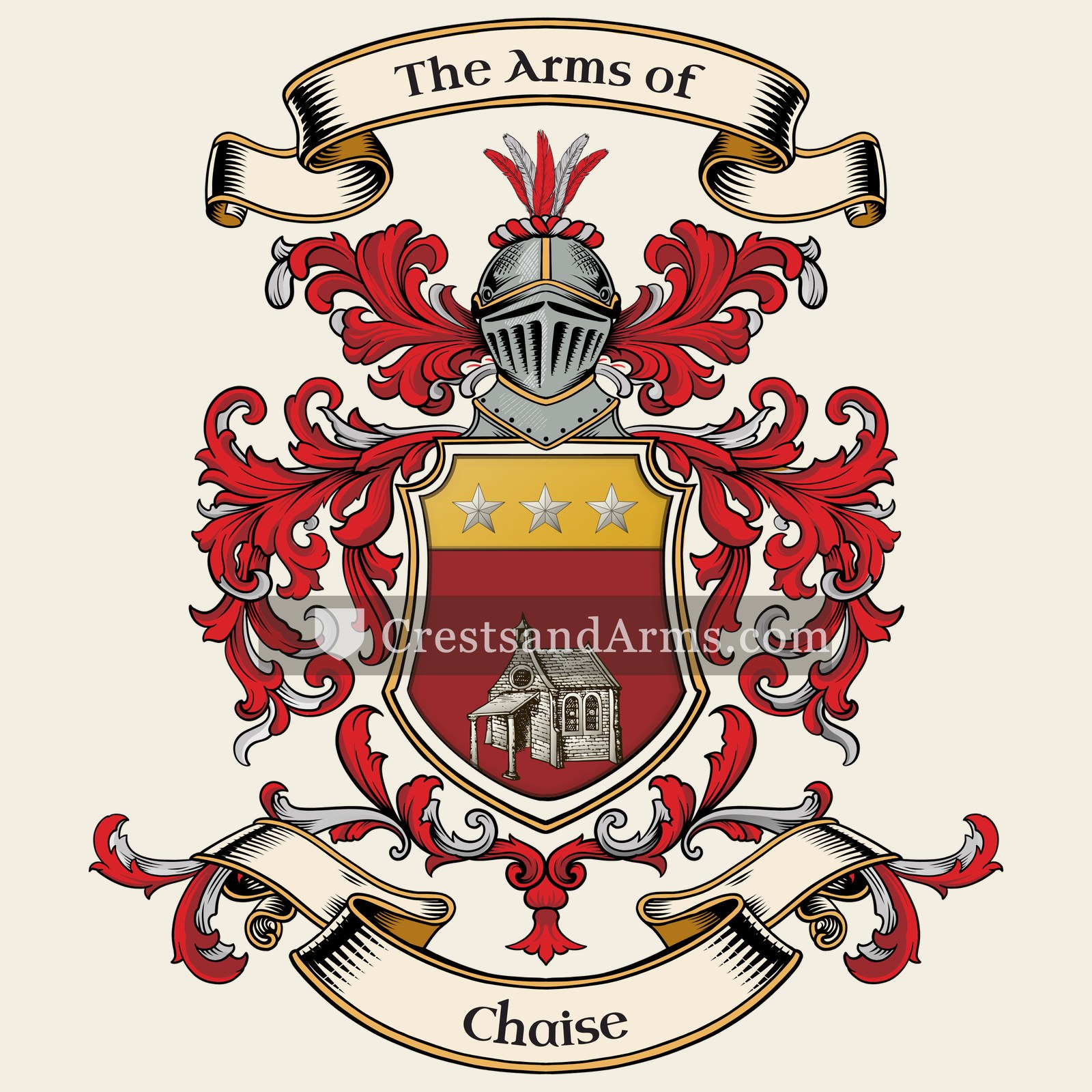
Symbols on this shield
chiefAuthority, wisdom and dominion
churchFaith, and the endowment of a house of God
mulletThe third son, and a divine quality from above
Colours
Red (Gules)Means: Military strength
Gold (Or)Means: Generosity
Silver (Argent)Means: Peace and sincerity
Historical info
Source
J. B. Rietstap, Armorial Général, Gouda: G. B. van Goor Zonen, 1884–87
Blazon (the actual original written record)
“De gu. à une église d'arg., le clocher à dextre; au chef d'or, ch. de trois étoiles d'arg.”
PiedmontPiedmont, c. 1775
Digital archive packCoat of arms PNG, gold border print PDF, vector SVG and the certificate of authenticity. Sent to your email in minutes.
Map of Italy showing where the Chaise arms are recorded
The Chaise arms were recorded in Piedmont, c. 1775.
Piedmont was Alpine and river country in north-western Italy, ruled from Turin. Its noble houses were listed formally by the state, and a name on that list carried arms as a matter of record.
This is where the arms were entered in the register. Families often moved to other parts of the country, so the same name can turn up in more than one region.
The body that granted and recorded arms in Italy in this period.
Alvise Giovanni Mocenigo
Sovereign of the period
Alvise Giovanni Mocenigo
1763–1778
Reigning in France when the Chaise arms are first recorded.
How Arms Worked in Italy
In the Italian states, coats of arms were often used by noble families to show their status and history. These symbols were passed down through the generations to all legitimate male descendants. Younger branches of a family usually kept the original design but sometimes added small changes to distinguish their specific line from the main branch.
Granting authority
Various local rulers and city governments controlled the use of coats of arms across the different Italian states.
How they got arms
Families often assumed their own arms or received them as official grants from local lords, popes, or city councils.
Where arms were recorded
Arms were recorded in local city archives or private family books rather than in one single national register.
The family's standing
Recorded among the armigerous families of Piedmont.
Origin & History of the Chaise Family in Italy
The family name Chaise has deep roots in the Piedmont region of Italy, where records confirm members of the family were established by 1775. The name itself is closely linked to the French word for chair, which often served as a nickname for a person who held a position of authority or occupied a specific seat of status within a village or guild. During the late 18th century, Piedmont was a crossroads of cultural and linguistic exchange between Italy and France. Families like the Chaises often moved across these borders due to trade routes and the shifting political landscape of the Kingdom of Sardinia. By settling in the foothills of the Alps, the family became part of a unique regional identity that blended Italian traditions with the linguistic influences of their neighbors. Their presence in local parish and civil registers from this era suggests they were integrated into the agrarian and professional life of the region, contributing to the local economy long before the unification of Italy.
Chaise Meaning & Related Branches
Root word
cathedra
A Latin term referring to a seat, chair, or throne.
This name
ChaiseAn occupational surname for a chair maker or a topographic name for someone living near a specific seat.
also spelled
Chaize
Shayz
Chase
Related arms
Chaisvariant spelling
Chaix de Lavarènevariant spelling
Chaizevariant spelling
Documented Sources
J. B. Rietstap, Armorial Général, Gouda: G. B. van Goor Zonen, 1884–87
Archives départementales de la Seine-Maritime, Registres paroissiaux et d'état civil
Dauzat, Albert, Dictionnaire étymologique des noms et prénoms de France, 1951
Morlet, Marie-Thérèse, Dictionnaire étymologique des noms de famille, 1991
Digital archive packCoat of arms PNG, gold border print PDF, vector SVG and the certificate of authenticity. Sent to your email in minutes.


 chiefAuthority, wisdom and dominion
 griffinValour and vigilance, guarding great treasure
 crescentHonour by the sovereign, and the second son
 chiefAuthority, wisdom and dominion
 griffinValour and vigilance, guarding great treasure
 crescentHonour by the sovereign, and the second son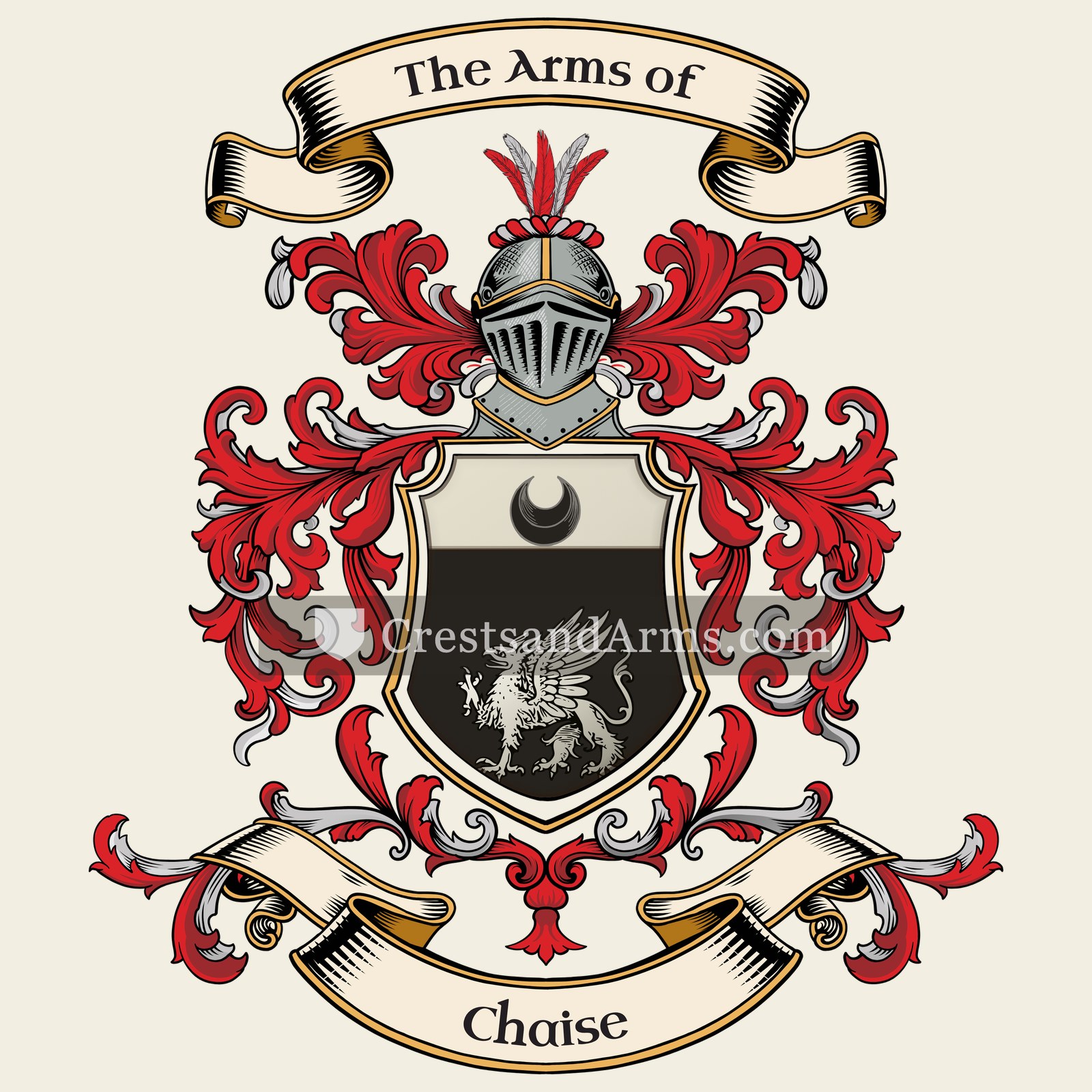


 churchFaith, and the endowment of a house of God
 mulletThe third son, and a divine quality from above