Map of Belgium showing where the Chambre arms are recorded
The Chambre arms were recorded in Brabant, c. 1737.
Brabant lay at the heart of the Low Countries, where the trade routes met. Its towns were wealthy and its landowners many, and both kinds of family kept arms, which is why the region is so heavily represented.
This is where the arms were entered in the register. Families often moved to other parts of the country, so the same name can turn up in more than one region.
The body that granted and recorded arms in Belgium in this period.
Charles VI, Holy Roman Emperor
Sovereign of the period
Charles VI, Holy Roman Emperor
1711–1740
Reigning in Belgium when the Chambre arms are first recorded.
How Arms Worked in Belgium
In Belgium, a coat of arms is considered personal property that is passed down through the male line to legitimate descendants. Families often use the same shield design across generations to show their shared heritage. If a branch of the family wants to change the design, they must apply for an official update to their specific version of the arms.
Granting authority
The Conseil héraldique is the official body that regulates and approves all coats of arms in Belgium.
How they got arms
Families obtain their coats of arms through formal royal grants or by confirming their historical right to use existing designs.
Where arms were recorded
All approved coats of arms are officially recorded in the public registers of the Conseil héraldique since 1844.
The family's standing
Recorded among the armigerous families of Brabant.
Origin & History of the Chambre Family in Belgium
The family name Chambre has deep roots in the historical region of Brabant, where members of the family were firmly established by the year 1737. During this period, the name was closely tied to the social and administrative structures of the Southern Netherlands, which was then under Austrian rule. Families like the Chambre line often functioned within the local merchant and landholding classes, playing a quiet but essential role in the economic life of the province. Because the name itself translates to the word for a room or a chamber, it is likely that the family originally earned this identifier through their association with a specific building or their service within a local government office. By the mid-18th century, the family was well-integrated into the regional landscape, leaving behind traces in local parish registers and tax records that document their steady presence in the towns and rural districts of Brabant.
Coat of Arms & Family Crest Details
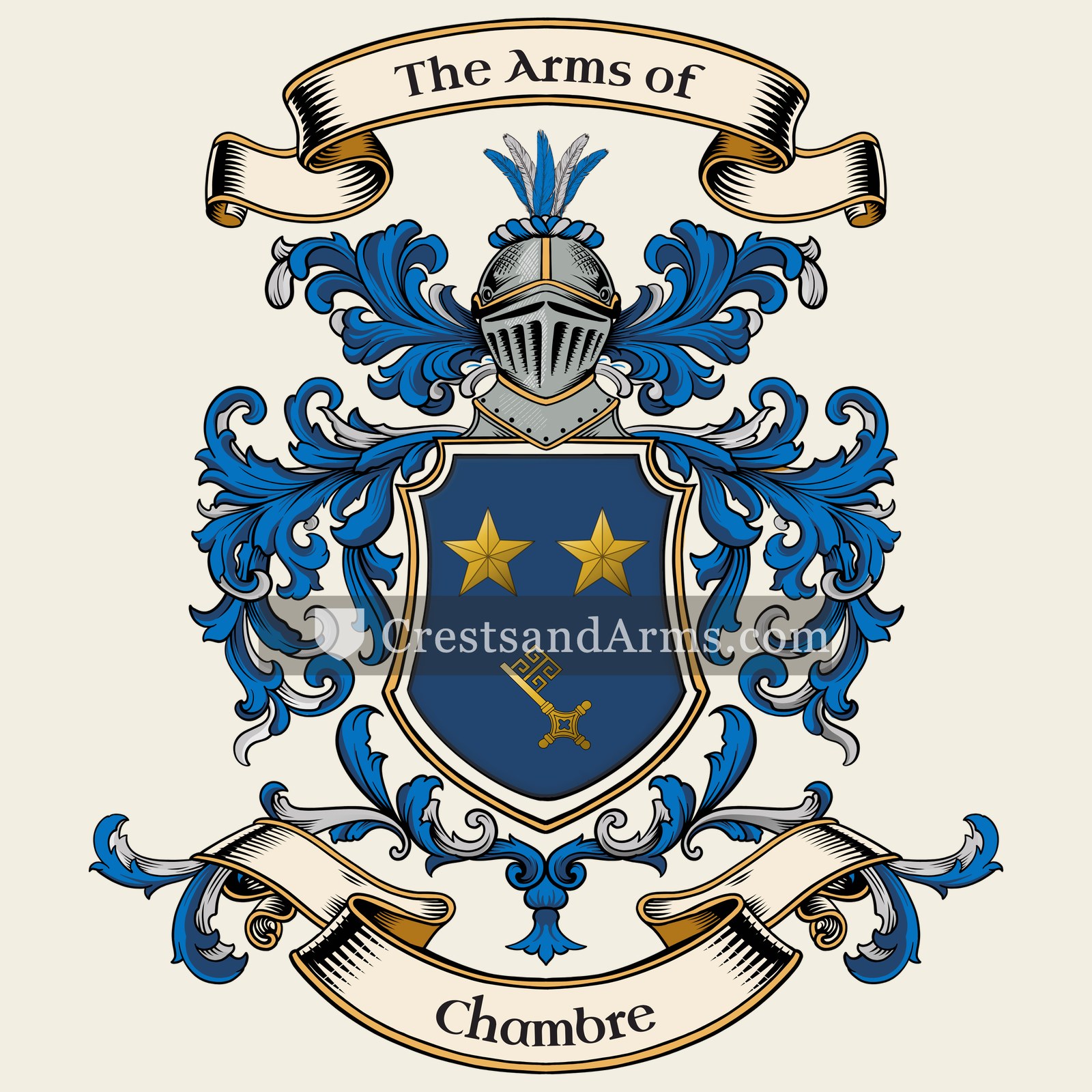
Symbols on this shield
chiefAuthority, wisdom and dominion
crescentHonour by the sovereign, and the second son
lionCourage, strength and royalty
Colours
Red (Gules)Means: Military strength
Black (Sable)Means: Constancy
Silver (Argent)Means: Peace and sincerity
Gold (Or)Means: Generosity
Historical info
Source
J. B. Rietstap, Armorial Général, Gouda: G. B. van Goor Zonen, 1884–87
Blazon (the actual original written record)
“De gu. à trois croiss. d'arg.; au chef de sa., ch. d'un lion léopardé d'or.”
BourgogneBourgogne, c. 1663
Digital archive packCoat of arms PNG, gold border print PDF, vector SVG and the certificate of authenticity. Sent to your email in minutes.
Map of France showing where the Chambre arms are recorded
The Chambre arms were recorded in Bourgogne, c. 1663.
Bourgogne was one of the richest parts of France, built on wine, wool and the roads that carried both. Wealth of that kind bought land, and land brought arms, so the region filled with armed families earlier than most of the country.
This is where the arms were entered in the register. Families often moved to other parts of the country, so the same name can turn up in more than one region.
The body that granted and recorded arms in France in this period.
Louis XIV of France
Sovereign of the period
Louis XIV of France
1643–1715
Reigning in Belgium when the Chambre arms are first recorded.
How Arms Worked in France
In France, a coat of arms was a mark of honor that passed down through the male line to all legitimate descendants. Families often used the same shield without changes to show their shared heritage. If a branch wanted to stand out, they could add a small mark to their shield to show their specific place in the family tree.
Granting authority
The Juge d'armes de France acted as the official authority that regulated and verified coats of arms across the country.
How they got arms
Families typically inherited their arms from ancestors, though they could also receive them through royal grants or by proving their noble status.
Where arms were recorded
Coats of arms were officially recorded in the Armorial Général de France, which began its main collection in the year 1696.
The family's standing
Recorded among the armigerous families of Bourgogne.
Origin & History of the Chambre Family in France
The family name Chambre finds its roots in the social and administrative structures of medieval France. The name is derived from the French word for a room or chamber, which often identified individuals who served in the private quarters of a noble household or held a specific administrative role within a royal court. By the time the family was firmly established in the Bourgogne region in 1663, they were part of a society where surnames were becoming permanent markers of lineage and professional identity. During this period, the Bourgogne area was a center of agricultural wealth and regional governance, providing a stable environment for families to build their local influence. As the name spread through the province, it became associated with the daily life and civic duties of the local population, reflecting a transition from simple occupational titles to inherited family names that defined their place in French society.
Coat of Arms & Family Crest Details
Symbols on this shield
keyGuardianship, and the office of a steward
mulletThe third son, and a divine quality from above
Colours
Blue (Azure)Means: Loyalty and truth
Gold (Or)Means: Generosity
Historical info
Source
Sir Bernard Burke, The General Armory of England, Scotland, Ireland and Wales, London: Harrison & Sons, 1884
Blazon (the actual original written record)
“Az. a key in pale betw. two mullets of six points fesswise or”
NorfolkNorfolk, c. 1435
Digital archive packCoat of arms PNG, gold border print PDF, vector SVG and the certificate of authenticity. Sent to your email in minutes.
Map of England showing where the Chambre arms are recorded
The Chambre arms were recorded in Norfolk, c. 1435.
Norfolk grew rich on wool and grain, and its wealth was spread among many middling families rather than a few great ones. Households of that kind bought land and took arms, and the county holds a large share of English names.
This is where the arms were entered in the register. Families often moved to other parts of the country, so the same name can turn up in more than one region.
The body that granted and recorded arms in England in this period.
Henry VI of England
Sovereign of the period
Henry VI of England
1422–1461
Reigning in Belgium when the Chambre arms are first recorded.
How Arms Worked in England
English heraldry allowed arms to be shared by all legitimate descendants of the original owner. These symbols were treated as personal property that moved through the generations to all children. While the eldest son kept the original design, other family members could use the same shield without needing to change it or register their own unique versions.
Granting authority
The College of Arms in London has regulated the use of coats of arms throughout England and Wales since 1484.
How they got arms
Families typically obtained their coats of arms through a formal grant from the Crown or by proving their ancient right to them.
Where arms were recorded
All official coats of arms are recorded in the registers kept at the College of Arms, which date back to the fifteenth century.
The family's standing
Recorded among the armigerous families of Norfolk.
Origin & History of the Chambre Family in England
The surname Chambre traces its roots to the Old French word for a room or a private chamber, which suggests that the earliest people to carry the name likely served in the households of medieval nobility. By 1435, historical records confirm that members of the family were well-established in the county of Norfolk. During this period, the family was integrated into the local social fabric, often appearing in legal documents related to land ownership and regional administration. As they moved through the late Middle Ages, the family name became associated with the professional class, reflecting the transition from household service to independent landholding. This early presence in Norfolk indicates that the family had successfully integrated into the English countryside, securing a stable place within the local community long before the modern era.
Chambre Meaning & Related Branches
Root word
Camera
A vaulted chamber, room, or arched structure in Latin.
This name
ChambreAn occupational name for a chamberlain or someone who lived near a specific room.
also spelled
Chambree
Shambra
Chamber
Chambir
Related arms
Bourbon-Cluyssimilar arms
Chambervariant spelling
Chambersvariant spelling
Chambirvariant spelling
Documented Sources
J. B. Rietstap, Armorial Général, Gouda: G. B. van Goor Zonen, 1884–87
Archives: State Archives in Belgium (Algemeen Rijksarchief), Parochieregisters van Brabant
Archives: State Archives in Belgium (Algemeen Rijksarchief), Registers van de Raad van Brabant
Book: Warlop, Ernest, The Flemish Nobility before 1300, 1975
Book: De Smet, Jos, Geschiedenis van de Brabantse steden, 1962
Digital archive packCoat of arms PNG, gold border print PDF, vector SVG and the certificate of authenticity. Sent to your email in minutes.


 trefoilPerpetuity, and the Trinity
 trefoilPerpetuity, and the Trinity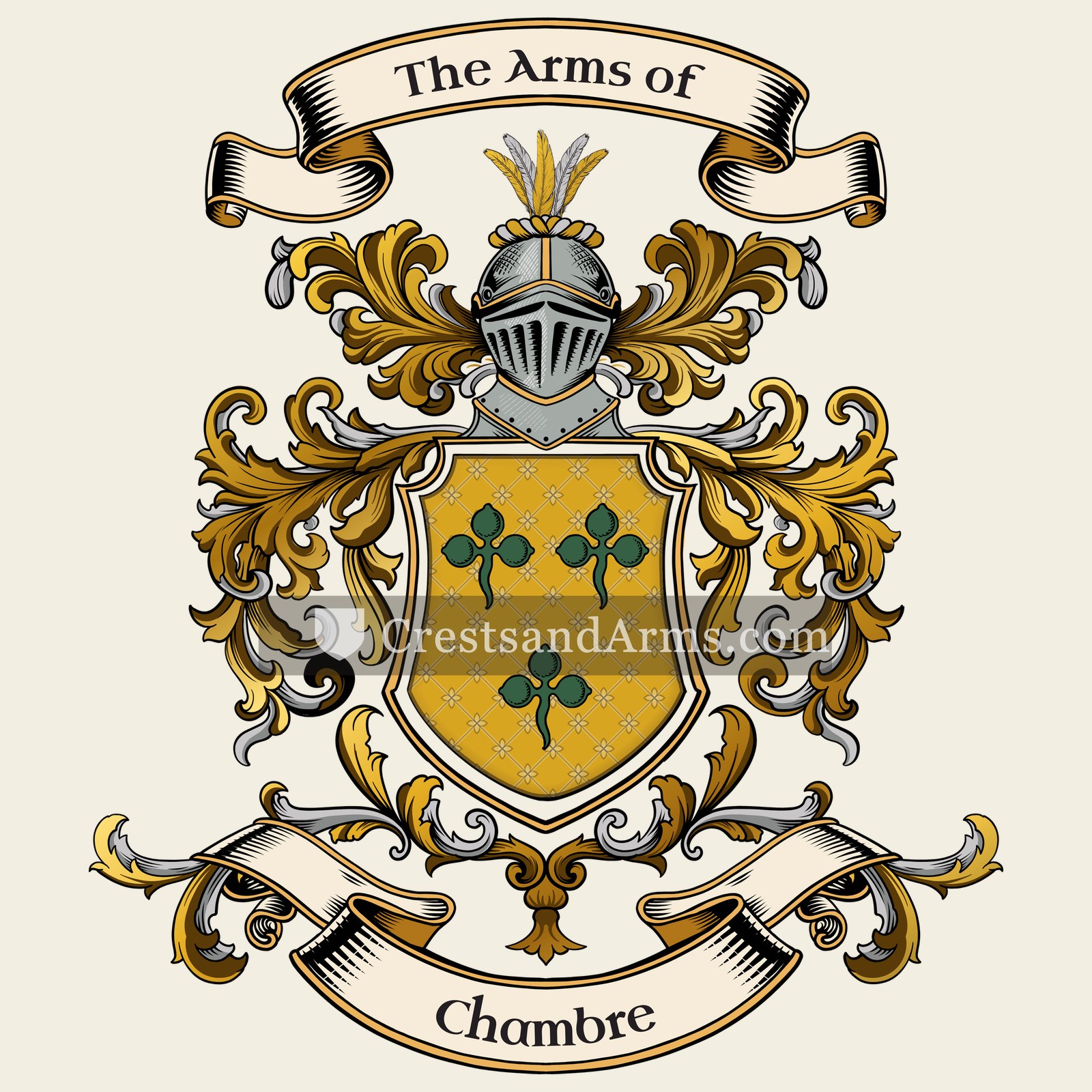


 chiefAuthority, wisdom and dominion
 crescentHonour by the sovereign, and the second son
 lionCourage, strength and royalty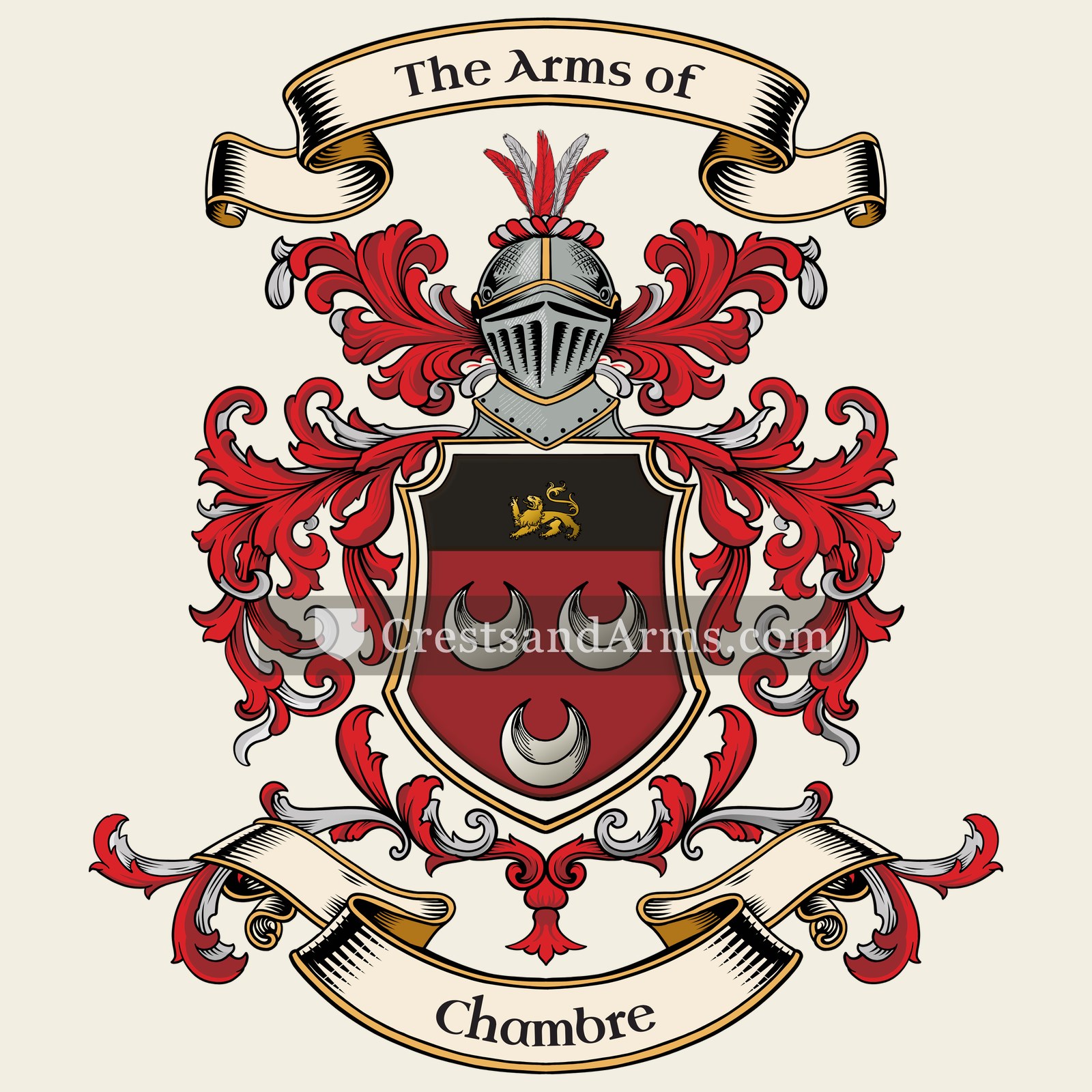


 keyGuardianship, and the office of a steward
 mulletThe third son, and a divine quality from above