Map of Britain showing where the Champernowne arms are recorded
The Champernowne arms were recorded in Devonshire, c. 1700.
This is where the arms were entered in the register. Families often moved to other parts of the country, so the same name can turn up in more than one region.
The body that granted and recorded arms in Britain in this period.
William III of England
Sovereign of the period
William III of England
1694–1702
Reigning in Britain when the Champernowne arms are first recorded.
How Arms Worked in Britain
English heraldry allowed arms to be shared by all legitimate descendants of the original owner. These symbols were treated as personal property that moved through the generations to all children. While the eldest son kept the original design, other family members could use the same shield without needing to change it or register their own unique versions.
Granting authority
The College of Arms in London has regulated the use of coats of arms throughout England and Wales since 1484.
How they got arms
Families typically obtained their coats of arms through a formal grant from the Crown or by proving their ancient right to them.
Where arms were recorded
All official coats of arms are recorded in the registers kept at the College of Arms, which date back to the fifteenth century.
The family's standing
Recorded among the armigerous families of Devonshire.
Origin & History of the Champernowne Family in Britain
The Champernowne family established deep roots in the county of Devonshire long before the eighteenth century, tracing their origins back to the arrival of the Normans in England. The name itself is derived from the French phrase "champ arnoul," which translates to the field of Arnoul. By the thirteenth century, the family had secured significant landholdings in the South Hams region, particularly at Modbury. They became prominent members of the local gentry, often serving as sheriffs or knights of the shire. Their influence in the West Country grew through strategic marriages and their involvement in regional administration. By the time the family was well-documented in the 1700s, they had already spent hundreds of years shaping the landscape and social fabric of Devonshire through their long-standing tenure at estates like Dartington Hall.
Coat of Arms & Family Crest Details
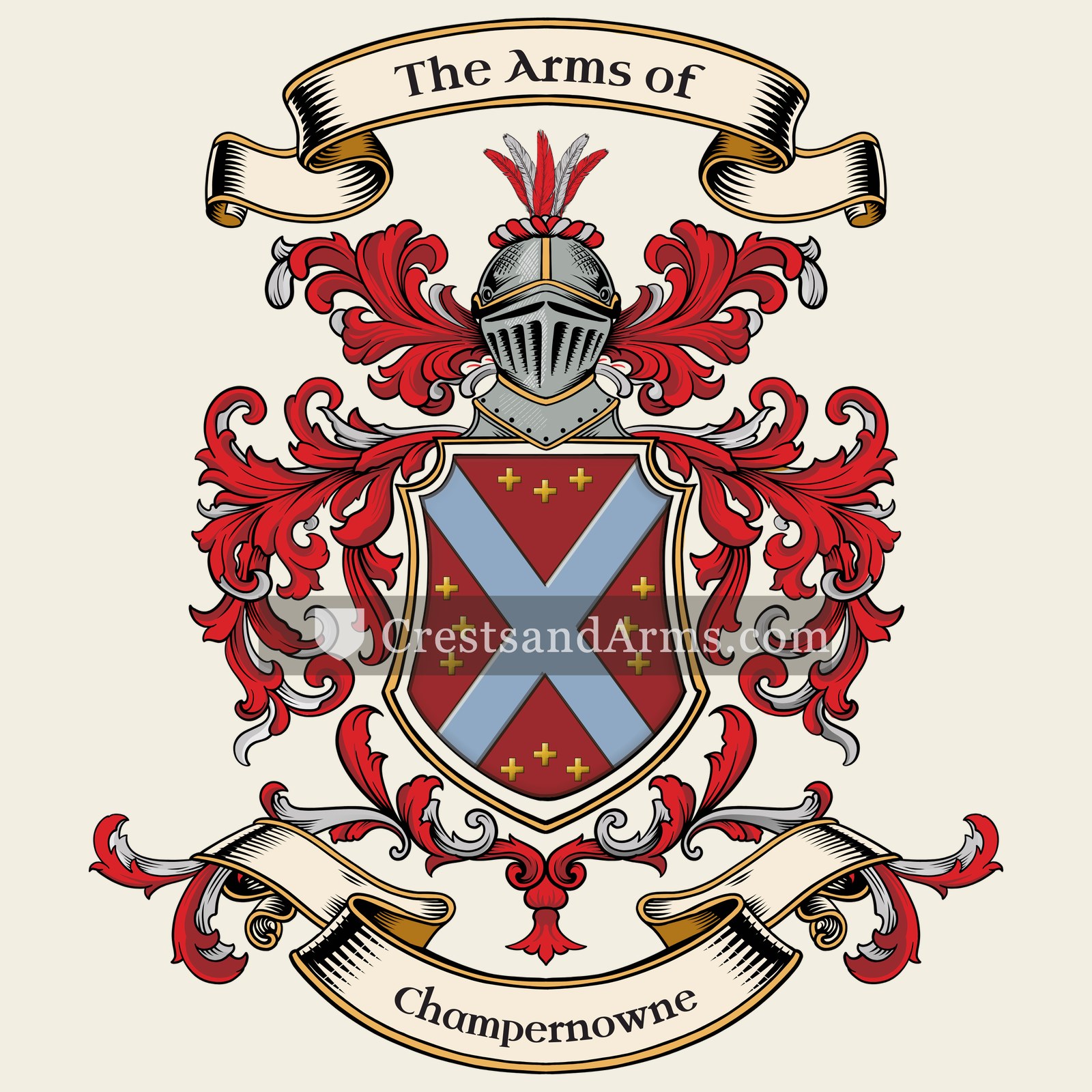
Symbols on this shield
saltireResolution, and St Andrew's cross
vairProtection, and the winter fur
cross symbolChristian faith and service
Colours
Red (Gules)Means: Military strength
VairMeans: Protection
Gold (Or)Means: Generosity
Historical info
Source
Sir Bernard Burke, The General Armory of England, Scotland, Ireland and Wales, London: Harrison & Sons, 1884
Blazon (the actual original written record)
“Gu. a saltire vair betw. twelve crosses formée fitchée or”
WiltsCalcott · Wilts, c. 1620
Digital archive packCoat of arms PNG, gold border print PDF, vector SVG and the certificate of authenticity. Sent to your email in minutes.
Map of England showing where the Champernowne arms are recorded
The Champernowne arms were recorded in Wilts, c. 1620.
Wiltshire was sheep country, and wool made money steadily for hundreds of years. Families who made it bought manors on the downs, and holding a manor was the usual reason to take arms.
This is where the arms were entered in the register. Families often moved to other parts of the country, so the same name can turn up in more than one region.
The body that granted and recorded arms in England in this period.
James VI and I
Sovereign of the period
James VI and I
1603–1625
Reigning in Britain when the Champernowne arms are first recorded.
How Arms Worked in England
English heraldry allowed arms to be shared by all legitimate descendants of the original owner. These symbols were treated as personal property that moved through the generations to all children. While the eldest son kept the original design, other family members could use the same shield without needing to change it or register their own unique versions.
Granting authority
The College of Arms in London has regulated the use of coats of arms throughout England and Wales since 1484.
How they got arms
Families typically obtained their coats of arms through a formal grant from the Crown or by proving their ancient right to them.
Where arms were recorded
All official coats of arms are recorded in the registers kept at the College of Arms, which date back to the fifteenth century.
The family's standing
Recorded among the armigerous families of Wilts.
Origin & History of the Champernowne Family in England
The Champernowne family name has deep roots in the English landscape, tracing its origins back to the period following the Norman Conquest. The name itself is derived from the French phrase "champ d'erne," which translates to "field of the alder trees," reflecting the family's early connection to specific parcels of land. By the time the family was firmly established in Wiltshire in 1620, they had already spent centuries integrating into the local gentry of the West Country. They were known for their strategic marriages and their ability to maintain influence across generations, particularly in the counties of Devon and Cornwall before spreading further inland. Their history is defined by a steady rise in social status through the management of estates and service to the crown, which allowed them to become a fixture of the English rural elite long before the seventeenth century.
Champernowne Meaning & Related Branches
Root word
Campus
Latin for field or open plain.
This name
ChampernowneDerived from a place name in Normandy meaning field of the blackthorn or dark field.
also spelled
Champernoun
Champernow
Champernowe
Shampernon
Champernon
Related arms
Champervariant spelling
Champernonvariant spelling
Documented Sources
J. B. Rietstap, Armorial Général, Gouda: G. B. van Goor Zonen, 1884–87
Pole, William. Collections Towards a Description of the County of Devon. 1791
Risdon, Tristram. The Chorographical Description or Survey of the County of Devon. 1811
The National Archives, Kew. Inquisitions Post Mortem, Henry III to Richard III, Series C 132–C 145
Digital archive packCoat of arms PNG, gold border print PDF, vector SVG and the certificate of authenticity. Sent to your email in minutes.


 saltireResolution, and St Andrew's cross
 billetThe sealed letter, and a message delivered
 saltireResolution, and St Andrew's cross
 billetThe sealed letter, and a message delivered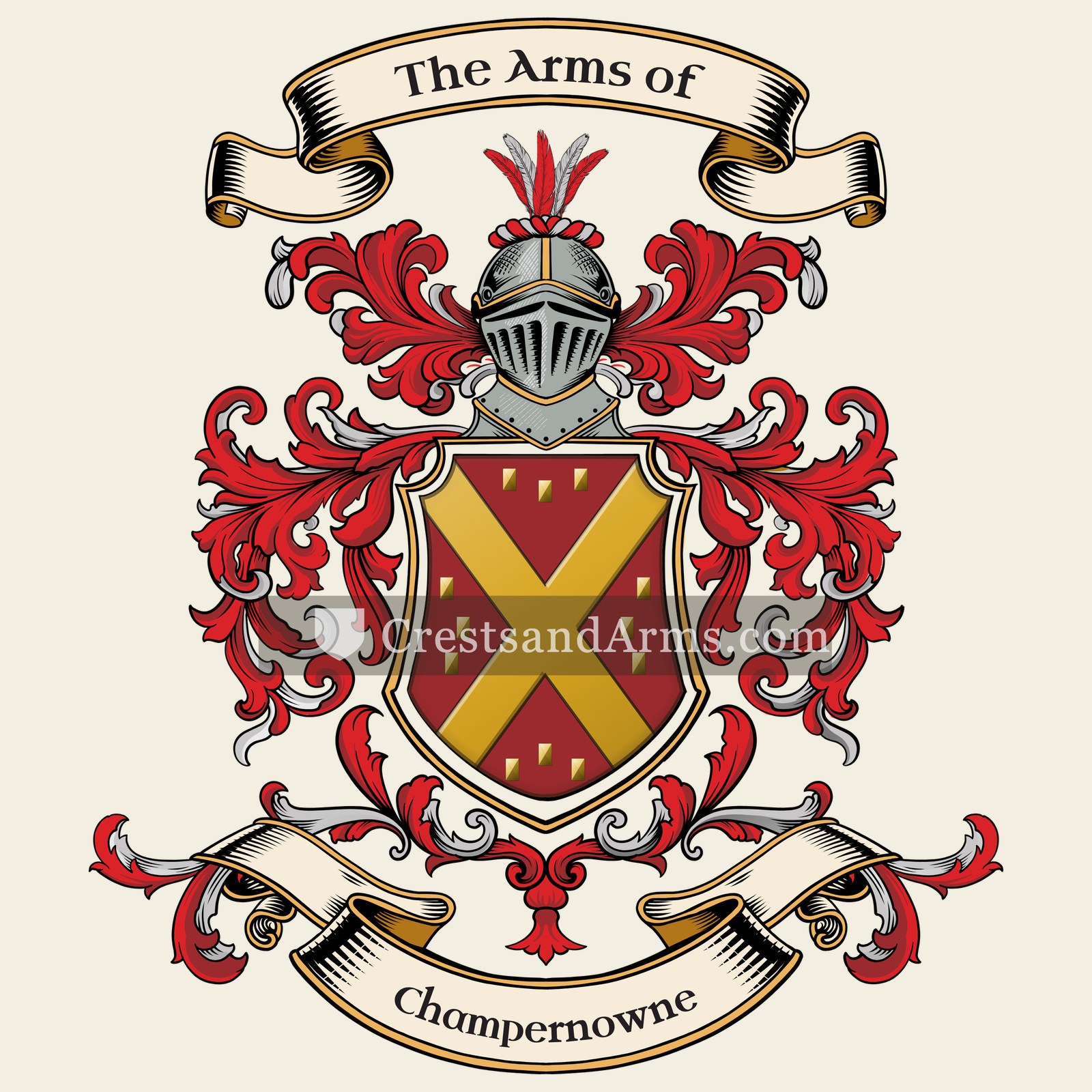


 cross symbolChristian faith and service