Map of France showing where the Chanel arms are recorded
The Chanel arms were recorded in Lorraine, c. 1663.
Lorraine sat on the border between France and the German lands, and border country bred soldiers. Families here held small estates and served in arms, and a fighting man was exactly the sort who carried a shield of his own.
This is where the arms were entered in the register. Families often moved to other parts of the country, so the same name can turn up in more than one region.
The body that granted and recorded arms in France in this period.
Louis XIV of France
Sovereign of the period
Louis XIV of France
1643–1715
Reigning in France when the Chanel arms are first recorded.
How Arms Worked in France
In France, a coat of arms was a mark of honor that passed down through the male line to all legitimate descendants. Families often used the same shield without changes to show their shared heritage. If a branch wanted to stand out, they could add a small mark to their shield to show their specific place in the family tree.
Granting authority
The Juge d'armes de France acted as the official authority that regulated and verified coats of arms across the country.
How they got arms
Families typically inherited their arms from ancestors, though they could also receive them through royal grants or by proving their noble status.
Where arms were recorded
Coats of arms were officially recorded in the Armorial Général de France, which began its main collection in the year 1696.
The family's standing
Recorded among the armigerous families of Lorraine.
Origin & History of the Chanel Family in France
The name Chanel finds its roots in the historical region of Lorraine, where records confirm the family was established by at least 1663. During this period, the name was closely tied to the rural landscape of eastern France, likely originating as a descriptive term for people living near a canal or a specific water channel. Life in the 17th century for families in Lorraine was defined by the transition of the region between local duchies and the growing influence of the French crown. As the family moved through the generations, they remained deeply connected to the social structures of the French countryside. By staying rooted in these provincial areas, the early members of the Chanel family helped shape the local identity of their communities long before the name became associated with global fashion.
Coat of Arms & Family Crest Details
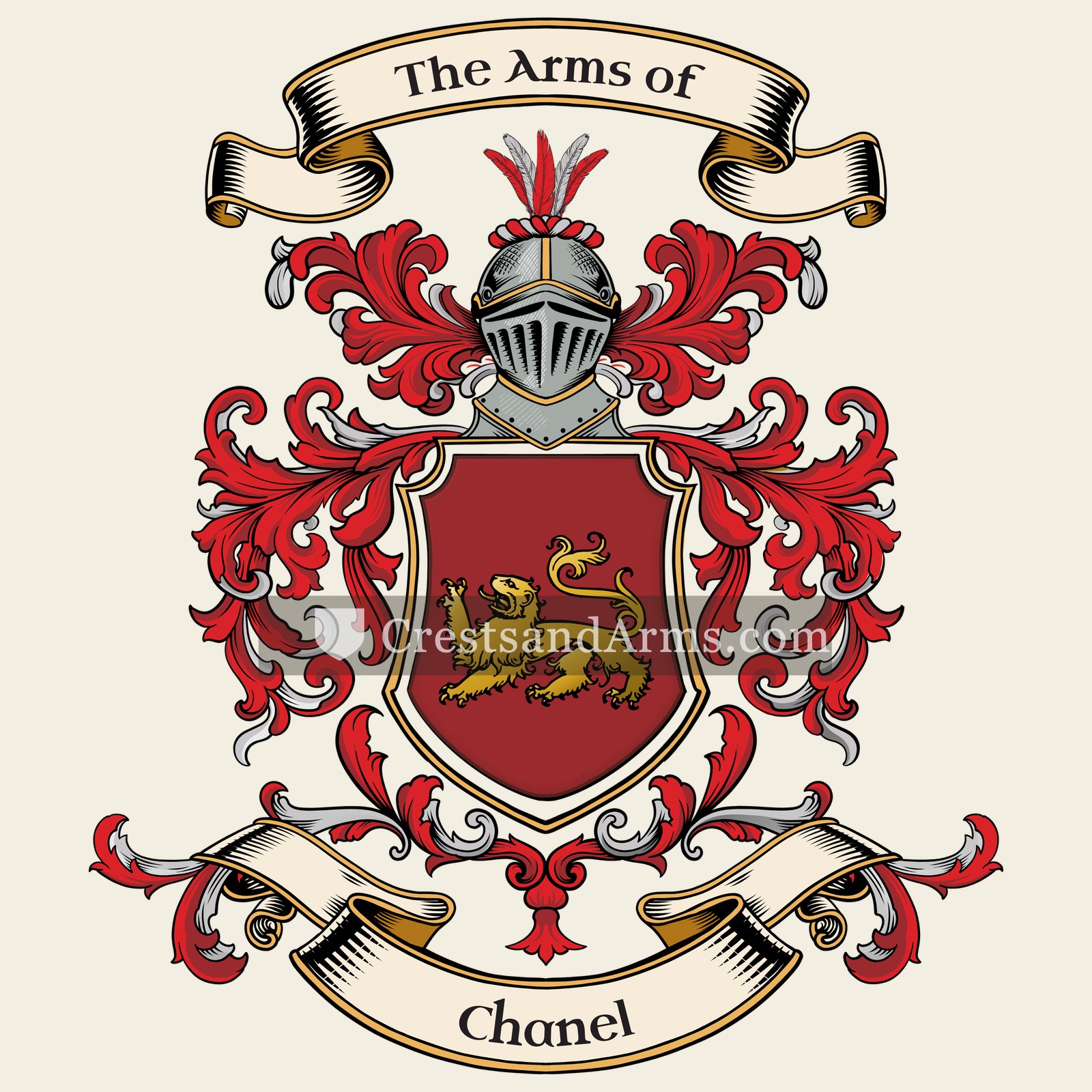
Symbols on this shield
lionCourage, strength and royalty
Colours
Red (Gules)Means: Military strength
Gold (Or)Means: Generosity
Historical info
Source
J. B. Rietstap, Armorial Général, Gouda: G. B. van Goor Zonen, 1884–87
Blazon (the actual original written record)
“Parti de gu. et de sin; au lion d'or, br. sur le tout. C.: trois pl. d'aut.: de gu., d'or et de sin.”
Switzerlandc. 1745
Digital archive packCoat of arms PNG, gold border print PDF, vector SVG and the certificate of authenticity. Sent to your email in minutes.
Map of Switzerland showing where the Chanel arms are recorded
The Chanel arms were recorded in Switzerland, c. 1745.
Arms such as these were typically recorded in Bern.
Bern was the largest of the Swiss cantons and ran itself, with its own council and its own courts. Its governing families held office for generations, and office of that kind carried a shield with it.
This is where the arms were entered in the register. Families often moved to other parts of the country, so the same name can turn up in more than one region.
The body that granted and recorded arms in Switzerland in this period.
How Arms Worked in Switzerland
In Switzerland, coats of arms were not restricted to the nobility and were often adopted by common citizens and families. These symbols were passed down through generations to show family identity. When branches of a family grew, they often changed small details of the design to distinguish their own line from the original group.
Granting authority
Cantonal and civic authorities managed the use of coats of arms within their specific regions and local jurisdictions.
How they got arms
Families typically assumed their own coats of arms based on local custom rather than receiving them from a central monarch.
Where arms were recorded
Arms were recorded in various cantonal and civic registers starting from the fourteenth century throughout the Swiss region.
The family's standing
Recorded among the armigerous families of Switzerland.
Origin & History of the Chanel Family in Switzerland
The history of the Chanel family in Switzerland is deeply rooted in the social and professional landscape of the eighteenth century. Records confirm that members of the family were established in the city of Bern by 1745, where they lived as part of the local community. During this era, the name was often associated with skilled craftsmanship and trade, reflecting the industrious nature of families living in the Swiss cantons. These early ancestors navigated the complex legal and social structures of the Old Swiss Confederacy, often moving between different regions to find work or settle into new roles. By documenting their presence in official registers, the family left behind a clear trail of their integration into Swiss society long before the name became synonymous with global fashion. Their early life in Bern serves as a foundational chapter that highlights the mobility and resilience of the family during a time of significant change in European history.
Chanel Meaning & Related Branches
Root word
canalis
Latin term for a pipe, channel, or water conduit.
This name
ChanelAn occupational name for someone who lived near a canal or worked as a pipe maker.
also spelled
Chanell
Chanele
Chanelle
Shanel
Documented Sources
J. B. Rietstap, Armorial Général, Gouda: G. B. van Goor Zonen, 1884–87
Edmonde Charles-Roux, L'Irrégulière ou mon itinéraire Chanel, 1974
Marcel Haedrich, Coco Chanel: secrète, 1971
Archives départementales de Meurthe-et-Moselle, Registres paroissiaux et d'état civil
Digital archive packCoat of arms PNG, gold border print PDF, vector SVG and the certificate of authenticity. Sent to your email in minutes.


 oakGreat age, strength and steadfastness
 starThe celestial goddess, and nobility
 oakGreat age, strength and steadfastness
 starThe celestial goddess, and nobility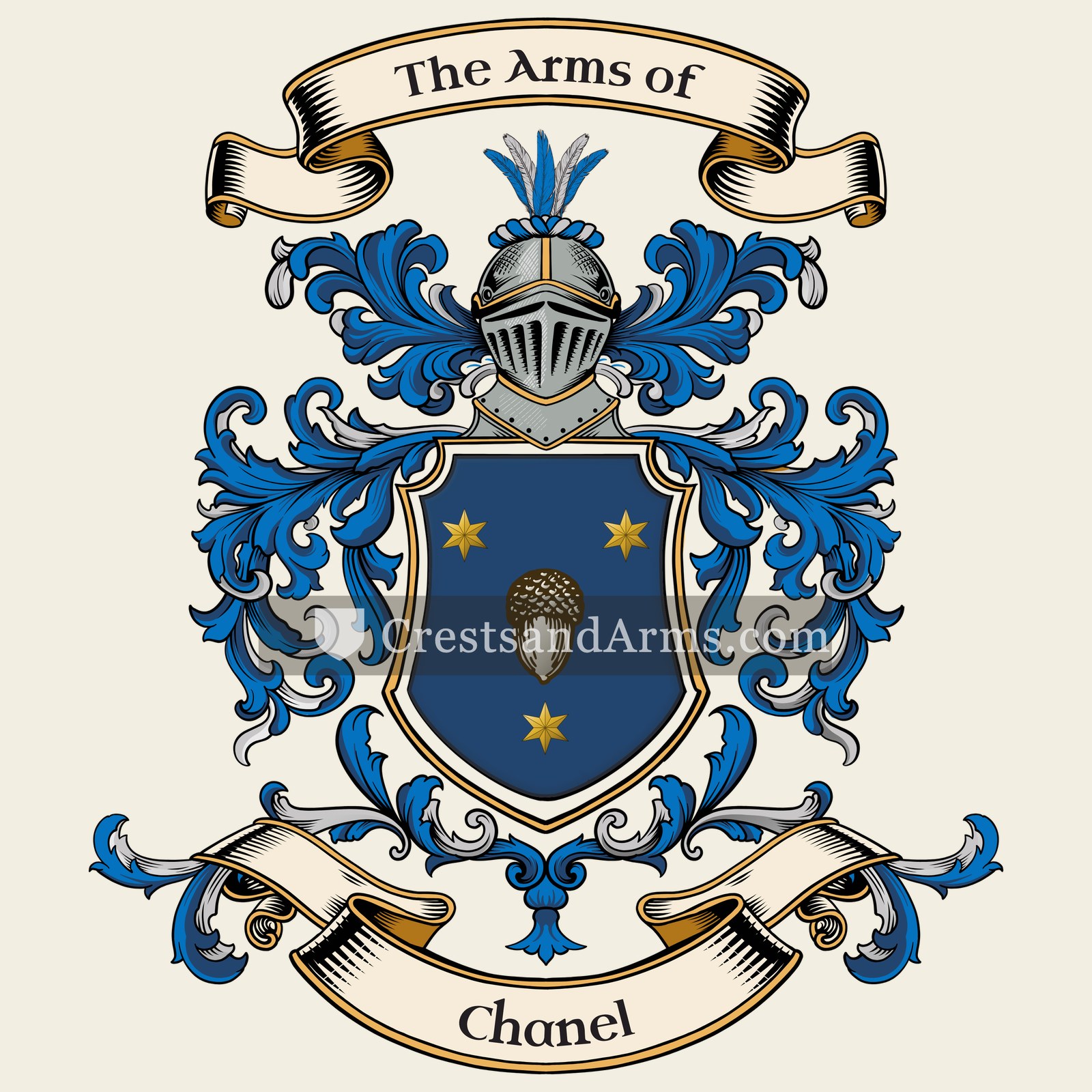


 lionCourage, strength and royalty