Map of Netherlands showing where the Chardon arms are recorded
The Chardon arms were recorded in Netherlands, c. 1815.
Arms such as these were typically recorded in Friesland.
Friesland was low, wet country on the northern coast of the Netherlands, farmed by families who had held the same land for centuries. Free landholders were unusually common there, and a free landholder could carry arms.
This is where the arms were entered in the register. Families often moved to other parts of the country, so the same name can turn up in more than one region.
Region
Friesland
First recorded
1815
Granting Authority for the Chardon Arms
Hoge Raad van Adel
Photograph made by me · CC BY-SA 3.0
The body that granted and recorded arms in Netherlands in this period.
William I of the Netherlands
Sovereign of the period
William I of the Netherlands
1815–1840
Reigning in Netherlands when the Chardon arms are first recorded.
How Arms Worked in Netherlands
In the Netherlands, coats of arms were often used by noble families and those who held specific public offices. These arms were passed down through the generations to legitimate descendants. Younger branches of a family usually kept the original design without needing to add special marks. This system ensured that the family identity remained clear and consistent over many years.
Granting authority
The Hoge Raad van Adel is the official body that regulates and manages noble titles and coats of arms in the Netherlands.
How they got arms
Families typically obtained their coats of arms through official royal grants or by proving their long-standing historical use of the symbols.
Where arms were recorded
Coats of arms are officially recorded in the registers held by the Hoge Raad van Adel, which began its work in 1814.
The family's standing
Recorded among the armigerous families of Netherlands.
Origin & History of the Chardon Family in Netherlands
The name Chardon has roots that trace back to the French language, where it literally translates to the word for thistle. While the name originated in French-speaking regions, members of the family established a notable presence in the Netherlands by the early nineteenth century. Records confirm that the family was living in the province of Friesland by 1815, a time when the Netherlands was undergoing significant political changes following the Napoleonic era. During this period, the Dutch government began to standardize civil registration, which helped solidify family names as permanent records for future generations. The movement of the Chardon family into the northern provinces suggests they were part of a broader pattern of migration and integration that defined the social landscape of the Netherlands during the nineteenth century. By settling in Friesland, the family became part of the local community and contributed to the regional history of the area as it transitioned into the modern Dutch state.
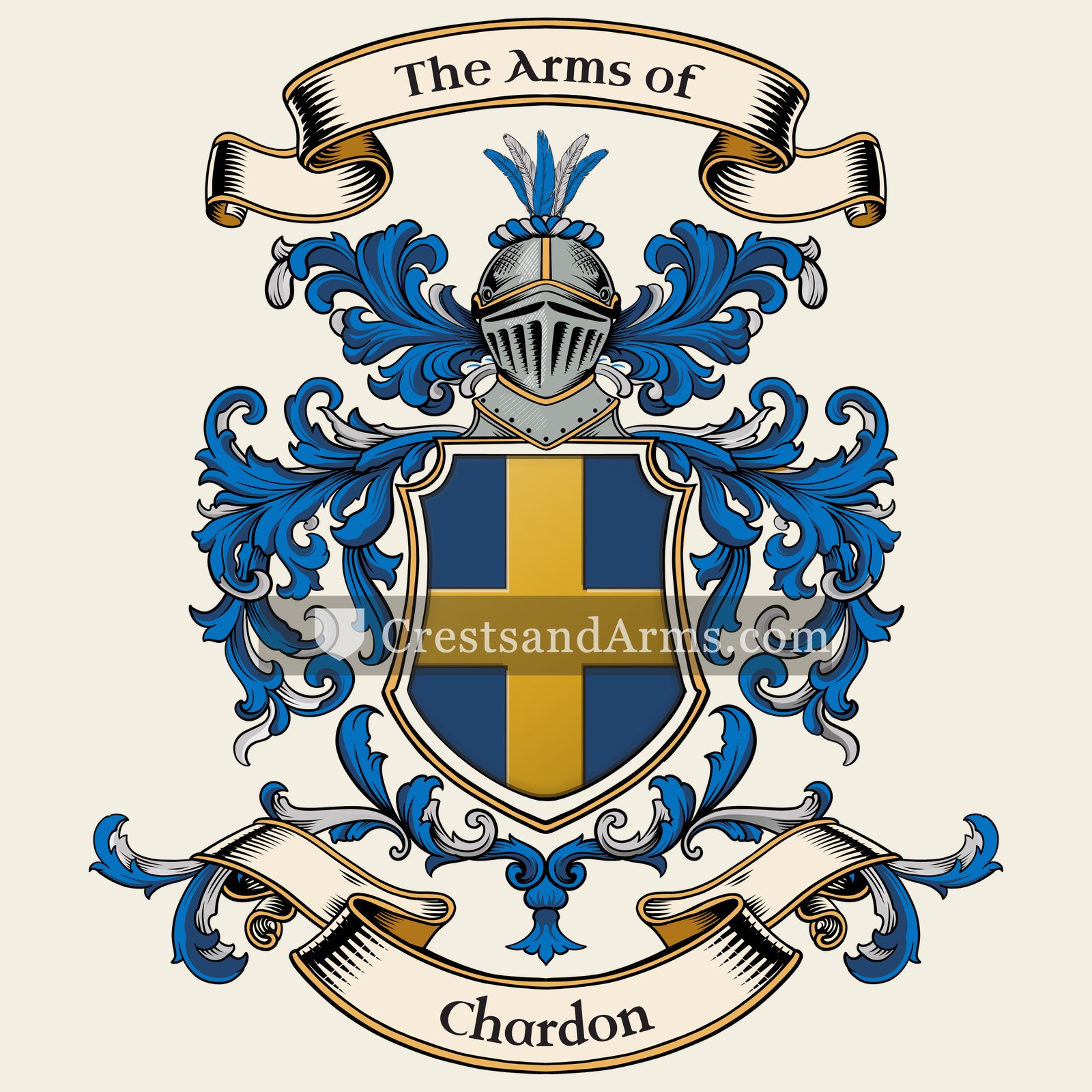
Coat of Arms & Family Crest Details
Symbols on this shield
cross symbolChristian faith and service
Colours
Blue (Azure)Means: Loyalty and truth
Gold (Or)Means: Generosity
Historical info
Source
J. B. Rietstap, Armorial Général, Gouda: G. B. van Goor Zonen, 1884–87
Blazon (the actual original written record)
“D'azur à la croix d'or.”
MaineMaine, c. 1663
Digital archive packCoat of arms PNG, gold border print PDF, vector SVG and the certificate of authenticity. Sent to your email in minutes.
Map of France showing where the Chardon arms are recorded
The Chardon arms were recorded in Maine, c. 1663.
Maine was quiet farming country in western France, held in small manors by families who stayed for generations. Nothing about it was grand, but steady landholding is exactly what puts a name in the registers.
This is where the arms were entered in the register. Families often moved to other parts of the country, so the same name can turn up in more than one region.
The body that granted and recorded arms in France in this period.
Louis XIV of France
Sovereign of the period
Louis XIV of France
1643–1715
Reigning in Netherlands when the Chardon arms are first recorded.
How Arms Worked in France
In France, a coat of arms was a mark of honor that passed down through the male line to all legitimate descendants. Families often used the same shield without changes to show their shared heritage. If a branch wanted to stand out, they could add a small mark to their shield to show their specific place in the family tree.
Granting authority
The Juge d'armes de France acted as the official authority that regulated and verified coats of arms across the country.
How they got arms
Families typically inherited their arms from ancestors, though they could also receive them through royal grants or by proving their noble status.
Where arms were recorded
Coats of arms were officially recorded in the Armorial Général de France, which began its main collection in the year 1696.
The family's standing
Recorded among the armigerous families of Maine.
Origin & History of the Chardon Family in France
The surname Chardon originates from the French word for thistle, a sturdy plant common across the countryside of France. During the seventeenth century, individuals carrying this name were part of the social fabric in regions like Maine, a historic province in the northwest of the country. Historical records confirm that members of the Chardon family were established in this area by 1663, living as part of a rural society that relied heavily on agriculture and local trade. Because the name is derived from a common plant, it likely began as a descriptive nickname for a person who lived near a patch of thistles or perhaps someone known for a sharp or resilient personality. Over time, this name became a permanent family identifier, passed down through generations as these families navigated the changing political and social landscapes of provincial France.
Chardon Meaning & Related Branches
Root word
Carduus
Latin term for a thistle or prickly plant.
This name
ChardonDerived from the French word for thistle, likely denoting someone living near thistles.
also spelled
Chardonn
Chardone
Shardon
Documented Sources
J. B. Rietstap, Armorial Général, Gouda: G. B. van Goor Zonen, 1884–87
Centraal Bureau voor Genealogie, Bevolkingsregisters van Friesland, 1815
Tresoar (Fries Historisch en Letterkundig Centrum), Burgerlijke Stand van Friesland, 1811-1950
Digital archive packCoat of arms PNG, gold border print PDF, vector SVG and the certificate of authenticity. Sent to your email in minutes.


 plant thistleDefiance, and the defence of Scotland
 plant thistleDefiance, and the defence of Scotland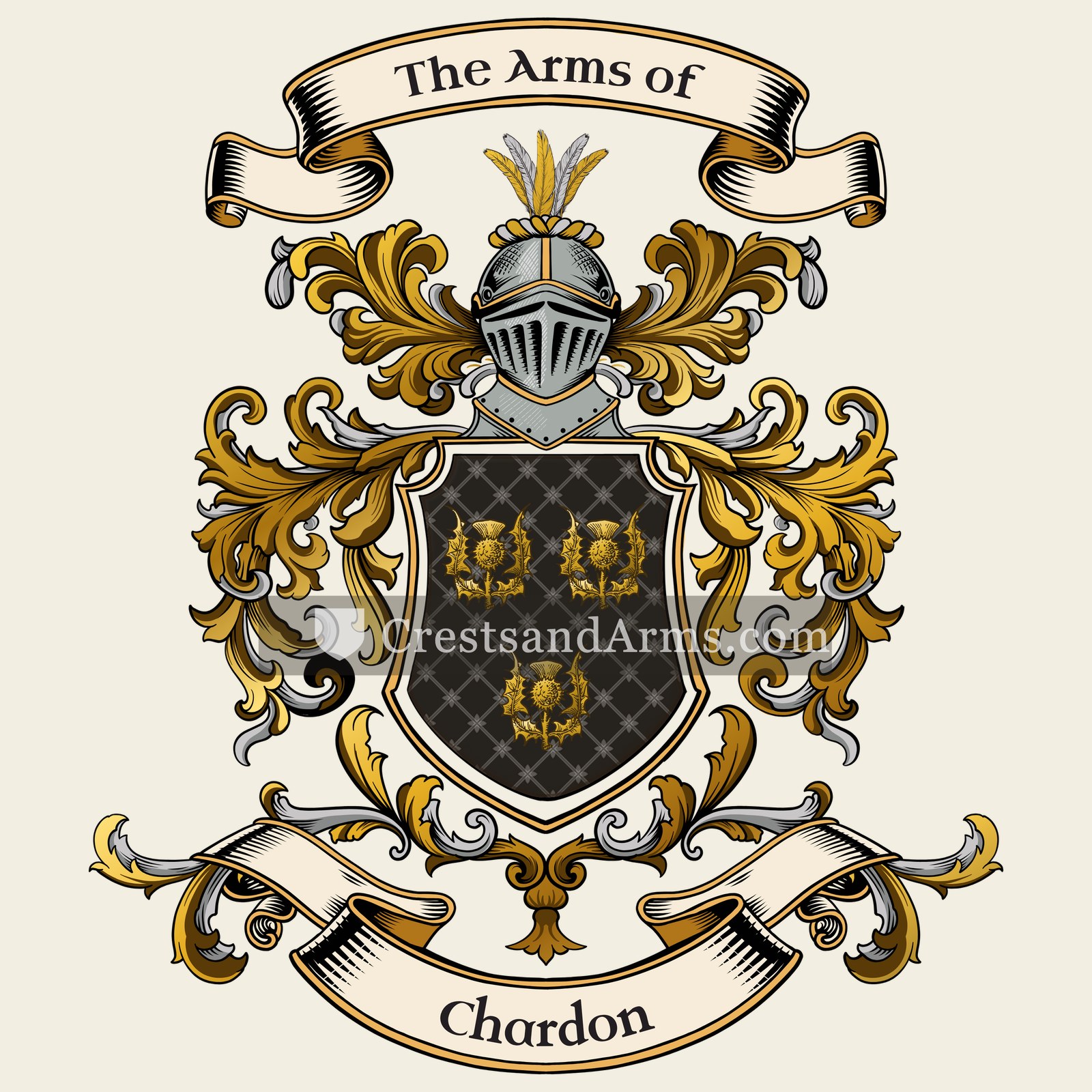


 cross symbolChristian faith and service