Map of France showing where the Chavannes arms are recorded
The Chavannes arms were recorded in Forez, c. 1663.
Forez was a small upland county in central France, thick with minor gentry holding modest estates. Its families were more numerous than wealthy, and even a small holding was enough for a shield of one's own.
This is where the arms were entered in the register. Families often moved to other parts of the country, so the same name can turn up in more than one region.
The body that granted and recorded arms in France in this period.
Louis XIV of France
Sovereign of the period
Louis XIV of France
1643–1715
Reigning in France when the Chavannes arms are first recorded.
How Arms Worked in France
In France, a coat of arms was a mark of honor that passed down through the male line to all legitimate descendants. Families often used the same shield without changes to show their shared heritage. If a branch wanted to stand out, they could add a small mark to their shield to show their specific place in the family tree.
Granting authority
The Juge d'armes de France acted as the official authority that regulated and verified coats of arms across the country.
How they got arms
Families typically inherited their arms from ancestors, though they could also receive them through royal grants or by proving their noble status.
Where arms were recorded
Coats of arms were officially recorded in the Armorial Général de France, which began its main collection in the year 1696.
The family's standing
Recorded among the armigerous families of Forez.
Origin & History of the Chavannes Family in France
The family name Chavannes finds its deep roots in the historical province of Forez, located in east-central France. By the year 1663, records confirm that members of the family were firmly established in this region, which was known for its rolling hills and strong ties to the French monarchy. The name itself is topographical, derived from the Old French word *chavanne*, which refers to a small hut or a humble dwelling. This suggests that the earliest ancestors were likely rural landowners or farmers who identified themselves by the modest structures they built on their property. Over time, the family became integrated into the local social fabric of Forez, living through the transition from the feudal era to the more centralized administration of the French state. Their presence in this specific area highlights a long history of agricultural stability and local community involvement that defined the lives of many families in the French countryside during the seventeenth century.
Coat of Arms & Family Crest Details
Symbols on this shield
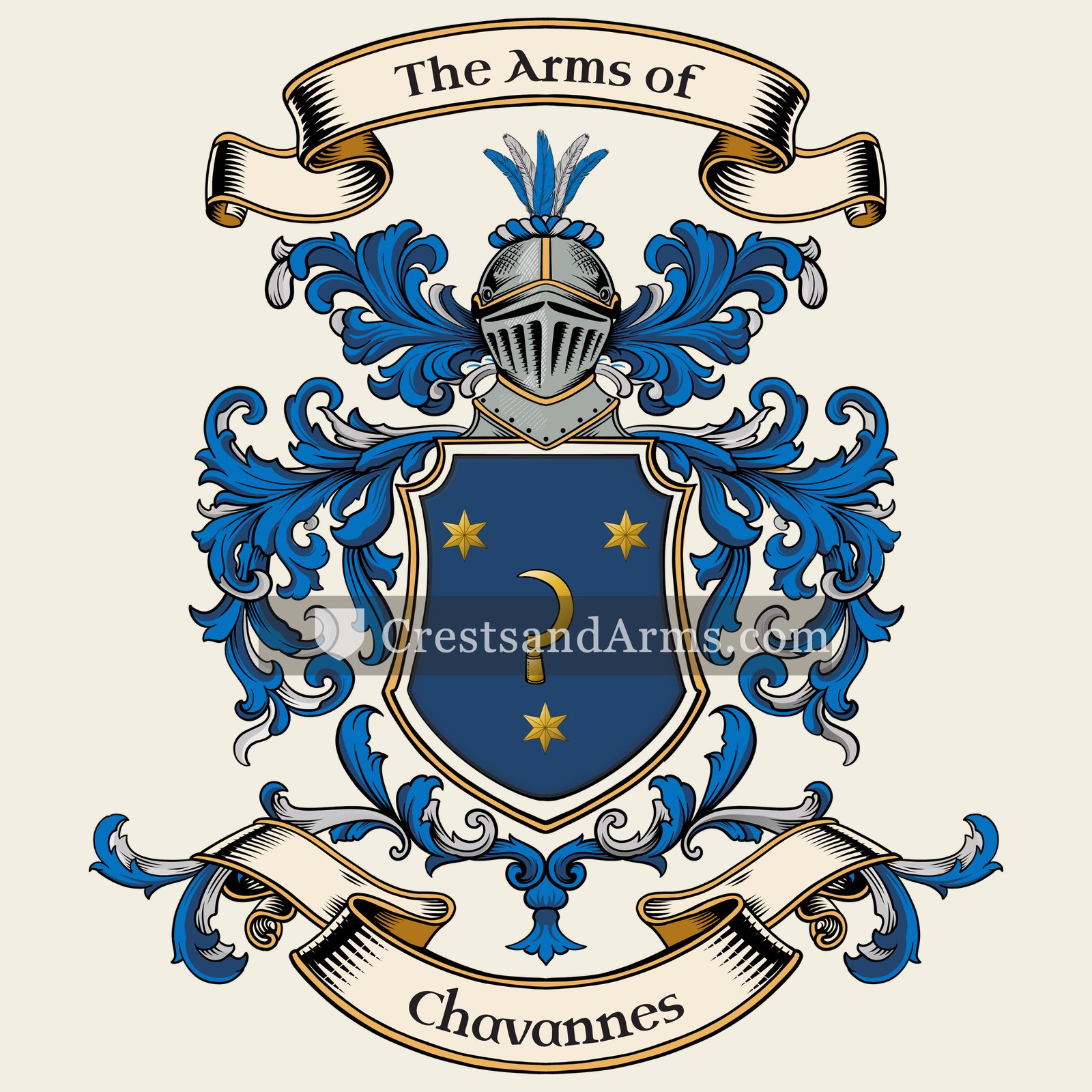
sickleThe harvest, and the reaping of what was sown
starThe celestial goddess, and nobility
Colours
Blue (Azure)Means: Loyalty and truth
Gold (Or)Means: Generosity
Historical info
Source
J. B. Rietstap, Armorial Général, Gouda: G. B. van Goor Zonen, 1884–87
Blazon (the actual original written record)
“D'azur à un compas d'or, ouvert en chev., acc. de trois étoiles (5) du même.”
Switzerlandc. 1745
Digital archive packCoat of arms PNG, gold border print PDF, vector SVG and the certificate of authenticity. Sent to your email in minutes.
Map of Switzerland showing where the Chavannes arms are recorded
The Chavannes arms were recorded in Switzerland, c. 1745.
Arms such as these were typically recorded in Bern.
Bern was the largest of the Swiss cantons and ran itself, with its own council and its own courts. Its governing families held office for generations, and office of that kind carried a shield with it.
This is where the arms were entered in the register. Families often moved to other parts of the country, so the same name can turn up in more than one region.
The body that granted and recorded arms in Switzerland in this period.
How Arms Worked in Switzerland
In Switzerland, coats of arms were not restricted to the nobility and were often adopted by common citizens and families. These symbols were passed down through generations to show family identity. When branches of a family grew, they often changed small details of the design to distinguish their own line from the original group.
Granting authority
Cantonal and civic authorities managed the use of coats of arms within their specific regions and local jurisdictions.
How they got arms
Families typically assumed their own coats of arms based on local custom rather than receiving them from a central monarch.
Where arms were recorded
Arms were recorded in various cantonal and civic registers starting from the fourteenth century throughout the Swiss region.
The family's standing
Recorded among the armigerous families of Switzerland.
Origin & History of the Chavannes Family in Switzerland
The family name Chavannes is deeply rooted in the French-speaking regions of Switzerland, particularly within the cantons of Vaud and Bern. The name itself is topographical, derived from the Old French word *chavane*, which refers to a small hut or a humble dwelling. This suggests that the earliest ancestors of the family were likely rural inhabitants who identified themselves by the modest structures they occupied. By the mid-18th century, members of the family had established a notable presence in the city of Bern, where they integrated into the local administrative and social fabric by 1745. During this era, families with this surname were often involved in the professional class, contributing to the development of Swiss civic life as the region navigated the complexities of the Ancien Régime. Their migration from the western territories toward the capital city reflects the broader movement of families seeking greater economic and political opportunities within the Swiss Confederation.
Chavannes Meaning & Related Branches
Root word
cava
A hollow, cave, or depression in the landscape.
This name
ChavannesA topographic name for someone who lived near a hollow or a cave.
also spelled
Chavane
Chavann
Shavan
Related arms
Maconsame arms
Vesvresame arms
Alixanssimilar arms
Documented Sources
J. B. Rietstap, Armorial Général, Gouda: G. B. van Goor Zonen, 1884–87
Archives: Archives départementales de la Loire, Série E (Familles et seigneuries)
Books: Dufour, Jean-Étienne, Dictionnaire topographique du département de la Loire, 1946
Books: Gras, Pierre, Le Forez au XVIIe siècle, 1958
Digital archive packCoat of arms PNG, gold border print PDF, vector SVG and the certificate of authenticity. Sent to your email in minutes.


 crescentHonour by the sovereign, and the second son
 crescentHonour by the sovereign, and the second son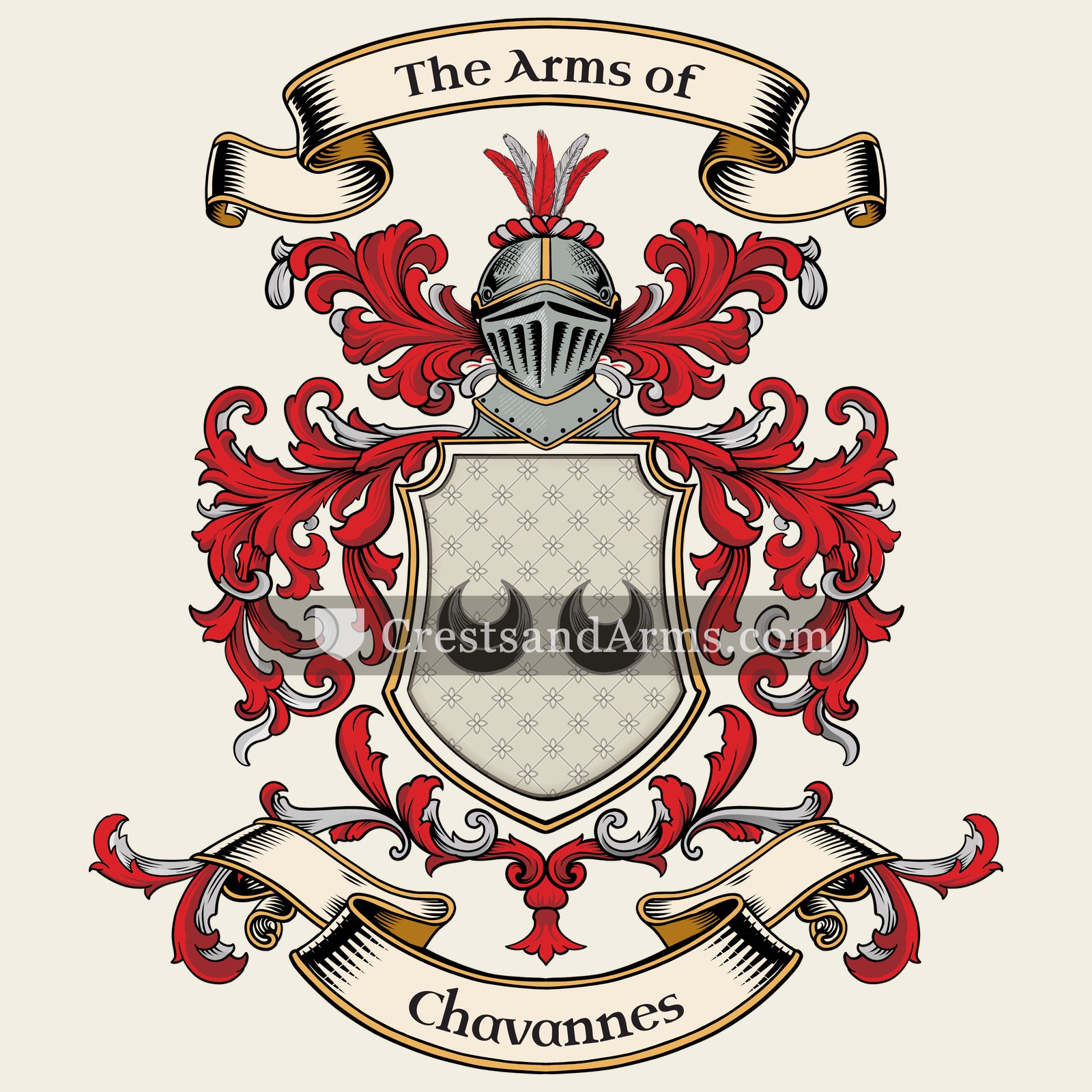


 sickleThe harvest, and the reaping of what was sown
 starThe celestial goddess, and nobility