A record of documented arms, meaning and origin, researched for the Cheney family lines. Documented in 3 countries.
Reg. 7296 · French, A–C
Coat of Arms & Family Crest Details
Symbols on this shield
bendDefence, and the scarf of a commander
martletA younger son, who must win his own land
Colours
ErmineMeans: Dignity
Black (Sable)Means: Constancy
Gold (Or)Means: Generosity
Historical info
Source
J. B. Rietstap, Armorial Général, Gouda: G. B. van Goor Zonen, 1884–87
Blazon (the actual original written record)
“D'herm. à la bande de sa., ch. de trois martinets d'or. C.: un crâne de boeuf d'arg. — Armes mod. (celles de la famille de Sherland:) D'azur à six lions d'arg.; au canton d'herm. C.: un crâne de boeuf d'arg. S.: deux lévriers, au nat.”
Francec. 1496
Digital archive packCoat of arms PNG, gold border print PDF, vector SVG and the certificate of authenticity. Sent to your email in minutes.
Map of France showing where the Cheney arms are recorded
The Cheney arms were recorded in France, c. 1496.
Arms such as these were typically recorded in Bretagne.
More families held coats of arms in Bretagne than anywhere else in France. The land was divided into many small estates rather than a few large ones, so far more households counted as gentry, and each needed a shield of its own to be told apart.
This is where the arms were entered in the register. Families often moved to other parts of the country, so the same name can turn up in more than one region.
The body that granted and recorded arms in France in this period.
Charles VIII of France
Sovereign of the period
Charles VIII of France
1483–1498
Reigning in France when the Cheney arms are first recorded.
How Arms Worked in France
In France, a coat of arms was a mark of honor that passed down through the male line to all legitimate descendants. Families often used the same shield without changes to show their shared heritage. If a branch wanted to stand out, they could add a small mark to their shield to show their specific place in the family tree.
Granting authority
The Juge d'armes de France acted as the official authority that regulated and verified coats of arms across the country.
How they got arms
Families typically inherited their arms from ancestors, though they could also receive them through royal grants or by proving their noble status.
Where arms were recorded
Coats of arms were officially recorded in the Armorial Général de France, which began its main collection in the year 1696.
The family's standing
Recorded among the armigerous families of France.
Origin & History of the Cheney Family in France
The family name Cheney traces its roots to the historical region of Brittany in northwestern France. By the year 1496, records confirm that members of this family were well-established within the local social structure of the province. The name itself is linked to the French word *chêne*, which refers to an oak tree. In medieval times, families often adopted surnames based on the natural features of the land where they lived or worked. It is likely that the early ancestors of the Cheney line resided near a prominent oak forest or a singular, notable oak tree that served as a landmark for their community. Over time, this descriptive label evolved into a formal family name that persisted as the family moved through different regions and historical eras.
Coat of Arms & Family Crest Details
Symbols on this shield
chevronProtection, and faithful service completed
chiefAuthority, wisdom and dominion
chequyConstancy, and the counting-board
paleMilitary strength, and a fortified defence
rabbitOne who lives peaceably and well
fishA true and generous mind, and Christian faith
roseThe seventh son, and beauty with grace
Colours
Silver (Argent)Means: Peace and sincerity
Blue (Azure)Means: Loyalty and truth
Gold (Or)Means: Generosity
Historical info
Source
Sir Bernard Burke, The General Armory of England, Scotland, Ireland and Wales, London: Harrison & Sons, 1884
Blazon (the actual original written record)
“Ar. on a chev. az. a coney pass. betw. two fishes haurient of the first on a chief chequy of the first and second a pale of the last charged with a rose or”
GloucesterBristol · Gloucester, c. 1562
Digital archive packCoat of arms PNG, gold border print PDF, vector SVG and the certificate of authenticity. Sent to your email in minutes.
Map of England showing where the Cheney arms are recorded
The Cheney arms were recorded in Gloucester, c. 1562.
Gloucestershire had good farmland, a cloth trade in its valleys and a river carrying goods to Bristol. All three made money, and money bought the estates that brought arms with them.
This is where the arms were entered in the register. Families often moved to other parts of the country, so the same name can turn up in more than one region.
The body that granted and recorded arms in England in this period.
Elizabeth I of England
Sovereign of the period
Elizabeth I of England
1558–1603
Reigning in France when the Cheney arms are first recorded.
How Arms Worked in England
English heraldry allowed arms to be shared by all legitimate descendants of the original owner. These symbols were treated as personal property that moved through the generations to all children. While the eldest son kept the original design, other family members could use the same shield without needing to change it or register their own unique versions.
Granting authority
The College of Arms in London has regulated the use of coats of arms throughout England and Wales since 1484.
How they got arms
Families typically obtained their coats of arms through a formal grant from the Crown or by proving their ancient right to them.
Where arms were recorded
All official coats of arms are recorded in the registers kept at the College of Arms, which date back to the fifteenth century.
The family's standing
Recorded among the armigerous families of Gloucester.
Origin & History of the Cheney Family in England
The family name Cheney has deep roots in the English landscape, evolving from a descriptive term used to identify people who lived near oak trees. The name is derived from the Old French word *chesne*, which means oak. By the time the family established a documented presence in Gloucester in 1562, the name had already been used for several centuries to distinguish families living in wooded areas or near prominent landmarks. During the sixteenth century, the Cheneys in Gloucester were part of a growing class of families who were becoming more involved in local trade and civic life. As the English language shifted and surnames became more permanent, the family helped shape the social fabric of the region. Their history reflects the broader movement of families who settled in growing towns and contributed to the development of local communities during the Tudor period.
Coat of Arms & Family Crest Details
Symbols on this shield
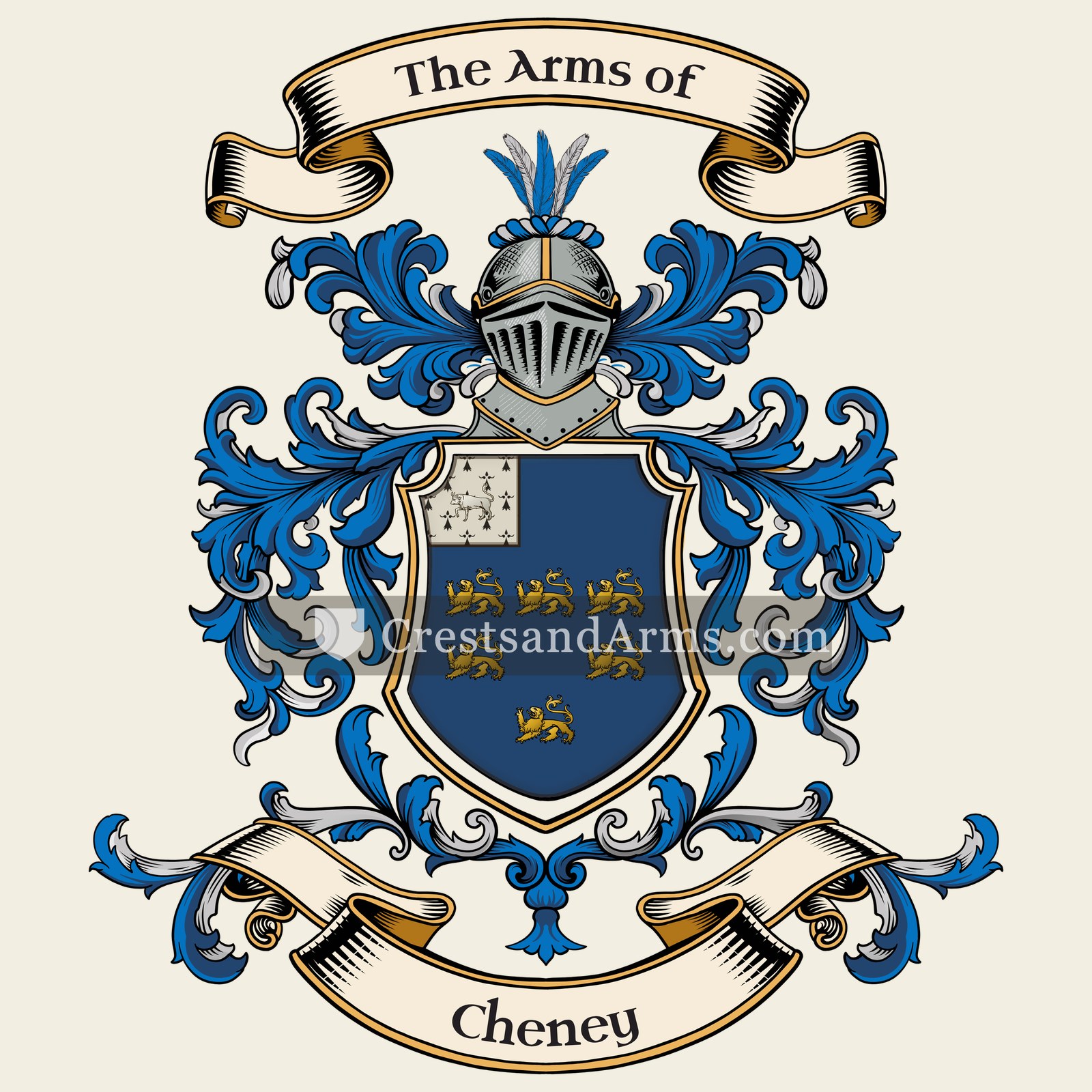
cantonA mark of honour granted by the sovereign
lionCourage, strength and royalty
bullValour and generosity
Colours
Blue (Azure)Means: Loyalty and truth
ErmineMeans: Dignity
Gold (Or)Means: Generosity
Historical info
Source
Sir Bernard Burke, The General Armory of England, Scotland, Ireland and Wales, London: Harrison & Sons, 1884
Blazon (the actual original written record)
“Az. six lions ramp. three, two, and one, armed and langued gu. a canton erm. thereon a bull's scalp ppr”
KildareHollywood · Kildare, c. 1645
Digital archive packCoat of arms PNG, gold border print PDF, vector SVG and the certificate of authenticity. Sent to your email in minutes.
Map of Ireland showing where the Cheney arms are recorded
The Cheney arms were recorded in Kildare, c. 1645.
Kildare was flat grazing country close to Dublin, taken early by Norman families. Being near the seat of government meant being near where arms were recorded, which is why so many Kildare names appear.
This is where the arms were entered in the register. Families often moved to other parts of the country, so the same name can turn up in more than one region.
The body that granted and recorded arms in Ireland in this period.
Charles I of England
Sovereign of the period
Charles I of England
1625–1649
Reigning in France when the Cheney arms are first recorded.
How Arms Worked in Ireland
The Ulster King of Arms granted coats of arms to individuals who proved their social standing and good character. These symbols were typically inherited by all legitimate descendants of the original holder. If a family branch wanted a unique look, they could apply for a specific change to their design through the office to ensure their identity remained distinct.
Granting authority
The Ulster King of Arms acted as the official body that regulated and issued all coats of arms throughout Ireland.
How they got arms
Families obtained their arms through formal grants issued by the office after proving their eligibility and paying the required fees.
Where arms were recorded
All official grants were recorded in the registers held by the Ulster King of Arms starting from the year 1552.
The family's standing
Recorded among the armigerous families of Kildare.
Origin & History of the Cheney Family in Ireland
The Cheney family name in Ireland is deeply connected to the shifting political landscape of the seventeenth century. While the name itself has roots in older Norman traditions, its documented presence in County Kildare by 1645 highlights the family's integration into the Irish landed class during a period of significant upheaval. During this time, families like the Cheneys often acted as local administrators or landowners who navigated the complex social changes brought on by the English presence in Ireland. By settling in Kildare, the family became part of the regional fabric, participating in the agricultural and civic life of the area. Their early history reflects the broader movement of families who relocated to Ireland to manage estates and establish new roots, eventually becoming a permanent part of the local community.
Cheney Meaning & Related Branches
Root word
Chesne
Old French term for an oak tree.
This name
CheneyA topographic name for someone who lived near an oak forest or a prominent oak tree.
also spelled
Chenay
Chenie
Shenay
Chene
Cheny
Related arms
Chenevariant spelling
Chenievariant spelling
Chenyvariant spelling
Cheynevariant spelling
Documented Sources
J. B. Rietstap, Armorial Général, Gouda: G. B. van Goor Zonen, 1884–87
Dauzat, Albert. Dictionnaire étymologique des noms de famille et prénoms de France. 1951
Morice, Pierre-Hyacinthe. Mémoires pour servir de preuves à l'histoire ecclésiastique et civile de Bretagne. 1742
Archives départementales d'Ille-et-Vilaine. Série E, Fonds de la famille de Chêné
Digital archive packCoat of arms PNG, gold border print PDF, vector SVG and the certificate of authenticity. Sent to your email in minutes.


 bendDefence, and the scarf of a commander
 martletA younger son, who must win his own land
 bendDefence, and the scarf of a commander
 martletA younger son, who must win his own land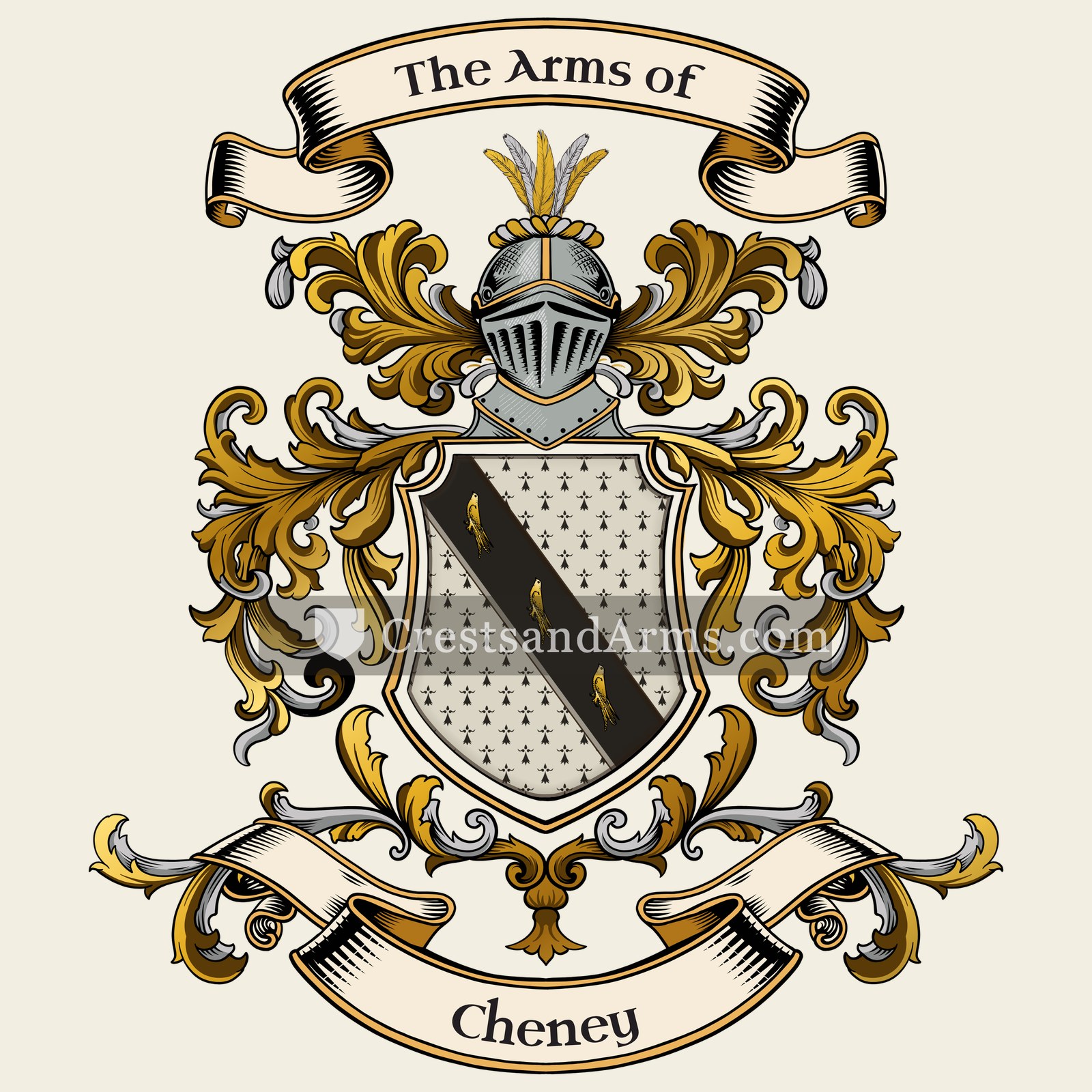


 chevronProtection, and faithful service completed
 chiefAuthority, wisdom and dominion
 chequyConstancy, and the counting-board
 paleMilitary strength, and a fortified defence
 rabbitOne who lives peaceably and well
 fishA true and generous mind, and Christian faith
 roseThe seventh son, and beauty with grace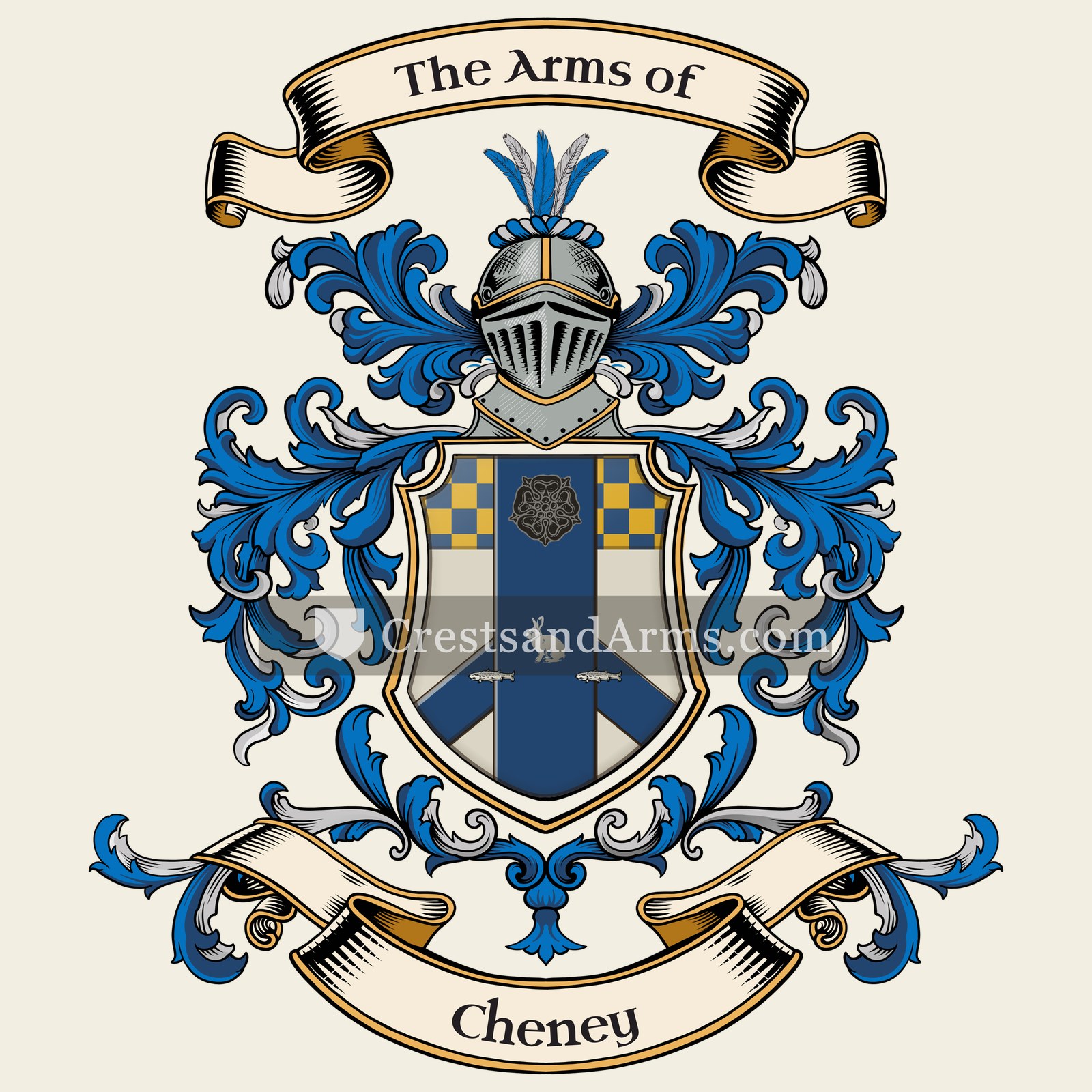


 cantonA mark of honour granted by the sovereign
 lionCourage, strength and royalty
 bullValour and generosity