Map of Belgium showing where the Chevalier arms are recorded
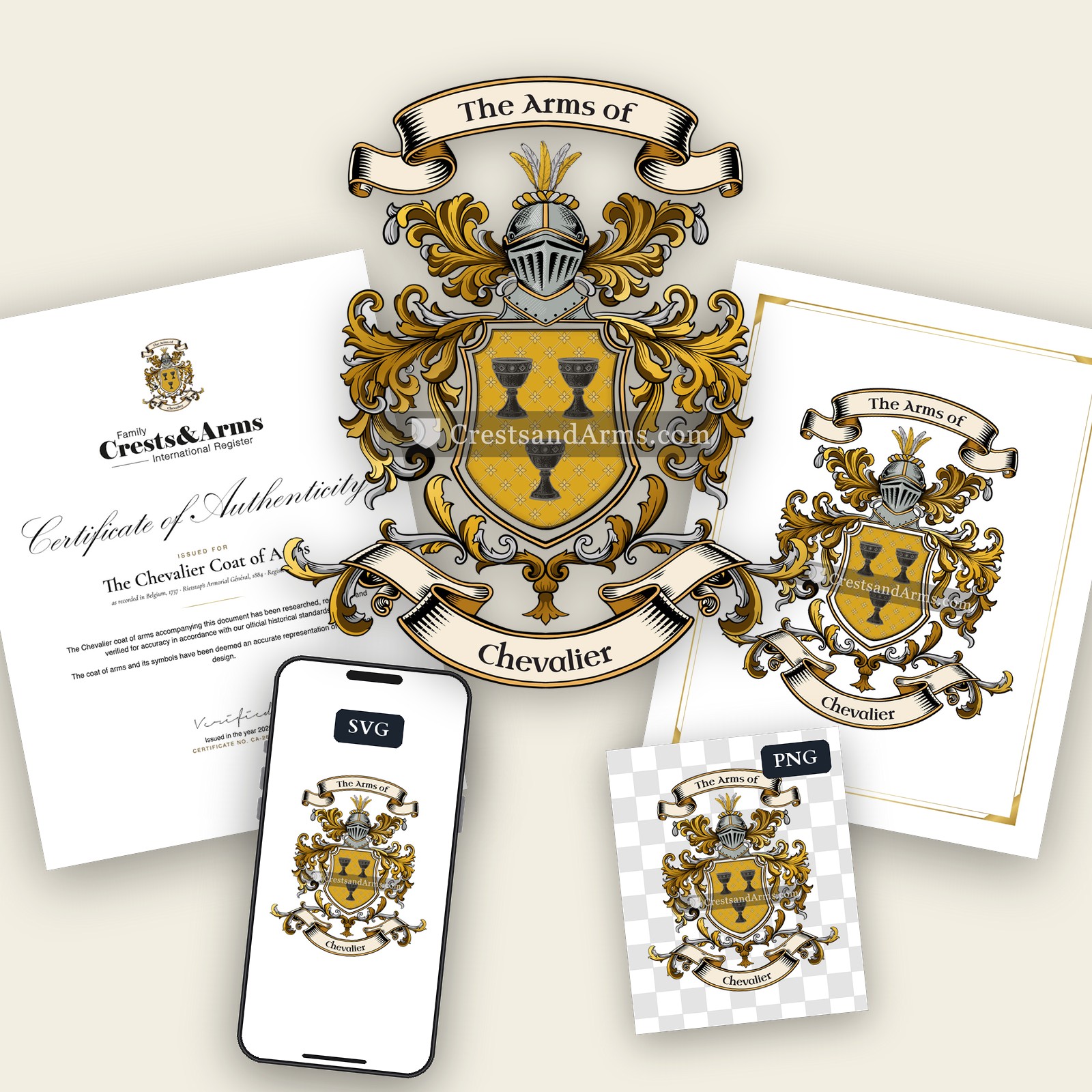
The Chevalier arms were recorded in Belgium, c. 1737.
Arms such as these were typically recorded in Brabant.
Brabant lay at the heart of the Low Countries, where the trade routes met. Its towns were wealthy and its landowners many, and both kinds of family kept arms, which is why the region is so heavily represented.
This is where the arms were entered in the register. Families often moved to other parts of the country, so the same name can turn up in more than one region.
The body that granted and recorded arms in Belgium in this period.
Charles VI, Holy Roman Emperor
Sovereign of the period
Charles VI, Holy Roman Emperor
1711–1740
Reigning in Belgium when the Chevalier arms are first recorded.
How Arms Worked in Belgium
In Belgium, a coat of arms is considered personal property that is passed down through the male line to legitimate descendants. Families often use the same shield design across generations to show their shared heritage. If a branch of the family wants to change the design, they must apply for an official update to their specific version of the arms.
Granting authority
The Conseil héraldique is the official body that regulates and approves all coats of arms in Belgium.
How they got arms
Families obtain their coats of arms through formal royal grants or by confirming their historical right to use existing designs.
Where arms were recorded
All approved coats of arms are officially recorded in the public registers of the Conseil héraldique since 1844.
The family's standing
Recorded among the armigerous families of Belgium.
Origin & History of the Chevalier Family in Belgium
The surname Chevalier originates from the Old French word for a horseman or knight, reflecting a time when names were often chosen to describe a person’s social role or occupation. By the early eighteenth century, members of the Chevalier family were well-established in the region of Brabant, which was then part of the Southern Netherlands under Austrian rule. During this period, the family likely lived within a society defined by local trade guilds and agricultural land management. As residents of Brabant, they were part of a culturally rich area that served as a crossroads for European commerce and politics. The presence of the family in this specific region by 1737 suggests they were integrated into the local community, likely participating in the administrative or economic life of the province during a time of relative stability under the Habsburg monarchy.
Coat of Arms & Family Crest Details
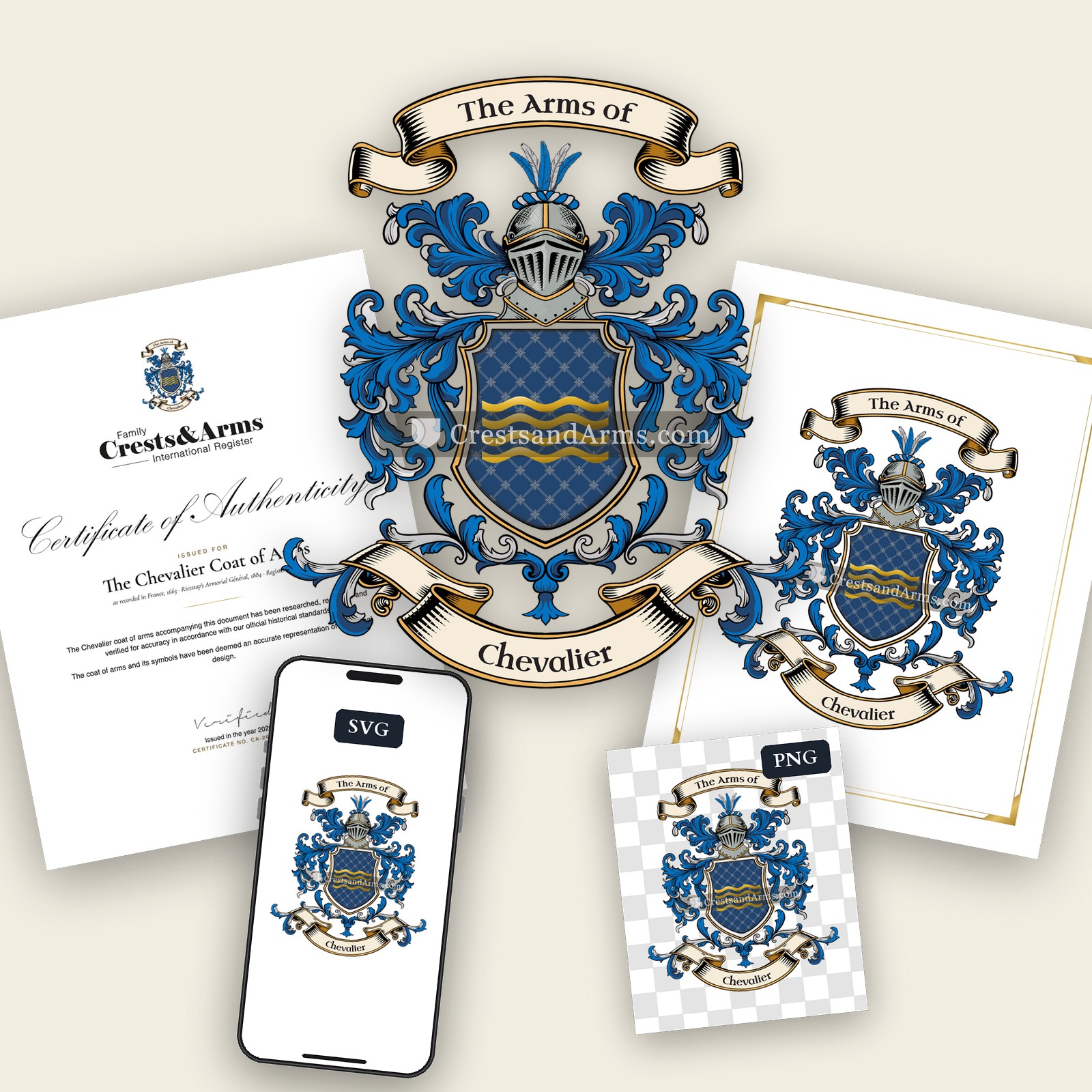
Symbols on this shield
riverThe bounds of a land, and life carried through it
Colours
Blue (Azure)Means: Loyalty and truth
Gold (Or)Means: Generosity
Historical info
Source
J. B. Rietstap, Armorial Général, Gouda: G. B. van Goor Zonen, 1884–87
Blazon (the actual original written record)
“D'azur à un lacs d'amour d'or, passé en double saut.”
FranceParis, c. 1663
Digital archive packCoat of arms PNG, gold border print PDF, vector SVG and the certificate of authenticity. Sent to your email in minutes.
Map of France showing where the Chevalier arms are recorded
The Chevalier arms were recorded in Paris, c. 1663.
This is where the arms were entered in the register. Families often moved to other parts of the country, so the same name can turn up in more than one region.
The body that granted and recorded arms in France in this period.
Louis XIV of France
Sovereign of the period
Louis XIV of France
1643–1715
Reigning in Belgium when the Chevalier arms are first recorded.
How Arms Worked in France
In France, a coat of arms was a mark of honor that passed down through the male line to all legitimate descendants. Families often used the same shield without changes to show their shared heritage. If a branch wanted to stand out, they could add a small mark to their shield to show their specific place in the family tree.
Granting authority
The Juge d'armes de France acted as the official authority that regulated and verified coats of arms across the country.
How they got arms
Families typically inherited their arms from ancestors, though they could also receive them through royal grants or by proving their noble status.
Where arms were recorded
Coats of arms were officially recorded in the Armorial Général de France, which began its main collection in the year 1696.
The family's standing
Recorded among the armigerous families of France.
Origin & History of the Chevalier Family in France
The name Chevalier originated in medieval France as a descriptive term for a knight or a mounted soldier. Over time, this title evolved into a hereditary surname that identified families associated with the noble or military classes. By the mid-seventeenth century, the name was well-established among the urban population of Paris. Records confirm that members of the Chevalier family were active residents of the city by 1663, where they often participated in the professional and social life of the French capital. As the family grew, they integrated into various sectors of Parisian society, ranging from skilled trades to administrative roles. This transition from a military title to a common family name reflects the broader social shifts occurring in France during the transition from the feudal era to the centralized monarchy.
Coat of Arms & Family Crest Details
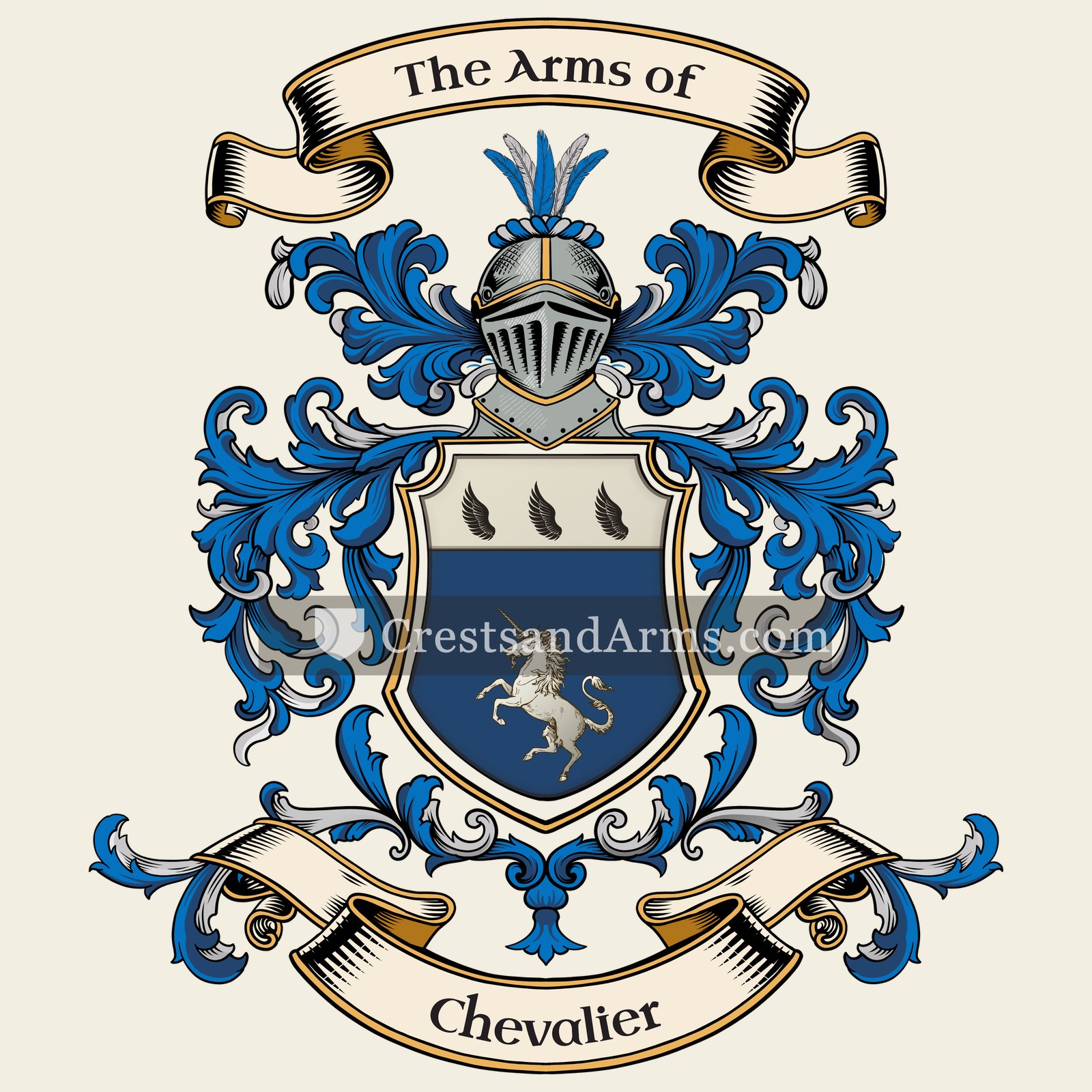
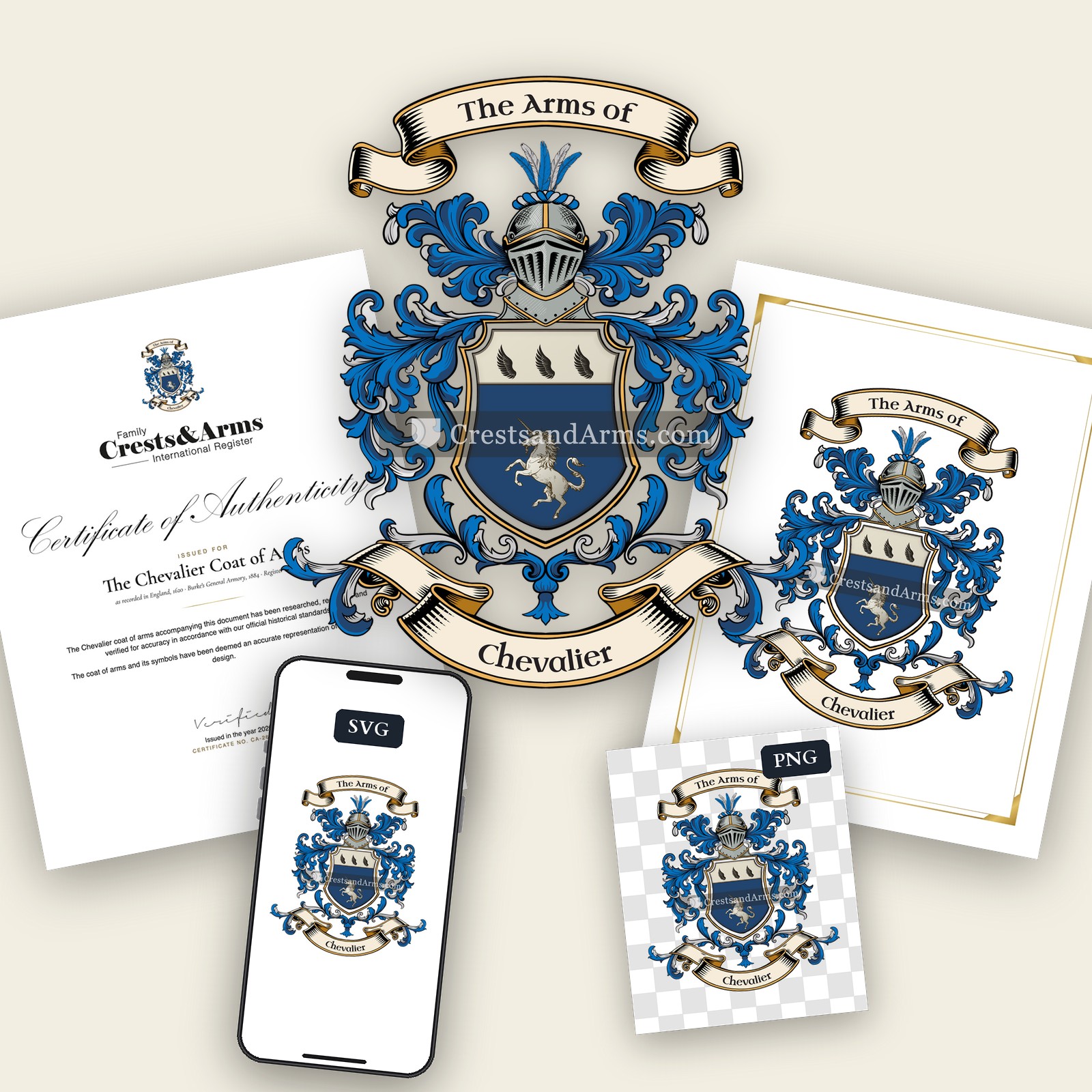
Symbols on this shield
chiefAuthority, wisdom and dominion
unicornPurity, and extreme courage in defence of honour
wingSwiftness, and protection under a raised wing
Colours
Blue (Azure)Means: Loyalty and truth
Silver (Argent)Means: Peace and sincerity
Black (Sable)Means: Constancy
Historical info
Source
Sir Bernard Burke, The General Armory of England, Scotland, Ireland and Wales, London: Harrison & Sons, 1884
Blazon (the actual original written record)
“Az. a unicorn's head erased ar. on a chief of the last, three sinister wings sa”
SuffolkJersey · Suffolk, c. 1620
Digital archive packCoat of arms PNG, gold border print PDF, vector SVG and the certificate of authenticity. Sent to your email in minutes.
Map of England showing where the Chevalier arms are recorded
The Chevalier arms were recorded in Suffolk, c. 1620.
Suffolk was wool country, and its cloth towns were among the wealthiest in England. Clothier families bought manors with their profits, and holding a manor was the ordinary route to a coat of arms.
This is where the arms were entered in the register. Families often moved to other parts of the country, so the same name can turn up in more than one region.
The body that granted and recorded arms in England in this period.
James VI and I
Sovereign of the period
James VI and I
1603–1625
Reigning in Belgium when the Chevalier arms are first recorded.
How Arms Worked in England
English heraldry allowed arms to be shared by all legitimate descendants of the original owner. These symbols were treated as personal property that moved through the generations to all children. While the eldest son kept the original design, other family members could use the same shield without needing to change it or register their own unique versions.
Granting authority
The College of Arms in London has regulated the use of coats of arms throughout England and Wales since 1484.
How they got arms
Families typically obtained their coats of arms through a formal grant from the Crown or by proving their ancient right to them.
Where arms were recorded
All official coats of arms are recorded in the registers kept at the College of Arms, which date back to the fifteenth century.
The family's standing
Recorded among the armigerous families of Suffolk.
Origin & History of the Chevalier Family in England
The surname Chevalier originated as a descriptive occupational name in medieval France, signifying a knight or a horseman. By the time the name appeared in the English historical record during the early seventeenth century, it had become a hereditary surname used by families who had migrated across the English Channel. Records confirm that members of the Chevalier family were established in the county of Suffolk by 1620, likely settling there as part of the broader movement of Huguenot refugees and continental merchants seeking new opportunities in East Anglia. These early settlers often integrated into the local agricultural or trade-based economy of the region. Over time, the family name became firmly rooted in the English landscape, transitioning from its French linguistic origins into a permanent fixture of the local community.
Chevalier Meaning & Related Branches
Root word
Caballus
Latin term for a horse or pack animal.
This name
ChevalierAn occupational surname for a knight or a horseman.
also spelled
Chevalie
Chevaliere
Shevalyay
Chevalyer
Documented Sources
J. B. Rietstap, Armorial Général, Gouda: G. B. van Goor Zonen, 1884–87
State Archives in Belgium (Rijksarchief te België), Parochieregisters van Brabant
State Archives in Belgium (Rijksarchief te België), Notariële archieven van het hertogdom Brabant
Debrabandere, Frans, Woordenboek van de familienamen in België en Noord-Frankrijk, 2003
Dauzat, Albert, Dictionnaire étymologique des noms de famille et prénoms de France, 1951
Digital archive packCoat of arms PNG, gold border print PDF, vector SVG and the certificate of authenticity. Sent to your email in minutes.


 cupFaith, office, and a trust discharged
 cupFaith, office, and a trust discharged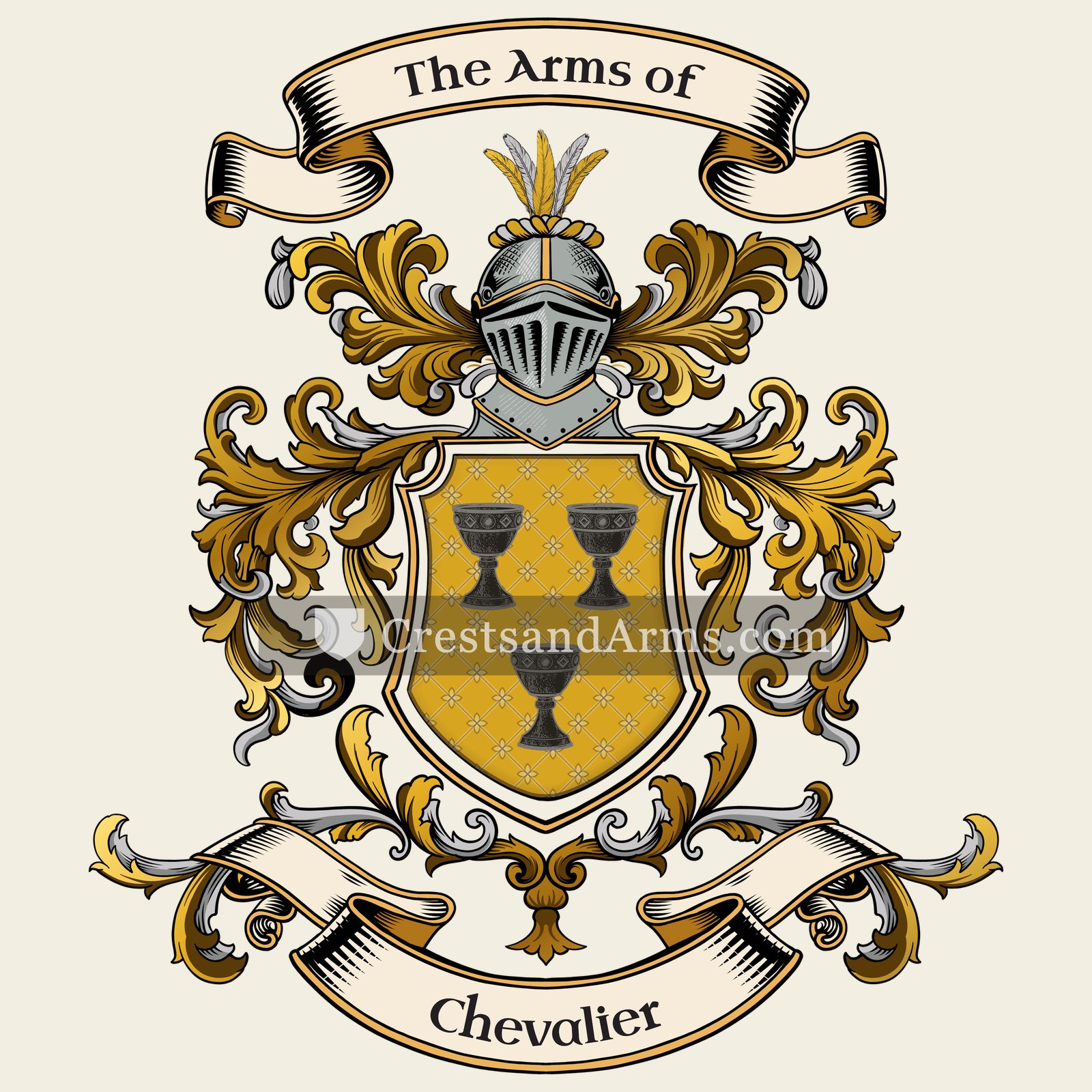


 riverThe bounds of a land, and life carried through it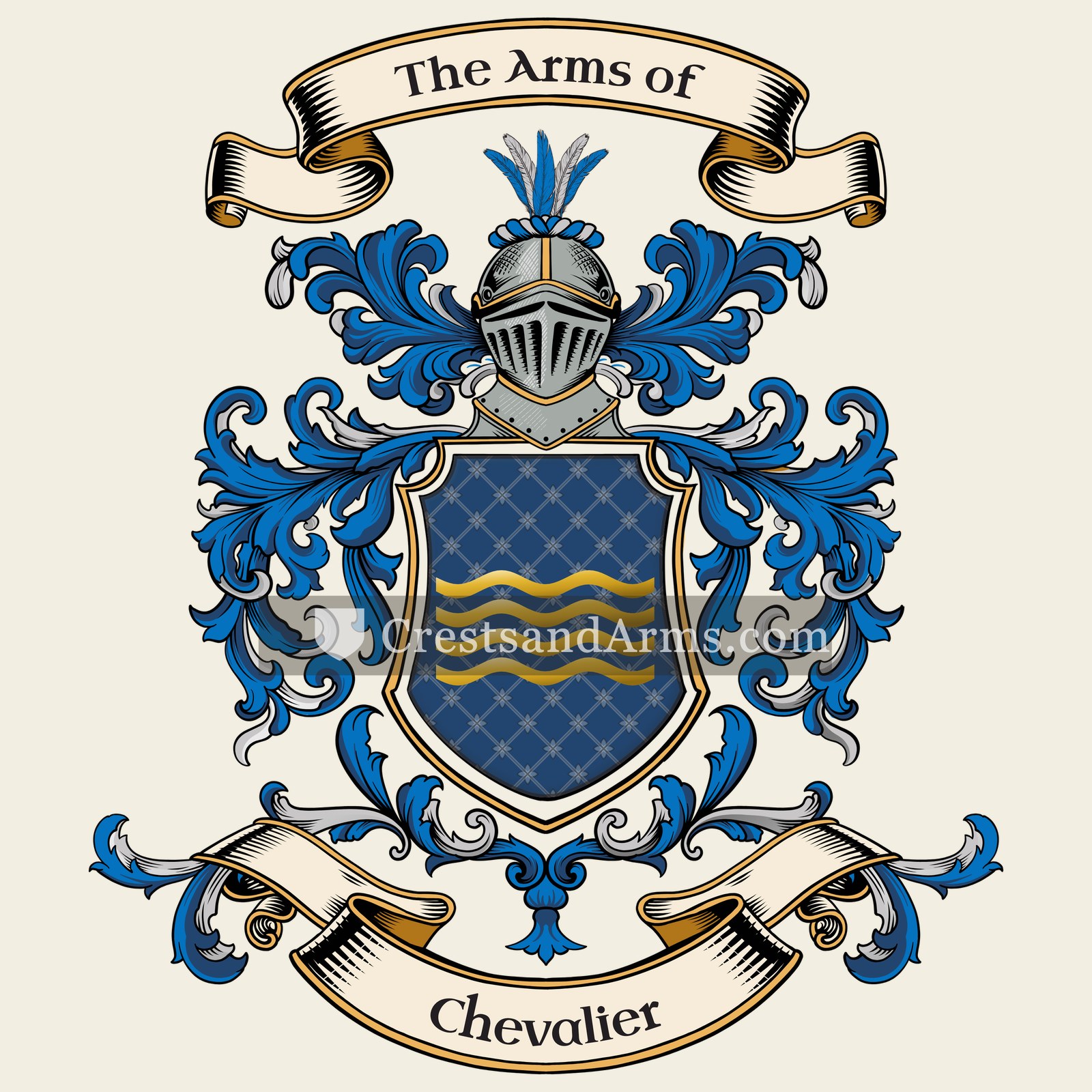


 chiefAuthority, wisdom and dominion
 unicornPurity, and extreme courage in defence of honour
 wingSwiftness, and protection under a raised wing