Map of Belgium showing where the Chin arms are recorded
The Chin arms were recorded in Tournaisis, c. 1737.
This is where the arms were entered in the register. Families often moved to other parts of the country, so the same name can turn up in more than one region.
The body that granted and recorded arms in Belgium in this period.
Charles VI, Holy Roman Emperor
Sovereign of the period
Charles VI, Holy Roman Emperor
1711–1740
Reigning in Belgium when the Chin arms are first recorded.
How Arms Worked in Belgium
In Belgium, a coat of arms is considered personal property that is passed down through the male line to legitimate descendants. Families often use the same shield design across generations to show their shared heritage. If a branch of the family wants to change the design, they must apply for an official update to their specific version of the arms.
Granting authority
The Conseil héraldique is the official body that regulates and approves all coats of arms in Belgium.
How they got arms
Families obtain their coats of arms through formal royal grants or by confirming their historical right to use existing designs.
Where arms were recorded
All approved coats of arms are officially recorded in the public registers of the Conseil héraldique since 1844.
The family's standing
Recorded among the armigerous families of Belgium.
Origin & History of the Chin Family in Belgium
The history of the Chin family in Belgium is rooted in the fertile landscape of the Tournaisis region, where records confirm their presence as early as 1737. During this period, the family lived in a territory that was frequently caught between the shifting borders of European powers, requiring them to be highly adaptable to changing local administrations. The name itself likely evolved from the local dialect and geography of the area, reflecting the deep agricultural ties that defined life in the Hainaut province. As members of the community, the early Chin family members were typically involved in the rural economy, working the land and participating in the social structures of their parish. Over the decades, their consistent presence in the region allowed them to establish firm roots, transitioning from local inhabitants into a recognized part of the historical fabric of the Tournaisis. This longevity in one specific area suggests a stable life centered around family traditions and the steady rhythms of village life in eighteenth-century Belgium.
Coat of Arms & Family Crest Details
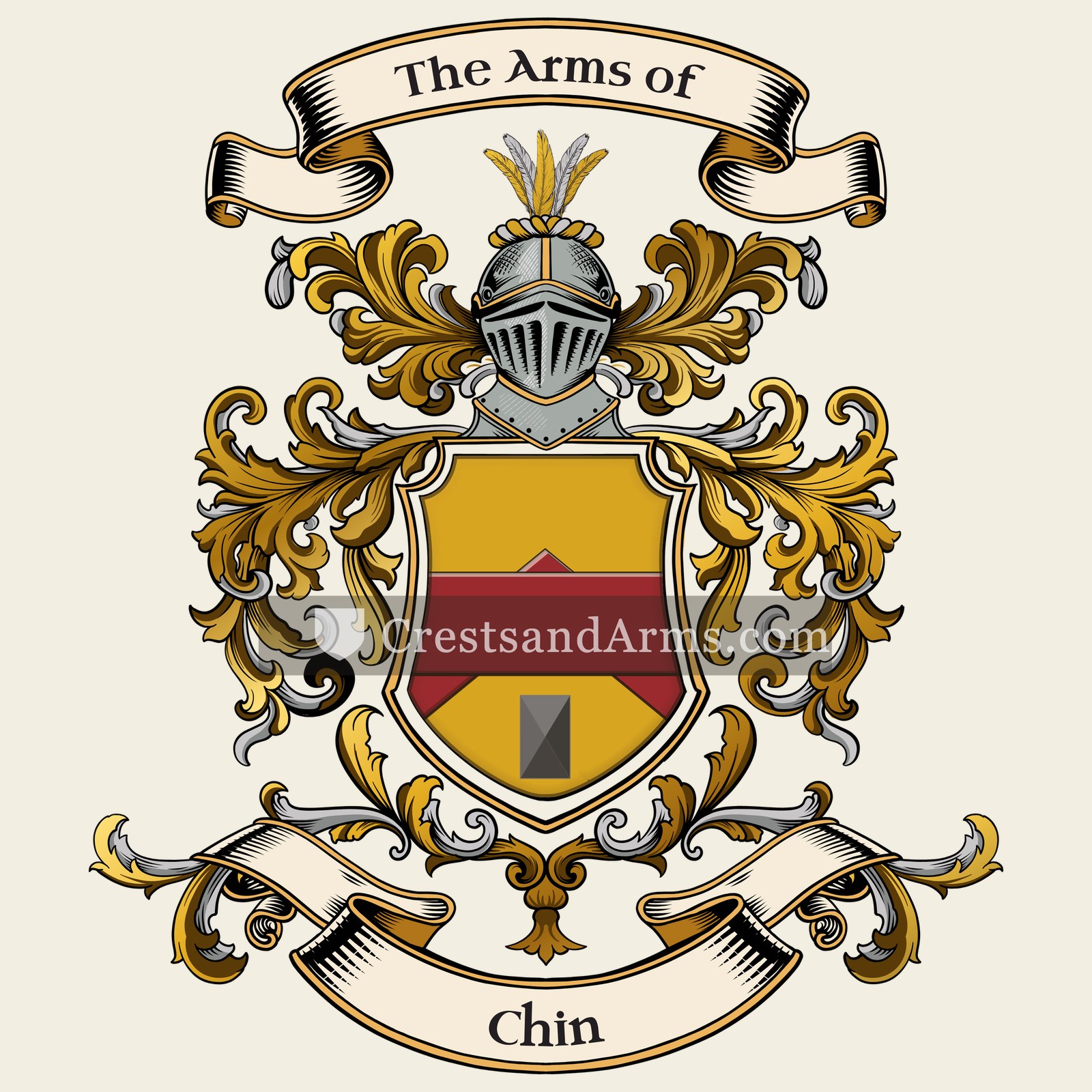
Symbols on this shield
chevronProtection, and faithful service completed
fessThe military belt, and readiness to serve
billetThe sealed letter, and a message delivered
Colours
Gold (Or)Means: Generosity
Red (Gules)Means: Military strength
Historical info
Source
J. B. Rietstap, Armorial Général, Gouda: G. B. van Goor Zonen, 1884–87
Blazon (the actual original written record)
“Parti: au 1 d'or à trois chev. de gu.; au 2 d'or à trois fasces de gu., semées de bill. du champ.”
ArtoisArtois, c. 1663
Digital archive packCoat of arms PNG, gold border print PDF, vector SVG and the certificate of authenticity. Sent to your email in minutes.
Map of France showing where the Chin arms are recorded
The Chin arms were recorded in Artois, c. 1663.
Artois lay on the disputed ground between France and the Low Countries and was fought over for centuries. Families there held their land under arms, and a shield was how a fighting household was known.
This is where the arms were entered in the register. Families often moved to other parts of the country, so the same name can turn up in more than one region.
The body that granted and recorded arms in France in this period.
Louis XIV of France
Sovereign of the period
Louis XIV of France
1643–1715
Reigning in Belgium when the Chin arms are first recorded.
How Arms Worked in France
In France, a coat of arms was a mark of honor that passed down through the male line to all legitimate descendants. Families often used the same shield without changes to show their shared heritage. If a branch wanted to stand out, they could add a small mark to their shield to show their specific place in the family tree.
Granting authority
The Juge d'armes de France acted as the official authority that regulated and verified coats of arms across the country.
How they got arms
Families typically inherited their arms from ancestors, though they could also receive them through royal grants or by proving their noble status.
Where arms were recorded
Coats of arms were officially recorded in the Armorial Général de France, which began its main collection in the year 1696.
The family's standing
Recorded among the armigerous families of Artois.
Origin & History of the Chin Family in France
The history of the Chin family in France centers on the northern region of Artois, where records confirm their presence as early as 1663. During the seventeenth century, Artois was a landscape defined by shifting borders and the influence of both Spanish and French rule. Families living in this area often navigated a complex social structure shaped by agricultural life and the local parish system. The name Chin likely emerged from the linguistic blending common in this borderland region, where local dialects and regional naming customs influenced how families were identified in official church registers. By settling in Artois, the early members of this family became part of a resilient community that survived the frequent wars and territorial changes of the era. Their presence in the local records suggests they were integrated into the daily life of the province, contributing to the development of the region through their work and local connections.
Chin Meaning & Related Branches
Root word
Chen
A Chinese surname derived from the ancient State of Chen.
This name
ChinRefers to an ancestral origin or a location associated with the Chen dynasty.
also spelled
Chine
Chinn
Chyn
Related arms
Busigniessame arms
Documented Sources
J. B. Rietstap, Armorial Général, Gouda: G. B. van Goor Zonen, 1884–87
Archives de l'État à Tournai, État civil et registres paroissiaux du Tournaisis
Hocquet, Jean-Claude, Le Tournaisis et le Hainaut au XVIIIe siècle, 1985
Rolland, Paul, Histoire de Tournai, 1956
Digital archive packCoat of arms PNG, gold border print PDF, vector SVG and the certificate of authenticity. Sent to your email in minutes.


 lionCourage, strength and royalty
 lionCourage, strength and royalty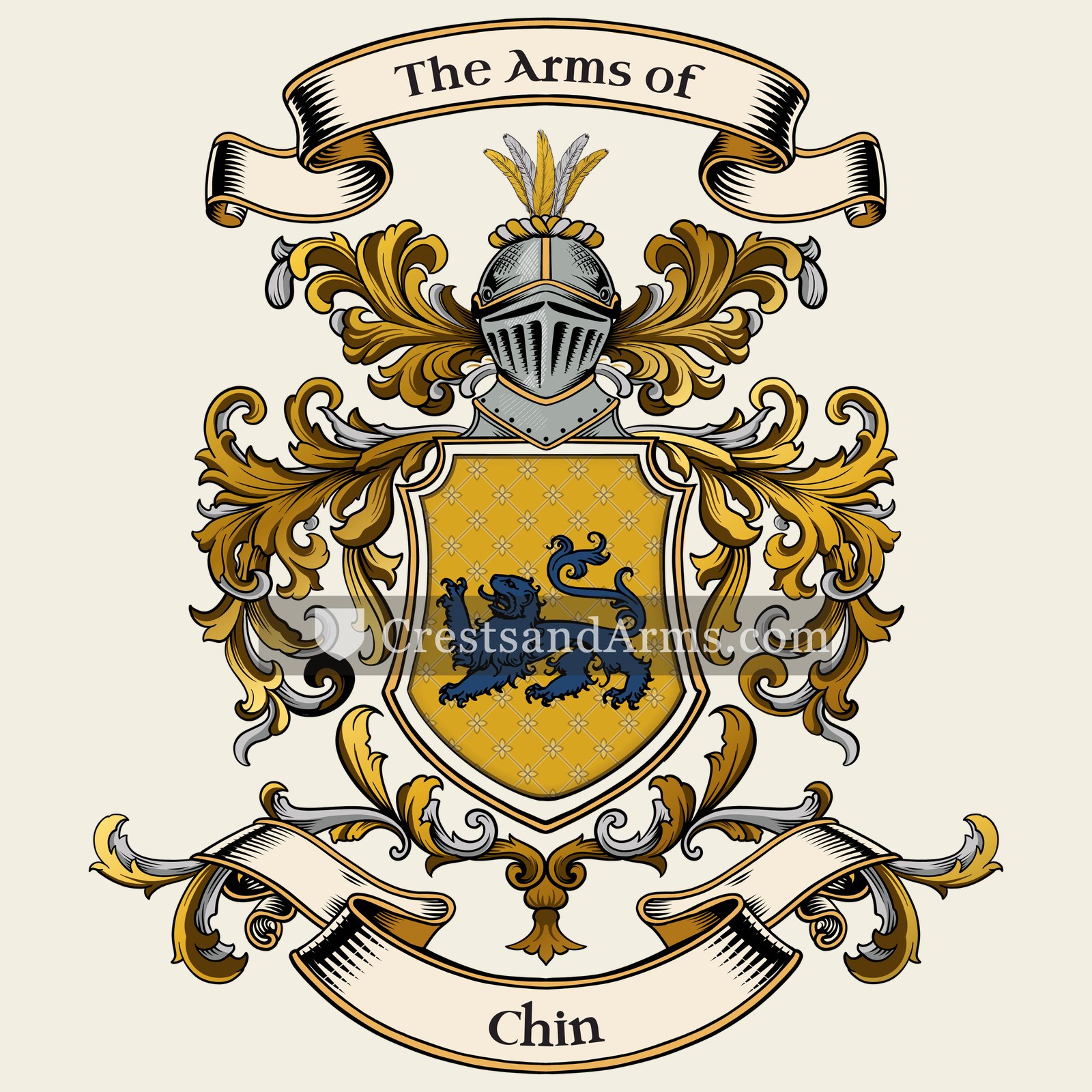


 chevronProtection, and faithful service completed
 fessThe military belt, and readiness to serve
 billetThe sealed letter, and a message delivered