Map of Belgium showing where the Ching arms are recorded
The Ching arms were recorded in Belgium, c. 1737.
Arms such as these were typically recorded in Brabant.
Brabant lay at the heart of the Low Countries, where the trade routes met. Its towns were wealthy and its landowners many, and both kinds of family kept arms, which is why the region is so heavily represented.
This is where the arms were entered in the register. Families often moved to other parts of the country, so the same name can turn up in more than one region.
The body that granted and recorded arms in Belgium in this period.
Charles VI, Holy Roman Emperor
Sovereign of the period
Charles VI, Holy Roman Emperor
1711–1740
Reigning in Belgium when the Ching arms are first recorded.
How Arms Worked in Belgium
In Belgium, a coat of arms is considered personal property that is passed down through the male line to legitimate descendants. Families often use the same shield design across generations to show their shared heritage. If a branch of the family wants to change the design, they must apply for an official update to their specific version of the arms.
Granting authority
The Conseil héraldique is the official body that regulates and approves all coats of arms in Belgium.
How they got arms
Families obtain their coats of arms through formal royal grants or by confirming their historical right to use existing designs.
Where arms were recorded
All approved coats of arms are officially recorded in the public registers of the Conseil héraldique since 1844.
The family's standing
Recorded among the armigerous families of Belgium.
Origin & History of the Ching Family in Belgium
The history of the Ching family in Belgium begins with their documented presence in the region of Brabant as early as 1737. During this period, the Duchy of Brabant was a bustling center of trade and administration under the rule of the Austrian Netherlands. Families like the Chings often settled in these areas to participate in the growing merchant networks that connected local markets to broader European trade routes. Because the name appears in regional records during the eighteenth century, it suggests that the family integrated into the local social fabric during a time of significant economic transition. While the name itself carries deep roots that span across different cultures, its appearance in the Brabant archives highlights how individual families contributed to the diverse demographic landscape of the Low Countries long before the modern borders of Belgium were established.
Meaning of the Ching family crest colors & symbols
Colours
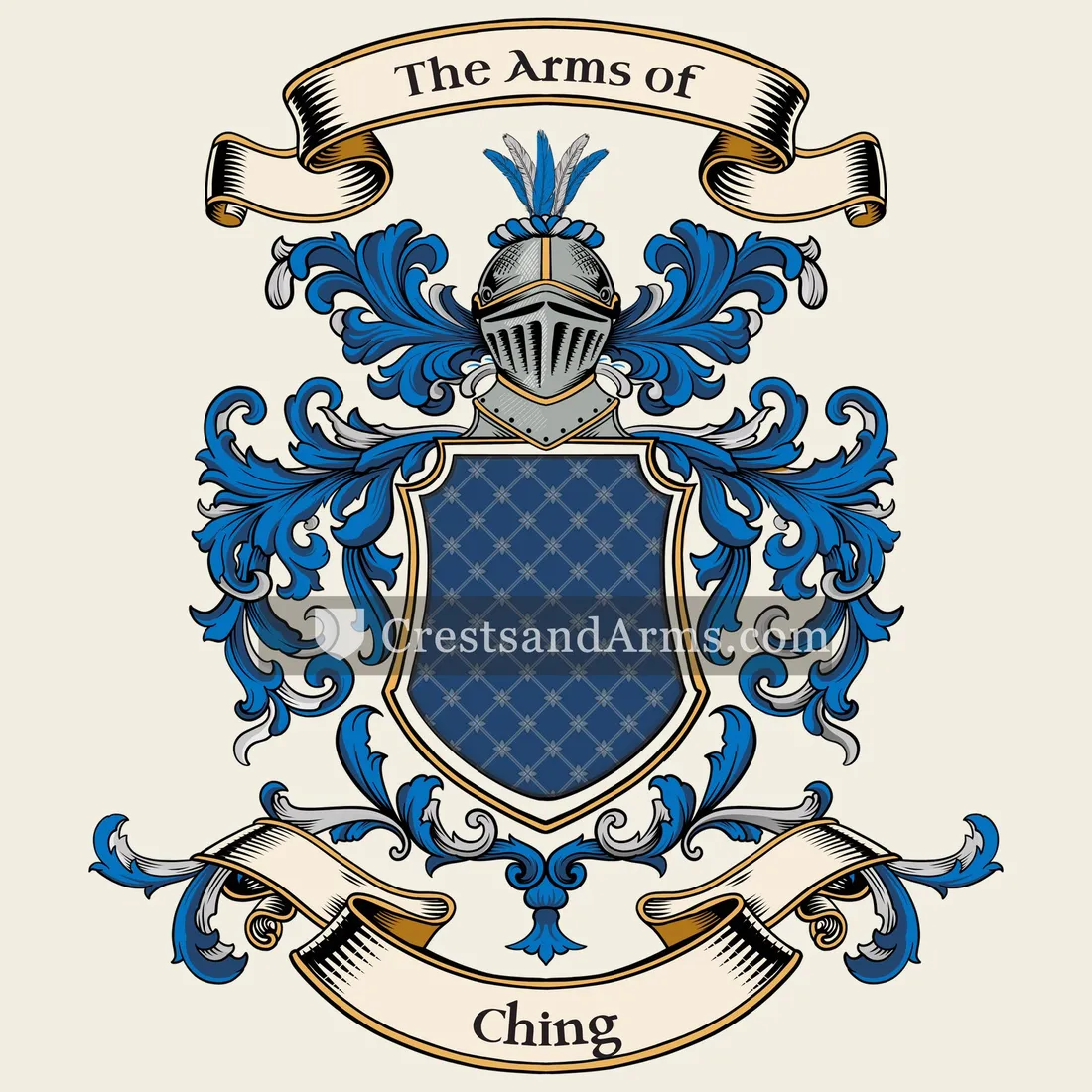
Blue (Azure)Means: Loyalty and truth
Historical info
Source
J. B. Rietstap, Armorial Général, Gouda: G. B. van Goor Zonen, 1884–87
Blazon (the actual original written record)
“D'azur à une lionne arrêtée d'or. C.: la lionne.”
LorraineLorraine, c. 1566
Digital archive packCoat of arms PNG, gold border print PDF, vector SVG and the certificate of authenticity. Sent to your email in minutes.
Map of France showing where the Ching arms are recorded
The Ching arms were recorded in Lorraine, c. 1566.
Lorraine sat on the border between France and the German lands, and border country bred soldiers. Families here held small estates and served in arms, and a fighting man was exactly the sort who carried a shield of his own.
This is where the arms were entered in the register. Families often moved to other parts of the country, so the same name can turn up in more than one region.
The body that granted and recorded arms in France in this period.
Charles IX of France
Sovereign of the period
Charles IX of France
1560–1574
Reigning in Belgium when the Ching arms are first recorded.
How Arms Worked in France
In France, a coat of arms was a mark of honor that passed down through the male line to all legitimate descendants. Families often used the same shield without changes to show their shared heritage. If a branch wanted to stand out, they could add a small mark to their shield to show their specific place in the family tree.
Granting authority
The Juge d'armes de France acted as the official authority that regulated and verified coats of arms across the country.
How they got arms
Families typically inherited their arms from ancestors, though they could also receive them through royal grants or by proving their noble status.
Where arms were recorded
Coats of arms were officially recorded in the Armorial Général de France, which began its main collection in the year 1696.
The family's standing
Recorded among the armigerous families of Lorraine.
Origin & History of the Ching Family in France
The history of the Ching family in France begins in the eastern region of Lorraine, where records confirm their presence as early as 1566. During this period, Lorraine was a crossroads of European culture and trade, situated between the French Kingdom and the Holy Roman Empire. Families living in this area often navigated complex social changes as the region shifted between independent duchies and French influence. The name likely emerged from local linguistic traditions, reflecting the diverse dialects spoken in the borderlands of the sixteenth century. By settling in this specific territory, the early members of the family became part of a resilient community that survived the religious and political upheavals of the Renaissance. Their documented history in Lorraine suggests they were established residents who participated in the agricultural and civic life of the region long before the modern borders of France were fully defined.
Ching Meaning & Related Branches
Root word
Qing
Clear, pure, or crystalline in the Chinese language.
This name
ChingA surname derived from the Qing dynasty, symbolizing purity and clarity.
also spelled
Coyng
Coin
Coingue
Documented Sources
J. B. Rietstap, Armorial Général, Gouda: G. B. van Goor Zonen, 1884–87
State Archives in Belgium (Algemeen Rijksarchief), Registers van de Raad van Brabant
State Archives in Belgium (Algemeen Rijksarchief), Parochieregisters van de provincie Brabant
Digital archive packCoat of arms PNG, gold border print PDF, vector SVG and the certificate of authenticity. Sent to your email in minutes.


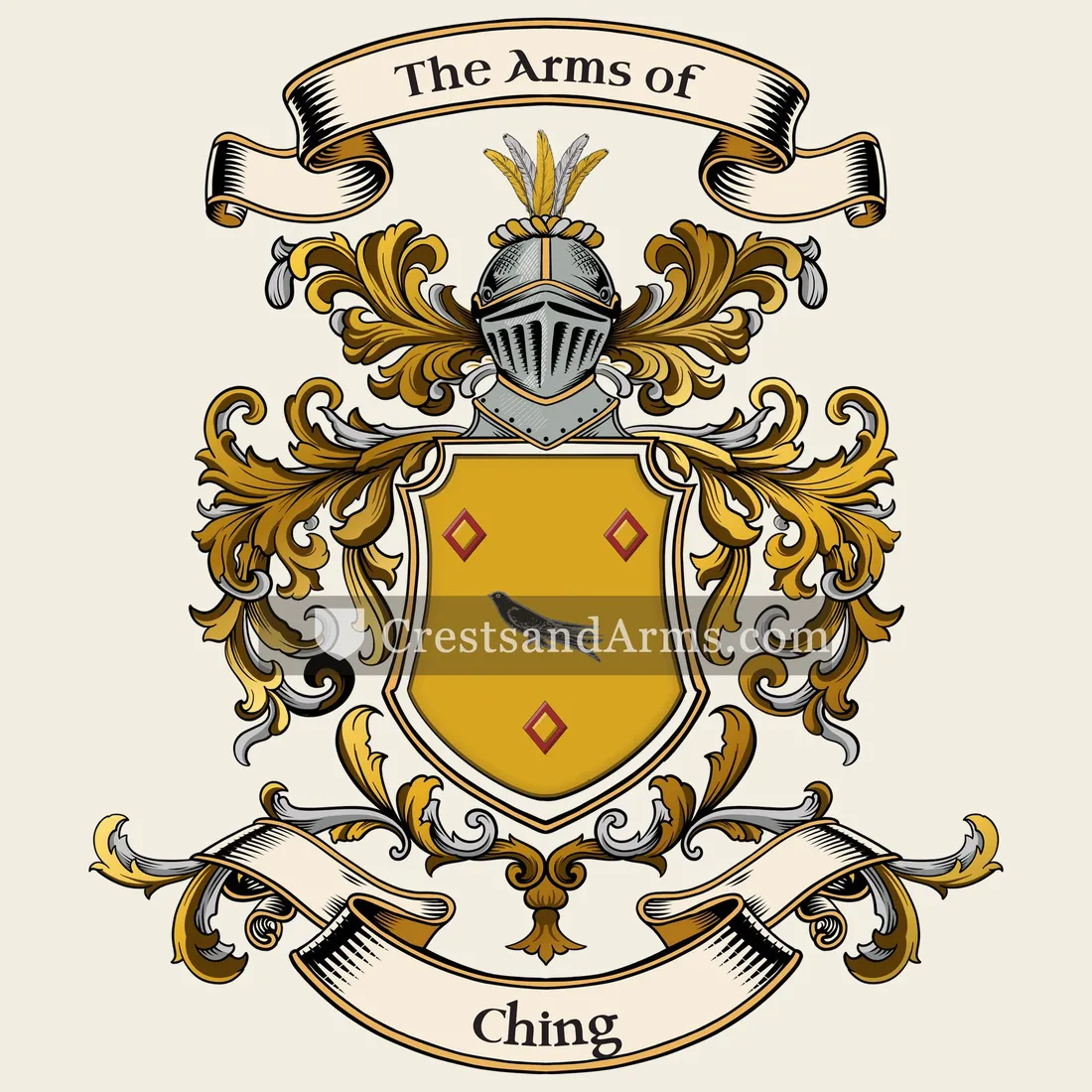
 martletA younger son, who must win his own land
 masclePersuasion and the mail of a knight's coat
 martletA younger son, who must win his own land
 masclePersuasion and the mail of a knight's coat