Map of Belgium showing where the Christiaens arms are recorded
The Christiaens arms were recorded in Bruges, c. 1737.
This is where the arms were entered in the register. Families often moved to other parts of the country, so the same name can turn up in more than one region.
The body that granted and recorded arms in Belgium in this period.
Charles VI, Holy Roman Emperor
Sovereign of the period
Charles VI, Holy Roman Emperor
1711–1740
Reigning in Belgium when the Christiaens arms are first recorded.
How Arms Worked in Belgium
In Belgium, a coat of arms is considered personal property that is passed down through the male line to legitimate descendants. Families often use the same shield design across generations to show their shared heritage. If a branch of the family wants to change the design, they must apply for an official update to their specific version of the arms.
Granting authority
The Conseil héraldique is the official body that regulates and approves all coats of arms in Belgium.
How they got arms
Families obtain their coats of arms through formal royal grants or by confirming their historical right to use existing designs.
Where arms were recorded
All approved coats of arms are officially recorded in the public registers of the Conseil héraldique since 1844.
The family's standing
Recorded among the armigerous families of Belgium.
Origin & History of the Christiaens Family in Belgium
The family name Christiaens is a patronymic surname, meaning it originated from the given name Christiaan, which translates to Christian. In the context of Belgium, this name became common as people began adopting fixed surnames to distinguish themselves in growing urban centers. By the year 1737, records confirm that members of the Christiaens family were well-established in the city of Bruges. During this period, Bruges was a significant hub for trade and craftsmanship, and families like the Christiaens often participated in the local economy through guilds or small-scale commerce. As the family settled into the social fabric of West Flanders, they contributed to the local history of the region by maintaining their presence through generations of urban life. Their history reflects the broader patterns of Flemish migration and settlement, where families often remained rooted in specific provinces for centuries, building their lives around the traditions and industries of their home cities.
Coat of Arms & Family Crest Details
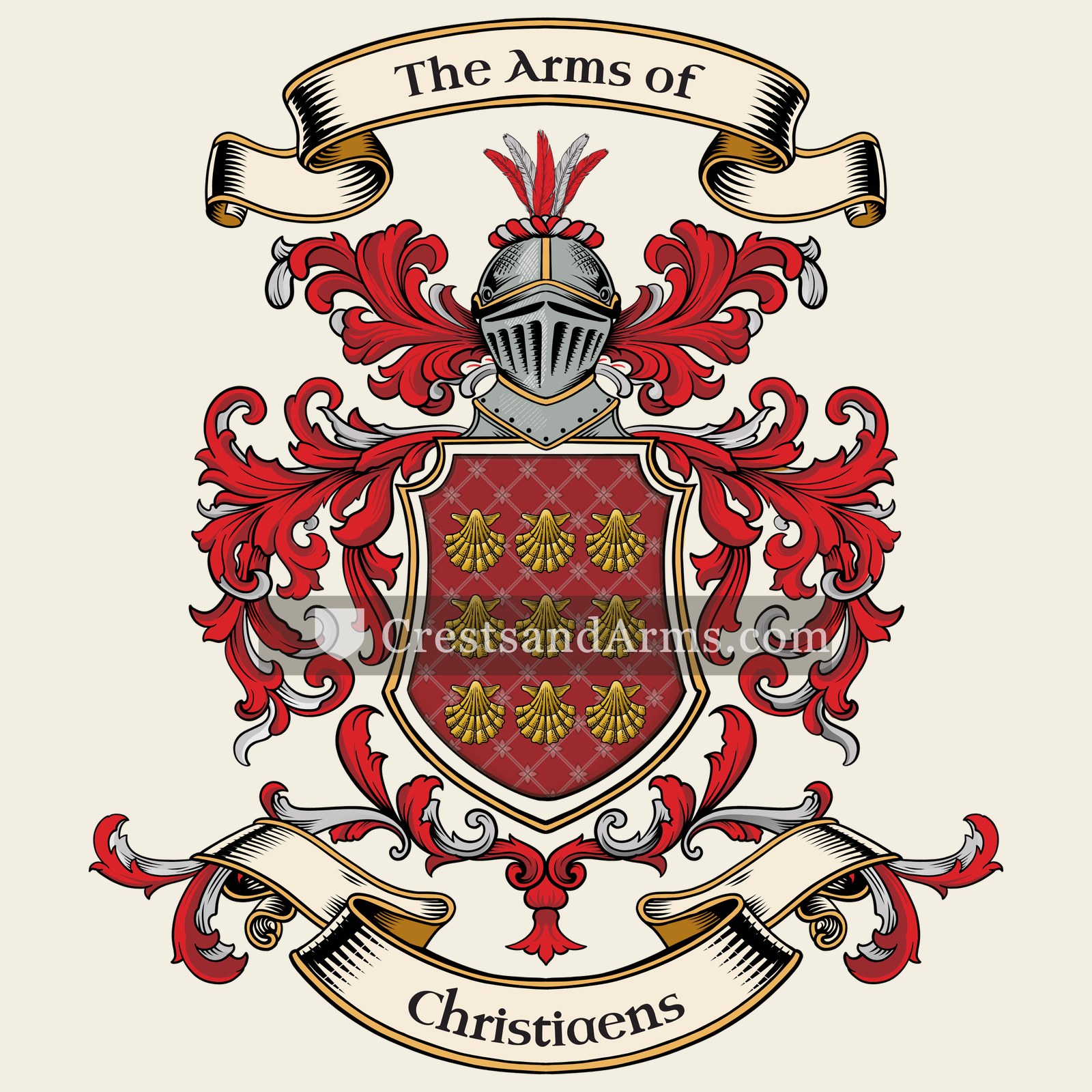
Symbols on this shield
escallopThe pilgrim's shell, and a long journey made
Colours
Red (Gules)Means: Military strength
Gold (Or)Means: Generosity
Historical info
Source
J. B. Rietstap, Armorial Général, Gouda: G. B. van Goor Zonen, 1884–87
Blazon (the actual original written record)
“De gu. à neuf coquilles d'or. C.: une coquille d'or, entre un vol-banneret d'or et de gu.”
FlandreFlandre, c. 1663
Digital archive packCoat of arms PNG, gold border print PDF, vector SVG and the certificate of authenticity. Sent to your email in minutes.
Map of France showing where the Christiaens arms are recorded
The Christiaens arms were recorded in Flandre, c. 1663.
Flandre grew rich on cloth, and its towns were among the busiest in Europe. Merchant families bought land with their profits and took arms to go with it, so trade put as many names in the registers here as land did.
This is where the arms were entered in the register. Families often moved to other parts of the country, so the same name can turn up in more than one region.
The body that granted and recorded arms in France in this period.
Louis XIV of France
Sovereign of the period
Louis XIV of France
1643–1715
Reigning in Belgium when the Christiaens arms are first recorded.
How Arms Worked in France
In France, a coat of arms was a mark of honor that passed down through the male line to all legitimate descendants. Families often used the same shield without changes to show their shared heritage. If a branch wanted to stand out, they could add a small mark to their shield to show their specific place in the family tree.
Granting authority
The Juge d'armes de France acted as the official authority that regulated and verified coats of arms across the country.
How they got arms
Families typically inherited their arms from ancestors, though they could also receive them through royal grants or by proving their noble status.
Where arms were recorded
Coats of arms were officially recorded in the Armorial Général de France, which began its main collection in the year 1696.
The family's standing
Recorded among the armigerous families of Flandre.
Origin & History of the Christiaens Family in France
The family name Christiaens finds its deep historical roots in the region of Flanders, a territory that shared a complex and shifting border with France during the seventeenth century. By 1663, records confirm that members of the family were firmly established in this area, which was a vibrant center of trade and cultural exchange between the French-speaking and Dutch-speaking worlds. The name itself is a patronymic, meaning it was derived from the given name Christian, and it served as a way to identify individuals as the children or descendants of a man by that name. Because Flanders was frequently caught between the political ambitions of the French monarchy and the local authorities, families like the Christiaens often lived through periods of significant social change. Their presence in the region during the 1660s places them in a time when the French crown was actively expanding its influence over northern territories, leading to a unique blend of linguistic and cultural traditions that shaped the identity of families living in the borderlands.
Christiaens Meaning & Related Branches
Root word
Christus
The anointed one derived from the Greek word for messiah.
This name
ChristiaensA patronymic surname meaning son of Christian or follower of Christ.
also spelled
Kristiaens
Kristians
Christians
Related arms
Andreæsimilar arms
Documented Sources
J. B. Rietstap, Armorial Général, Gouda: G. B. van Goor Zonen, 1884–87
Debrabandere, Frans. Woordenboek van de familienamen in België en Noord-Frankrijk. 1993
Stadsarchief Brugge, Parochieregisters van de stad Brugge
Digital archive packCoat of arms PNG, gold border print PDF, vector SVG and the certificate of authenticity. Sent to your email in minutes.


 chiefAuthority, wisdom and dominion
 ermineDignity and rank
 lambGentleness, patience and faith
 chiefAuthority, wisdom and dominion
 ermineDignity and rank
 lambGentleness, patience and faith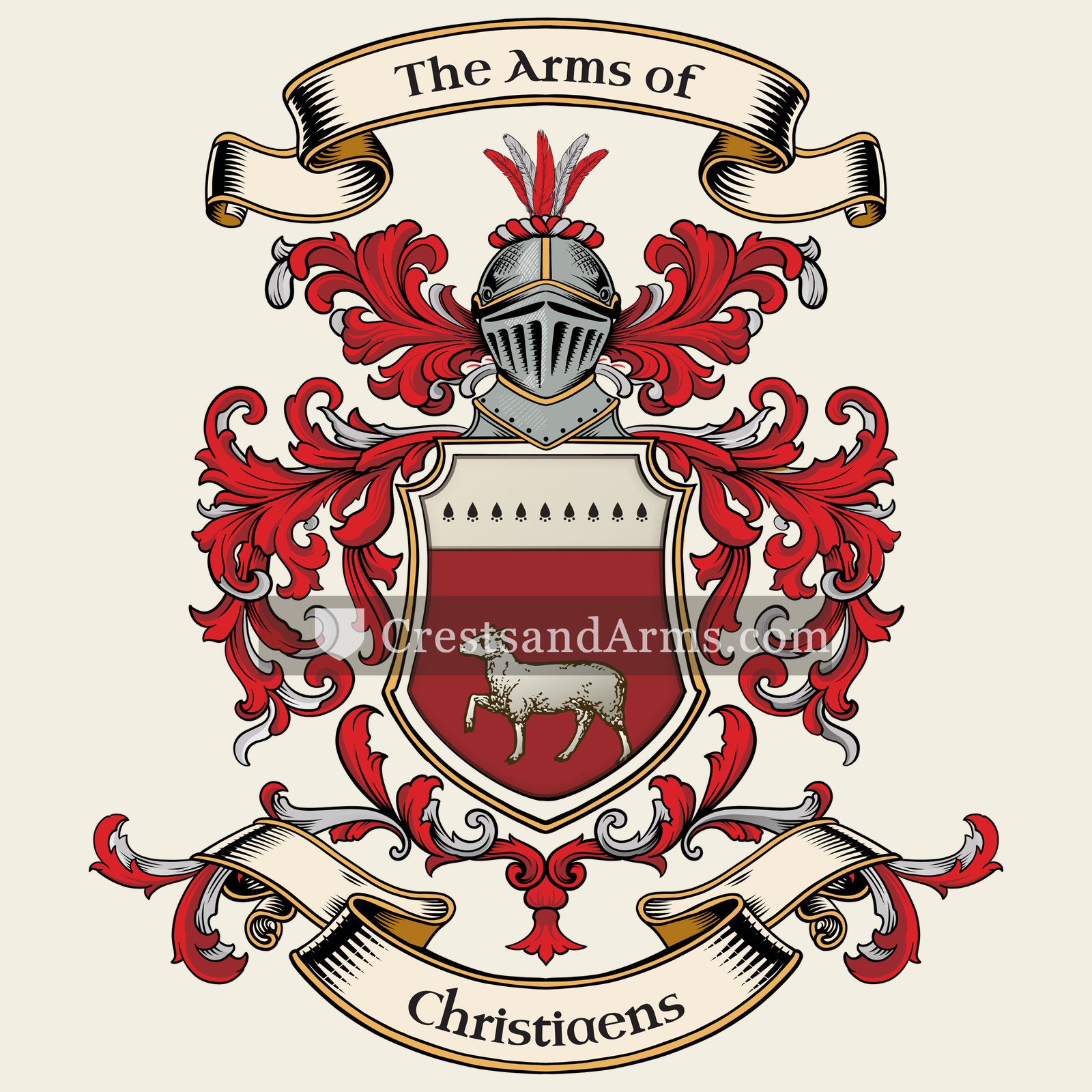


 escallopThe pilgrim's shell, and a long journey made