Map of Spain showing where the Ciamarra arms are recorded
The Ciamarra arms were recorded in Castile, c. 1722.
Castile was the heart of Spain and the source of most of its noble families. Land won in the long wars against the Moors was granted out to fighting men, and a man granted land was granted arms along with it.
This is where the arms were entered in the register. Families often moved to other parts of the country, so the same name can turn up in more than one region.
The body that granted and recorded arms in Spain in this period.
Philip V of Spain
Sovereign of the period
Philip V of Spain
1714–1724
Reigning in Spain when the Ciamarra arms are first recorded.
How Arms Worked in Spain
In Spain, a coat of arms was considered a form of property that belonged to the entire family line. These arms were passed down from a father to all his children equally. Younger branches of the family usually kept the original design without needing to add any special marks to distinguish their specific line.
Granting authority
The Cronista Rey de Armas was the official body that regulated and granted coats of arms throughout Spain.
How they got arms
Families often obtained their arms through royal grants or by proving their noble status to the official heraldic authority.
Where arms were recorded
Coats of arms were officially recorded in the registers of the Cronista Rey de Armas starting in 1496.
The family's standing
Recorded among the armigerous families of Castile.
Origin & History of the Ciamarra Family in Spain
The Ciamarra family name has deep roots tied to the historical landscape of Castile, where members of the lineage were firmly established by the year 1722. During this era, Castile served as the political and cultural heart of Spain, acting as a central hub for families involved in local administration, land management, and the shifting social structures of the eighteenth century. The presence of the Ciamarra name in these records suggests that the family was part of the regional fabric during a time of significant transition for the Spanish monarchy. While the name itself carries linguistic echoes that suggest a connection to broader Mediterranean movements, its specific history in Castile highlights the family’s integration into the local community. By settling in this region, the early Ciamarra family members participated in the daily life and economic development of the Spanish interior, leaving behind a legacy that is preserved through the official documentation of their residence and activities.
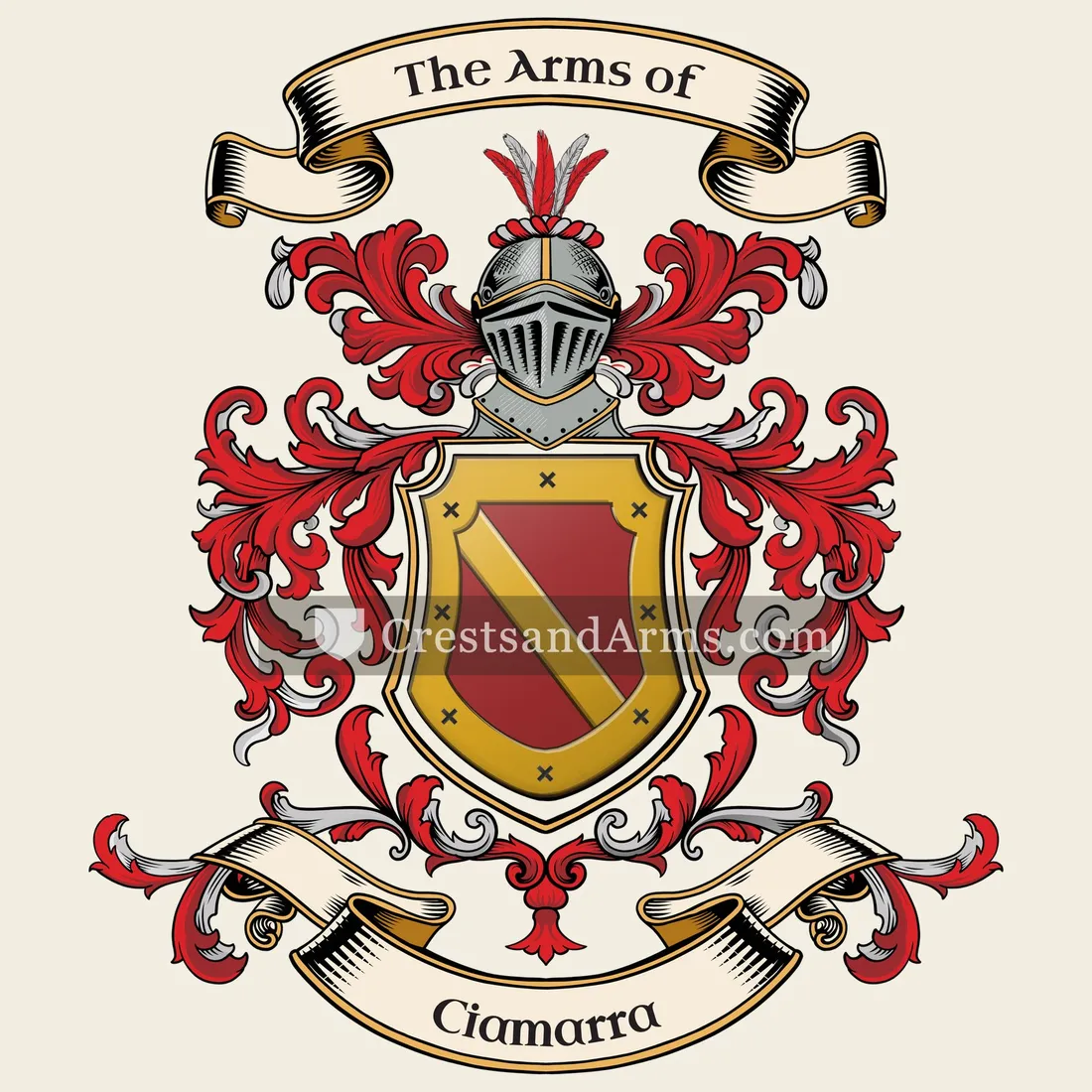
Meaning of the Ciamarra family crest colors & symbols
Symbols on this shield
heartSincerity, charity and true affection
arrowReadiness for battle, and affliction endured
Colours
Gold (Or)Means: Generosity
Red (Gules)Means: Military strength
Historical info
Source
J. B. Rietstap, Armorial Général, Gouda: G. B. van Goor Zonen, 1884–87
Blazon (the actual original written record)
“D'or à un coeur de gu., traversé d'une flèche au nat. en barre, la pointe en bas, cant. de quatre contours de fenêtre carrés”
Austriac. 1772
Digital archive packCoat of arms PNG, gold border print PDF, vector SVG and the certificate of authenticity. Sent to your email in minutes.
Map of Austria showing where the Ciamarra arms are recorded
The Ciamarra arms were recorded in Austria, c. 1772.
Arms such as these were typically recorded in Tyrol.
Tyrol was mountain country in western Austria, where the valleys were held by families who had been there a very long time. Old tenure counted for more than money, and old families carried arms.
This is where the arms were entered in the register. Families often moved to other parts of the country, so the same name can turn up in more than one region.
Region
Tyrol
First recorded
1772
Granting Authority for the Ciamarra Arms
Imperial and Royal chancery
Sodacan · CC BY-SA 3.0
The body that granted and recorded arms in Austria in this period.
Joseph II, Holy Roman Emperor
Sovereign of the period
Joseph II, Holy Roman Emperor
1765–1790
Reigning in Spain when the Ciamarra arms are first recorded.
How Arms Worked in Austria
Austrian coats of arms were often linked directly to noble titles granted by the Emperor. These symbols belonged to the entire family line rather than just one individual. When a family grew, new branches kept the original design without needing to change it. This system allowed all members of a noble house to share the same identity across many generations.
Granting authority
The Imperial and Royal chancery managed all heraldic matters and controlled the official granting of arms throughout the Austrian lands.
How they got arms
Families typically received their arms through a formal imperial decree that often accompanied the elevation of a person to noble status.
Where arms were recorded
Official records of these grants were kept in the Imperial Register of Nobility which began its formal documentation process in 1453.
The family's standing
Recorded among the armigerous families of Austria.
Origin & History of the Ciamarra Family in Austria
The Ciamarra family history in the Austrian region of Tyrol begins with documented records confirming their presence there by 1772. During this period, the family established themselves within the complex social landscape of the Habsburg monarchy, a time when Tyrol served as a vital crossroads for trade and cultural exchange between the Italian peninsula and the German-speaking lands. The name itself reflects these deep Mediterranean roots, yet the family successfully integrated into the administrative and social structures of the Alpine provinces. By settling in this mountainous territory, the Ciamarra family participated in the regional development of the late eighteenth century, navigating the transition from traditional feudal ties to the more centralized bureaucratic systems of the Enlightenment era. Their early presence in Tyrol highlights a history of migration and adaptation, showing how families moved across borders to find new opportunities in the heart of Europe.
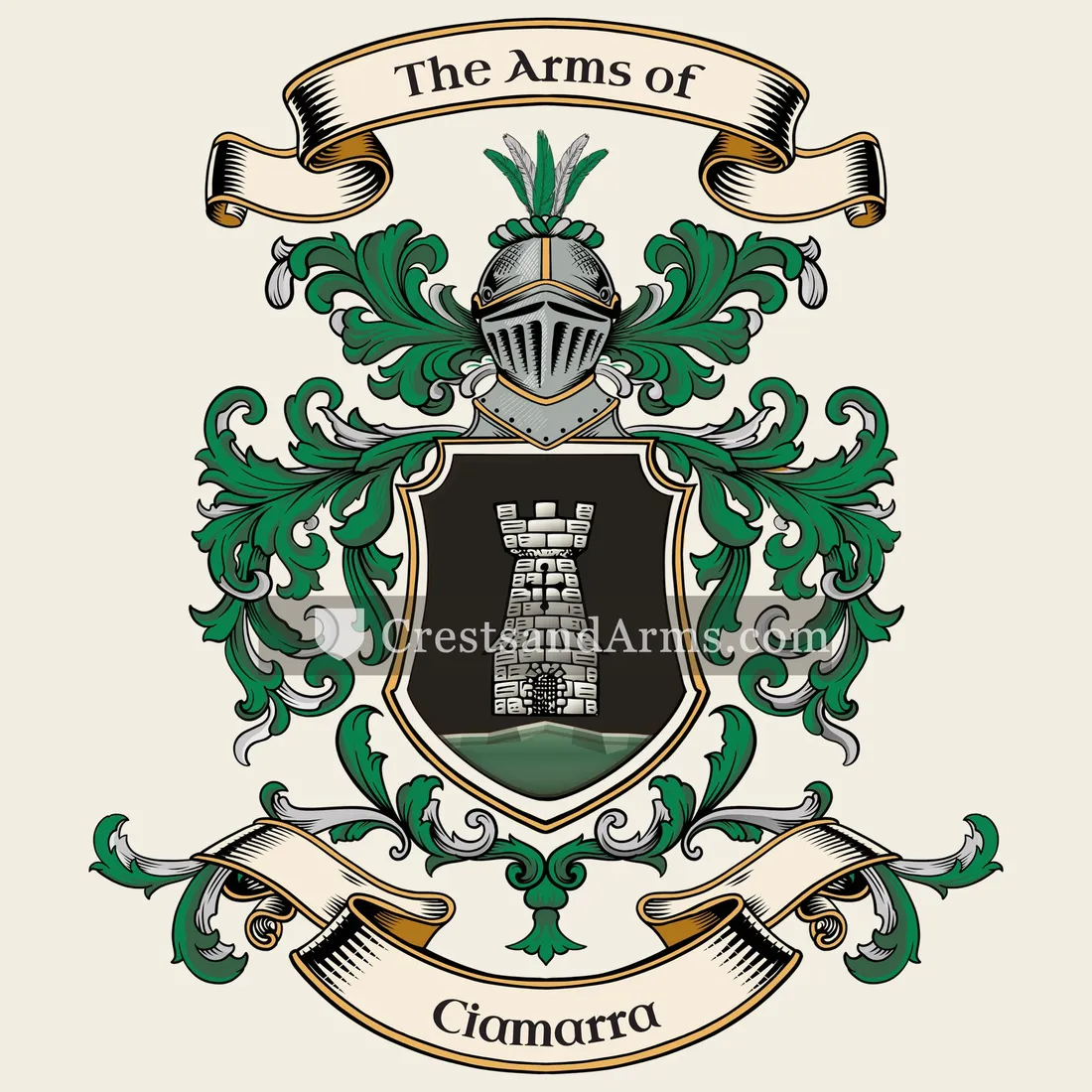
Meaning of the Ciamarra family crest colors & symbols
Symbols on this shield
mountThe ground held, and steadfastness upon it
towerGrandeur and solidity, and a stronghold defended
Colours
Black (Sable)Means: Constancy
Silver (Argent)Means: Peace and sincerity
Historical info
Source
J. B. Rietstap, Armorial Général, Gouda: G. B. van Goor Zonen, 1884–87
Blazon (the actual original written record)
“De sa. à une tour sommée d'une tourelle d'arg., accostée de deux lévriers affr. du même, ramp. contre la tour, le tout soutenu d'une terrasse de sin.”
Portugalc. 1706
Digital archive packCoat of arms PNG, gold border print PDF, vector SVG and the certificate of authenticity. Sent to your email in minutes.
Map of Portugal showing where the Ciamarra arms are recorded
The Ciamarra arms were recorded in Portugal, c. 1706.
Arms such as these were typically recorded in Lisboa.
Lisbon was the seat of the Portuguese crown and the port its wealth came through. Families made rich by trade and by service to the king took arms, and the crown's heralds recorded them there.
This is where the arms were entered in the register. Families often moved to other parts of the country, so the same name can turn up in more than one region.
The body that granted and recorded arms in Portugal in this period.
Peter II of Portugal
Sovereign of the period
Peter II of Portugal
1683–1706
Reigning in Spain when the Ciamarra arms are first recorded.
How Arms Worked in Portugal
In Portugal, a coat of arms was a family possession that passed from a father to his children. Every legitimate descendant had the right to use the family shield without needing to change it. Younger branches of the family kept the original design, though they sometimes added small symbols to distinguish their specific line from the main branch.
Granting authority
The Cartório da Nobreza acted as the official body that managed and regulated noble titles and coats of arms in Portugal.
How they got arms
Families typically inherited their arms through bloodline, though they could also receive new grants from the crown for distinguished service.
Where arms were recorded
Coats of arms were officially recorded in the books of the Cartório da Nobreza starting in the year 1512.
The family's standing
Recorded among the armigerous families of Portugal.
Origin & History of the Ciamarra Family in Portugal
The Ciamarra family name carries a distinct history that traces back to the vibrant urban landscape of Lisbon during the early eighteenth century. By 1706, members of the family were already established residents in the Portuguese capital, a time when the city served as a bustling center for international trade and cultural exchange. While the name itself suggests roots that likely extend into the Mediterranean world, its presence in Lisbon highlights the family's integration into the social and economic fabric of Portugal during the reign of King João V. During this period, families in Lisbon often navigated the complexities of a growing colonial empire, and the Ciamarra name appears in records that reflect the daily lives of citizens living through the city's transition into a major European power. This early documentation serves as a vital anchor for understanding how the family settled into the local community and contributed to the diverse heritage of the region.
Ciamarra Meaning & Related Branches
Root word
Cima
Derived from the Latin word cyma meaning a sprout or summit.
This name
CiamarraRefers to someone who lived near a mountain peak or the top of a hill.
also spelled
Kamara
Documented Sources
J. B. Rietstap, Armorial Général, Gouda: G. B. van Goor Zonen, 1884–87
Archivo General de Simancas, Registro del Sello de Corte, 1722
Archivo Histórico Nacional, Sección Nobleza, 1722
Digital archive packCoat of arms PNG, gold border print PDF, vector SVG and the certificate of authenticity. Sent to your email in minutes.


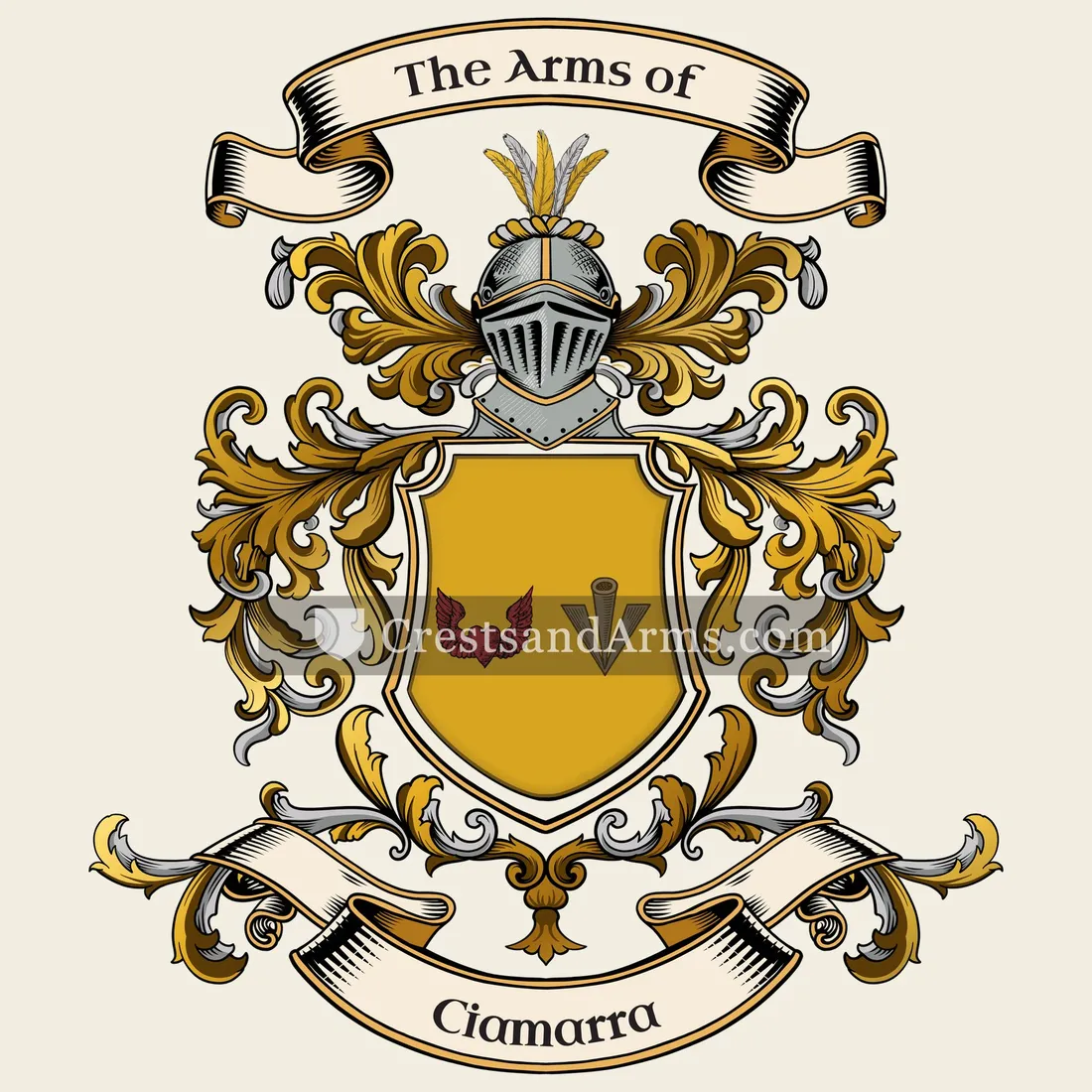
 saltire coupedResolution, and the cross of St Andrew
 saltire coupedResolution, and the cross of St Andrew


 heartSincerity, charity and true affection
 arrowReadiness for battle, and affliction endured


 mountThe ground held, and steadfastness upon it
 towerGrandeur and solidity, and a stronghold defended