Map of England showing where the Clark arms are recorded
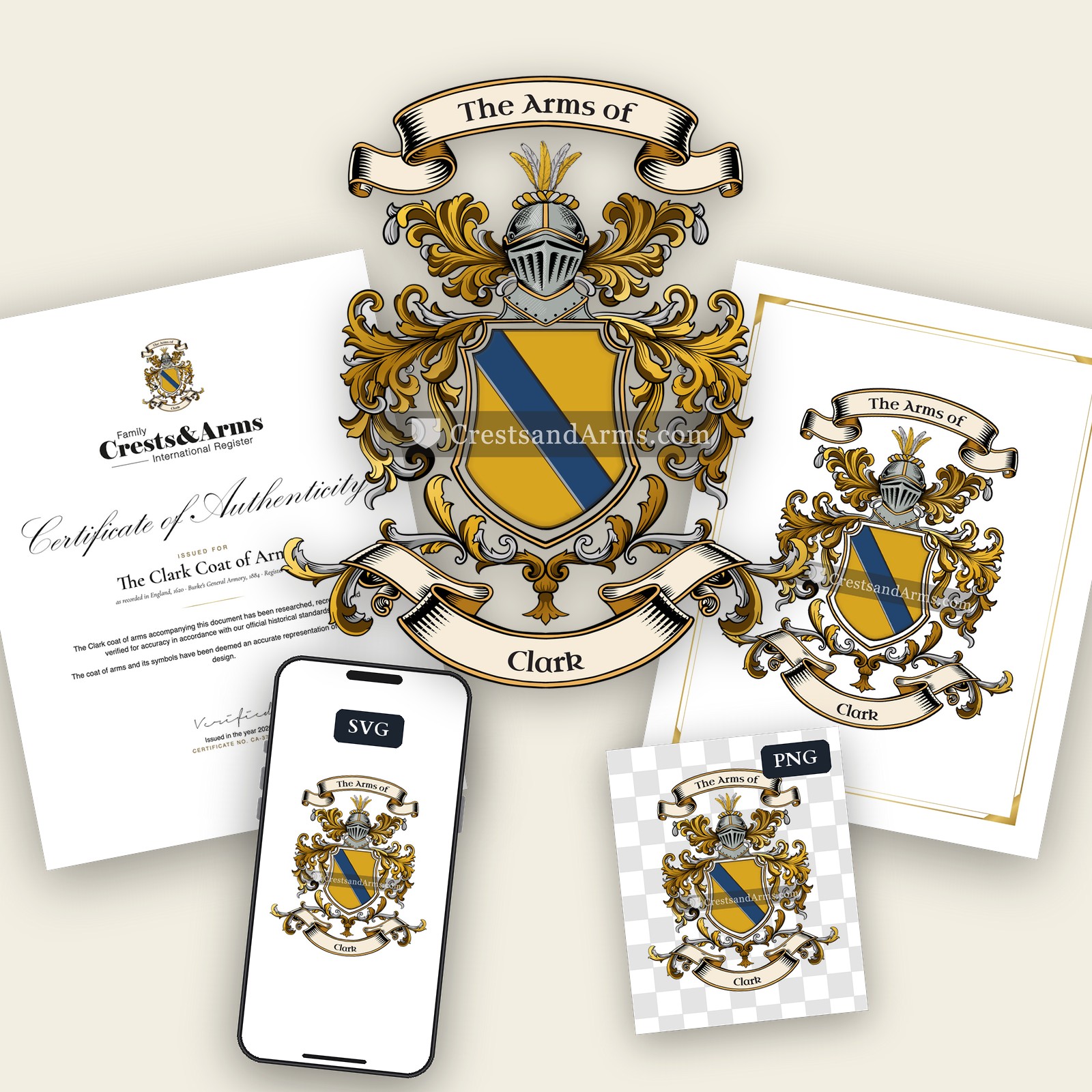
The Clark arms were recorded in England, c. 1620.
Arms such as these were typically recorded in York.
Yorkshire is the largest of the English counties, and it held more gentry families than any other. Land there was split among a great many households rather than a few, so a great many of them carried arms.
This is where the arms were entered in the register. Families often moved to other parts of the country, so the same name can turn up in more than one region.
The body that granted and recorded arms in England in this period.
James VI and I
Sovereign of the period
James VI and I
1603–1625
Reigning in England when the Clark arms are first recorded.
How Arms Worked in England
English heraldry allowed arms to be shared by all legitimate descendants of the original owner. These symbols were treated as personal property that moved through the generations to all children. While the eldest son kept the original design, other family members could use the same shield without needing to change it or register their own unique versions.
Granting authority
The College of Arms in London has regulated the use of coats of arms throughout England and Wales since 1484.
How they got arms
Families typically obtained their coats of arms through a formal grant from the Crown or by proving their ancient right to them.
Where arms were recorded
All official coats of arms are recorded in the registers kept at the College of Arms, which date back to the fifteenth century.
The family's standing
Recorded among the armigerous families of England.
Origin & History of the Clark Family in England
The surname Clark is an occupational name that originated in medieval England. It comes from the Old English word *clerec*, which referred to a member of the clergy or a person who could read and write. During the Middle Ages, most people were illiterate, so a person who served as a scribe or a record keeper held a position of high status and importance within the community. By the time the name became hereditary, it was widely used to identify those who performed administrative duties for local lords or the church. Records confirm that families carrying this name were well-established in the city of York by 1620. At that time, York was a major center for trade and government in Northern England, and families named Clark often worked in the city as merchants, legal clerks, or skilled tradespeople. This history reflects the transition of the name from a specific job title to a permanent family identity that spread across the English landscape.
Coat of Arms & Family Crest Details
Symbols on this shield
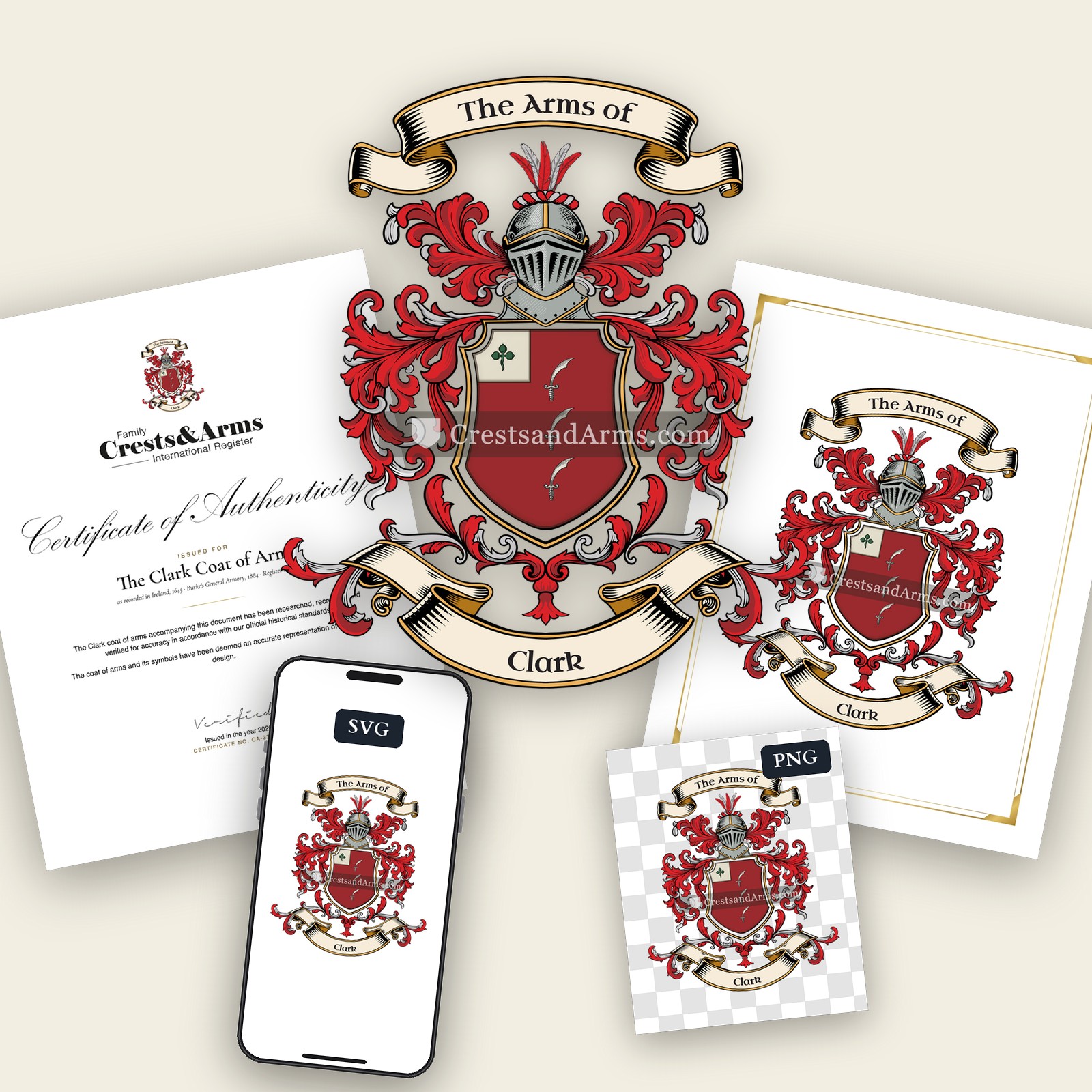
cantonA mark of honour granted by the sovereign
swordJustice, and military honour
trefoilPerpetuity, and the Trinity
Colours
Red (Gules)Means: Military strength
Silver (Argent)Means: Peace and sincerity
Green (Vert)Means: Hope
Historical info
Source
Sir Bernard Burke, The General Armory of England, Scotland, Ireland and Wales, London: Harrison & Sons, 1884
Blazon (the actual original written record)
“Gu. three swords erect in pale ppr. hilts and pomels or, a canton ar. charged with a trefoil vert”
LondonderryMaghera · Londonderry, c. 1645
Digital archive packCoat of arms PNG, gold border print PDF, vector SVG and the certificate of authenticity. Sent to your email in minutes.
Map of Ireland showing where the Clark arms are recorded
The Clark arms were recorded in Londonderry, c. 1645.
Londonderry was planted from England in the seventeenth century, with London companies granted the land. Their tenants and officers took arms and had them recorded, unusually carefully for Ireland.
This is where the arms were entered in the register. Families often moved to other parts of the country, so the same name can turn up in more than one region.
The body that granted and recorded arms in Ireland in this period.
Charles I of England
Sovereign of the period
Charles I of England
1625–1649
Reigning in England when the Clark arms are first recorded.
How Arms Worked in Ireland
The Ulster King of Arms granted coats of arms to individuals who proved their social standing and good character. These symbols were typically inherited by all legitimate descendants of the original holder. If a family branch wanted a unique look, they could apply for a specific change to their design through the office to ensure their identity remained distinct.
Granting authority
The Ulster King of Arms acted as the official body that regulated and issued all coats of arms throughout Ireland.
How they got arms
Families obtained their arms through formal grants issued by the office after proving their eligibility and paying the required fees.
Where arms were recorded
All official grants were recorded in the registers held by the Ulster King of Arms starting from the year 1552.
The family's standing
Recorded among the armigerous families of Londonderry.
Origin & History of the Clark Family in Ireland
The surname Clark originates from the Latin word *clericus*, which refers to a member of the clergy or a learned scholar. In the medieval period, many people who could read and write were employed as scribes, and they eventually adopted this title as their family name. By 1645, records confirm that families bearing the name Clark were well-established in Londonderry. This presence was largely connected to the Plantation of Ulster, a period during the seventeenth century when many settlers from Britain moved to northern Ireland to develop the land. These early settlers often held roles as administrators, merchants, or skilled tradespeople, reflecting the scholarly roots of their name. Over the following generations, the Clark families became deeply integrated into the social and economic life of the region, contributing to the growth of towns and the development of local industries.
Coat of Arms & Family Crest Details
Symbols on this shield
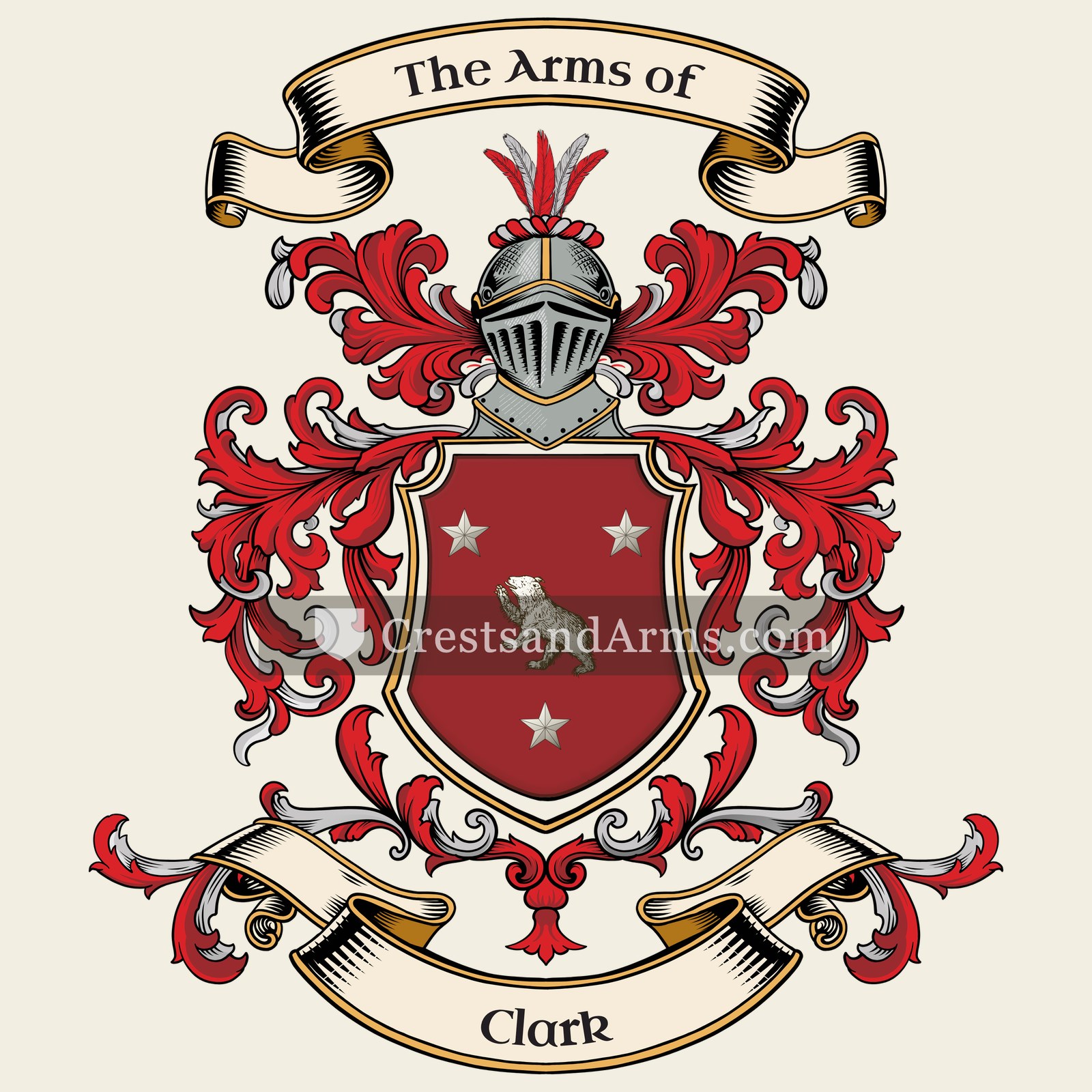
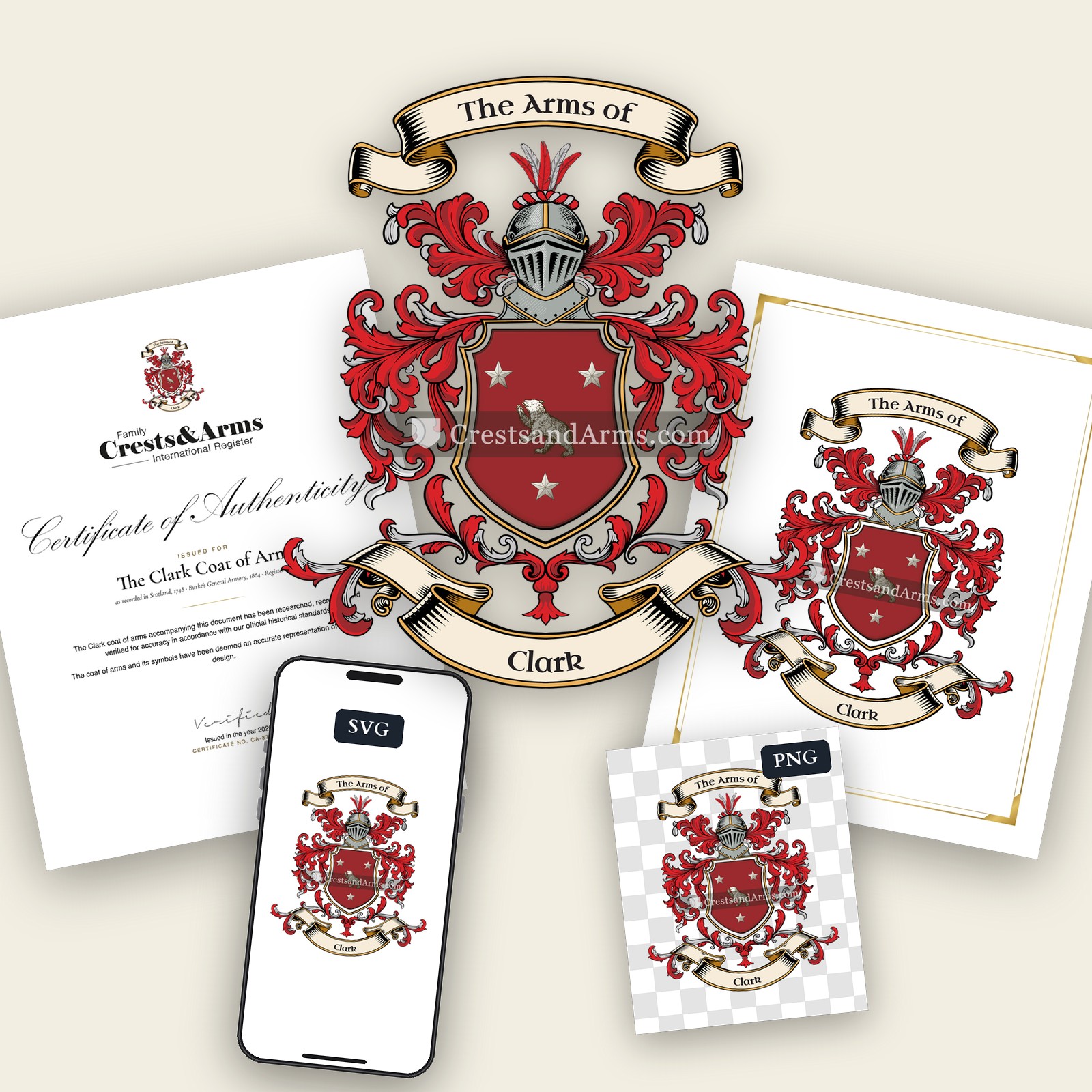
bearStrength, cunning and protection of kin
mulletThe third son, and a divine quality from above
Colours
Red (Gules)Means: Military strength
Silver (Argent)Means: Peace and sincerity
Historical info
Source
Sir Bernard Burke, The General Armory of England, Scotland, Ireland and Wales, London: Harrison & Sons, 1884
Blazon (the actual original written record)
“Gu. a bear sejant ar. muzzled, collared, and chained ppr. betw. three mullets, two and one, of the second”
NairnAchareidh · Nairn, c. 1748
Digital archive packCoat of arms PNG, gold border print PDF, vector SVG and the certificate of authenticity. Sent to your email in minutes.
Map of Scotland showing where the Clark arms are recorded
The Clark arms were recorded in Nairn, c. 1748.
Nairnshire was a small strip of farming country on the Moray Firth. Its landed families were few and long-established, and long establishment brought arms with it.
This is where the arms were entered in the register. Families often moved to other parts of the country, so the same name can turn up in more than one region.
The body that granted and recorded arms in Scotland in this period.
George II of Great Britain
Sovereign of the period
George II of Great Britain
1727–1760
Reigning in England when the Clark arms are first recorded.
How Arms Worked in Scotland
Scottish heraldry is unique because it treats a coat of arms as a piece of personal property protected by law. Only one person can own a specific design at any given time. When a family grows, the head keeps the original shield while other relatives must apply for their own distinct version with slight changes to prove their specific identity.
Granting authority
The Court of the Lord Lyon acts as the official body that regulates and controls all heraldic matters throughout Scotland.
How they got arms
Individuals obtain a legal right to their arms through a formal petition process that confirms their identity and family connection.
Where arms were recorded
All valid coats of arms are officially entered into the Public Register of All Arms and Bearings starting from 1672.
The family's standing
Recorded among the armigerous families of Nairn.
Origin & History of the Clark Family in Scotland
The surname Clark originates from the Latin word *clericus*, which historically referred to a member of the clergy or a learned person who could read and write. In medieval Scotland, this name was often given to individuals who served as scribes, scholars, or administrators for the church and the royal court. Because these roles were essential to the functioning of society, the name spread quickly across the country. By the mid-eighteenth century, the family had established a notable presence in the coastal town of Nairn. Records from 1748 confirm that members of the Clark family were living and working in this region during a time of significant social change in the Scottish Highlands. Their presence in Nairn suggests that they were likely integrated into the local economy and community life of the town during the mid-1700s.
Clark Meaning & Related Branches
Root word
Clericus
A person ordained for religious duties or a member of the clergy.
This name
ClarkAn occupational surname for a scribe, scholar, or member of the clergy.
also spelled
Clarc
Klerk
Clarke
Clerke
Clerk
Related arms
Gandolfisimilar arms
Hamilton d'Enderwycksimilar arms
Lindsaysimilar arms
Klerkvariant spelling
Documented Sources
Sir Bernard Burke, The General Armory of England, Scotland, Ireland and Wales, London: Harrison & Sons, 1884
Bardsley, Charles Wareing, A Dictionary of English and Welsh Surnames, 1901
Reaney, P.H., A Dictionary of British Surnames, 1958
York City Archives, York City Chamberlains' Accounts, 1620
Digital archive packCoat of arms PNG, gold border print PDF, vector SVG and the certificate of authenticity. Sent to your email in minutes.


 bendDefence, and the scarf of a commander
 bendDefence, and the scarf of a commander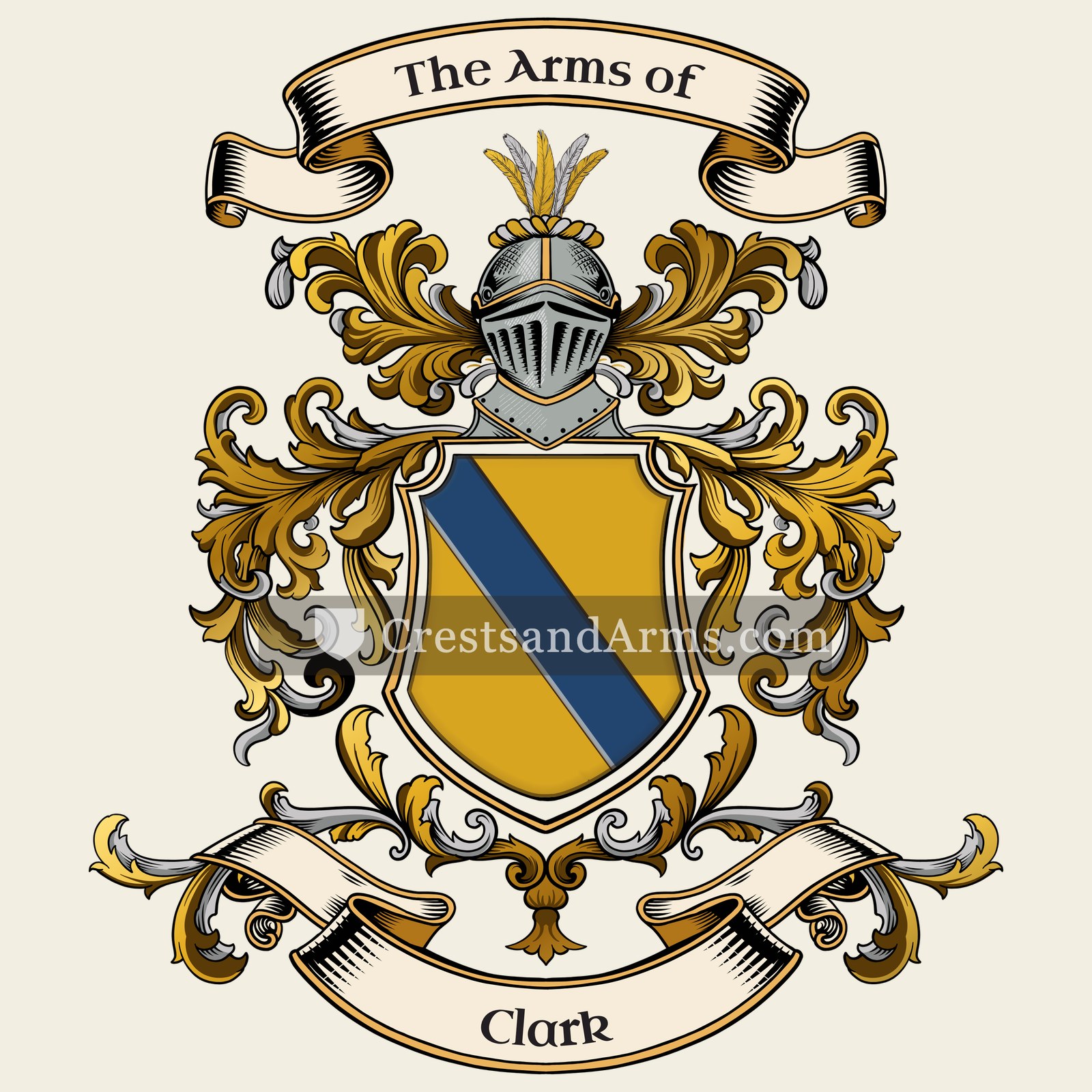


 cantonA mark of honour granted by the sovereign
 swordJustice, and military honour
 trefoilPerpetuity, and the Trinity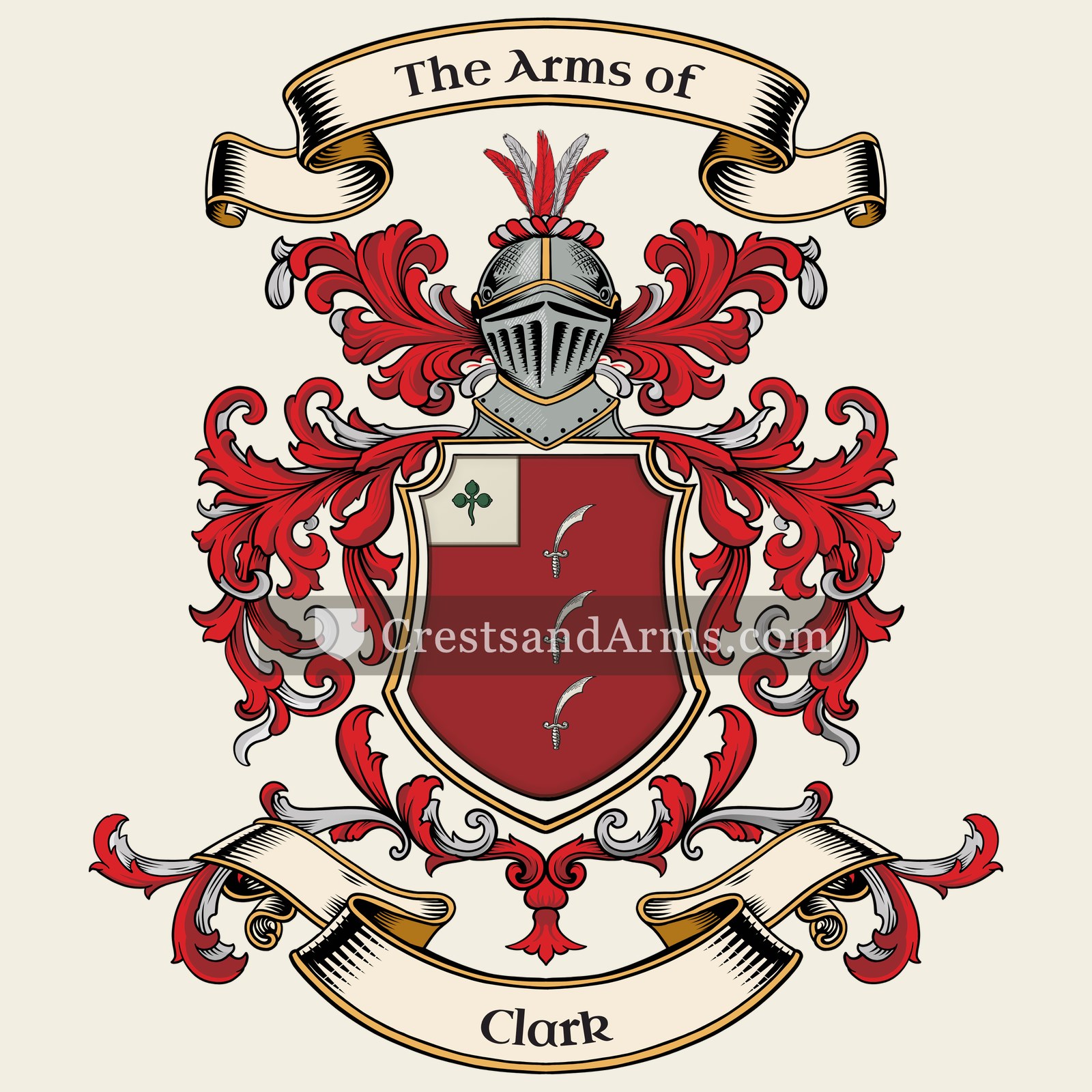


 bearStrength, cunning and protection of kin
 mulletThe third son, and a divine quality from above