Map of France showing where the Clarry arms are recorded
The Clarry arms were recorded in Limousin, c. 1663.
Limousin was upland farming country in central France, poor in money but full of old families. Estates were small and held for a very long time, and long tenure counted for more than wealth when arms were recorded.
This is where the arms were entered in the register. Families often moved to other parts of the country, so the same name can turn up in more than one region.
The body that granted and recorded arms in France in this period.
Louis XIV of France
Sovereign of the period
Louis XIV of France
1643–1715
Reigning in France when the Clarry arms are first recorded.
How Arms Worked in France
In France, a coat of arms was a mark of honor that passed down through the male line to all legitimate descendants. Families often used the same shield without changes to show their shared heritage. If a branch wanted to stand out, they could add a small mark to their shield to show their specific place in the family tree.
Granting authority
The Juge d'armes de France acted as the official authority that regulated and verified coats of arms across the country.
How they got arms
Families typically inherited their arms from ancestors, though they could also receive them through royal grants or by proving their noble status.
Where arms were recorded
Coats of arms were officially recorded in the Armorial Général de France, which began its main collection in the year 1696.
The family's standing
Recorded among the armigerous families of Limousin.
Origin & History of the Clarry Family in France
The family name Clarry traces its roots back to the rugged landscapes of the Limousin region in central France. By the year 1663, records confirm that members of the family were already well-established in this area, living as part of a society deeply connected to the land and the local parish structure. During the seventeenth century, Limousin was a province defined by its granite hills and dense forests, which shaped the daily lives and occupations of those residing there. Families like the Clarrys often served as essential links in the local community, participating in the agricultural traditions and the social life of the rural villages. As the name appears in historical documents from this period, it reflects a lineage that was firmly integrated into the regional identity of France long before the major political shifts of the following centuries.
Meaning of the Clarry family crest colors & symbols
Symbols on this shield
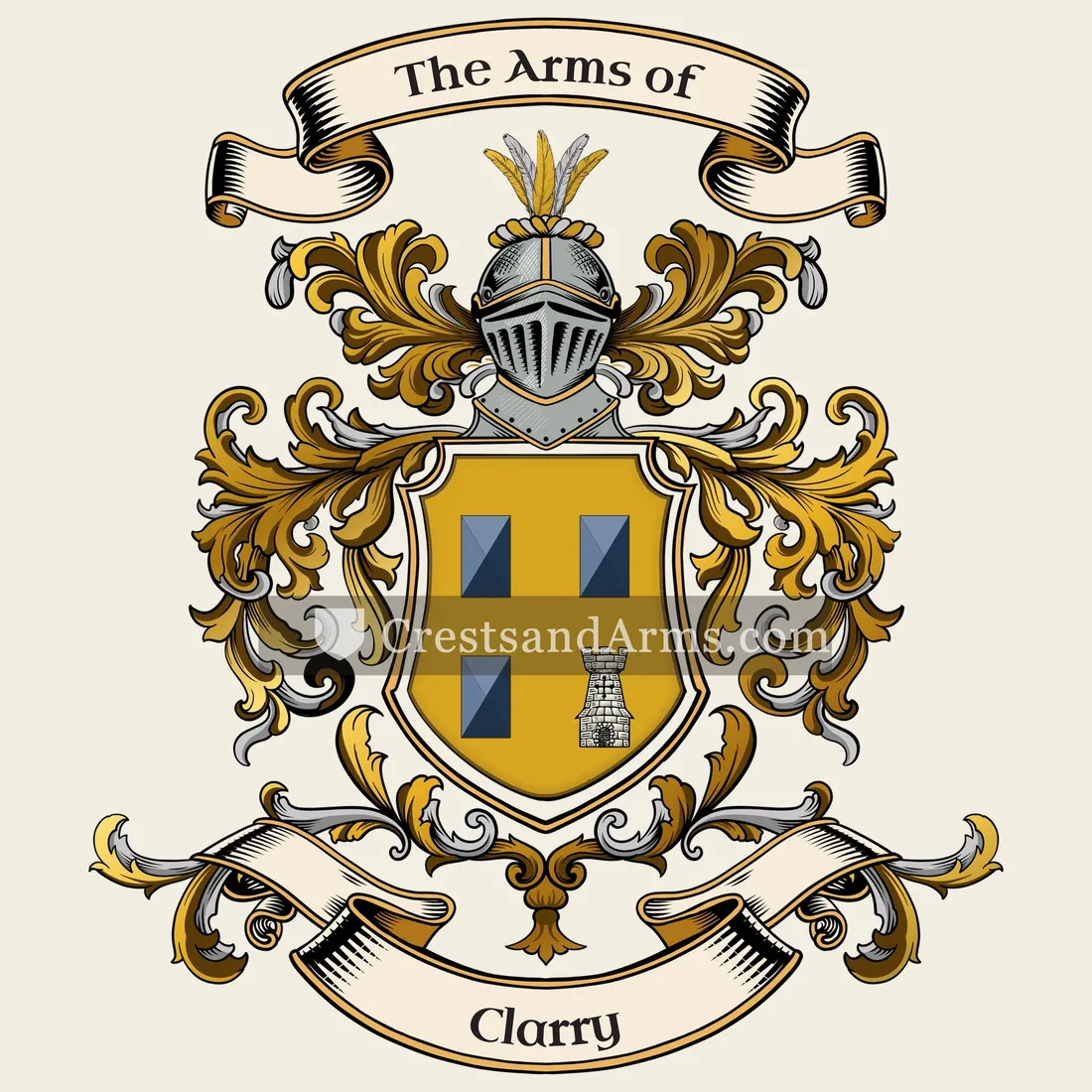
billetThe sealed letter, and a message delivered
towerGrandeur and solidity, and a stronghold defended
Colours
Gold (Or)Means: Generosity
Blue (Azure)Means: Loyalty and truth
Silver (Argent)Means: Peace and sincerity
Historical info
Source
J. B. Rietstap, Armorial Général, Gouda: G. B. van Goor Zonen, 1884–87
Blazon (the actual original written record)
“Parti: au 1 d'or à trois bill. malordonnées d'azur; au 2 d'azur à une tour d'arg., ouv et aj. de sa., posée en barre, mouv. du canton dextre de la p. Cq. cour. C.: un bras, paré d'arg., iss. de la couronne, la main de carn. empoignant une bannière aux armes du 1, flottant à sen. L. d'or et d'azur.”
Austriac. 1772
Digital archive packCoat of arms PNG, gold border print PDF, vector SVG and the certificate of authenticity. Sent to your email in minutes.
Map of Austria showing where the Clarry arms are recorded
The Clarry arms were recorded in Austria, c. 1772.
Arms such as these were typically recorded in Tyrol.
Tyrol was mountain country in western Austria, where the valleys were held by families who had been there a very long time. Old tenure counted for more than money, and old families carried arms.
This is where the arms were entered in the register. Families often moved to other parts of the country, so the same name can turn up in more than one region.
Region
Tyrol
First recorded
1772
Granting Authority for the Clarry Arms
Imperial and Royal chancery
Sodacan · CC BY-SA 3.0
The body that granted and recorded arms in Austria in this period.
Joseph II, Holy Roman Emperor
Sovereign of the period
Joseph II, Holy Roman Emperor
1765–1790
Reigning in France when the Clarry arms are first recorded.
How Arms Worked in Austria
Austrian coats of arms were often linked directly to noble titles granted by the Emperor. These symbols belonged to the entire family line rather than just one individual. When a family grew, new branches kept the original design without needing to change it. This system allowed all members of a noble house to share the same identity across many generations.
Granting authority
The Imperial and Royal chancery managed all heraldic matters and controlled the official granting of arms throughout the Austrian lands.
How they got arms
Families typically received their arms through a formal imperial decree that often accompanied the elevation of a person to noble status.
Where arms were recorded
Official records of these grants were kept in the Imperial Register of Nobility which began its formal documentation process in 1453.
The family's standing
Recorded among the armigerous families of Austria.
Origin & History of the Clarry Family in Austria
The family name Clarry has roots that trace back to the rugged landscapes of the Tyrol region in western Austria. By the year 1772, records confirm that members of the family were already established within this mountainous territory. During this period, the Tyrol was a vital crossroads for trade and culture between the German-speaking lands and Italy. Families living in this area often worked in agriculture, forestry, or local administration to support the growing communities nestled in the Alps. The presence of the Clarry name in these early records suggests that the family was part of the local social fabric during a time of significant change under the rule of the Habsburg monarchy. As the region modernized, these early ancestors helped shape the identity of the alpine villages where they resided, leaving a lasting mark on the history of the Austrian countryside.
Meaning of the Clarry family crest colors & symbols
Symbols on this shield
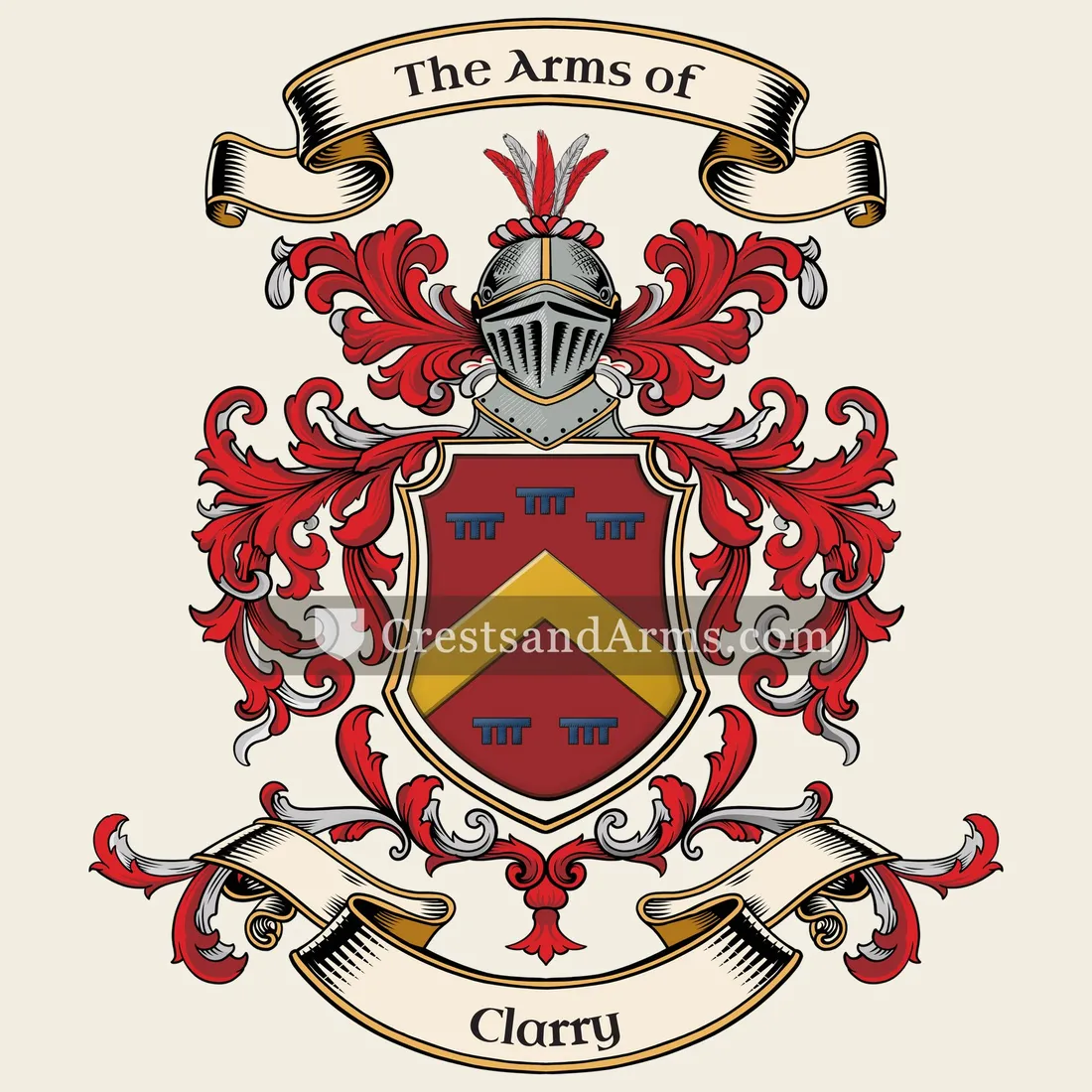
chevronProtection, and faithful service completed
labelThe eldest son, during his father's life
Colours
Red (Gules)Means: Military strength
Gold (Or)Means: Generosity
Blue (Azure)Means: Loyalty and truth
Historical info
Source
Sir Bernard Burke, The General Armory of England, Scotland, Ireland and Wales, London: Harrison & Sons, 1884
Blazon (the actual original written record)
“Gu. three chev. or, a label of five points over all, in chief az”
Englandc. 1620
Digital archive packCoat of arms PNG, gold border print PDF, vector SVG and the certificate of authenticity. Sent to your email in minutes.
Map of England showing where the Clarry arms are recorded
The Clarry arms were recorded in England, c. 1620.
Arms such as these were typically recorded in York.
Yorkshire is the largest of the English counties, and it held more gentry families than any other. Land there was split among a great many households rather than a few, so a great many of them carried arms.
This is where the arms were entered in the register. Families often moved to other parts of the country, so the same name can turn up in more than one region.
The body that granted and recorded arms in England in this period.
James VI and I
Sovereign of the period
James VI and I
1603–1625
Reigning in France when the Clarry arms are first recorded.
How Arms Worked in England
English heraldry allowed arms to be shared by all legitimate descendants of the original owner. These symbols were treated as personal property that moved through the generations to all children. While the eldest son kept the original design, other family members could use the same shield without needing to change it or register their own unique versions.
Granting authority
The College of Arms in London has regulated the use of coats of arms throughout England and Wales since 1484.
How they got arms
Families typically obtained their coats of arms through a formal grant from the Crown or by proving their ancient right to them.
Where arms were recorded
All official coats of arms are recorded in the registers kept at the College of Arms, which date back to the fifteenth century.
The family's standing
Recorded among the armigerous families of England.
Origin & History of the Clarry Family in England
The surname Clarry is a rare name that appears in historical records within the northern English city of York during the early seventeenth century. By 1620, families bearing this name were established in the region, likely working as tradespeople or laborers during a time of significant social change in England. The name itself is thought to be a variation of older occupational or locational terms, though its exact linguistic roots remain a subject of debate among historians. During this period, York served as a major hub for commerce and religion, and families like the Clarrys were part of the growing urban population that navigated the transition from the Elizabethan era to the Stuart period. These early settlers helped shape the local community, leaving behind traces of their existence in parish registers and municipal documents that recorded births, marriages, and deaths. Their presence in York suggests that the family was well-integrated into the local economy and social life of northern England long before the industrial shifts of later centuries.
Clarry Meaning & Related Branches
Root word
Clarus
Latin term meaning clear, bright, or famous.
This name
ClarryDerived from a personal name signifying brightness, clarity, or illustrious character.
also spelled
Clari
Clarie
Klary
Clarey
Documented Sources
J. B. Rietstap, Armorial Général, Gouda: G. B. van Goor Zonen, 1884–87
Archives départementales de la Haute-Vienne, Registres paroissiaux et d'état civil
Boutier, Jean, Les sociétés rurales en Limousin aux XVIIe et XVIIIe siècles, 1984
Laronze, Georges, Histoire du Limousin, 1946
Digital archive packCoat of arms PNG, gold border print PDF, vector SVG and the certificate of authenticity. Sent to your email in minutes.


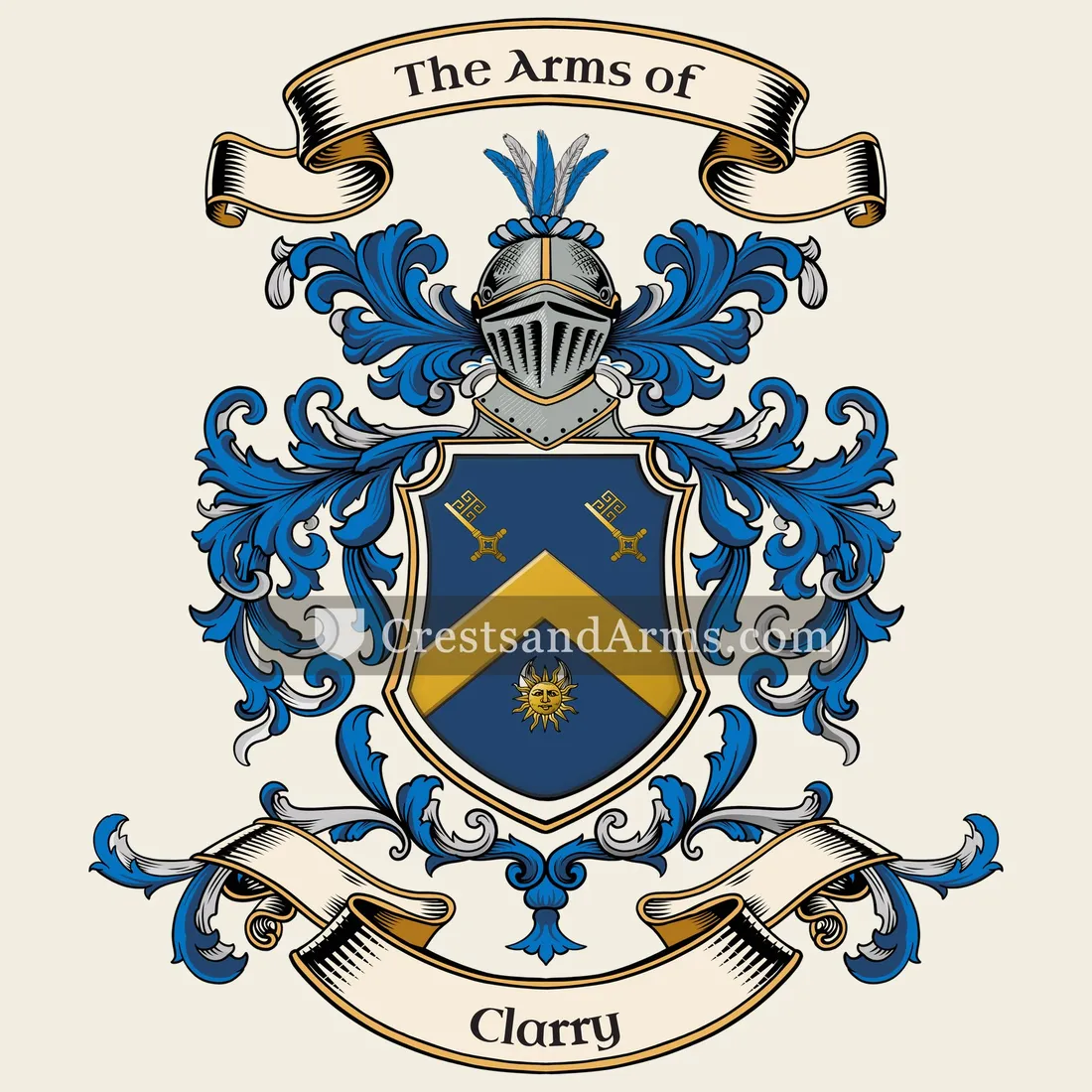
 chevronProtection, and faithful service completed
 crescentHonour by the sovereign, and the second son
 keyGuardianship, and the office of a steward
 sunGlory, splendour and the source of life
 chevronProtection, and faithful service completed
 crescentHonour by the sovereign, and the second son
 keyGuardianship, and the office of a steward
 sunGlory, splendour and the source of life


 billetThe sealed letter, and a message delivered
 towerGrandeur and solidity, and a stronghold defended


 labelThe eldest son, during his father's life