Map of France showing where the Clearman arms are recorded
The Clearman arms were recorded in France, c. 1576.
Arms such as these were typically recorded in Bretagne.
More families held coats of arms in Bretagne than anywhere else in France. The land was divided into many small estates rather than a few large ones, so far more households counted as gentry, and each needed a shield of its own to be told apart.
This is where the arms were entered in the register. Families often moved to other parts of the country, so the same name can turn up in more than one region.
The body that granted and recorded arms in France in this period.
Henry III of France
Sovereign of the period
Henry III of France
1574–1589
Reigning in France when the Clearman arms are first recorded.
How Arms Worked in France
In France, a coat of arms was a mark of honor that passed down through the male line to all legitimate descendants. Families often used the same shield without changes to show their shared heritage. If a branch wanted to stand out, they could add a small mark to their shield to show their specific place in the family tree.
Granting authority
The Juge d'armes de France acted as the official authority that regulated and verified coats of arms across the country.
How they got arms
Families typically inherited their arms from ancestors, though they could also receive them through royal grants or by proving their noble status.
Where arms were recorded
Coats of arms were officially recorded in the Armorial Général de France, which began its main collection in the year 1696.
The family's standing
Recorded among the armigerous families of France.
Origin & History of the Clearman Family in France
The family name Clearman finds its earliest documented roots in the rugged landscape of Bretagne, France, during the late sixteenth century. Records confirm that members of the family were established in this region by 1576, a time when Bretagne functioned as a distinct province with its own unique customs and strong maritime connections. The name likely evolved from local linguistic influences in the area, reflecting the way families were identified by their trade, their physical traits, or their specific location within the Breton countryside. As the family lived through the transition from the Renaissance into the early modern period, they were part of a society deeply shaped by the Catholic Church and the complex social hierarchies of rural France. Their presence in Bretagne suggests that the family was integrated into the local agricultural or merchant communities that defined the region during this era. By remaining in this coastal territory, the family was positioned at the crossroads of European trade and cultural exchange, which played a significant role in how their identity and surname were preserved over the following centuries.
Meaning of the Clearman family crest colors & symbols
Symbols on this shield
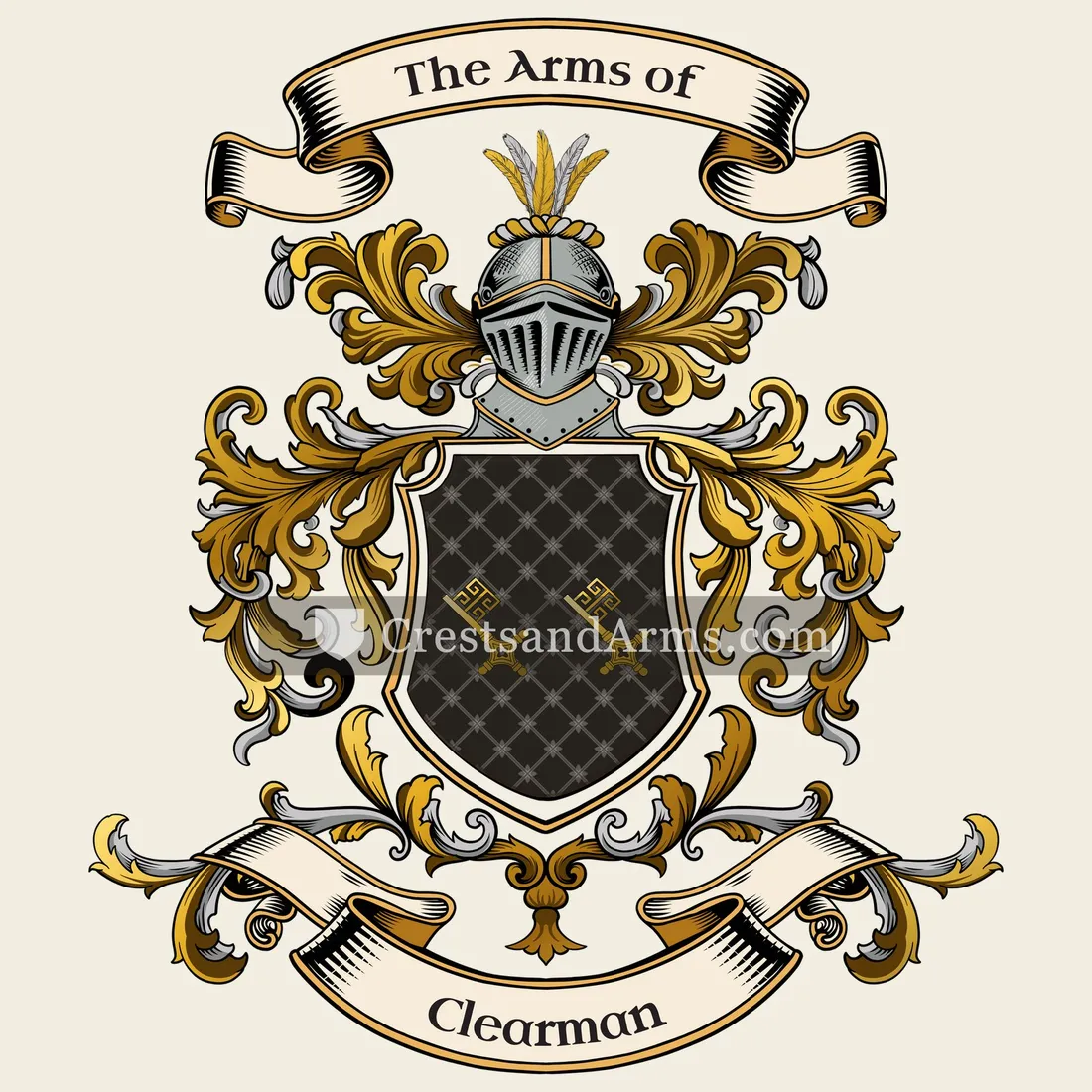
keyGuardianship, and the office of a steward
Colours
Black (Sable)Means: Constancy
Gold (Or)Means: Generosity
Historical info
Source
J. B. Rietstap, Armorial Général, Gouda: G. B. van Goor Zonen, 1884–87
Blazon (the actual original written record)
“De sa. à deux clés d'or, passées en saut.”
GenevoisGenevois, c. 1745
Digital archive packCoat of arms PNG, gold border print PDF, vector SVG and the certificate of authenticity. Sent to your email in minutes.
Map of Switzerland showing where the Clearman arms are recorded
The Clearman arms were recorded in Genevois, c. 1745.
Genevois was Alpine country south of Geneva, held in small estates by families who stayed put. Land there passed down the same line for centuries, and long tenure counted for more than wealth.
This is where the arms were entered in the register. Families often moved to other parts of the country, so the same name can turn up in more than one region.
The body that granted and recorded arms in Switzerland in this period.
How Arms Worked in Switzerland
In Switzerland, coats of arms were not restricted to the nobility and were often adopted by common citizens and families. These symbols were passed down through generations to show family identity. When branches of a family grew, they often changed small details of the design to distinguish their own line from the original group.
Granting authority
Cantonal and civic authorities managed the use of coats of arms within their specific regions and local jurisdictions.
How they got arms
Families typically assumed their own coats of arms based on local custom rather than receiving them from a central monarch.
Where arms were recorded
Arms were recorded in various cantonal and civic registers starting from the fourteenth century throughout the Swiss region.
The family's standing
Recorded among the armigerous families of Genevois.
Origin & History of the Clearman Family in Switzerland
The Clearman family name finds its historical roots in the Genevois region of Switzerland, where records confirm members of the family were established by 1745. During the mid-eighteenth century, this area was a hub of intellectual and social activity, nestled between the Jura Mountains and the Alps. Families in this region often lived in small, tight-knit communities that relied on agriculture and local trade. Because the name suggests a connection to the clearing of land, it is likely that early ancestors were involved in the difficult work of preparing forests for farming or building new settlements. Life in the Genevois at this time was governed by strict local customs and the influence of the nearby city of Geneva, which acted as a major center for commerce and culture. These early Clearmans were part of a resilient population that navigated the political shifts of the region while maintaining their local ties to the land.
Meaning of the Clearman family crest colors & symbols
Symbols on this shield
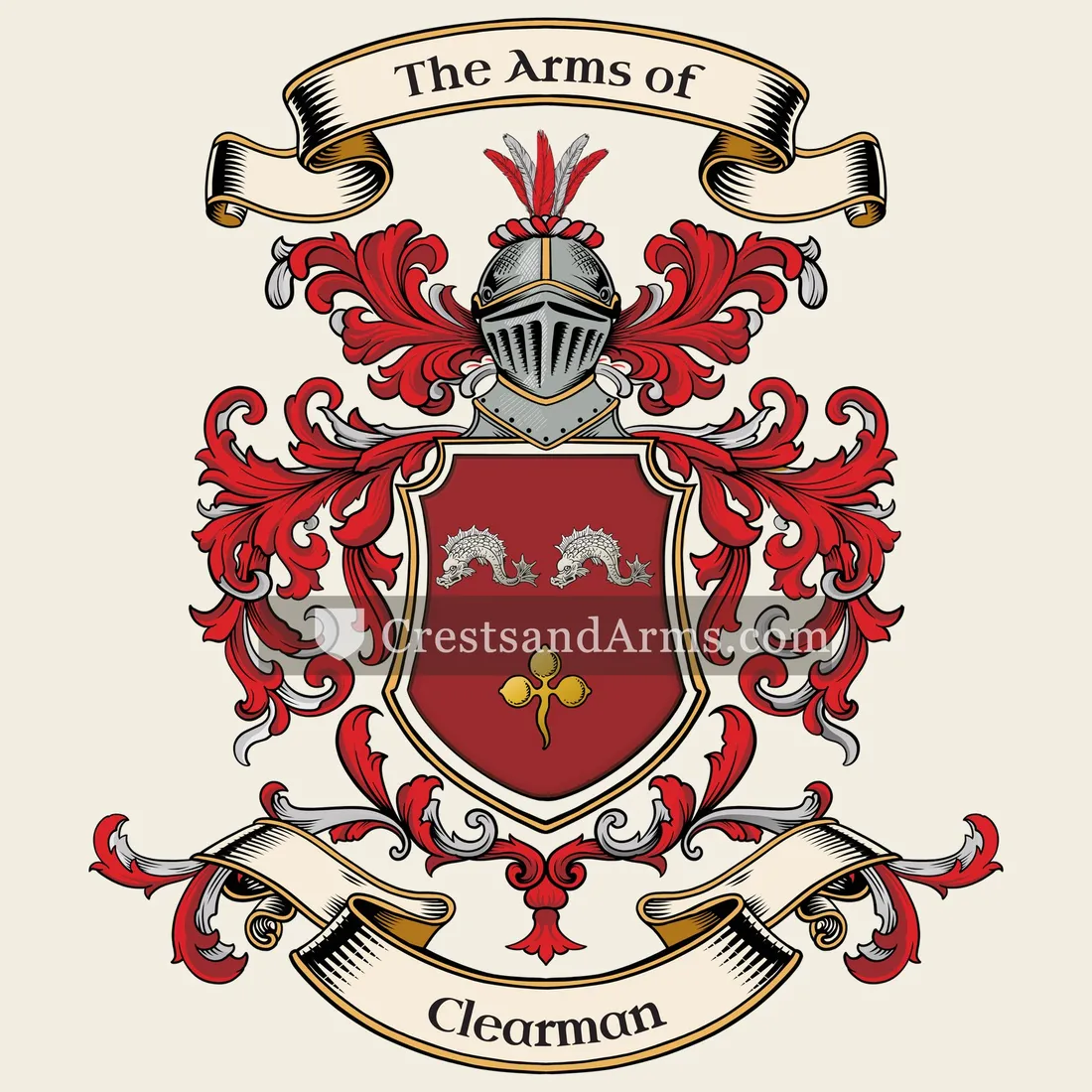
trefoilPerpetuity, and the Trinity
dolphinSwiftness, charity and love
Colours
Red (Gules)Means: Military strength
Gold (Or)Means: Generosity
Silver (Argent)Means: Peace and sincerity
Historical info
Source
Sir Bernard Burke, The General Armory of England, Scotland, Ireland and Wales, London: Harrison & Sons, 1884
Blazon (the actual original written record)
“Gu. the field replenished with trefoils, two dolphins endorsed ar”
Englandc. 1620
Digital archive packCoat of arms PNG, gold border print PDF, vector SVG and the certificate of authenticity. Sent to your email in minutes.
Map of England showing where the Clearman arms are recorded
The Clearman arms were recorded in England, c. 1620.
Arms such as these were typically recorded in York.
Yorkshire is the largest of the English counties, and it held more gentry families than any other. Land there was split among a great many households rather than a few, so a great many of them carried arms.
This is where the arms were entered in the register. Families often moved to other parts of the country, so the same name can turn up in more than one region.
The body that granted and recorded arms in England in this period.
James VI and I
Sovereign of the period
James VI and I
1603–1625
Reigning in France when the Clearman arms are first recorded.
How Arms Worked in England
English heraldry allowed arms to be shared by all legitimate descendants of the original owner. These symbols were treated as personal property that moved through the generations to all children. While the eldest son kept the original design, other family members could use the same shield without needing to change it or register their own unique versions.
Granting authority
The College of Arms in London has regulated the use of coats of arms throughout England and Wales since 1484.
How they got arms
Families typically obtained their coats of arms through a formal grant from the Crown or by proving their ancient right to them.
Where arms were recorded
All official coats of arms are recorded in the registers kept at the College of Arms, which date back to the fifteenth century.
The family's standing
Recorded among the armigerous families of England.
Origin & History of the Clearman Family in England
The surname Clearman likely originated as a descriptive occupational name in medieval England, referring to a person who worked as a clerk or a scholar. By the early 17th century, the family had established a notable presence in the historic city of York. Records from 1620 confirm that members of the family were living in this region, which was a major center for trade and religious administration at the time. During this period, individuals with this name were often associated with the local merchant classes or the administrative offices of the York Minster. Living in a city defined by its Roman roots and medieval walls, these early Clearmans were part of a society transitioning from the Elizabethan era into the political shifts of the Stuart period. Their presence in York suggests they were integrated into the urban life of Northern England, likely contributing to the city's role as a hub for record-keeping and regional governance.
Clearman Meaning & Related Branches
Root word
Clarus
Latin term meaning clear, bright, famous, or illustrious.
This name
ClearmanA topographic or occupational name referring to a person who lived near a clearing or worked as a woodcutter.
also spelled
Clermond
Clermon
Clarmont
Documented Sources
J. B. Rietstap, Armorial Général, Gouda: G. B. van Goor Zonen, 1884–87
Archives départementales d'Ille-et-Vilaine, Série B: Cours et juridictions
Croix, Alain, La Bretagne aux 16e et 17e siècles: la vie, la mort, la foi, 1981
Le Moigne, Jean-Jacques, Histoire de la Bretagne, 1986
Digital archive packCoat of arms PNG, gold border print PDF, vector SVG and the certificate of authenticity. Sent to your email in minutes.


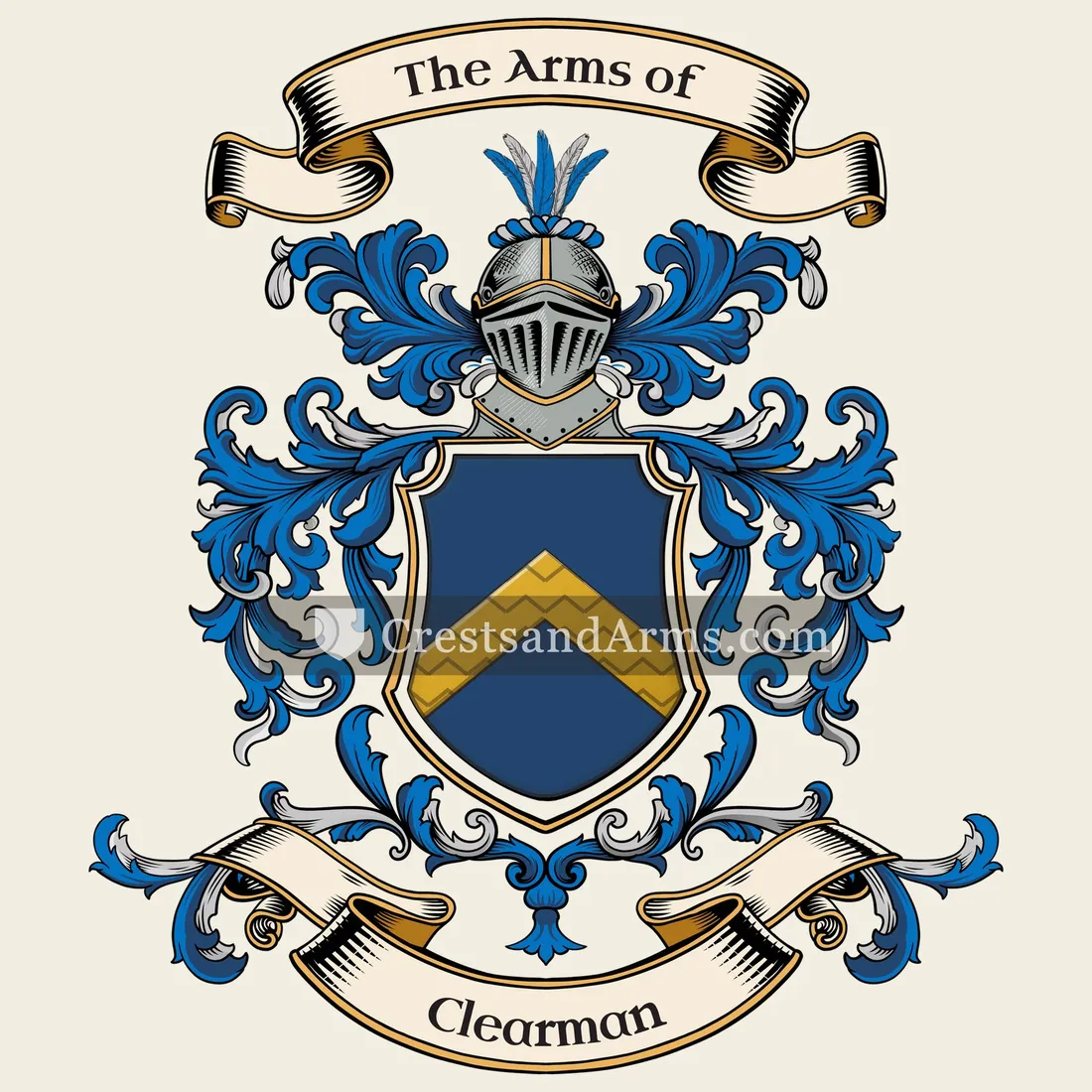
 chevronProtection, and faithful service completed
 chevronProtection, and faithful service completed


 keyGuardianship, and the office of a steward

 trefoilPerpetuity, and the Trinity
 dolphinSwiftness, charity and love