A record of documented arms, meaning and origin, researched for the Clemence family lines. Documented in 3 countries.
Reg. 4900 · German, A–C
Coat of Arms & Family Crest Details
Symbols on this shield
mountThe ground held, and steadfastness upon it
mulletThe third son, and a divine quality from above
armA person of action, industrious and laborious
fleur de lisPurity, light, and the sixth son
lionCourage, strength and royalty
Colours
Blue (Azure)Means: Loyalty and truth
Red (Gules)Means: Military strength
Silver (Argent)Means: Peace and sincerity
Gold (Or)Means: Generosity
Historical info
Source
J. B. Rietstap, Armorial Général, Gouda: G. B. van Goor Zonen, 1884–87
Blazon (the actual original written record)
“Ec.: au 1 d'azur à un tertre de trois coupeaux d'arg., sommé d'une étoile d'or; au 2 coupé de gu. sur arg.; à un bras, en pal, paré de l'un en l'autre; au 3 d'arg. à trois fleurs-de-lis de gu., défaillantes à sen.; au 4 de sa. au lion d'or. C.: 1º un chapeau de tournoi d'arg., retr. de gu., orné sur chaque côté d'une demi-fleur-de-lis de gu., sommées chacune d'une pl. d'aut. d'arg., 1. d'arg. et de gu.; 2º un tertre de trois coupeaux d'arg., accosté de deux bras parés d'un coupé d'arg. sur gu., les mains tenant ensemble une étoile d'or au-dessus du tertre; l. d'arg. et d'azur.”
Germanyc. 1744
Digital archive packCoat of arms PNG, gold border print PDF, vector SVG and the certificate of authenticity. Sent to your email in minutes.
Map of Germany showing where the Clemence arms are recorded
The Clemence arms were recorded in Germany, c. 1744.
Arms such as these were typically recorded in Bavaria.
Bavaria was a country of old landed families and walled market towns. Estates passed down the same line for centuries, and both the landowners and the leading townsmen kept arms, which is why so many Bavarian names sit in the registers.
This is where the arms were entered in the register. Families often moved to other parts of the country, so the same name can turn up in more than one region.
The body that granted and recorded arms in Germany in this period.
Charles VII, Holy Roman Emperor
Sovereign of the period
Charles VII, Holy Roman Emperor
1742–1745
Reigning in Germany when the Clemence arms are first recorded.
How Arms Worked in Germany
In the Holy Roman Empire, coats of arms were often granted to individuals by the Emperor or his representatives. These arms were then passed down through the generations to all legitimate descendants of the original holder. Younger branches of a family usually kept the same shield design without needing to change it, as the arms belonged to the entire lineage.
Granting authority
The Holy Roman Emperor held the sole power to grant new coats of arms throughout his vast imperial territories.
How they got arms
Families typically obtained their coats of arms through a formal imperial grant or by proving their noble status to the authorities.
Where arms were recorded
These grants were officially recorded in the Imperial Chancery registers, which began keeping formal records of such honors during the Middle Ages.
The family's standing
Recorded among the armigerous families of Germany.
Origin & History of the Clemence Family in Germany
The family name Clemence traces its roots to the Latin word *clemens*, which translates to mild, gentle, or merciful. In the context of 18th-century Bavaria, this name likely functioned as a descriptive surname used to identify individuals known for their calm temperament or kind nature. By 1744, families carrying this name were established within the Bavarian region, a time when the area was part of the Holy Roman Empire and undergoing significant social changes. During this period, the name was often recorded in local church registers as families participated in the life of their rural or town communities. These early ancestors were likely farmers, tradespeople, or skilled craftsmen who contributed to the local economy and social fabric of southern Germany. As the name spread through the region, it became a marker of identity for those living under the administrative and religious structures of the Bavarian electorate.
Coat of Arms & Family Crest Details
Symbols on this shield
bendDefence, and the scarf of a commander
chiefAuthority, wisdom and dominion
starThe celestial goddess, and nobility
Colours
Silver (Argent)Means: Peace and sincerity
Red (Gules)Means: Military strength
Gold (Or)Means: Generosity
Historical info
Source
Sir Bernard Burke, The General Armory of England, Scotland, Ireland and Wales, London: Harrison & Sons, 1884
Blazon (the actual original written record)
“Ar. two bends wavy gu. on a chief of the last, three estoiles or”
DorsetChardstock · Dorset, c. 1620
Digital archive packCoat of arms PNG, gold border print PDF, vector SVG and the certificate of authenticity. Sent to your email in minutes.
Map of England showing where the Clemence arms are recorded
The Clemence arms were recorded in Dorset, c. 1620.
Dorset was quiet farming and grazing country along the south coast. Its gentry were middling rather than grand, but they held their manors for a very long time, and long holding is what puts a name in the records.
This is where the arms were entered in the register. Families often moved to other parts of the country, so the same name can turn up in more than one region.
The body that granted and recorded arms in England in this period.
James VI and I
Sovereign of the period
James VI and I
1603–1625
Reigning in Germany when the Clemence arms are first recorded.
How Arms Worked in England
English heraldry allowed arms to be shared by all legitimate descendants of the original owner. These symbols were treated as personal property that moved through the generations to all children. While the eldest son kept the original design, other family members could use the same shield without needing to change it or register their own unique versions.
Granting authority
The College of Arms in London has regulated the use of coats of arms throughout England and Wales since 1484.
How they got arms
Families typically obtained their coats of arms through a formal grant from the Crown or by proving their ancient right to them.
Where arms were recorded
All official coats of arms are recorded in the registers kept at the College of Arms, which date back to the fifteenth century.
The family's standing
Recorded among the armigerous families of Dorset.
Origin & History of the Clemence Family in England
The surname Clemence finds its roots in the Latin name Clemens, which translates to mild, gentle, or merciful. In England, the name became popular following the influence of early saints and popes who bore the title. By the early 17th century, the family had established a notable presence in the county of Dorset. Historical records confirm that members of the Clemence family were living in this coastal region by 1620, likely working as farmers or tradespeople in the rural communities of the West Country. During this period, families often lived in the same parishes for generations, which helped the name take firm root in the local landscape. As the family grew, they contributed to the social and economic life of Dorset, helping to shape the history of the region before many families began to migrate further across England or overseas.
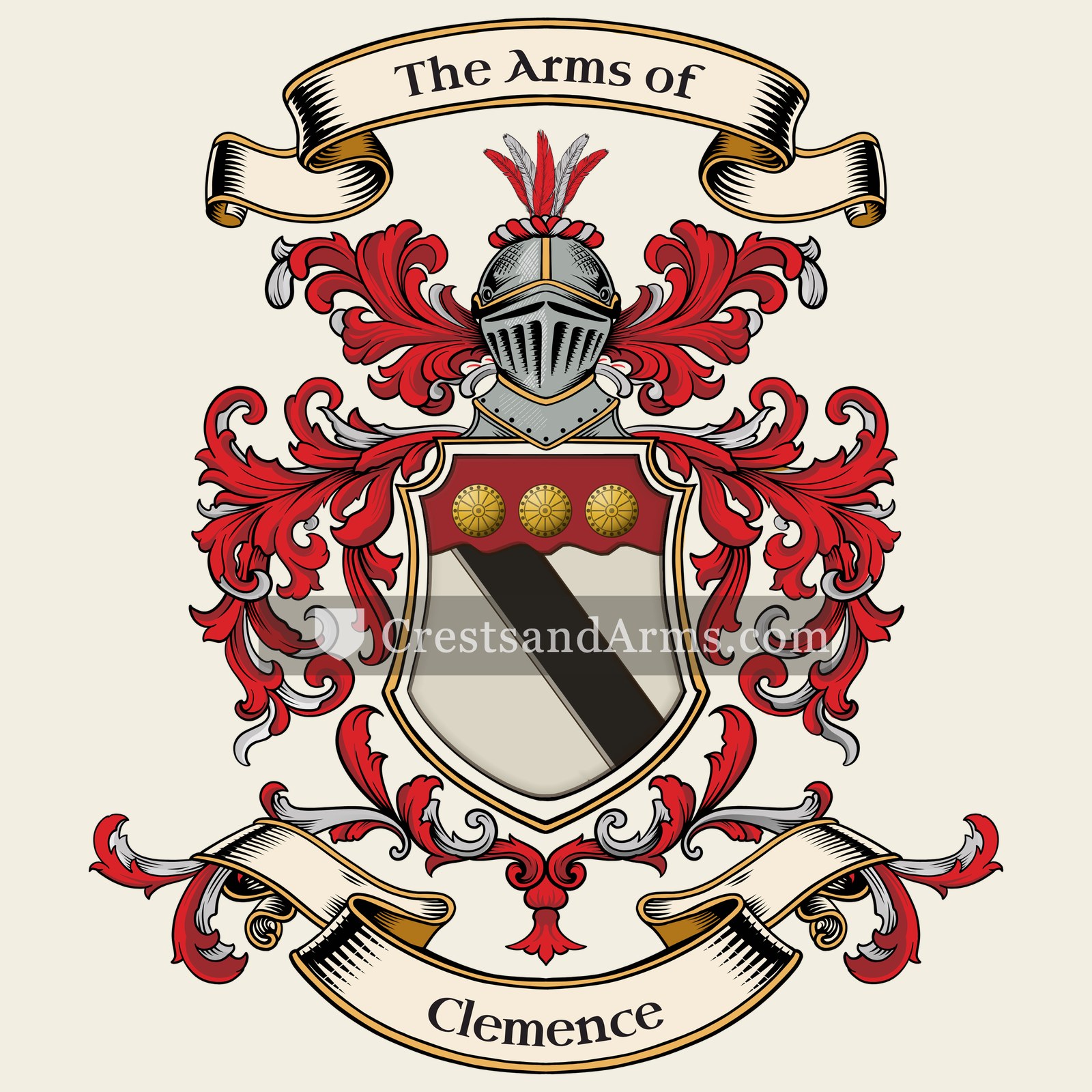
Coat of Arms & Family Crest Details
Symbols on this shield
bendDefence, and the scarf of a commander
chiefAuthority, wisdom and dominion
roundelA coin, and one who has been to the crusades
Colours
Silver (Argent)Means: Peace and sincerity
Black (Sable)Means: Constancy
Red (Gules)Means: Military strength
Gold (Or)Means: Generosity
Historical info
Source
Sir Bernard Burke, The General Armory of England, Scotland, Ireland and Wales, London: Harrison & Sons, 1884
Blazon (the actual original written record)
“Ar. two bends wavy sa. on a chief gu. three bezants”
CavanCavan, c. 1677
Digital archive packCoat of arms PNG, gold border print PDF, vector SVG and the certificate of authenticity. Sent to your email in minutes.
Map of Ireland showing where the Clemence arms are recorded
The Clemence arms were recorded in Cavan, c. 1677.
Cavan was drumlin and lake country on the edge of Ulster, planted in the seventeenth century. The new landowners took formal grants, and formal grants were recorded with arms.
This is where the arms were entered in the register. Families often moved to other parts of the country, so the same name can turn up in more than one region.
The body that granted and recorded arms in Ireland in this period.
Charles II of England
Sovereign of the period
Charles II of England
1660–1685
Reigning in Germany when the Clemence arms are first recorded.
How Arms Worked in Ireland
The Ulster King of Arms granted coats of arms to individuals who proved their social standing and good character. These symbols were typically inherited by all legitimate descendants of the original holder. If a family branch wanted a unique look, they could apply for a specific change to their design through the office to ensure their identity remained distinct.
Granting authority
The Ulster King of Arms acted as the official body that regulated and issued all coats of arms throughout Ireland.
How they got arms
Families obtained their arms through formal grants issued by the office after proving their eligibility and paying the required fees.
Where arms were recorded
All official grants were recorded in the registers held by the Ulster King of Arms starting from the year 1552.
The family's standing
Recorded among the armigerous families of Cavan.
Origin & History of the Clemence Family in Ireland
The family name Clemence has a distinct history in Ireland, particularly within County Cavan where records confirm members of the family were established by 1677. The name itself is derived from the Latin word clemens, which means mild or merciful, and it likely arrived in Ireland through migration from England or France during the seventeenth century. During this period, the landscape of Cavan was undergoing significant social and economic shifts due to land settlements and the movement of new families into the region. Families like the Clemences often settled on agricultural lands, integrating into the local community while maintaining their distinct surname. Over time, these early settlers became part of the fabric of rural Irish life, contributing to the development of the local economy and the growth of the population in the northern midlands. By establishing themselves in Cavan, the early Clemence family helped anchor the name in Irish history, leaving a trail of records that document their presence during a time of great transition.
Related Branches & Arms
Root word
Clemens
Latin term meaning merciful, gentle, or mild in disposition.
This name
ClemenceA surname derived from the Latin adjective denoting a compassionate or kind individual.
also spelled
Clemens
Milwitz
Klemens
Clemence
Klemens fon und Milvits
Documented Sources
J. B. Rietstap, Armorial Général, Gouda: G. B. van Goor Zonen, 1884–87


 mountThe ground held, and steadfastness upon it
 mulletThe third son, and a divine quality from above
 armA person of action, industrious and laborious
 fleur de lisPurity, light, and the sixth son
 lionCourage, strength and royalty
 mountThe ground held, and steadfastness upon it
 mulletThe third son, and a divine quality from above
 armA person of action, industrious and laborious
 fleur de lisPurity, light, and the sixth son
 lionCourage, strength and royalty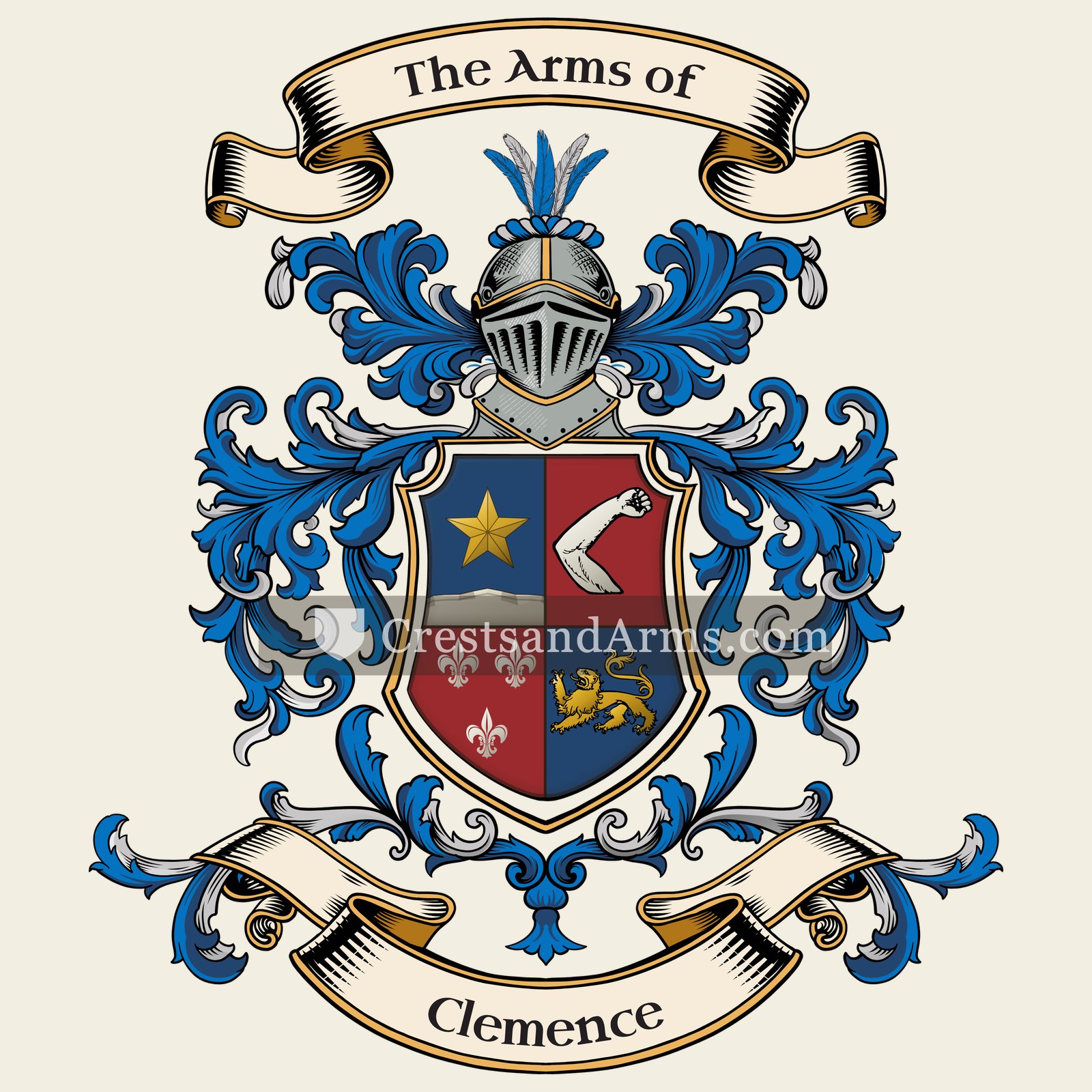


 bendDefence, and the scarf of a commander
 chiefAuthority, wisdom and dominion
 starThe celestial goddess, and nobility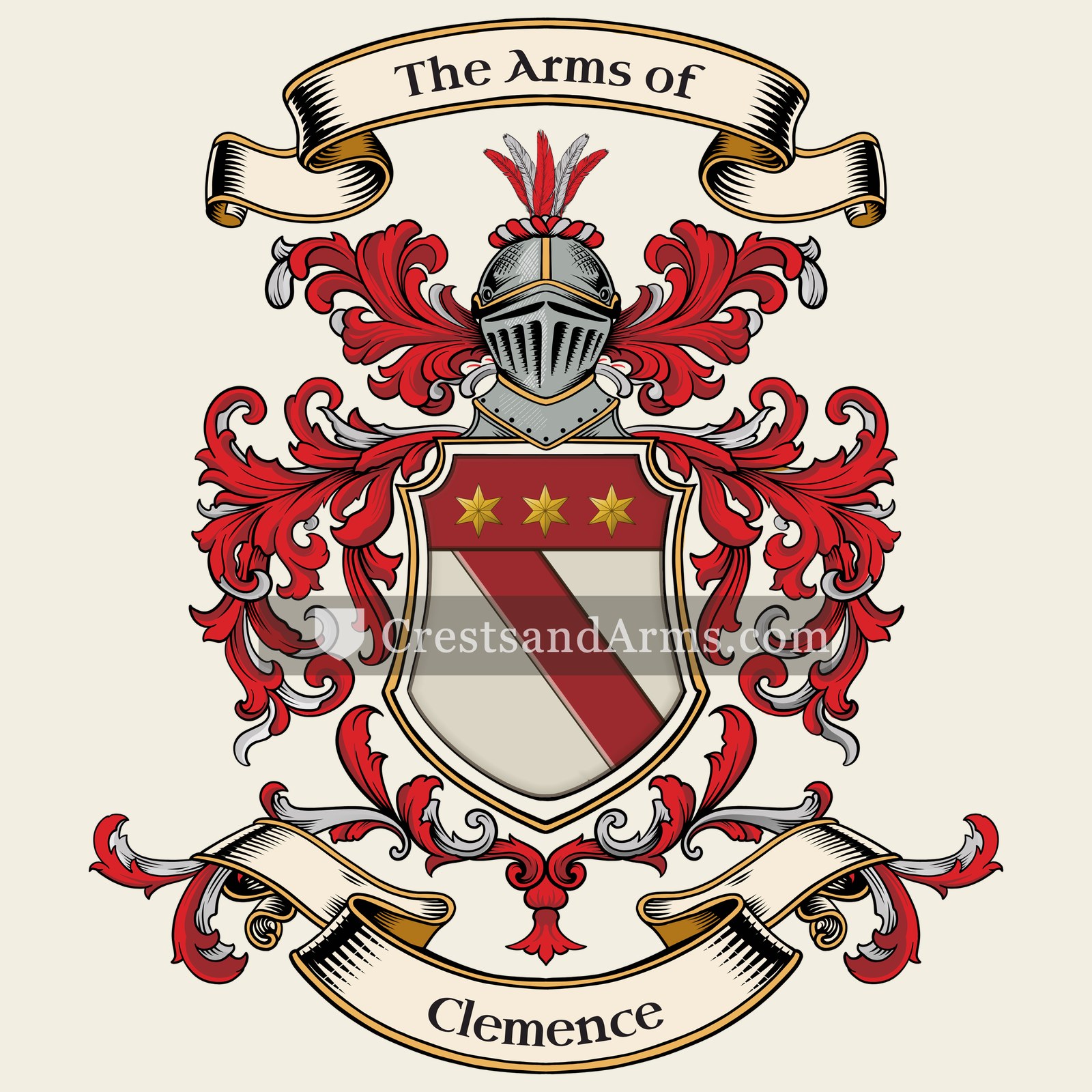


 roundelA coin, and one who has been to the crusades