Map of France showing where the Clermont arms are recorded
The Clermont arms were recorded in France, c. 1576.
Arms such as these were typically recorded in Bretagne.
More families held coats of arms in Bretagne than anywhere else in France. The land was divided into many small estates rather than a few large ones, so far more households counted as gentry, and each needed a shield of its own to be told apart.
This is where the arms were entered in the register. Families often moved to other parts of the country, so the same name can turn up in more than one region.
The body that granted and recorded arms in France in this period.
Henry III of France
Sovereign of the period
Henry III of France
1574–1589
Reigning in France when the Clermont arms are first recorded.
How Arms Worked in France
In France, a coat of arms was a mark of honor that passed down through the male line to all legitimate descendants. Families often used the same shield without changes to show their shared heritage. If a branch wanted to stand out, they could add a small mark to their shield to show their specific place in the family tree.
Granting authority
The Juge d'armes de France acted as the official authority that regulated and verified coats of arms across the country.
How they got arms
Families typically inherited their arms from ancestors, though they could also receive them through royal grants or by proving their noble status.
Where arms were recorded
Coats of arms were officially recorded in the Armorial Général de France, which began its main collection in the year 1696.
The family's standing
Recorded among the armigerous families of France.
Origin & History of the Clermont Family in France
The name Clermont originates from the French words for clear and mountain, suggesting that the earliest families likely lived near a prominent, visible hill or a fortified height. By the late sixteenth century, the family established a notable presence in the region of Bretagne, appearing in local records by 1576. During this era, families with this name were often tied to the land and the shifting political landscape of provincial France. As the family grew, they integrated into the social structures of the time, moving through the rural landscapes of western France to build lives centered on agriculture and local governance. Their history reflects the broader patterns of movement and regional stability that defined many families living in the French provinces during the late Renaissance period.
Coat of Arms & Family Crest Details
Symbols on this shield
keyGuardianship, and the office of a steward
Colours
Black (Sable)Means: Constancy
Gold (Or)Means: Generosity
Historical info
Source
J. B. Rietstap, Armorial Général, Gouda: G. B. van Goor Zonen, 1884–87
Blazon (the actual original written record)
“De sa. à deux clés d'or, passées en saut.”
GenevoisGenevois, c. 1745
Digital archive packCoat of arms PNG, gold border print PDF, vector SVG and the certificate of authenticity. Sent to your email in minutes.
Map of Switzerland showing where the Clermont arms are recorded
The Clermont arms were recorded in Genevois, c. 1745.
Genevois was Alpine country south of Geneva, held in small estates by families who stayed put. Land there passed down the same line for centuries, and long tenure counted for more than wealth.
This is where the arms were entered in the register. Families often moved to other parts of the country, so the same name can turn up in more than one region.
The body that granted and recorded arms in Switzerland in this period.
How Arms Worked in Switzerland
In Switzerland, coats of arms were not restricted to the nobility and were often adopted by common citizens and families. These symbols were passed down through generations to show family identity. When branches of a family grew, they often changed small details of the design to distinguish their own line from the original group.
Granting authority
Cantonal and civic authorities managed the use of coats of arms within their specific regions and local jurisdictions.
How they got arms
Families typically assumed their own coats of arms based on local custom rather than receiving them from a central monarch.
Where arms were recorded
Arms were recorded in various cantonal and civic registers starting from the fourteenth century throughout the Swiss region.
The family's standing
Recorded among the armigerous families of Genevois.
Origin & History of the Clermont Family in Switzerland
The family name Clermont has deep roots in the region of Genevois, where records confirm members of the family were well-established by 1745. During this period, the area was a crossroads of cultural and political influence between the Swiss Confederation and the neighboring Duchy of Savoy. Families like the Clermonts often played vital roles in the local economy, frequently working as skilled tradespeople or landowners who helped manage the rural landscape. Because the Genevois region experienced shifting borders and complex legal changes during the eighteenth century, the family likely navigated a society that valued community ties and local administrative service. By settling in this specific part of Switzerland, the early Clermonts became part of a long tradition of families who helped shape the social fabric of the Alpine foothills through their daily work and civic participation.
Coat of Arms & Family Crest Details
Symbols on this shield
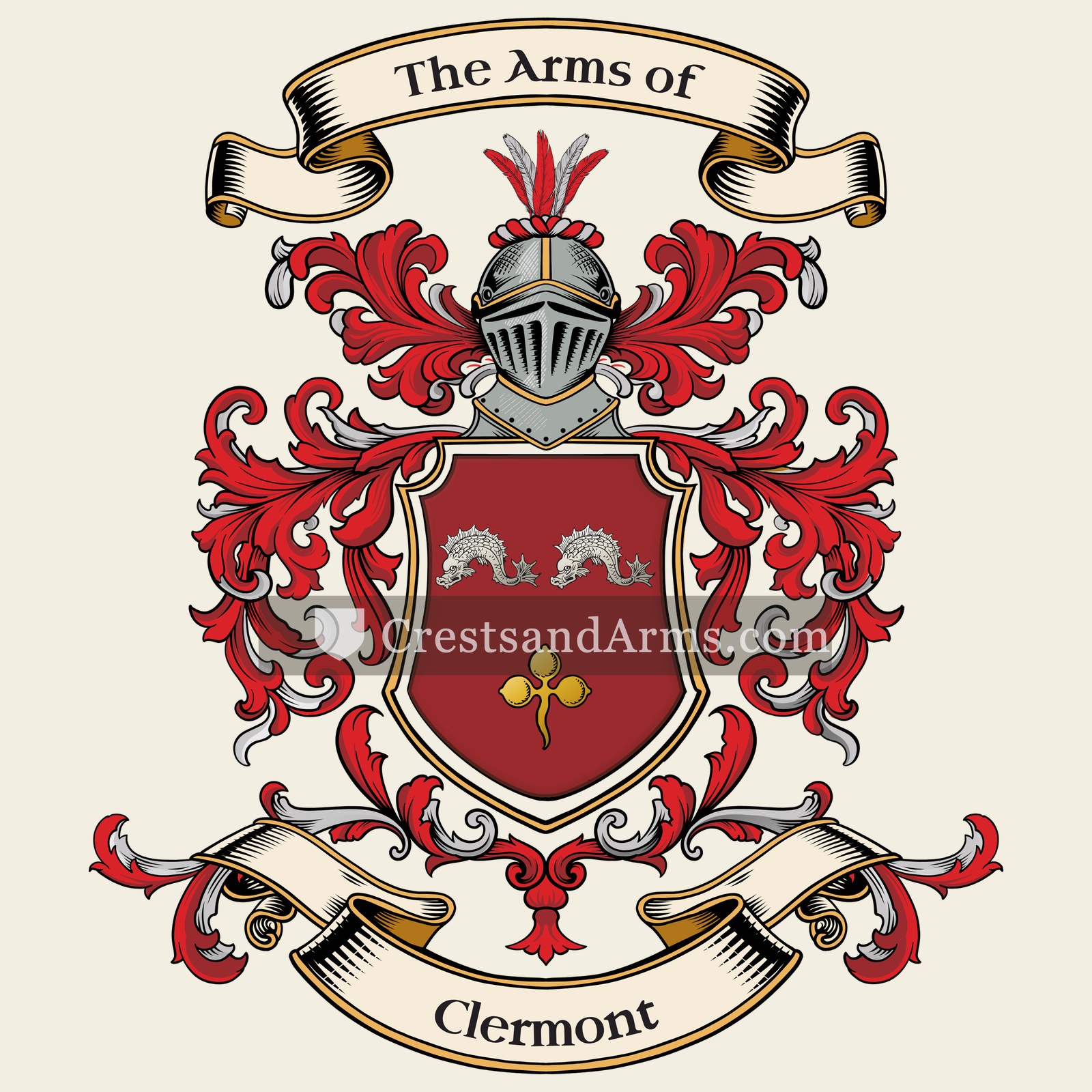
trefoilPerpetuity, and the Trinity
dolphinSwiftness, charity and love
Colours
Red (Gules)Means: Military strength
Gold (Or)Means: Generosity
Silver (Argent)Means: Peace and sincerity
Historical info
Source
Sir Bernard Burke, The General Armory of England, Scotland, Ireland and Wales, London: Harrison & Sons, 1884
Blazon (the actual original written record)
“Gu. the field replenished with trefoils, two dolphins endorsed ar”
Englandc. 1620
Digital archive packCoat of arms PNG, gold border print PDF, vector SVG and the certificate of authenticity. Sent to your email in minutes.
Map of England showing where the Clermont arms are recorded
The Clermont arms were recorded in England, c. 1620.
Arms such as these were typically recorded in York.
Yorkshire is the largest of the English counties, and it held more gentry families than any other. Land there was split among a great many households rather than a few, so a great many of them carried arms.
This is where the arms were entered in the register. Families often moved to other parts of the country, so the same name can turn up in more than one region.
The body that granted and recorded arms in England in this period.
James VI and I
Sovereign of the period
James VI and I
1603–1625
Reigning in France when the Clermont arms are first recorded.
How Arms Worked in England
English heraldry allowed arms to be shared by all legitimate descendants of the original owner. These symbols were treated as personal property that moved through the generations to all children. While the eldest son kept the original design, other family members could use the same shield without needing to change it or register their own unique versions.
Granting authority
The College of Arms in London has regulated the use of coats of arms throughout England and Wales since 1484.
How they got arms
Families typically obtained their coats of arms through a formal grant from the Crown or by proving their ancient right to them.
Where arms were recorded
All official coats of arms are recorded in the registers kept at the College of Arms, which date back to the fifteenth century.
The family's standing
Recorded among the armigerous families of England.
Origin & History of the Clermont Family in England
The family name Clermont traces its roots in England to the early seventeenth century, with documented evidence placing members of the family in the city of York by 1620. During this period, York served as a vital northern hub for trade and administration, suggesting that early ancestors were likely integrated into the urban professional or merchant classes. The name itself is of French origin, meaning clear mountain, and it was brought to England by settlers who traveled across the channel to seek new opportunities. As these individuals established themselves in Yorkshire, they became part of the local social fabric, navigating the complex religious and political shifts that defined England during the reign of King James I. By settling in a major regional center like York, the family gained access to local guilds and legal records, which helped them secure their place in the community for generations to come.
Clermont Meaning & Related Branches
Root word
Clarus and Mons
Latin for clear or bright and mountain or hill.
This name
ClermontRefers to a person who lived near a clear or bright mountain.
also spelled
Clermond
Clermon
Clarmont
Documented Sources
J. B. Rietstap, Armorial Général, Gouda: G. B. van Goor Zonen, 1884–87
Potier de Courcy, Pol, Nobiliaire et armorial de Bretagne, 1890
Archives départementales d'Ille-et-Vilaine, Série E: Familles et seigneuries
Archives départementales du Finistère, Série B: Cours et juridictions
Digital archive packCoat of arms PNG, gold border print PDF, vector SVG and the certificate of authenticity. Sent to your email in minutes.


 chevronProtection, and faithful service completed
 chevronProtection, and faithful service completed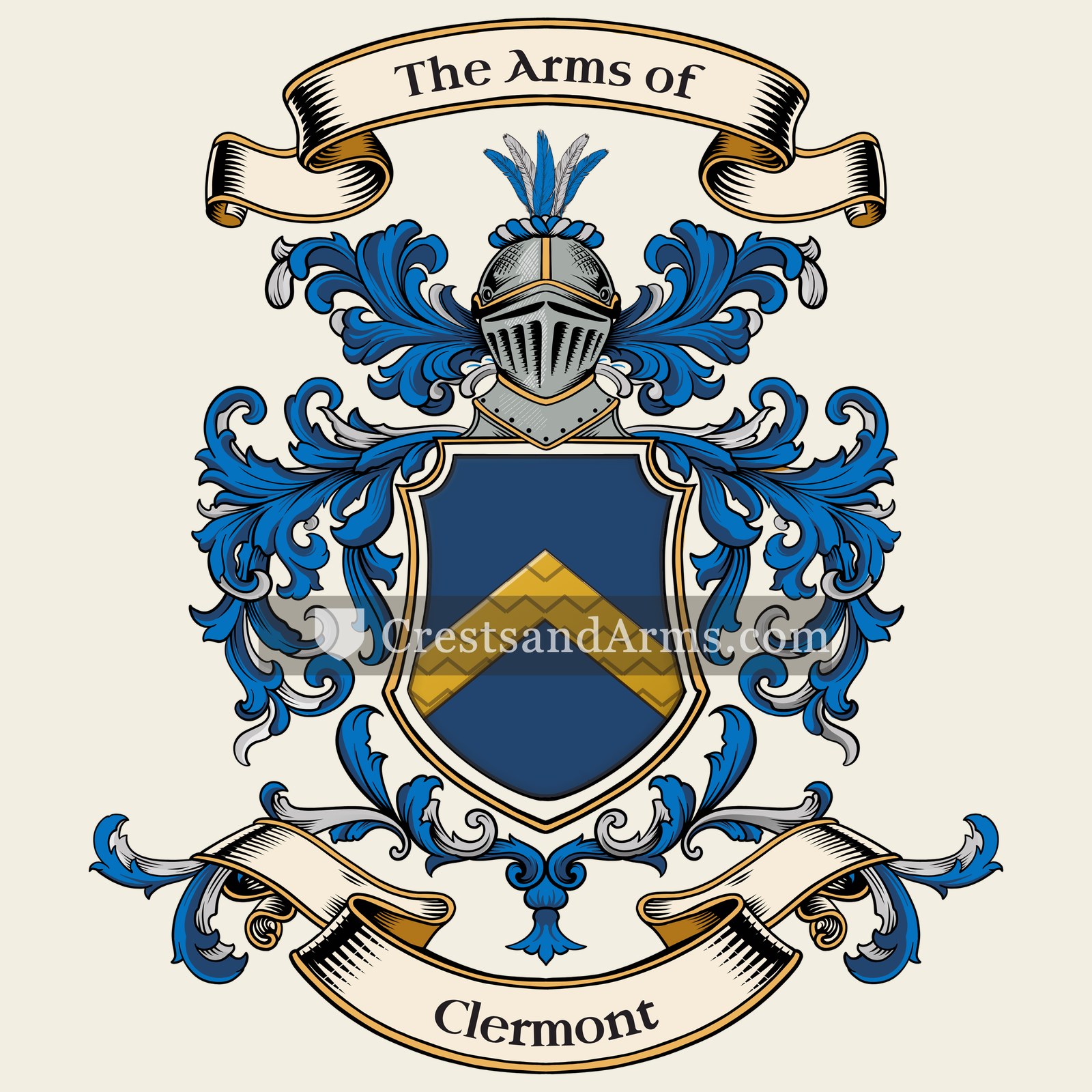


 keyGuardianship, and the office of a steward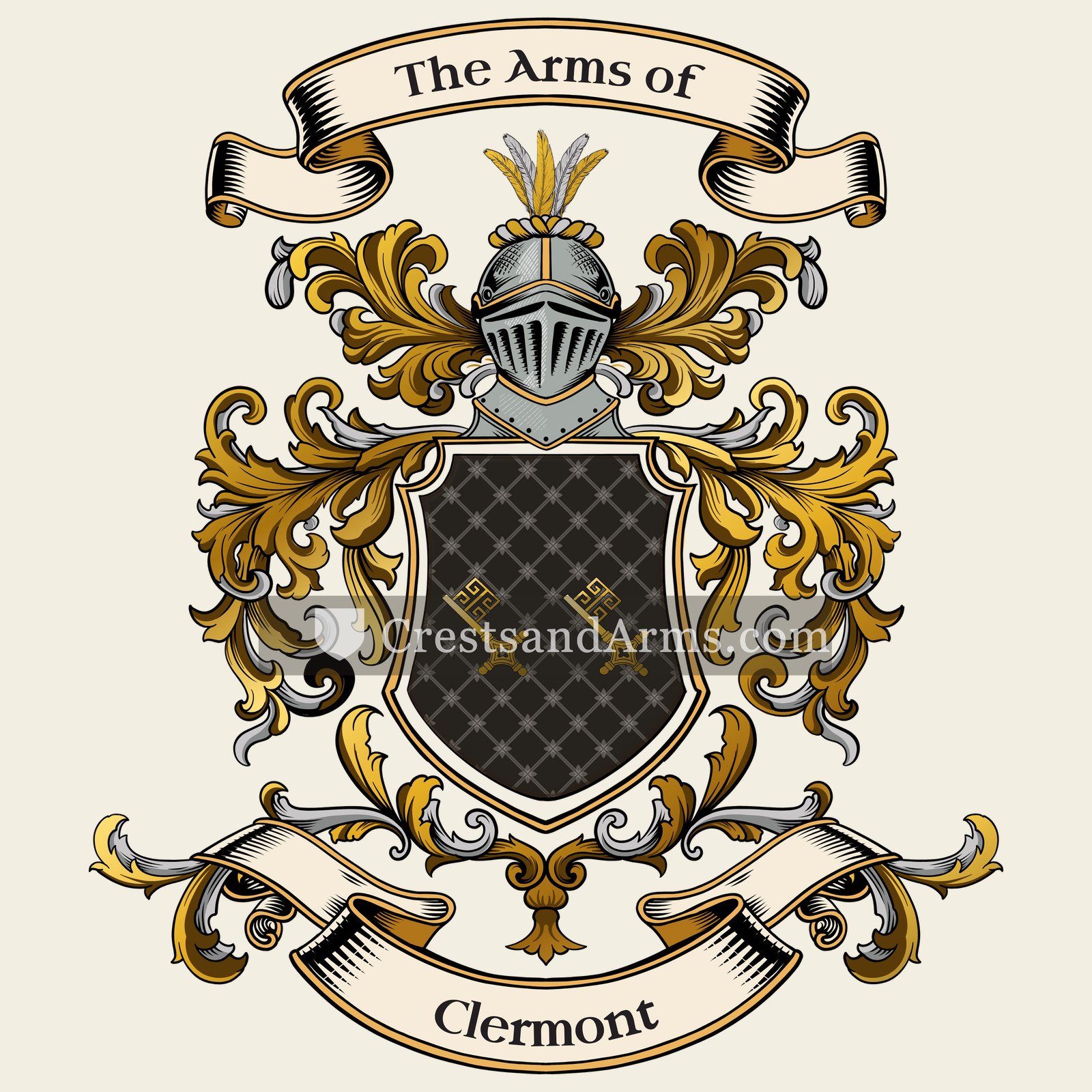

 trefoilPerpetuity, and the Trinity
 dolphinSwiftness, charity and love