Map of Germany showing where the Cloyd arms are recorded
The Cloyd arms were recorded in Courland, c. 1765.
Courland was Baltic coast country held in large estates by a small number of families. They kept their land for generations and served as officers abroad, and both landholding and service brought arms with them.
This is where the arms were entered in the register. Families often moved to other parts of the country, so the same name can turn up in more than one region.
The body that granted and recorded arms in Germany in this period.
Francis I, Holy Roman Emperor
Sovereign of the period
Francis I, Holy Roman Emperor
1745–1765
Reigning in Germany when the Cloyd arms are first recorded.
How Arms Worked in Germany
In the Holy Roman Empire, coats of arms were often granted to individuals by the Emperor or his representatives. These arms were then passed down through the generations to all legitimate descendants of the original holder. Younger branches of a family usually kept the same shield design without needing to change it, as the arms belonged to the entire lineage.
Granting authority
The Holy Roman Emperor held the sole power to grant new coats of arms throughout his vast imperial territories.
How they got arms
Families typically obtained their coats of arms through a formal imperial grant or by proving their noble status to the authorities.
Where arms were recorded
These grants were officially recorded in the Imperial Chancery registers, which began keeping formal records of such honors during the Middle Ages.
The family's standing
Recorded among the armigerous families of Courland.
Origin & History of the Cloyd Family in Germany
The history of the Cloyd name in the German-speaking regions is closely tied to the movement of people across the Baltic Sea during the eighteenth century. While the name itself has roots that suggest an evolution from older Germanic or Slavic linguistic patterns, the family established a notable presence in the region of Courland by 1765. At that time, Courland was a duchy with deep cultural and political connections to the German nobility and merchant classes. Families living in this area often served as administrators or landowners who helped bridge the gap between local traditions and the broader influences of the Holy Roman Empire. The presence of the Cloyd family in these records indicates that they were part of a mobile population that navigated the complex social structures of the Baltic frontier. By settling in this region, the family became part of a long tradition of migration that defined the history of Northern Europe during the Enlightenment era.
Coat of Arms & Family Crest Details
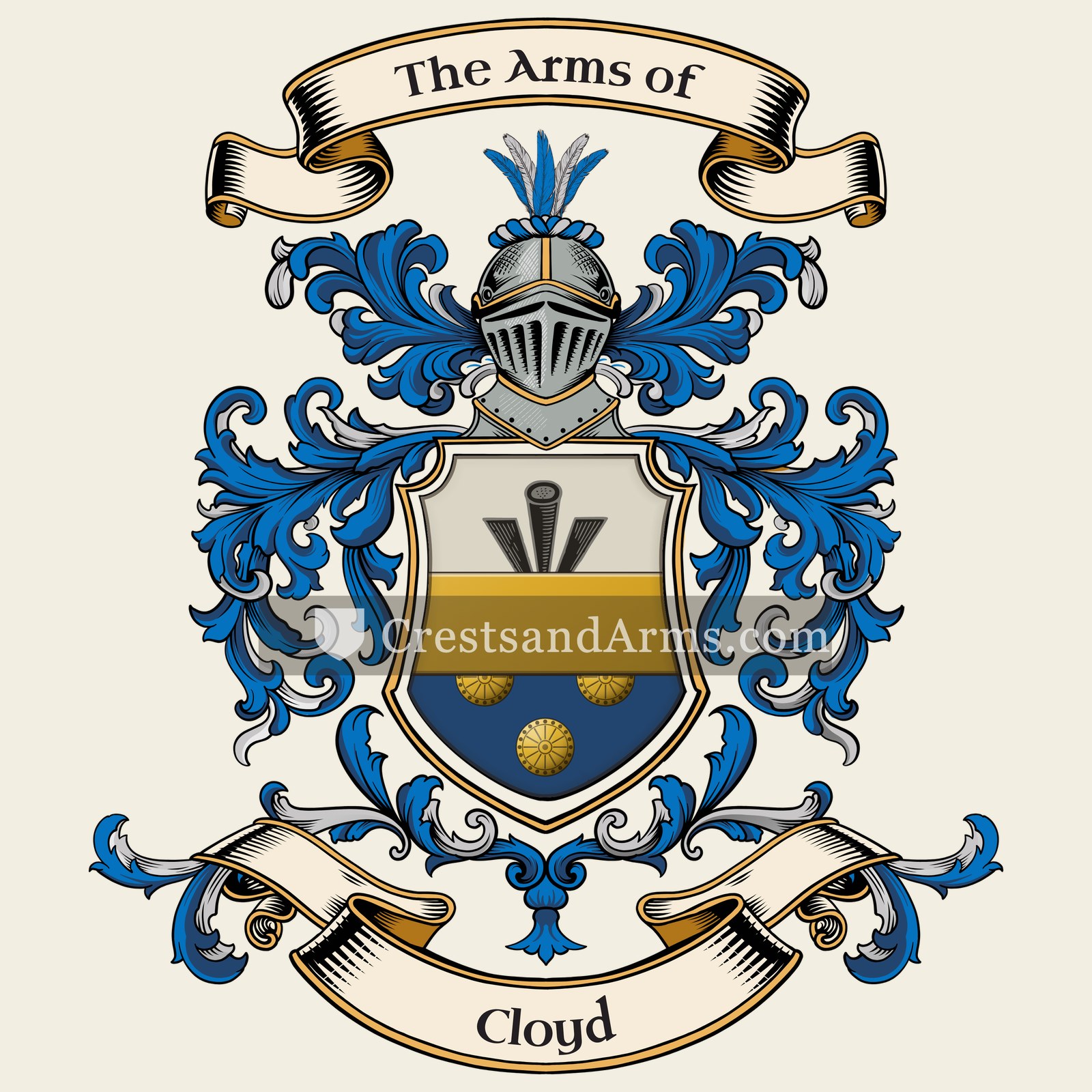
Symbols on this shield
fessThe military belt, and readiness to serve
arrowReadiness for battle, and affliction endured
roundelA coin, and one who has been to the crusades
Colours
Silver (Argent)Means: Peace and sincerity
Blue (Azure)Means: Loyalty and truth
Gold (Or)Means: Generosity
Black (Sable)Means: Constancy
Historical info
Source
J. B. Rietstap, Armorial Général, Gouda: G. B. van Goor Zonen, 1884–87
Blazon (the actual original written record)
“Coupé, d'arg. à un verrou de sa., posé en fasce, sur azur à trois boules d'or; à la fasce d'or, br. sur le coupé. C.: deux bêches carrées de sa. L. d'or et d'azur.”
LivoniaLivonia, c. 1566
Digital archive packCoat of arms PNG, gold border print PDF, vector SVG and the certificate of authenticity. Sent to your email in minutes.
Map of Poland showing where the Cloyd arms are recorded
The Cloyd arms were recorded in Livonia, c. 1566.
Livonia was Baltic country held by a small number of landed families who kept their estates for centuries. Land there passed down whole rather than being divided, and long unbroken tenure is what fills a register.
This is where the arms were entered in the register. Families often moved to other parts of the country, so the same name can turn up in more than one region.
Region
Livonia
First recorded
1566
Granting Authority for the Cloyd Arms
Ennoblement by the Sejm
Author: Olek Remesz · CC BY-SA 3.0
The body that granted and recorded arms in Poland in this period.
Sigismund II Augustus
Sovereign of the period
Sigismund II Augustus
1530–1572
Reigning in Germany when the Cloyd arms are first recorded.
How Arms Worked in Poland
Polish noble families shared a single coat of arms across many different surnames, creating large clans rather than individual designs. These symbols were held collectively by all members of the clan regardless of their specific family name. When a new family joined the nobility, they were adopted into an existing clan and began using that group's established shield.
Granting authority
The Sejm, which was the Polish parliament, held the power to grant noble status and the right to bear arms.
How they got arms
Families typically received their coat of arms through a formal act of ennoblement granted by the Sejm for distinguished service.
Where arms were recorded
These grants were officially recorded in the Crown Metrica, which served as the central archive for state documents starting in the sixteenth century.
The family's standing
Recorded among the armigerous families of Livonia.
Origin & History of the Cloyd Family in Poland
The history of the Cloyd family name in the Baltic region begins with records of their presence in Livonia by 1566. During this period, Livonia was a territory caught between the shifting borders of Poland, Sweden, and Russia. As the Polish-Lithuanian Commonwealth expanded its influence over these lands, families like the Cloyds often served as administrators or soldiers within the complex political structure of the era. The name likely evolved as it moved through these multicultural zones, adapting to the linguistic influences of the local Baltic populations and the Polish administrative systems. Because the region was a frontier for trade and military activity, the family members were part of a mobile class of people who navigated the transition between feudal loyalties and the centralized authority of the Polish crown. Their presence in 1566 highlights a time when the family was deeply embedded in the frontier politics of Northern Europe, long before the name would eventually migrate further west.
Cloyd Meaning & Related Branches
Root word
Claudius
Derived from the Latin word for lame or limping.
This name
CloydA locational or habitational surname likely referring to someone from a place named Cloyd or a variant of the name Claude.
also spelled
Clot
Klodt
Klot
Documented Sources
J. B. Rietstap, Armorial Général, Gouda: G. B. van Goor Zonen, 1884–87
Arbusov, Leonid, Grundriss der Geschichte Liv-, Est- und Kurlands, 1918
Latvian State Historical Archives, Fond 235: Records of the Evangelical Lutheran Church of Courland
Digital archive packCoat of arms PNG, gold border print PDF, vector SVG and the certificate of authenticity. Sent to your email in minutes.


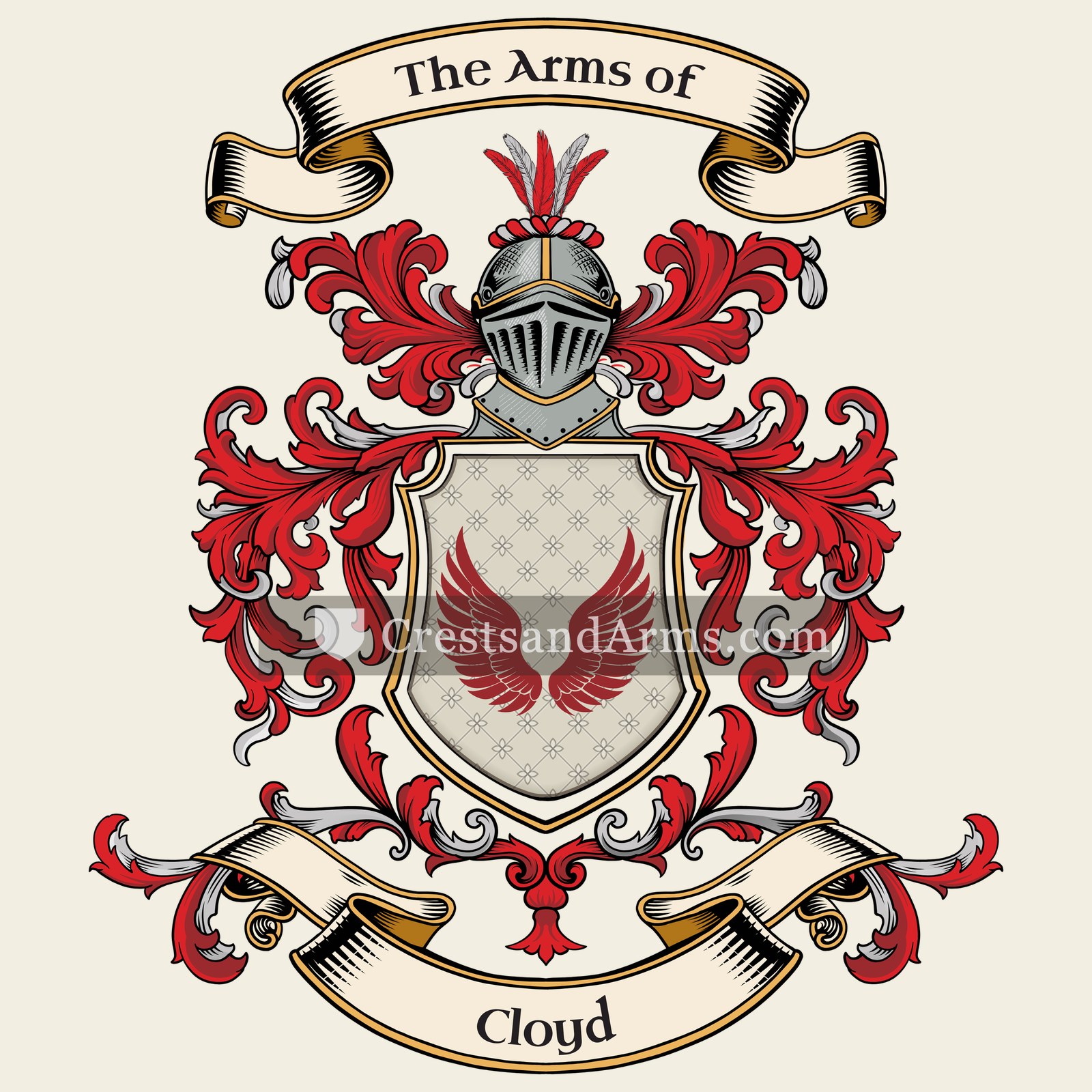
 vol / wingsSwiftness and protection
 vol / wingsSwiftness and protection


 fessThe military belt, and readiness to serve
 arrowReadiness for battle, and affliction endured
 roundelA coin, and one who has been to the crusades