Map of Germany showing where the Clymer arms are recorded
The Clymer arms were recorded in Dantzig, c. 1649.
Arms such as these were typically recorded in Bavaria.
Bavaria was a country of old landed families and walled market towns. Estates passed down the same line for centuries, and both the landowners and the leading townsmen kept arms, which is why so many Bavarian names sit in the registers.
This is where the arms were entered in the register. Families often moved to other parts of the country, so the same name can turn up in more than one region.
The body that granted and recorded arms in Germany in this period.
Ferdinand III, Holy Roman Emperor
Sovereign of the period
Ferdinand III, Holy Roman Emperor
1637–1657
Reigning in Germany when the Clymer arms are first recorded.
How Arms Worked in Germany
In the Holy Roman Empire, coats of arms were often granted to individuals by the Emperor or his representatives. These arms were then passed down through the generations to all legitimate descendants of the original holder. Younger branches of a family usually kept the same shield design without needing to change it, as the arms belonged to the entire lineage.
Granting authority
The Holy Roman Emperor held the sole power to grant new coats of arms throughout his vast imperial territories.
How they got arms
Families typically obtained their coats of arms through a formal imperial grant or by proving their noble status to the authorities.
Where arms were recorded
These grants were officially recorded in the Imperial Chancery registers, which began keeping formal records of such honors during the Middle Ages.
The family's standing
Recorded among the armigerous families of Germany.
Origin & History of the Clymer Family in Germany
The family name Clymer, often recorded in historical documents as Kleimer or Cleimer, finds its roots in the southern German regions, particularly within the state of Bavaria. By the year 1649, records confirm that members of the family were established in this area during a time of significant social rebuilding following the Thirty Years' War. The name itself is likely derived from the Middle High German word "kleimen," which historically referred to someone who worked with clay or performed plastering tasks. This suggests that the early ancestors of the Clymer family were likely skilled tradespeople or craftsmen who played a vital role in the construction and maintenance of local villages. As these families lived and worked in the Bavarian countryside, they became part of the steady agricultural and artisan culture that defined the region for generations. Over time, the spelling of the name evolved as families migrated and adapted to different linguistic environments, eventually leading to the modern form recognized today.
Coat of Arms & Family Crest Details
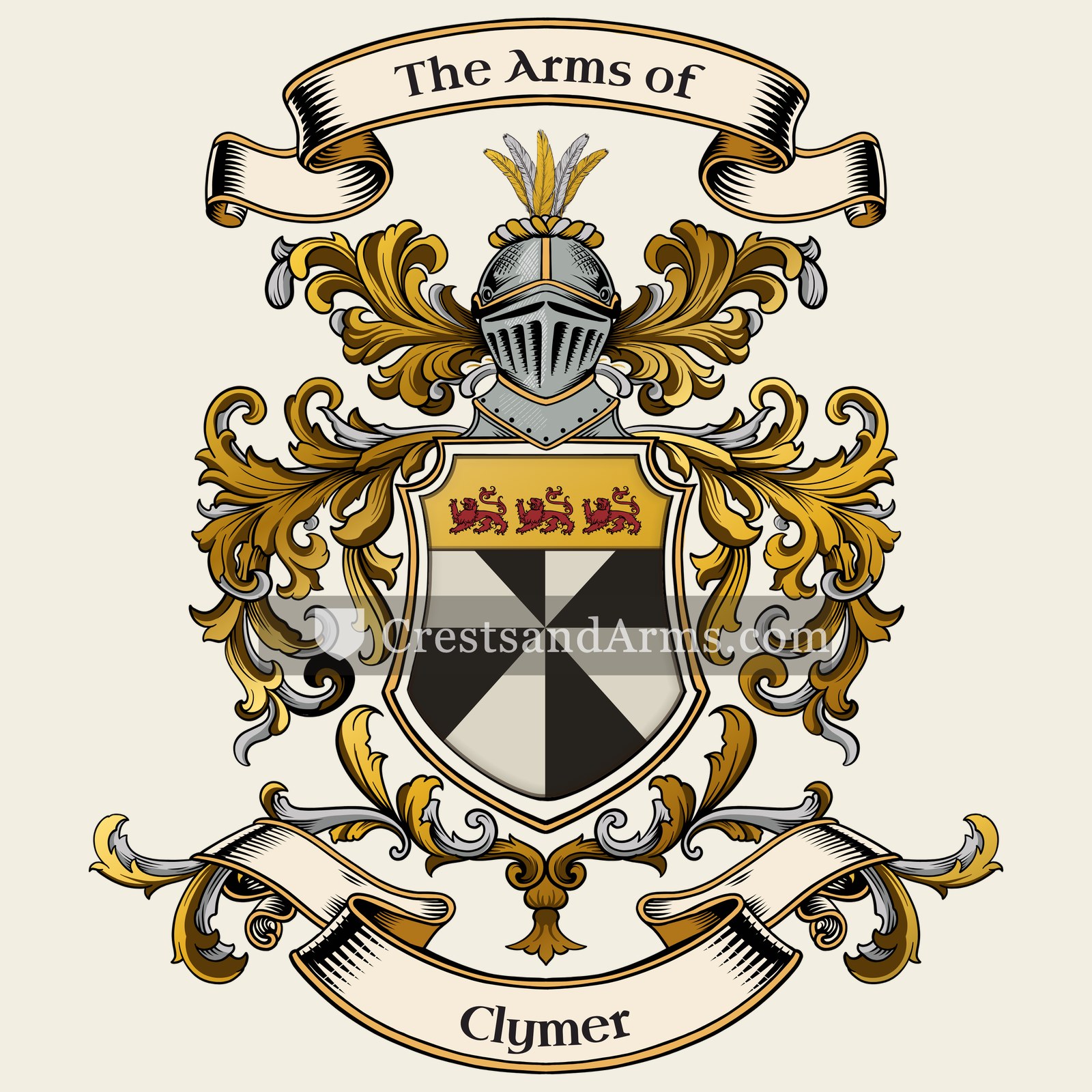
Symbols on this shield
chiefAuthority, wisdom and dominion
lionCourage, strength and royalty
Colours
Silver (Argent)Means: Peace and sincerity
Gold (Or)Means: Generosity
Red (Gules)Means: Military strength
Black (Sable)Means: Constancy
Historical info
Source
Sir Bernard Burke, The General Armory of England, Scotland, Ireland and Wales, London: Harrison & Sons, 1884
Blazon (the actual original written record)
“Gyronny of eight ar. and sa. on a chief or, three lions ramp. gu”
NorfolkWyghton · Norfolk, c. 1620
Digital archive packCoat of arms PNG, gold border print PDF, vector SVG and the certificate of authenticity. Sent to your email in minutes.
Map of England showing where the Clymer arms are recorded
The Clymer arms were recorded in Norfolk, c. 1620.
Norfolk grew rich on wool and grain, and its wealth was spread among many middling families rather than a few great ones. Households of that kind bought land and took arms, and the county holds a large share of English names.
This is where the arms were entered in the register. Families often moved to other parts of the country, so the same name can turn up in more than one region.
The body that granted and recorded arms in England in this period.
James VI and I
Sovereign of the period
James VI and I
1603–1625
Reigning in Germany when the Clymer arms are first recorded.
How Arms Worked in England
English heraldry allowed arms to be shared by all legitimate descendants of the original owner. These symbols were treated as personal property that moved through the generations to all children. While the eldest son kept the original design, other family members could use the same shield without needing to change it or register their own unique versions.
Granting authority
The College of Arms in London has regulated the use of coats of arms throughout England and Wales since 1484.
How they got arms
Families typically obtained their coats of arms through a formal grant from the Crown or by proving their ancient right to them.
Where arms were recorded
All official coats of arms are recorded in the registers kept at the College of Arms, which date back to the fifteenth century.
The family's standing
Recorded among the armigerous families of Norfolk.
Origin & History of the Clymer Family in England
The surname Clymer is rooted in the landscape of medieval England, where it likely functioned as an occupational name for a person who worked with clay or perhaps a maker of climbing equipment. By the early 17th century, the family had established a notable presence in the county of Norfolk. Records from this period indicate that members of the Clymer family were active participants in the local community, living during a time of significant social and religious change in East Anglia. As the region was a hub for trade and agricultural development, the family likely integrated into the local economy as farmers or skilled tradespeople. Their presence in Norfolk by 1620 suggests they were well-settled in the area, contributing to the historical fabric of the region before some members eventually sought new opportunities across the Atlantic.
Related Branches & Arms
Root word
Klimmer
A person who climbs or scales heights.
This name
ClymerAn occupational surname for someone who climbed or worked at heights, such as a roofer or climber.
also spelled
Colmar
Documented Sources
J. B. Rietstap, Armorial Général, Gouda: G. B. van Goor Zonen, 1884–87
Bahlow, Hans. Deutsches Namenlexikon: Familien- und Vornamen nach Ursprung und Sinn erklärt. 1967


 starThe celestial goddess, and nobility
 starThe celestial goddess, and nobility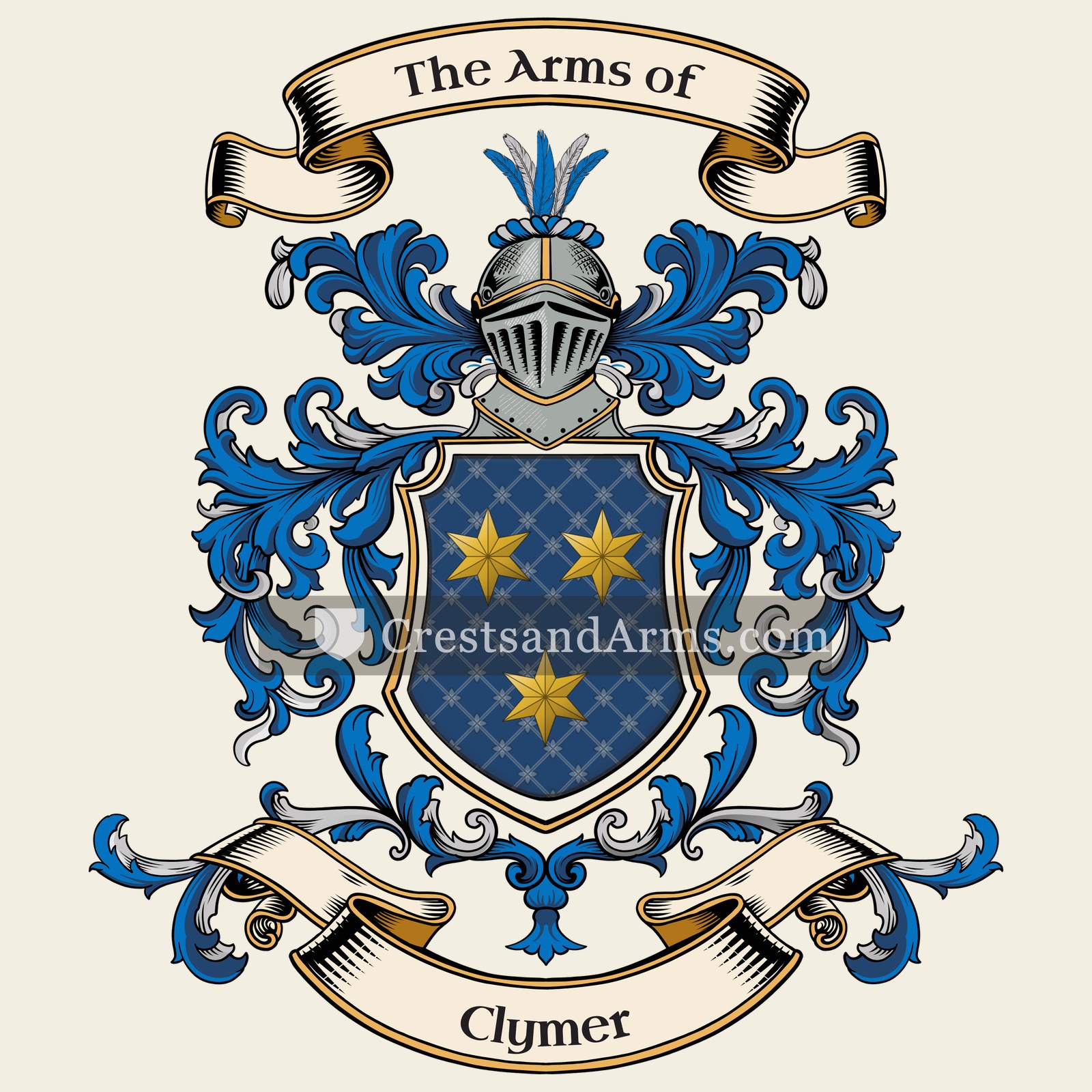


 chiefAuthority, wisdom and dominion
 lionCourage, strength and royalty