Map of France showing where the Coddington arms are recorded
The Coddington arms were recorded in New-York, c. 1725.
Arms such as these were typically recorded in Bretagne.
More families held coats of arms in Bretagne than anywhere else in France. The land was divided into many small estates rather than a few large ones, so far more households counted as gentry, and each needed a shield of its own to be told apart.
This is where the arms were entered in the register. Families often moved to other parts of the country, so the same name can turn up in more than one region.
The body that granted and recorded arms in France in this period.
Louis XV of France
Sovereign of the period
Louis XV of France
1715–1774
Reigning in France when the Coddington arms are first recorded.
How Arms Worked in France
In France, a coat of arms was a mark of honor that passed down through the male line to all legitimate descendants. Families often used the same shield without changes to show their shared heritage. If a branch wanted to stand out, they could add a small mark to their shield to show their specific place in the family tree.
Granting authority
The Juge d'armes de France acted as the official authority that regulated and verified coats of arms across the country.
How they got arms
Families typically inherited their arms from ancestors, though they could also receive them through royal grants or by proving their noble status.
Where arms were recorded
Coats of arms were officially recorded in the Armorial Général de France, which began its main collection in the year 1696.
The family's standing
Recorded among the armigerous families of France.
Origin & History of the Coddington Family in France
The history of the Coddington name in France is deeply tied to the coastal region of Bretagne, where records confirm the presence of family members as early as 1725. While the name itself is often associated with English origins, its appearance in French parish registers suggests that these individuals were likely part of a mobile population navigating the maritime trade routes between the British Isles and the French Atlantic coast. During the early eighteenth century, Bretagne served as a vital hub for merchants and sailors who frequently moved across the English Channel for work. Families like the Coddingtons often settled in port towns to manage shipping interests or local commerce. By integrating into the local community, these families adapted to the French legal and social systems of the time while maintaining their ancestral identity. This period of residency highlights how families could establish roots in new countries through economic necessity and the constant exchange of people across European borders.
Coat of Arms & Family Crest Details
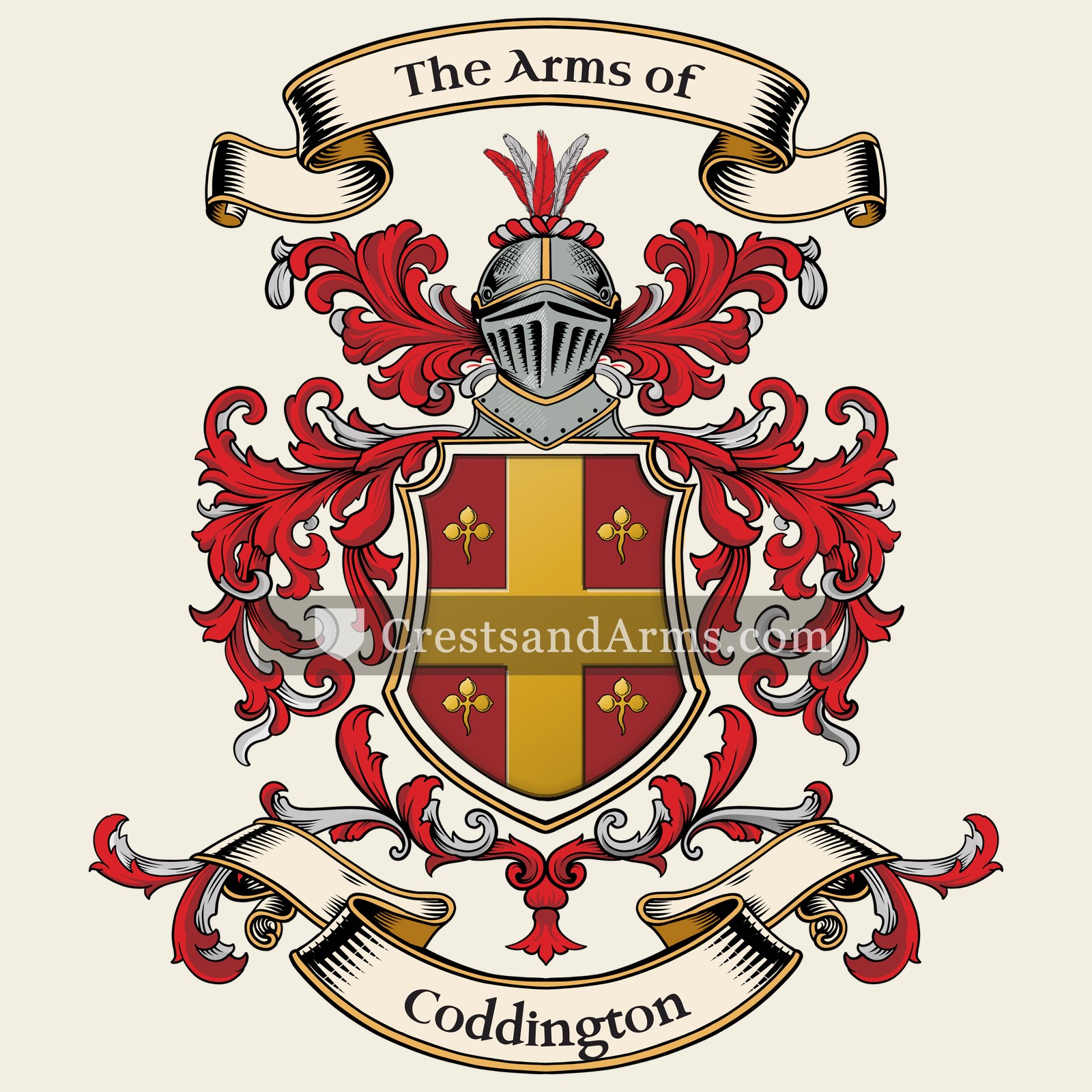
Symbols on this shield
cross symbolChristian faith and service
trefoilPerpetuity, and the Trinity
Colours
Red (Gules)Means: Military strength
Gold (Or)Means: Generosity
Historical info
Source
Sir Bernard Burke, The General Armory of England, Scotland, Ireland and Wales, London: Harrison & Sons, 1884
Blazon (the actual original written record)
“Gu. a cross or, fretty az. betw. four trefoils slipped of the second”
DublinDublin, c. 1656
Digital archive packCoat of arms PNG, gold border print PDF, vector SVG and the certificate of authenticity. Sent to your email in minutes.
Map of Ireland showing where the Coddington arms are recorded
The Coddington arms were recorded in Dublin, c. 1656.
Dublin was the seat of government in Ireland and the place where grants were sought and recorded. Families with business at the castle or the courts settled nearby, and settling there put their arms on record.
This is where the arms were entered in the register. Families often moved to other parts of the country, so the same name can turn up in more than one region.
The body that granted and recorded arms in Ireland in this period.
How Arms Worked in Ireland
The Ulster King of Arms granted coats of arms to individuals who proved their social standing and good character. These symbols were typically inherited by all legitimate descendants of the original holder. If a family branch wanted a unique look, they could apply for a specific change to their design through the office to ensure their identity remained distinct.
Granting authority
The Ulster King of Arms acted as the official body that regulated and issued all coats of arms throughout Ireland.
How they got arms
Families obtained their arms through formal grants issued by the office after proving their eligibility and paying the required fees.
Where arms were recorded
All official grants were recorded in the registers held by the Ulster King of Arms starting from the year 1552.
The family's standing
Recorded among the armigerous families of Dublin.
Origin & History of the Coddington Family in Ireland
The Coddington family name first appeared in the historical record of Ireland during the mid-seventeenth century, specifically within the city of Dublin by 1656. While the name originated in England, early members of the family relocated to Ireland during a period of significant political and social upheaval. These settlers were part of a broader movement of English families who moved to Irish urban centers to participate in trade and administration. Once established in Dublin, the family began to integrate into the local economy and social structure. Over the following generations, they transitioned from being newcomers to becoming landowners and active participants in the development of the region. Their presence in the capital city provided a stable foundation that allowed the family to expand their influence across the country throughout the eighteenth century.
Coddington Meaning & Related Branches
Root word
Codda
An Old English personal name derived from the word for a bag.
This name
CoddingtonRefers to the settlement or estate belonging to the descendants of Codda.
also spelled
Codyngton
Codinton
Coddingion
Related arms
Codintonvariant spelling
Porterrecorded with Coddington, same area
Documented Sources
J. B. Rietstap, Armorial Général, Gouda: G. B. van Goor Zonen, 1884–87
Archives Départementales du Finistère, Registres paroissiaux et d'état civil
Archives Départementales d'Ille-et-Vilaine, Série B: Cours et juridictions
Minois, Georges, Histoire de la Bretagne, 1996
Digital archive packCoat of arms PNG, gold border print PDF, vector SVG and the certificate of authenticity. Sent to your email in minutes.


 fessThe military belt, and readiness to serve
 lionCourage, strength and royalty
 fessThe military belt, and readiness to serve
 lionCourage, strength and royalty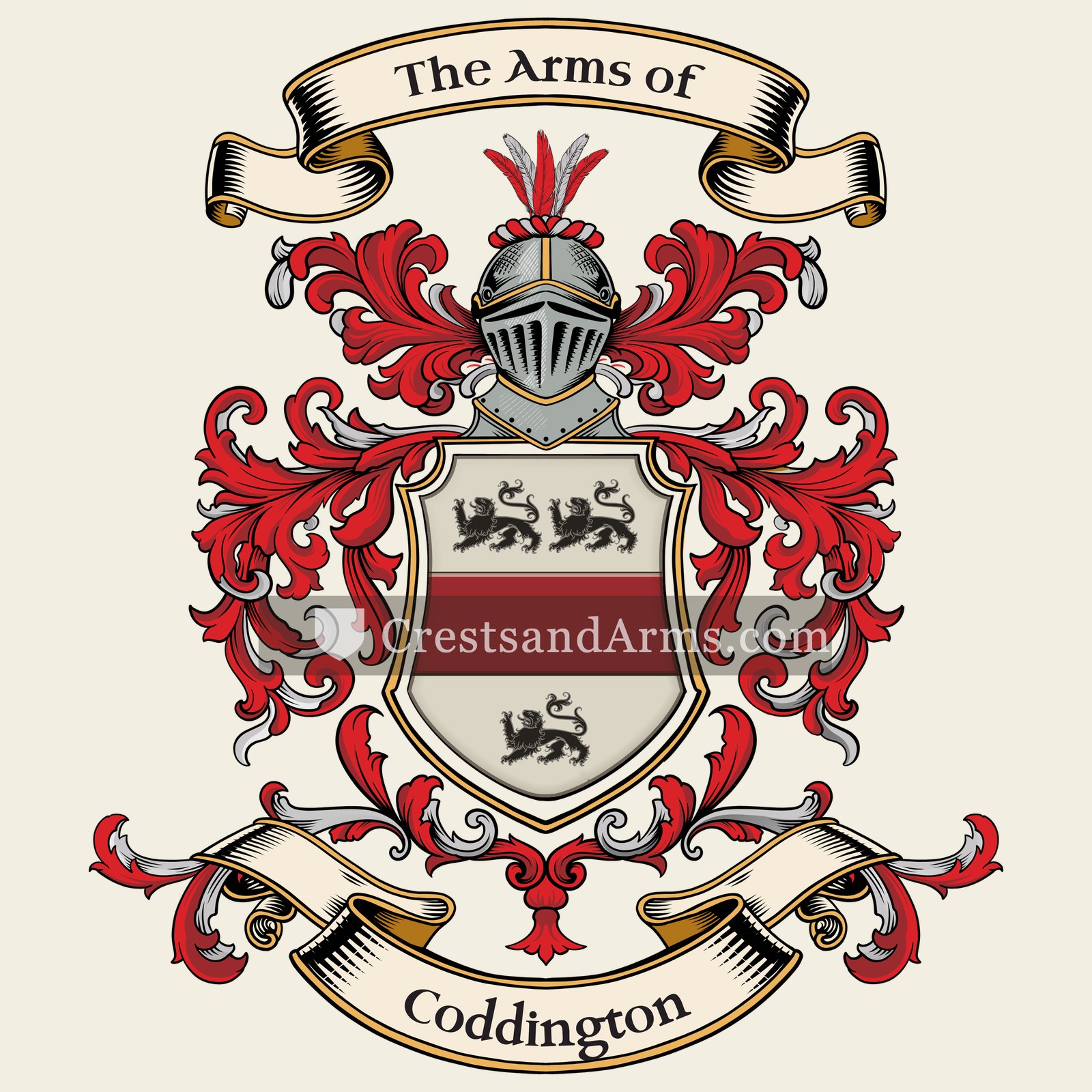


 cross symbolChristian faith and service
 trefoilPerpetuity, and the Trinity