Map of Poland showing where the Colonna arms are recorded
The Colonna arms were recorded in Poland, c. 1772.
Arms such as these were typically recorded in Mazovia.
Mazovia held Warsaw, the Polish court and the assemblies where the szlachta met. Poland's nobles were unusually numerous and every one of them bore arms, and Warsaw is where those arms were argued over and recorded.
This is where the arms were entered in the register. Families often moved to other parts of the country, so the same name can turn up in more than one region.
Region
Mazovia
First recorded
1772
Granting Authority for the Colonna Arms
Ennoblement by the Sejm
Author: Olek Remesz · CC BY-SA 3.0
The body that granted and recorded arms in Poland in this period.
Stanisław August Poniatowski
Sovereign of the period
Stanisław August Poniatowski
1764–1795
Reigning in Poland when the Colonna arms are first recorded.
How Arms Worked in Poland
Polish noble families shared a single coat of arms across many different surnames, creating large clans rather than individual designs. These symbols were held collectively by all members of the clan regardless of their specific family name. When a new family joined the nobility, they were adopted into an existing clan and began using that group's established shield.
Granting authority
The Sejm, which was the Polish parliament, held the power to grant noble status and the right to bear arms.
How they got arms
Families typically received their coat of arms through a formal act of ennoblement granted by the Sejm for distinguished service.
Where arms were recorded
These grants were officially recorded in the Crown Metrica, which served as the central archive for state documents starting in the sixteenth century.
The family's standing
Recorded among the armigerous families of Poland.
Origin & History of the Colonna Family in Poland
The history of the Colonna family in Poland is deeply tied to the shifting borders and social structures of the eighteenth century. While the name is famously associated with Italian nobility, branches of the family established a firm presence in the Mazovia region by 1772. During this period, Mazovia was a central hub of Polish political and cultural life, and the arrival of these families often coincided with the complex geopolitical changes surrounding the First Partition of Poland. Members of the family integrated into the local administrative and landowning classes, adapting to the customs of the Polish-Lithuanian Commonwealth. By settling in this area, they transitioned from their Mediterranean roots to become active participants in the regional history of central Poland, eventually leaving a lasting mark on the local records of the late eighteenth century.
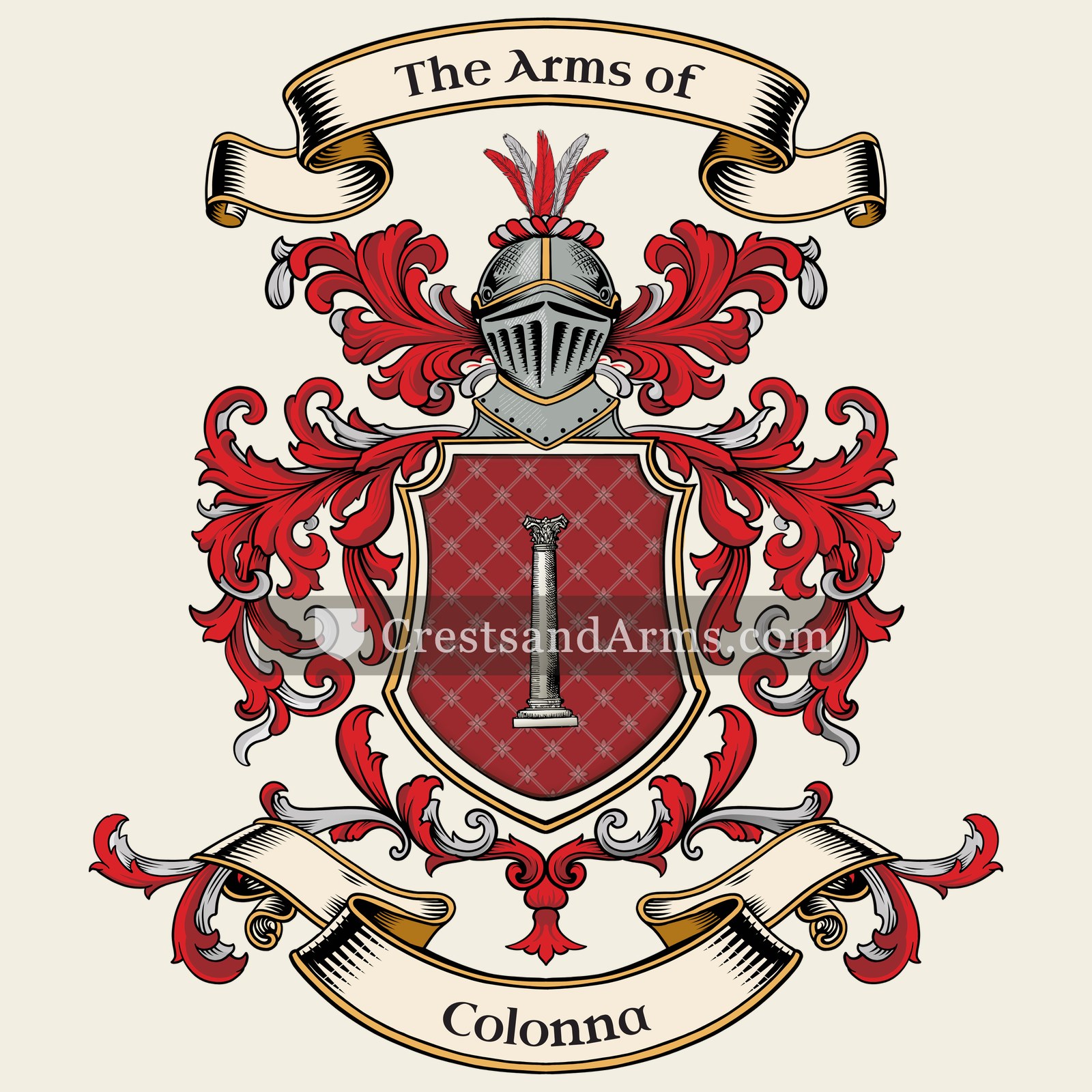
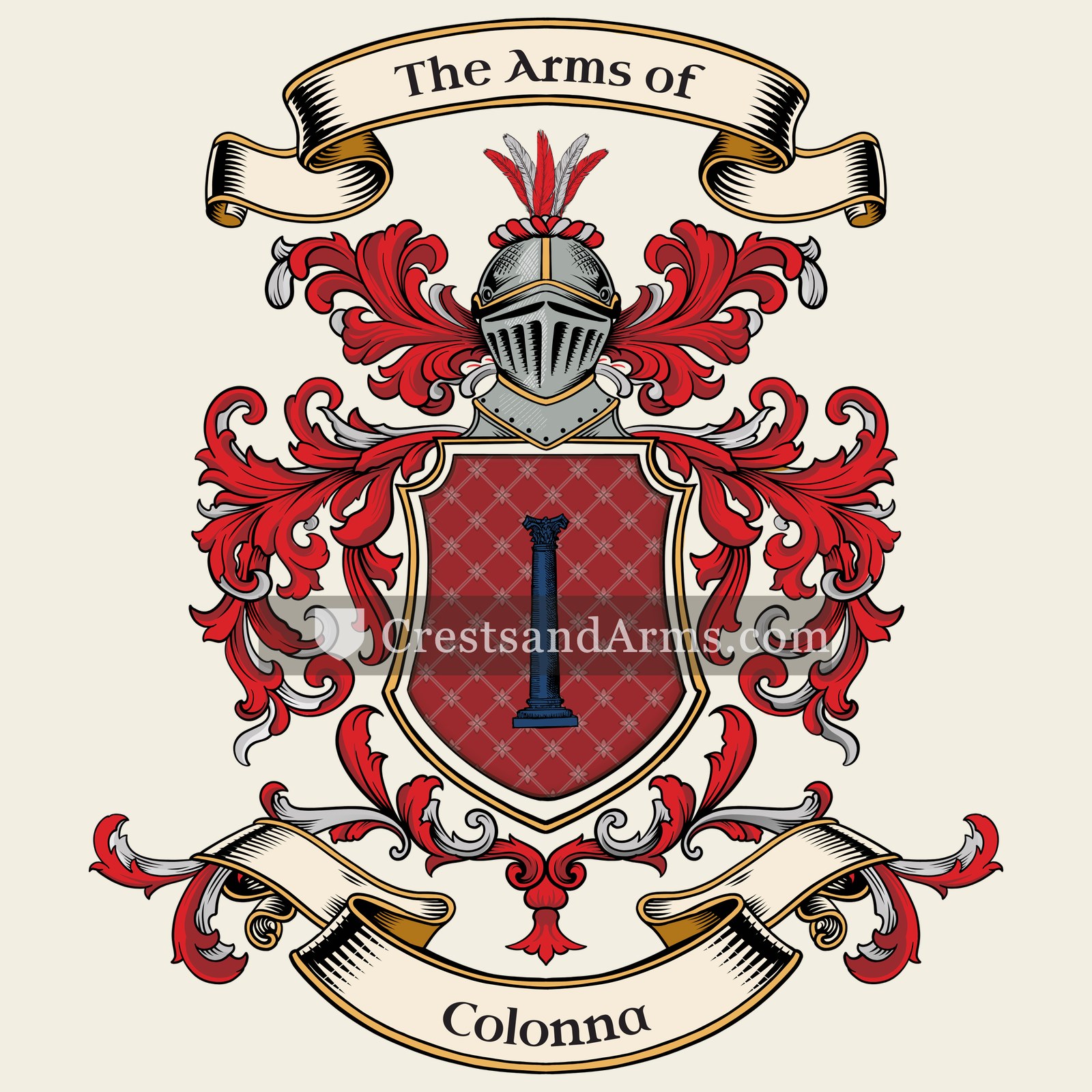
Coat of Arms & Family Crest Details
Symbols on this shield
columnFortitude and constancy
Colours
Red (Gules)Means: Military strength
Blue (Azure)Means: Loyalty and truth
Historical info
Source
J. B. Rietstap, Armorial Général, Gouda: G. B. van Goor Zonen, 1884–87
Blazon (the actual original written record)
“De gu. à une colonne d'azur, le chapiteau et le piédestal d'or, cour. du même.”
NaplesNaples, c. 1775
Digital archive packCoat of arms PNG, gold border print PDF, vector SVG and the certificate of authenticity. Sent to your email in minutes.
Map of Italy showing where the Colonna arms are recorded
The Colonna arms were recorded in Naples, c. 1775.
Naples was the largest city in Italy and the seat of a kingdom. Its noble houses were numerous, and the kingdom kept formal lists of the families entitled to arms, which is why so many appear in the records.
This is where the arms were entered in the register. Families often moved to other parts of the country, so the same name can turn up in more than one region.
The body that granted and recorded arms in Italy in this period.
Alvise Giovanni Mocenigo
Sovereign of the period
Alvise Giovanni Mocenigo
1763–1778
Reigning in Poland when the Colonna arms are first recorded.
How Arms Worked in Italy
In the Italian states, coats of arms were often used by noble families to show their status and history. These symbols were passed down through the generations to all legitimate male descendants. Younger branches of a family usually kept the original design but sometimes added small changes to distinguish their specific line from the main branch.
Granting authority
Various local rulers and city governments controlled the use of coats of arms across the different Italian states.
How they got arms
Families often assumed their own arms or received them as official grants from local lords, popes, or city councils.
Where arms were recorded
Arms were recorded in local city archives or private family books rather than in one single national register.
The family's standing
Recorded among the armigerous families of Naples.
Origin & History of the Colonna Family in Italy
The Colonna family name emerged as a powerful force in Italian history, deeply connected to the political and religious life of Rome and the surrounding regions. While the family established a notable presence in Naples by 1775, their roots reach back much further into the medieval period. Historians often trace the early prominence of the family to the Tusculum counts, who held significant influence over the papacy during the Middle Ages. Throughout the centuries, the family became famous for their intense rivalries with other noble houses, often shaping the course of Italian politics through their alliances and conflicts. Their influence extended across various Italian territories, allowing them to maintain a high social status and play a central role in the governance of the peninsula for generations. By the time they were documented in Naples during the late eighteenth century, they were already recognized as a family with a long and complex history of public service and regional authority.
Colonna Meaning & Related Branches
Root word
columna
A vertical pillar or post used for support or monument.
This name
ColonnaRefers to a person who lived near a prominent pillar or served as a pillar of strength.
also spelled
Colona
Kolona
Documented Sources
J. B. Rietstap, Armorial Général, Gouda: G. B. van Goor Zonen, 1884–87
Boniecki, Adam, Herbarz polski: wiadomości historyczno-genealogiczne o rodach szlacheckich, 1901


 columnFortitude and constancy
 columnFortitude and constancy