Map of Belgium showing where the Colony arms are recorded
The Colony arms were recorded in Tournai, c. 1737.
This is where the arms were entered in the register. Families often moved to other parts of the country, so the same name can turn up in more than one region.
The body that granted and recorded arms in Belgium in this period.
Charles VI, Holy Roman Emperor
Sovereign of the period
Charles VI, Holy Roman Emperor
1711–1740
Reigning in Belgium when the Colony arms are first recorded.
How Arms Worked in Belgium
In Belgium, a coat of arms is considered personal property that is passed down through the male line to legitimate descendants. Families often use the same shield design across generations to show their shared heritage. If a branch of the family wants to change the design, they must apply for an official update to their specific version of the arms.
Granting authority
The Conseil héraldique is the official body that regulates and approves all coats of arms in Belgium.
How they got arms
Families obtain their coats of arms through formal royal grants or by confirming their historical right to use existing designs.
Where arms were recorded
All approved coats of arms are officially recorded in the public registers of the Conseil héraldique since 1844.
The family's standing
Recorded among the armigerous families of Belgium.
Origin & History of the Colony Family in Belgium
The history of the Colony family in Belgium is deeply rooted in the historic city of Tournai, where records confirm their presence as early as 1737. During the eighteenth century, Tournai served as a vital cultural and economic hub in the Southern Netherlands, often shifting between the control of various European powers. Families living in this region during this period were typically involved in the thriving local textile trade or the skilled craftsmanship that defined the city’s reputation. By settling in Tournai, the Colony family became part of a complex urban society that valued trade, religious tradition, and civic participation. Their documented arrival in the city suggests they were part of the steady movement of people seeking opportunity in one of the oldest settlements in the region. Over time, the family name became woven into the local fabric of the city, reflecting the broader patterns of migration and social stability that characterized life in the Low Countries during the Enlightenment era.
Coat of Arms & Family Crest Details
Symbols on this shield
fessThe military belt, and readiness to serve
lionCourage, strength and royalty
Colours
Black (Sable)Means: Constancy
Red (Gules)Means: Military strength
Gold (Or)Means: Generosity
Historical info
Source
J. B. Rietstap, Armorial Général, Gouda: G. B. van Goor Zonen, 1884–87
Blazon (the actual original written record)
“De sa. au lion d'or, tenant un sabre d'arg.; à la fasce de gu., br. sur le tout.”
Francec. 1663
Digital archive packCoat of arms PNG, gold border print PDF, vector SVG and the certificate of authenticity. Sent to your email in minutes.
Map of France showing where the Colony arms are recorded
The Colony arms were recorded in France, c. 1663.
Arms such as these were typically recorded in Bretagne.
More families held coats of arms in Bretagne than anywhere else in France. The land was divided into many small estates rather than a few large ones, so far more households counted as gentry, and each needed a shield of its own to be told apart.
This is where the arms were entered in the register. Families often moved to other parts of the country, so the same name can turn up in more than one region.
The body that granted and recorded arms in France in this period.
Louis XIV of France
Sovereign of the period
Louis XIV of France
1643–1715
Reigning in Belgium when the Colony arms are first recorded.
How Arms Worked in France
In France, a coat of arms was a mark of honor that passed down through the male line to all legitimate descendants. Families often used the same shield without changes to show their shared heritage. If a branch wanted to stand out, they could add a small mark to their shield to show their specific place in the family tree.
Granting authority
The Juge d'armes de France acted as the official authority that regulated and verified coats of arms across the country.
How they got arms
Families typically inherited their arms from ancestors, though they could also receive them through royal grants or by proving their noble status.
Where arms were recorded
Coats of arms were officially recorded in the Armorial Général de France, which began its main collection in the year 1696.
The family's standing
Recorded among the armigerous families of France.
Origin & History of the Colony Family in France
The family name Colony finds its historical roots in the rugged landscape of Brittany, France, where records confirm the presence of family members as early as 1663. During the seventeenth century, Brittany was a distinct province with its own unique customs and a strong maritime culture that shaped the lives of its inhabitants. Families living in this region often identified themselves through their connection to the land or their specific roles within the local parish communities. By the mid-1600s, the name was established among the rural population, likely evolving from local linguistic patterns common to the western coastal regions of France. These early ancestors lived through a time of significant social change under the reign of Louis XIV, as the French monarchy worked to centralize power and standardize record-keeping across the provinces. This transition helped solidify the family name in official parish registers, providing a permanent link to their origins in the Breton countryside.
Coat of Arms & Family Crest Details
Symbols on this shield
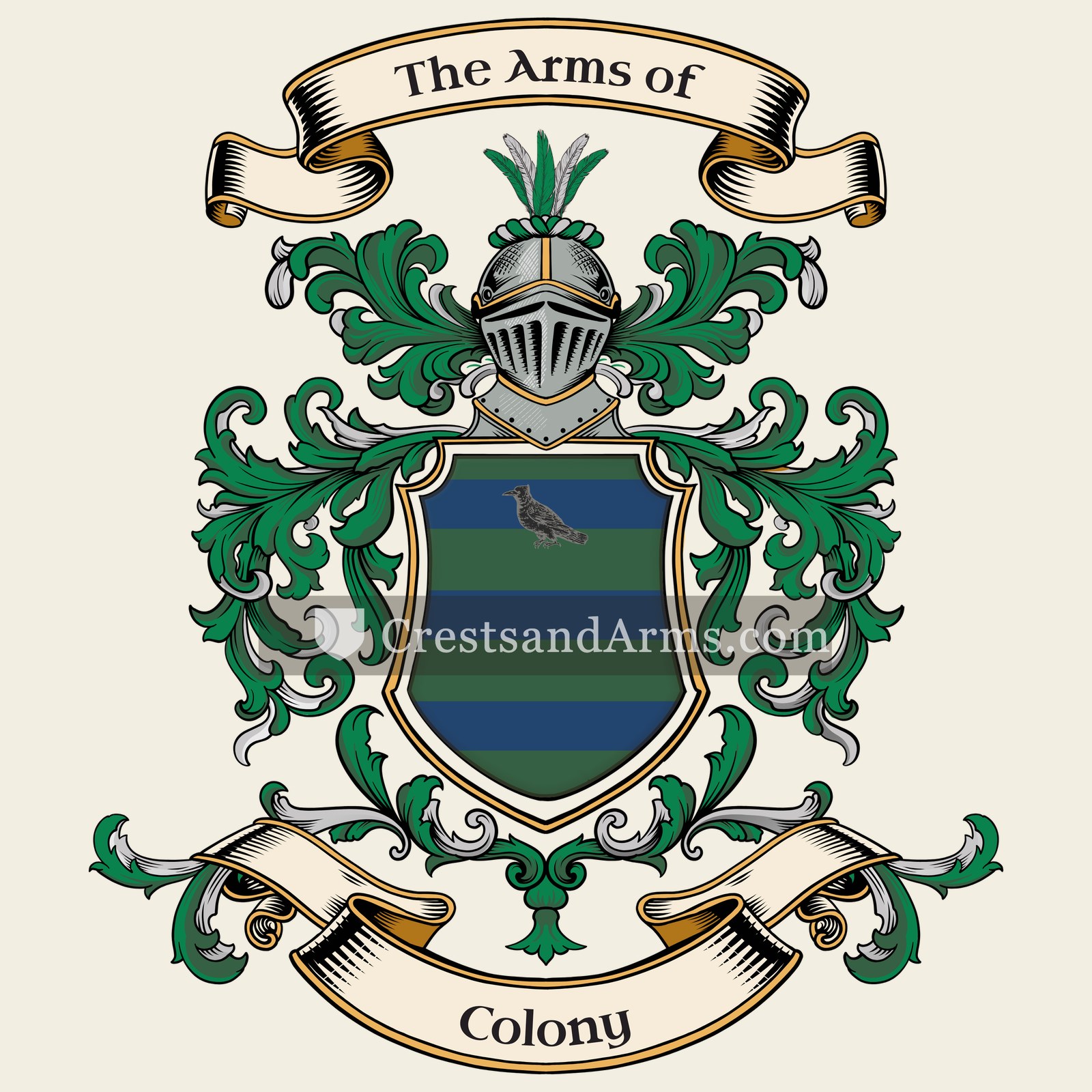
fessThe military belt, and readiness to serve
dovePeace, love and the Holy Spirit
Colours
Blue (Azure)Means: Loyalty and truth
Historical info
Source
J. B. Rietstap, Armorial Général, Gouda: G. B. van Goor Zonen, 1884–87
Blazon (the actual original written record)
“De sin. à trois fasces d'azur; à une colombe au nat., posée sur la fasce inférieure et br. sur la deuxième fasce. Cq. cour. C.: la colombe. L.: à dextre d'arg. et de sin., à sen. d'arg. et d'azur. S.: deux lions d'or. D.: DANS LA VÉRITÉ CONSTANCE.”
BavariaBavaria, c. 1810
Digital archive packCoat of arms PNG, gold border print PDF, vector SVG and the certificate of authenticity. Sent to your email in minutes.
Map of Germany showing where the Colony arms are recorded
The Colony arms were recorded in Bavaria, c. 1810.
Bavaria was a country of old landed families and walled market towns. Estates passed down the same line for centuries, and both the landowners and the leading townsmen kept arms, which is why so many Bavarian names sit in the registers.
This is where the arms were entered in the register. Families often moved to other parts of the country, so the same name can turn up in more than one region.
The body that granted and recorded arms in Germany in this period.
Frederick William III of Prussia
Sovereign of the period
Frederick William III of Prussia
1797–1840
Reigning in Belgium when the Colony arms are first recorded.
How Arms Worked in Germany
Prussian heraldry was strictly tied to social rank and noble status rather than being a free choice for every citizen. These symbols were treated as permanent family property that moved through the generations to all legitimate heirs. If a family branch wanted to change their design to stand out, they had to apply for official permission to alter their specific version of the shield.
Granting authority
The Prussian Heroldsamt acted as the central state office that managed and strictly controlled all noble titles and coats of arms.
How they got arms
Families usually obtained their arms through formal royal grants or by proving their long-standing noble status to the state authorities.
Where arms were recorded
All official coats of arms were kept in the rolls of the Prussian Heroldsamt, which functioned from 1706 until 1918.
The family's standing
Recorded among the armigerous families of Bavaria.
Origin & History of the Colony Family in Germany
The family name Colony, while often associated with later migrations, finds its early roots embedded in the social landscape of Bavaria during the early nineteenth century. By 1810, records indicate that members of the family were established within this region, which was then undergoing significant political shifts as it transitioned into the Kingdom of Bavaria. During this era, families in rural and urban Bavarian districts were often identified by their trade or their specific location within a village. The name likely evolved as a way to distinguish these individuals within their local community, reflecting the demographic changes and the movement of people across the German states during the Napoleonic period. As the family navigated the economic challenges of the time, they remained part of the foundational fabric of Bavarian society, contributing to the local labor force and the agricultural development of the region before many eventually sought new opportunities abroad.
Related Branches & Arms
Root word
Colonia
Latin term referring to a settlement, farm, or agricultural estate.
This name
ColonyA topographic name for someone who lived near or worked on a colonial settlement or farm.
also spelled
Coulone
Coulonne
Koolon
Documented Sources
J. B. Rietstap, Armorial Général, Gouda: G. B. van Goor Zonen, 1884–87
Archives: Archives de l'État à Tournai, Registres paroissiaux de la ville de Tournai
Archives: Archives de la Ville de Tournai, État civil et registres de population
Digital archive packCoat of arms PNG, gold border print PDF, vector SVG and the certificate of authenticity. Sent to your email in minutes.


 chevronProtection, and faithful service completed
 starThe celestial goddess, and nobility
 bellA call to prayer, and a warning given
 chevronProtection, and faithful service completed
 starThe celestial goddess, and nobility
 bellA call to prayer, and a warning given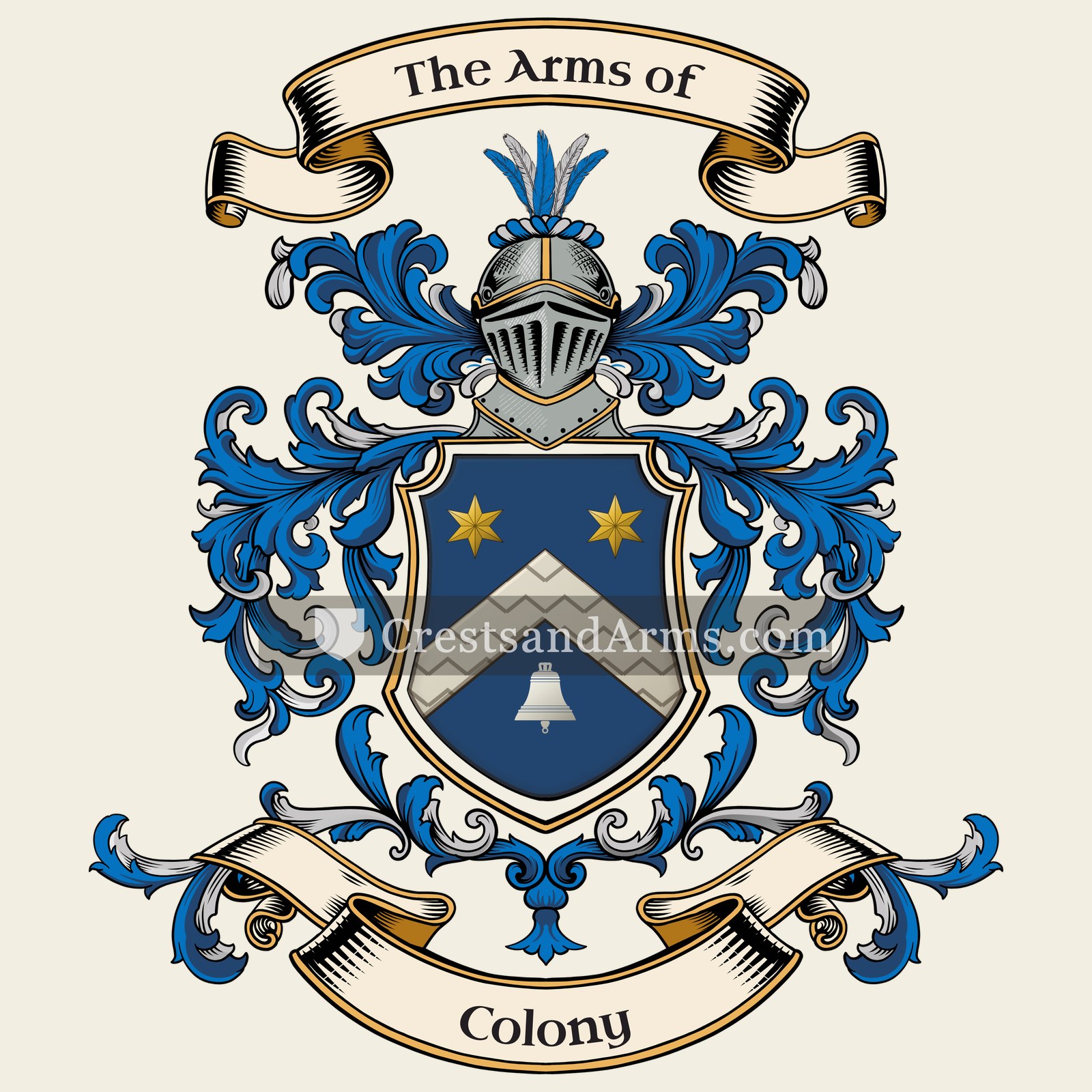


 fessThe military belt, and readiness to serve
 lionCourage, strength and royalty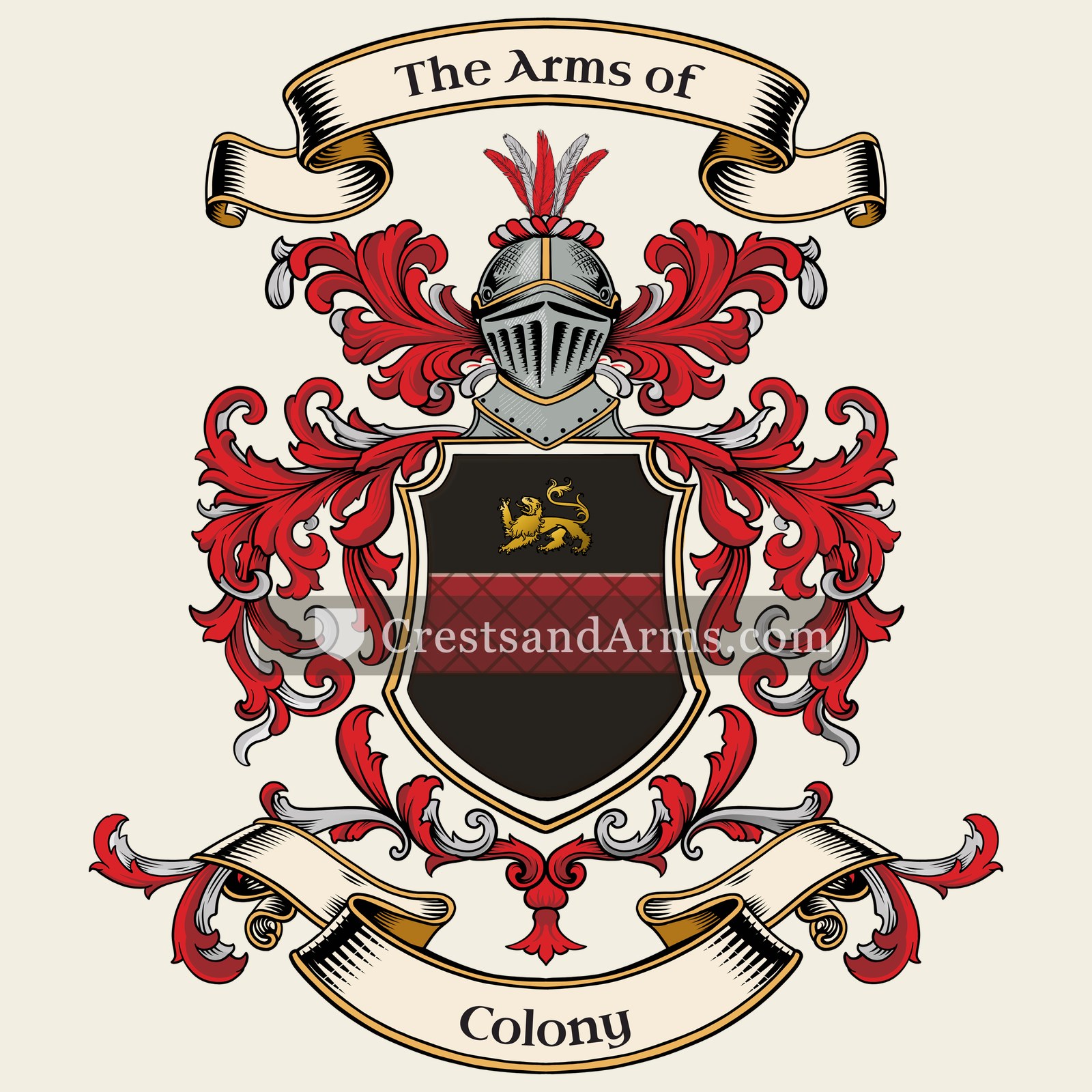


 dovePeace, love and the Holy Spirit