Map of France showing where the Conn arms are recorded
The Conn arms were recorded in Bourbonnais, c. 1663.
This is where the arms were entered in the register. Families often moved to other parts of the country, so the same name can turn up in more than one region.
The body that granted and recorded arms in France in this period.
Louis XIV of France
Sovereign of the period
Louis XIV of France
1643–1715
Reigning in France when the Conn arms are first recorded.
How Arms Worked in France
In France, a coat of arms was a mark of honor that passed down through the male line to all legitimate descendants. Families often used the same shield without changes to show their shared heritage. If a branch wanted to stand out, they could add a small mark to their shield to show their specific place in the family tree.
Granting authority
The Juge d'armes de France acted as the official authority that regulated and verified coats of arms across the country.
How they got arms
Families typically inherited their arms from ancestors, though they could also receive them through royal grants or by proving their noble status.
Where arms were recorded
Coats of arms were officially recorded in the Armorial Général de France, which began its main collection in the year 1696.
The family's standing
Recorded among the armigerous families of France.
Origin & History of the Conn Family in France
The history of the Conn family in France is deeply rooted in the historical province of Bourbonnais, where records confirm their presence as early as 1663. During this period, Bourbonnais was a region defined by its agricultural landscape and its strategic importance within the French kingdom. Families living in this area often served as local landholders or skilled laborers who contributed to the stability of the rural economy. The name likely evolved as a reflection of the local linguistic traditions of central France, where names were frequently adapted to suit the regional dialect. By settling in this specific part of the country, the early members of the family became part of a long-standing tradition of provincial life that spanned generations. Their presence in the seventeenth century suggests they were well-integrated into the local community and participated in the daily social and economic functions of the Bourbonnais region.
Meaning of the Conn family crest colors & symbols
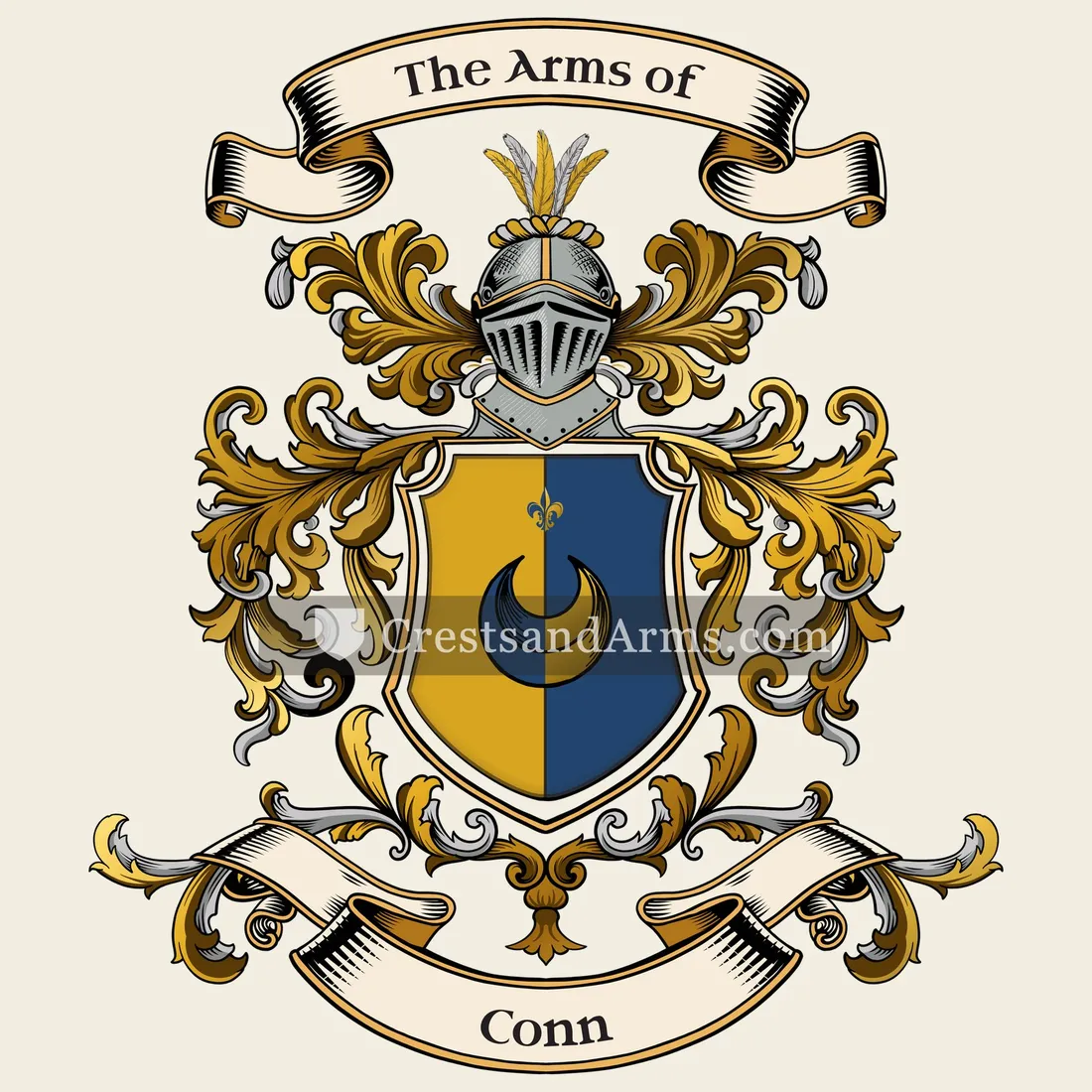
Symbols on this shield
fleur de lisPurity, light, and the sixth son
crescentHonour by the sovereign, and the second son
Colours
Gold (Or)Means: Generosity
Blue (Azure)Means: Loyalty and truth
Historical info
Source
Sir Bernard Burke, The General Armory of England, Scotland, Ireland and Wales, London: Harrison & Sons, 1884
Blazon (the actual original written record)
“Per pale or and az. a fleur-de-lis counterchanged, and a crescent for diff”
CorkCork, c. 1683
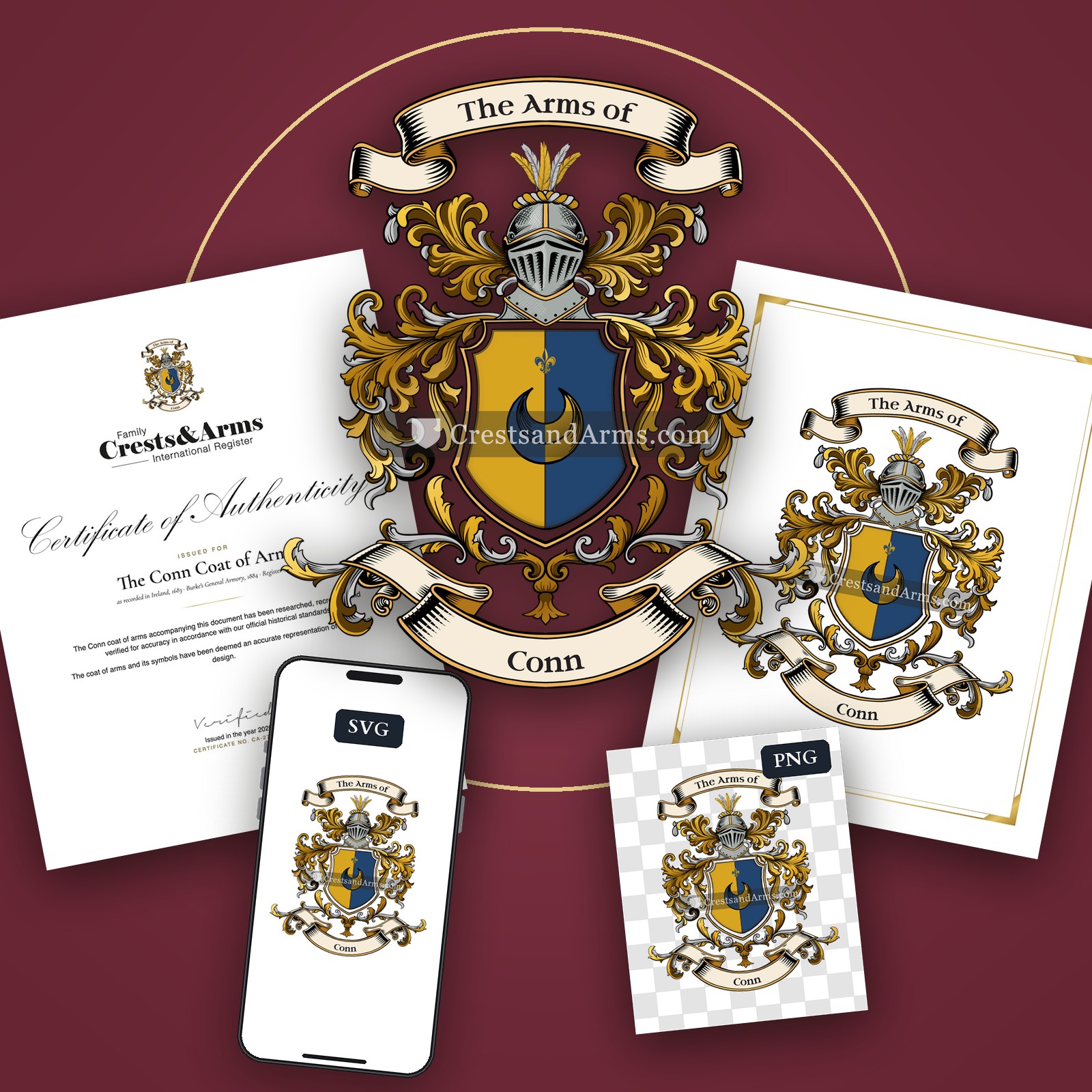
Digital archive packCoat of arms PNG, gold border print PDF, vector SVG and the certificate of authenticity. Sent to your email in minutes.
Map of Ireland showing where the Conn arms are recorded
The Conn arms were recorded in Cork, c. 1683.
Cork was the largest county in Ireland, with a great harbour and a wide farming hinterland. Both English settlers and older Irish families held land there, and holding land is what brought a family into the records.
This is where the arms were entered in the register. Families often moved to other parts of the country, so the same name can turn up in more than one region.
The body that granted and recorded arms in Ireland in this period.
Charles II of England
Sovereign of the period
Charles II of England
1660–1685
Reigning in France when the Conn arms are first recorded.
How Arms Worked in Ireland
The Ulster King of Arms granted coats of arms to individuals who proved their social standing and good character. These symbols were typically inherited by all legitimate descendants of the original holder. If a family branch wanted a unique look, they could apply for a specific change to their design through the office to ensure their identity remained distinct.
Granting authority
The Ulster King of Arms acted as the official body that regulated and issued all coats of arms throughout Ireland.
How they got arms
Families obtained their arms through formal grants issued by the office after proving their eligibility and paying the required fees.
Where arms were recorded
All official grants were recorded in the registers held by the Ulster King of Arms starting from the year 1552.
The family's standing
Recorded among the armigerous families of Cork.
Origin & History of the Conn Family in Ireland
The surname Conn has deep roots in the Gaelic tradition of Ireland, where it is often linked to the ancient name Conn of the Hundred Battles. This legendary figure was a high king of Ireland, and his name became a popular choice for families looking to honor their heritage. By the time the name appeared in official records in County Cork in 1683, the family was already well-established in the southern region of the country. During this period, the Conn family lived through a time of great transition as Ireland moved from traditional clan structures toward a more centralized administrative system. Families with this name were often involved in local agriculture and trade, which allowed them to maintain a steady presence in the Cork area for generations. Their history reflects the broader experience of Irish families who navigated the complex social and political changes of the seventeenth century while keeping their ancestral identity intact.
Conn Meaning & Related Branches
Root word
Conan
Derived from the Celtic word for hound or wolf.
This name
ConnA surname of Breton origin signifying a little hound or warrior.
also spelled
Connie
Conney
Cony
Documented Sources
J. B. Rietstap, Armorial Général, Gouda: G. B. van Goor Zonen, 1884–87
Archives départementales de l'Allier, Registres paroissiaux et d'état civil de l'Allier, Series E
Nicolle, Jean-Pierre, Histoire du Bourbonnais, 1982
Régnier, Marcel, Les familles du Bourbonnais sous l'Ancien Régime, 1975
Digital archive packCoat of arms PNG, gold border print PDF, vector SVG and the certificate of authenticity. Sent to your email in minutes.


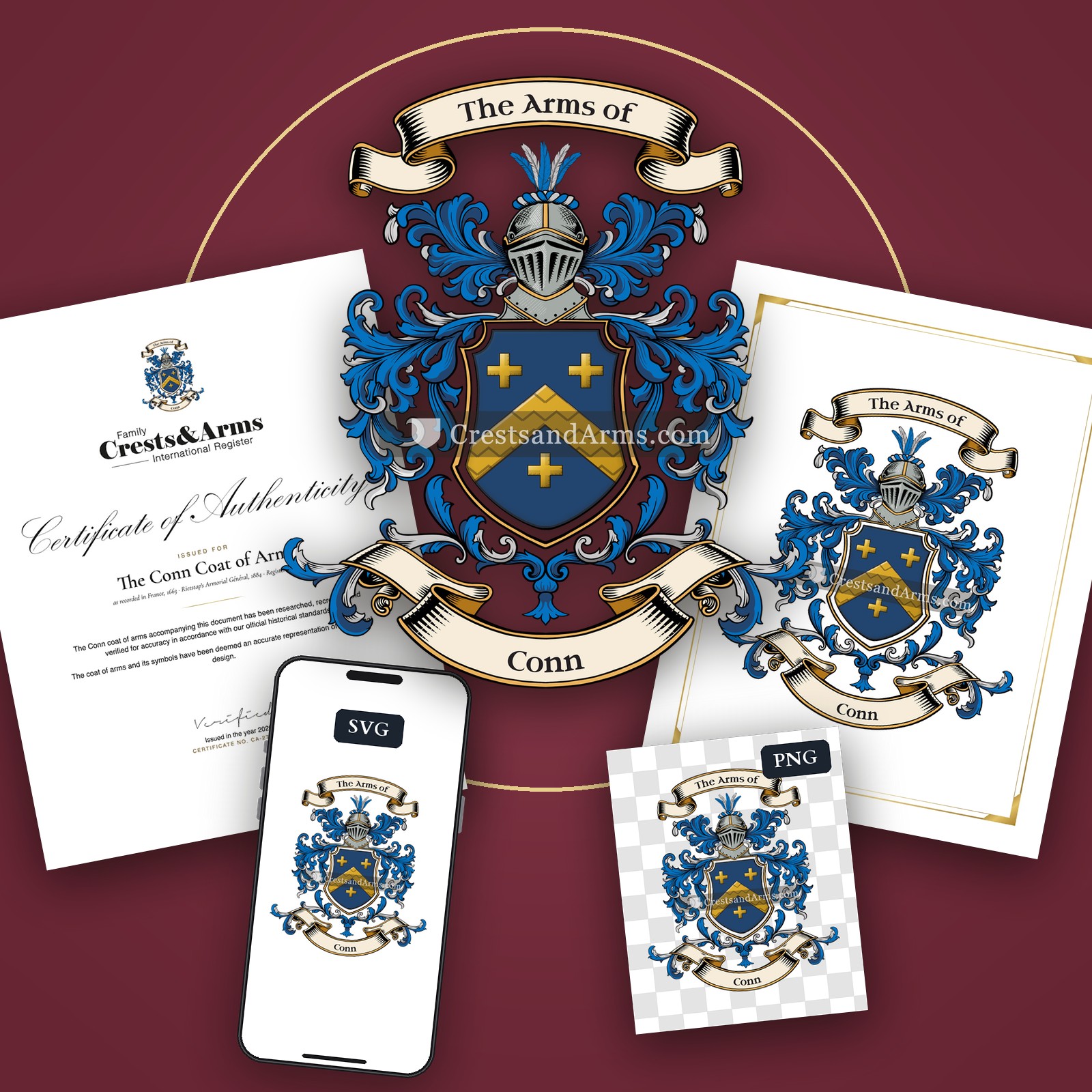
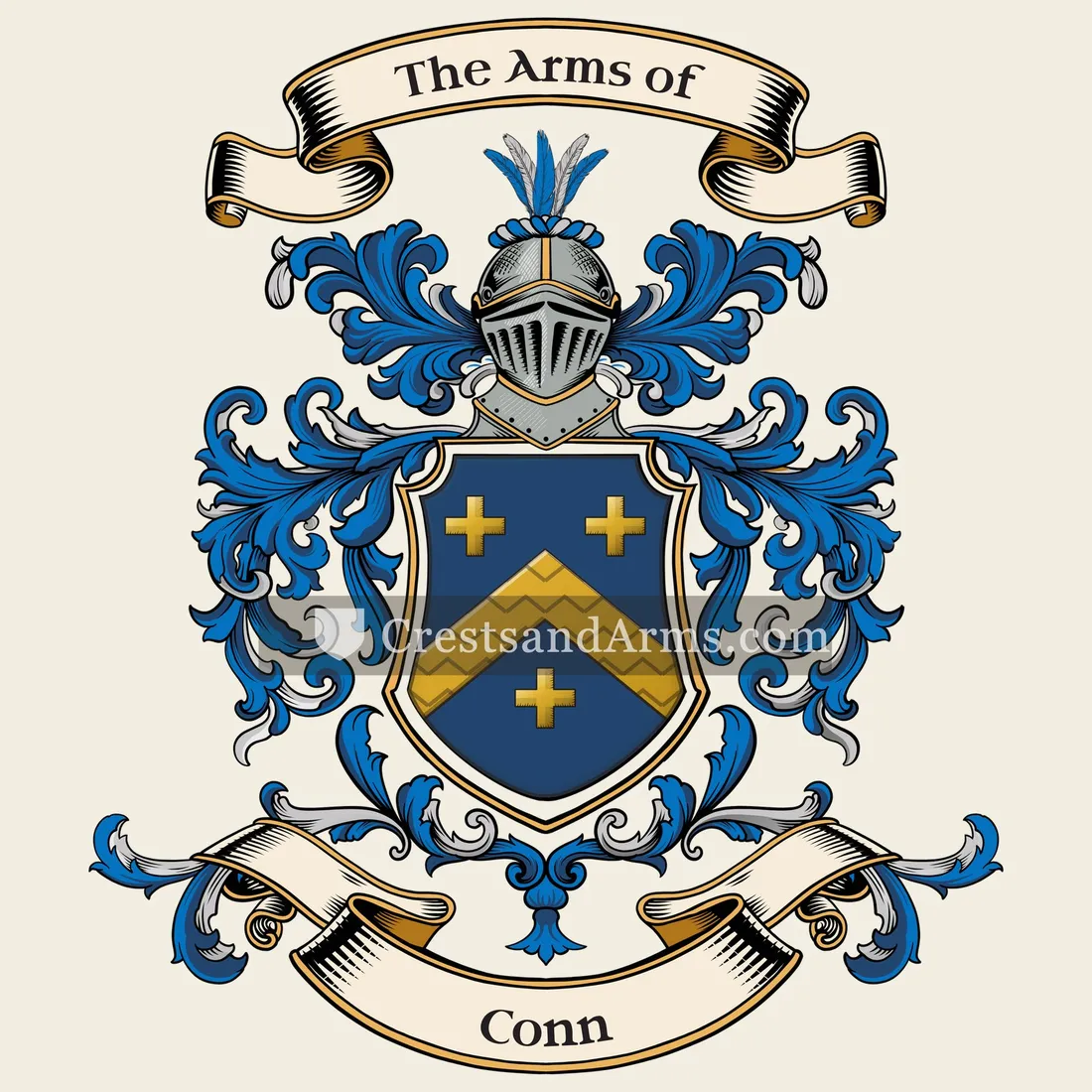
 chevronProtection, and faithful service completed
 cross symbolChristian faith and service
 chevronProtection, and faithful service completed
 cross symbolChristian faith and service


 fleur de lisPurity, light, and the sixth son
 crescentHonour by the sovereign, and the second son