Map of Austria showing where the Conrad arms are recorded
The Conrad arms were recorded in Austria, c. 1610.
Arms such as these were typically recorded in Tyrol.
Tyrol was mountain country in western Austria, where the valleys were held by families who had been there a very long time. Old tenure counted for more than money, and old families carried arms.
This is where the arms were entered in the register. Families often moved to other parts of the country, so the same name can turn up in more than one region.
Region
Tyrol
First recorded
1610
Granting Authority for the Conrad Arms
Imperial and Royal chancery
Sodacan · CC BY-SA 3.0
The body that granted and recorded arms in Austria in this period.
Emperor Rudolf II
Sovereign of the period
Emperor Rudolf II
1576–1612
Reigning in Austria when the Conrad arms are first recorded.
How Arms Worked in Austria
Austrian coats of arms were often linked directly to noble titles granted by the Emperor. These symbols belonged to the entire family line rather than just one individual. When a family grew, new branches kept the original design without needing to change it. This system allowed all members of a noble house to share the same identity across many generations.
Granting authority
The Imperial and Royal chancery managed all heraldic matters and controlled the official granting of arms throughout the Austrian lands.
How they got arms
Families typically received their arms through a formal imperial decree that often accompanied the elevation of a person to noble status.
Where arms were recorded
Official records of these grants were kept in the Imperial Register of Nobility which began its formal documentation process in 1453.
The family's standing
Recorded among the armigerous families of Austria.
Origin & History of the Conrad Family in Austria
The family name Conrad has deep roots in the Alpine regions of Austria, particularly within the rugged landscape of Tyrol. By the year 1610, records confirm that members of the family were already established in this area, living as part of the local mountain communities. The name itself comes from the Old High German words for bold and counsel, suggesting that early ancestors were likely viewed as wise or courageous leaders in their villages. During the seventeenth century, families in Tyrol often lived in small, tight-knit groups that relied on farming and trade to survive the harsh winters. As the Conrad family settled into this environment, they became part of the social fabric of the region, contributing to the development of local customs and the growth of the Austrian countryside. Their presence in Tyrol during this time reflects a long history of resilience and integration into the unique culture of the Austrian Alps.
Coat of Arms & Family Crest Details
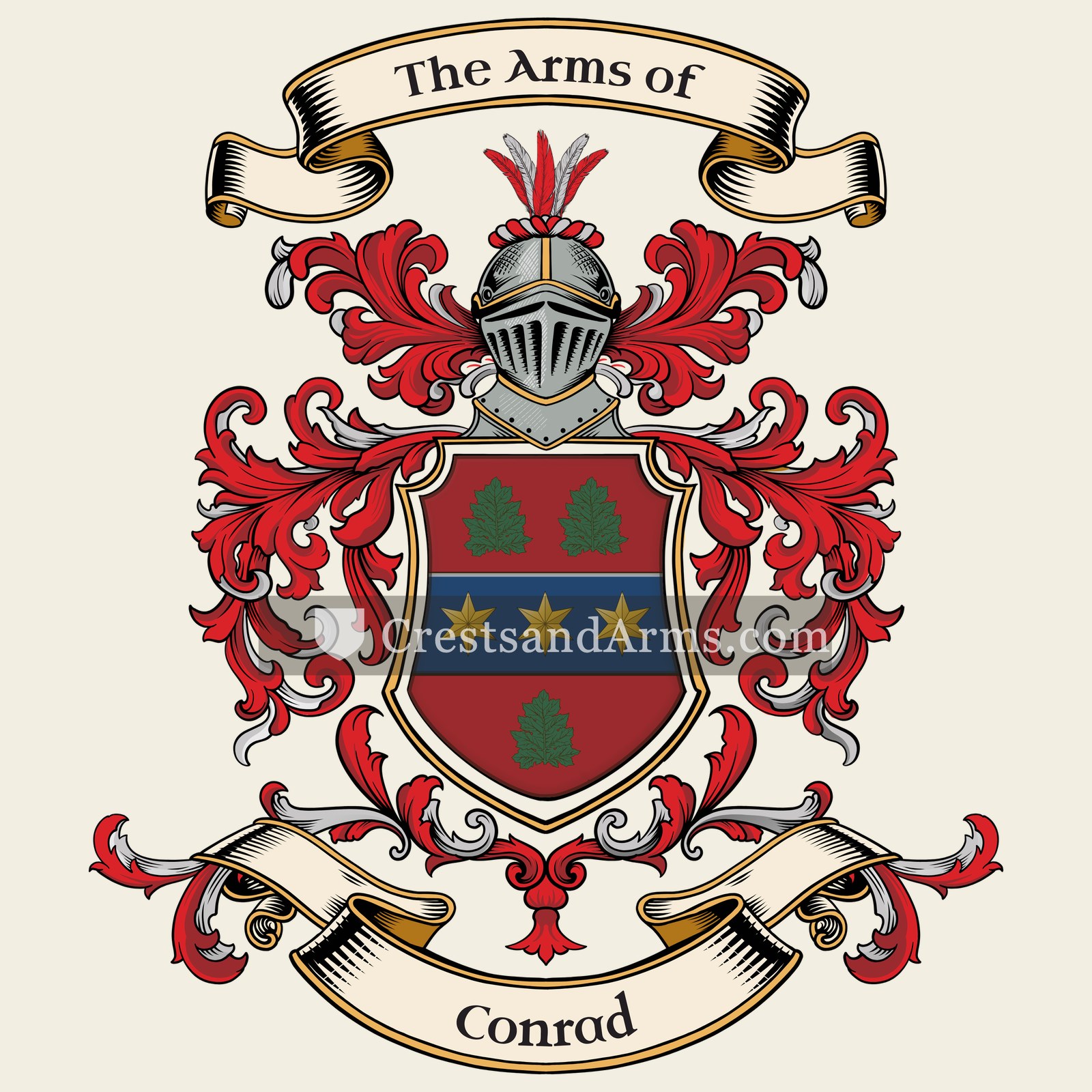
Symbols on this shield
fessThe military belt, and readiness to serve
starThe celestial goddess, and nobility
leafHappiness and abundance
Colours
Red (Gules)Means: Military strength
Blue (Azure)Means: Loyalty and truth
Gold (Or)Means: Generosity
Green (Vert)Means: Hope
Historical info
Source
J. B. Rietstap, Armorial Général, Gouda: G. B. van Goor Zonen, 1884–87
Blazon (the actual original written record)
“De gu. à la fasce d'azur, ch. de trois étoiles d'or et acc. de trois couronnes de feuillage de sin.”
Germanyc. 1765
Digital archive packCoat of arms PNG, gold border print PDF, vector SVG and the certificate of authenticity. Sent to your email in minutes.
Map of Germany showing where the Conrad arms are recorded
The Conrad arms were recorded in Germany, c. 1765.
Arms such as these were typically recorded in Bavaria.
Bavaria was a country of old landed families and walled market towns. Estates passed down the same line for centuries, and both the landowners and the leading townsmen kept arms, which is why so many Bavarian names sit in the registers.
This is where the arms were entered in the register. Families often moved to other parts of the country, so the same name can turn up in more than one region.
The body that granted and recorded arms in Germany in this period.
Francis I, Holy Roman Emperor
Sovereign of the period
Francis I, Holy Roman Emperor
1745–1765
Reigning in Austria when the Conrad arms are first recorded.
How Arms Worked in Germany
In the Holy Roman Empire, coats of arms were often granted to individuals by the Emperor or his representatives. These arms were then passed down through the generations to all legitimate descendants of the original holder. Younger branches of a family usually kept the same shield design without needing to change it, as the arms belonged to the entire lineage.
Granting authority
The Holy Roman Emperor held the sole power to grant new coats of arms throughout his vast imperial territories.
How they got arms
Families typically obtained their coats of arms through a formal imperial grant or by proving their noble status to the authorities.
Where arms were recorded
These grants were officially recorded in the Imperial Chancery registers, which began keeping formal records of such honors during the Middle Ages.
The family's standing
Recorded among the armigerous families of Germany.
Origin & History of the Conrad Family in Germany
The family name Conrad has deep roots in the German language, originating as a given name long before it became a hereditary surname. It is derived from the Old High German elements *kuon*, meaning bold or brave, and *rad*, meaning counsel, which together signify a brave advisor. By the time the name began to stabilize as a family identifier in the eighteenth century, it was already well-established across various German-speaking regions. Records from 1765 confirm that members of the Conrad family were living in Bavaria during this period. At that time, families in rural Bavaria were often tied to the land through agriculture or specialized trades. The transition from a personal name to a family name was a gradual process that helped local officials track residents for tax purposes and church registrations. As the family grew, they became part of the social fabric of their local Bavarian communities, contributing to the development of the region through their work and daily lives.
Conrad Meaning & Related Branches
Root word
Kuonrad
Derived from Germanic elements meaning bold or brave counsel.
This name
ConradA name signifying a wise and courageous advisor or counselor.
also spelled
Konrad
Related arms
Ciserchisimilar arms
Franziussimilar arms
Friedelsimilar arms
Capellerrecorded with Conrad, same area
Documented Sources
J. B. Rietstap, Armorial Général, Gouda: G. B. van Goor Zonen, 1884–87
Hermann Wiesflecker, Österreich im Zeitalter Maximilians I., 1999
Karl Finsterwalder, Tiroler Familiennamenkunde, 1977
Tiroler Landesarchiv, Tiroler Steuerkataster
Tiroler Landesarchiv, Pfarrbücher der Diözese Brixen
Digital archive packCoat of arms PNG, gold border print PDF, vector SVG and the certificate of authenticity. Sent to your email in minutes.


 knightChivalry and service in arms
 knightChivalry and service in arms
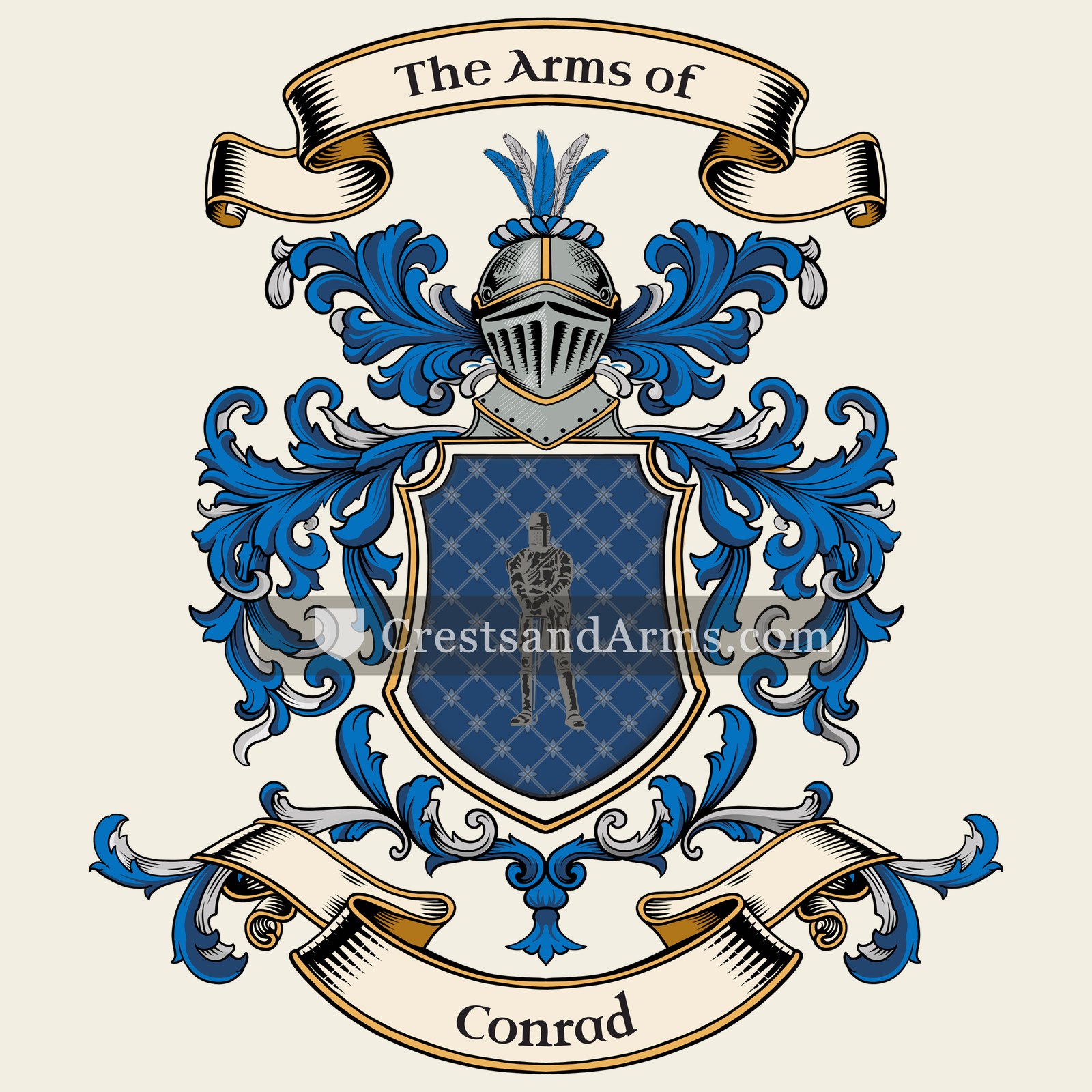


 fessThe military belt, and readiness to serve
 starThe celestial goddess, and nobility
 leafHappiness and abundance