Map of Netherlands showing where the Constance arms are recorded
The Constance arms were recorded in Netherlands, c. 1815.
Arms such as these were typically recorded in Friesland.
Friesland was low, wet country on the northern coast of the Netherlands, farmed by families who had held the same land for centuries. Free landholders were unusually common there, and a free landholder could carry arms.
This is where the arms were entered in the register. Families often moved to other parts of the country, so the same name can turn up in more than one region.
Region
Friesland
First recorded
1815
Granting Authority for the Constance Arms
Hoge Raad van Adel
Photograph made by me · CC BY-SA 3.0
The body that granted and recorded arms in Netherlands in this period.
William I of the Netherlands
Sovereign of the period
William I of the Netherlands
1815–1840
Reigning in Netherlands when the Constance arms are first recorded.
How Arms Worked in Netherlands
In the Netherlands, coats of arms were often used by noble families and those who held specific public offices. These arms were passed down through the generations to legitimate descendants. Younger branches of a family usually kept the original design without needing to add special marks. This system ensured that the family identity remained clear and consistent over many years.
Granting authority
The Hoge Raad van Adel is the official body that regulates and manages noble titles and coats of arms in the Netherlands.
How they got arms
Families typically obtained their coats of arms through official royal grants or by proving their long-standing historical use of the symbols.
Where arms were recorded
Coats of arms are officially recorded in the registers held by the Hoge Raad van Adel, which began its work in 1814.
The family's standing
Recorded among the armigerous families of Netherlands.
Origin & History of the Constance Family in Netherlands
The history of the Constance family in the Netherlands is deeply rooted in the northern province of Friesland, where records confirm their presence by 1815. During this period, the Netherlands underwent significant changes in how surnames were recorded due to the implementation of the Napoleonic civil registry. Before this time, many families in rural Friesland used patronymic naming systems, where a child’s last name was simply based on their father’s first name. The emergence of a fixed surname like Constance suggests that the family likely adopted a stable identity during the early nineteenth century to comply with new government requirements for legal documentation. This transition reflects a broader shift in Dutch society as the state sought to organize its population through standardized records. By settling in Friesland, the family became part of a region known for its strong cultural identity and distinct linguistic heritage, which helped shape their early experiences as they established themselves within the local community.
Meaning of the Constance family crest colors & symbols
Symbols on this shield
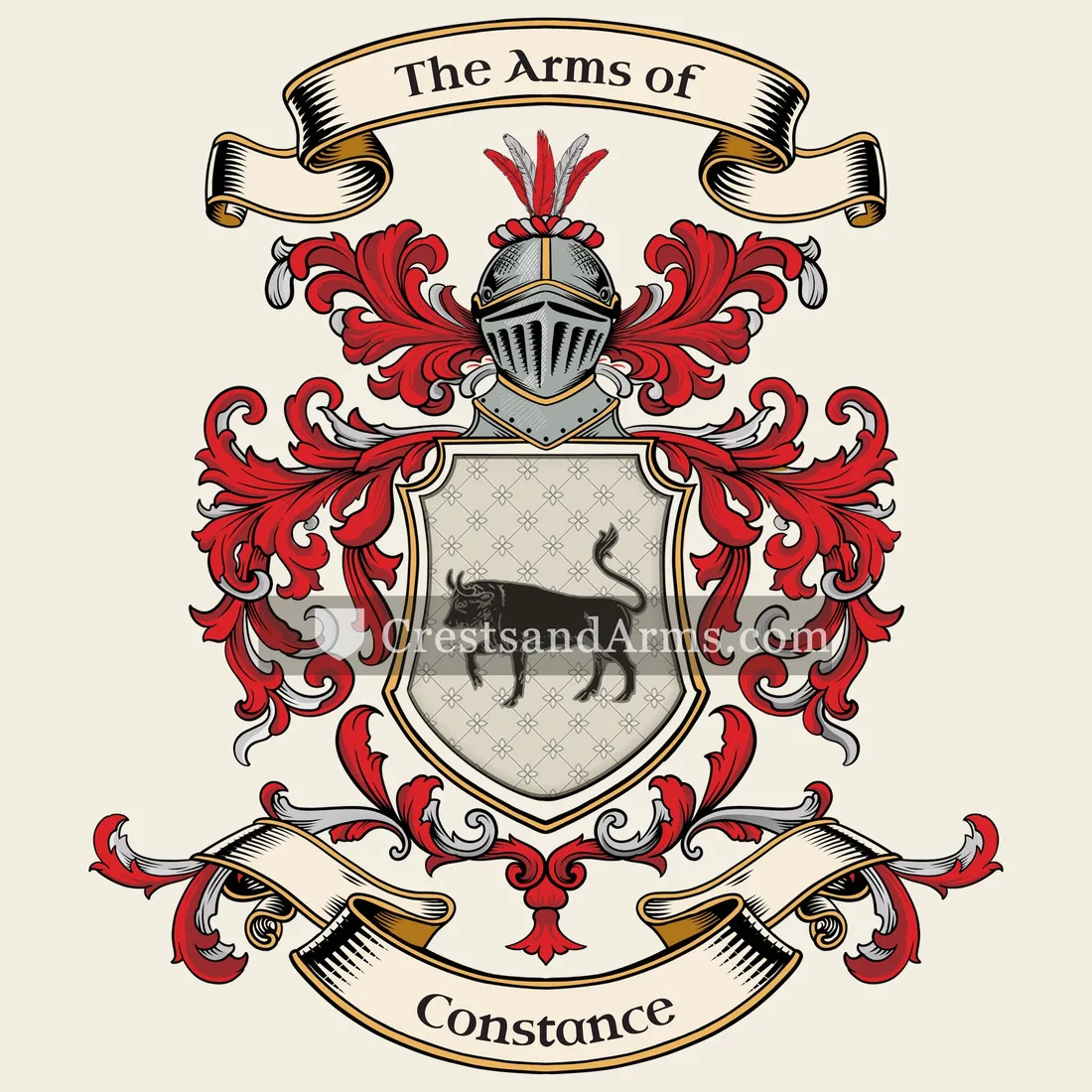
bullValour and generosity
Colours
Silver (Argent)Means: Peace and sincerity
Black (Sable)Means: Constancy
Historical info
Source
J. B. Rietstap, Armorial Général, Gouda: G. B. van Goor Zonen, 1884–87
Blazon (the actual original written record)
“D'arg. à un taureau de sa.”
LorraineLorraine, c. 1476
Digital archive packCoat of arms PNG, gold border print PDF, vector SVG and the certificate of authenticity. Sent to your email in minutes.
Map of France showing where the Constance arms are recorded
The Constance arms were recorded in Lorraine, c. 1476.
Lorraine sat on the border between France and the German lands, and border country bred soldiers. Families here held small estates and served in arms, and a fighting man was exactly the sort who carried a shield of his own.
This is where the arms were entered in the register. Families often moved to other parts of the country, so the same name can turn up in more than one region.
The body that granted and recorded arms in France in this period.
Louis XI of France
Sovereign of the period
Louis XI of France
1461–1483
Reigning in Netherlands when the Constance arms are first recorded.
How Arms Worked in France
In France, a coat of arms was a mark of honor that passed down through the male line to all legitimate descendants. Families often used the same shield without changes to show their shared heritage. If a branch wanted to stand out, they could add a small mark to their shield to show their specific place in the family tree.
Granting authority
The Juge d'armes de France acted as the official authority that regulated and verified coats of arms across the country.
How they got arms
Families typically inherited their arms from ancestors, though they could also receive them through royal grants or by proving their noble status.
Where arms were recorded
Coats of arms were officially recorded in the Armorial Général de France, which began its main collection in the year 1696.
The family's standing
Recorded among the armigerous families of Lorraine.
Origin & History of the Constance Family in France
The history of the Constance family in France is deeply rooted in the eastern region of Lorraine. By the year 1476, records confirm that family members were established in this area, which served as a vital crossroads between the French kingdom and the Holy Roman Empire. During this period, the name likely evolved from the Latin word constantia, which means steadfastness or loyalty. Families living in Lorraine at that time often faced significant challenges due to the frequent border conflicts and shifting political alliances of the late Middle Ages. The ancestors of the Constance line were likely involved in the local agricultural or administrative life of the duchy, helping to maintain stability in a region known for its rugged landscape and independent spirit. As the family grew, they became part of the local social fabric, contributing to the development of the communities that defined the Lorraine region for generations.
Meaning of the Constance family crest colors & symbols
Symbols on this shield
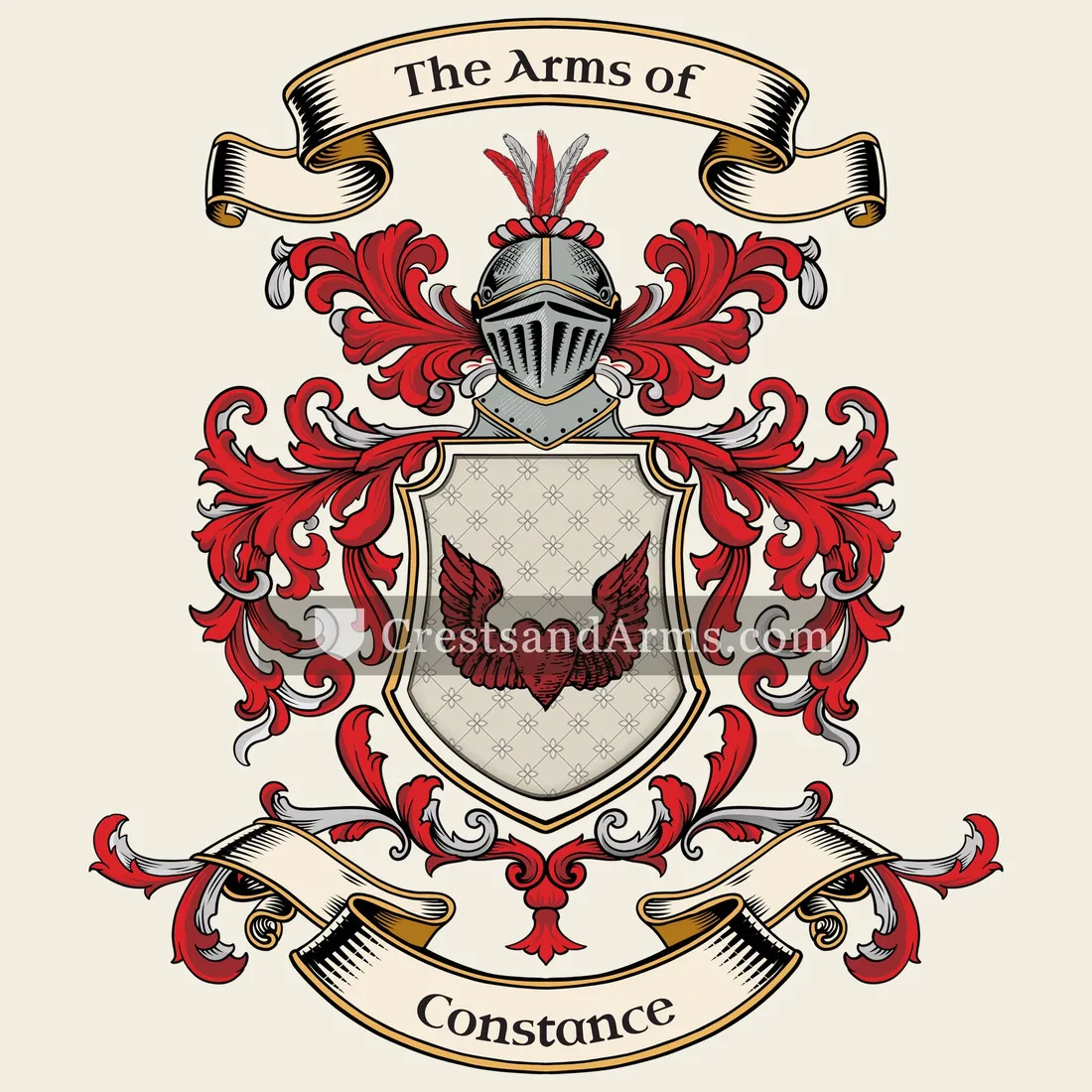
heartSincerity, charity and true affection
Colours
Silver (Argent)Means: Peace and sincerity
Red (Gules)Means: Military strength
Historical info
Source
Sir Bernard Burke, The General Armory of England, Scotland, Ireland and Wales, London: Harrison & Sons, 1884
Blazon (the actual original written record)
“Ar. a human heart gu”
Englandc. 1620
Digital archive packCoat of arms PNG, gold border print PDF, vector SVG and the certificate of authenticity. Sent to your email in minutes.
Map of England showing where the Constance arms are recorded
The Constance arms were recorded in England, c. 1620.
Arms such as these were typically recorded in York.
Yorkshire is the largest of the English counties, and it held more gentry families than any other. Land there was split among a great many households rather than a few, so a great many of them carried arms.
This is where the arms were entered in the register. Families often moved to other parts of the country, so the same name can turn up in more than one region.
The body that granted and recorded arms in England in this period.
James VI and I
Sovereign of the period
James VI and I
1603–1625
Reigning in Netherlands when the Constance arms are first recorded.
How Arms Worked in England
English heraldry allowed arms to be shared by all legitimate descendants of the original owner. These symbols were treated as personal property that moved through the generations to all children. While the eldest son kept the original design, other family members could use the same shield without needing to change it or register their own unique versions.
Granting authority
The College of Arms in London has regulated the use of coats of arms throughout England and Wales since 1484.
How they got arms
Families typically obtained their coats of arms through a formal grant from the Crown or by proving their ancient right to them.
Where arms were recorded
All official coats of arms are recorded in the registers kept at the College of Arms, which date back to the fifteenth century.
The family's standing
Recorded among the armigerous families of England.
Origin & History of the Constance Family in England
The name Constance traces its roots back to the Latin word *constantia*, which means steadfastness or loyalty. In England, the name began as a given name before evolving into a hereditary surname. By the early 17th century, the family had established a notable presence in the city of York. Records from 1620 confirm that members of the family were living in this historic northern hub during a time of significant social and religious change. Because York served as a major center for trade and administration in the north of England, families residing there often played active roles in the local merchant guilds or parish life. The transition from a personal name to a family name suggests that these early ancestors were well-known figures within their community, as surnames were often adopted to distinguish specific households in growing urban centers.
Constance Meaning & Related Branches
Root word
Constantia
Latin term meaning steadfastness, perseverance, or faithfulness.
This name
ConstanceDerived from the Latin word for someone who is constant, firm, or unwavering in character.
also spelled
Constante
Constent
Constaunt
Documented Sources
J. B. Rietstap, Armorial Général, Gouda: G. B. van Goor Zonen, 1884–87
Tresoar (Fries Historisch en Letterkundig Centrum), Burgerlijke Stand van Friesland
Meertens Instituut, Nederlandse Familienamenbank
Poortinga, Y., De foarnammen fan de Friezen: in stúdzje nei de Fryske foarnammen (1980)
Digital archive packCoat of arms PNG, gold border print PDF, vector SVG and the certificate of authenticity. Sent to your email in minutes.


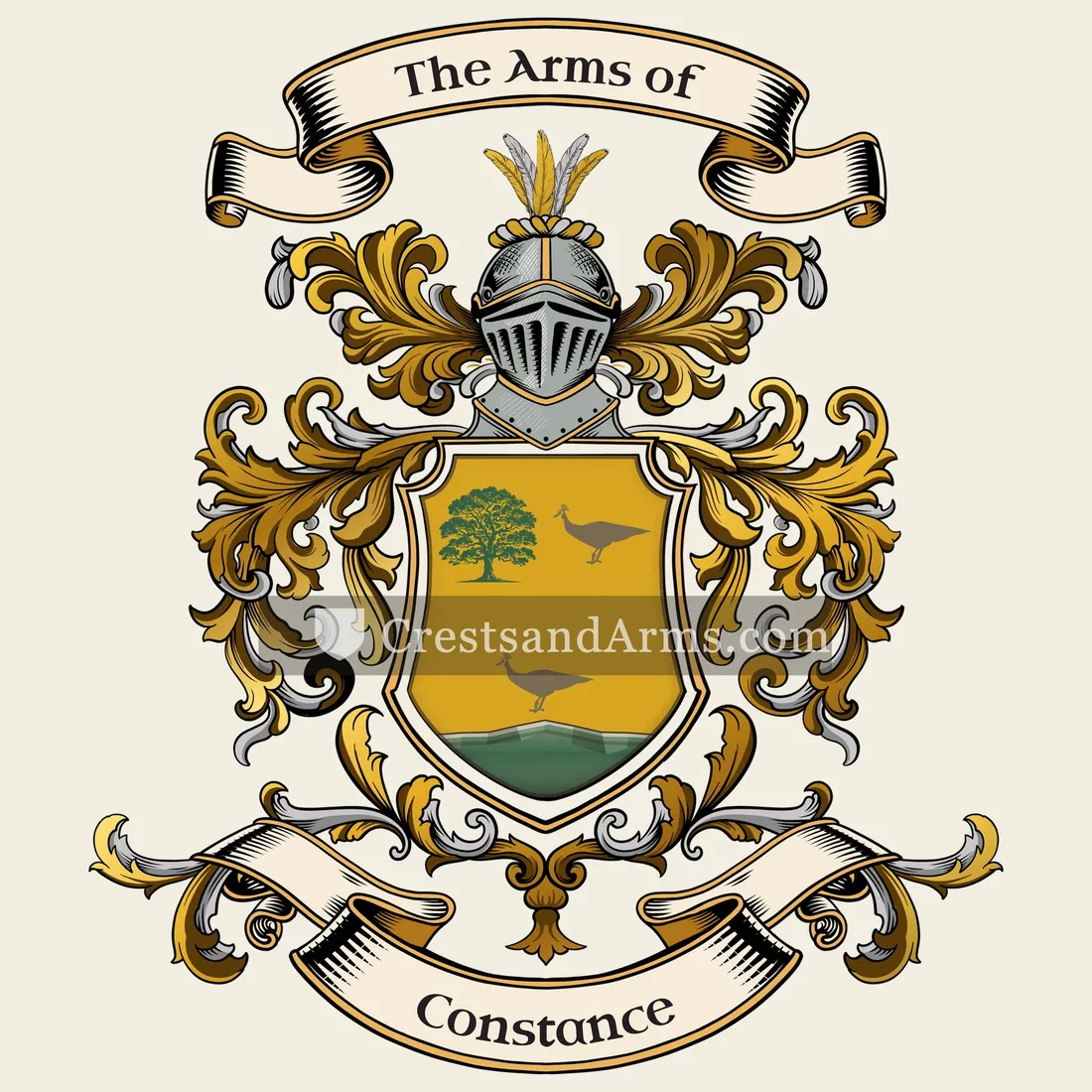
 mountThe ground held, and steadfastness upon it
 treeLife, endurance and deep roots
 peacockBeauty, power and knowledge
 mountThe ground held, and steadfastness upon it
 treeLife, endurance and deep roots
 peacockBeauty, power and knowledge


 bullValour and generosity


 heartSincerity, charity and true affection