Map of Netherlands showing where the Constanza arms are recorded
The Constanza arms were recorded in Netherlands, c. 1815.
Arms such as these were typically recorded in Friesland.
Friesland was low, wet country on the northern coast of the Netherlands, farmed by families who had held the same land for centuries. Free landholders were unusually common there, and a free landholder could carry arms.
This is where the arms were entered in the register. Families often moved to other parts of the country, so the same name can turn up in more than one region.
Region
Friesland
First recorded
1815
Granting Authority for the Constanza Arms
Hoge Raad van Adel
Photograph made by me · CC BY-SA 3.0
The body that granted and recorded arms in Netherlands in this period.
William I of the Netherlands
Sovereign of the period
William I of the Netherlands
1815–1840
Reigning in Netherlands when the Constanza arms are first recorded.
How Arms Worked in Netherlands
In the Netherlands, coats of arms were often used by noble families and those who held specific public offices. These arms were passed down through the generations to legitimate descendants. Younger branches of a family usually kept the original design without needing to add special marks. This system ensured that the family identity remained clear and consistent over many years.
Granting authority
The Hoge Raad van Adel is the official body that regulates and manages noble titles and coats of arms in the Netherlands.
How they got arms
Families typically obtained their coats of arms through official royal grants or by proving their long-standing historical use of the symbols.
Where arms were recorded
Coats of arms are officially recorded in the registers held by the Hoge Raad van Adel, which began its work in 1814.
The family's standing
Recorded among the armigerous families of Netherlands.
Origin & History of the Constanza Family in Netherlands
The history of the Constanza family in the Netherlands is rooted in the northern province of Friesland, where records confirm their presence by the year 1815. During this period, the Netherlands was undergoing significant social changes following the end of French rule and the establishment of the United Kingdom of the Netherlands. The name itself suggests a connection to the Latin word for constancy or steadfastness, a trait that was highly valued in the tight-knit Frisian communities of the early nineteenth century. Because Friesland maintained a distinct cultural and linguistic identity separate from the rest of the country, families living there often held onto specific naming traditions and regional ties. While the name may have arrived through migration or trade routes connecting the Dutch coast to broader European networks, the family established a clear foothold in the Frisian landscape during this era of national transition. By settling in this region, the early members of the Constanza family became part of the local agricultural and civic life that defined the northern Dutch provinces for generations.
Meaning of the Constanza family crest colors & symbols
Symbols on this shield
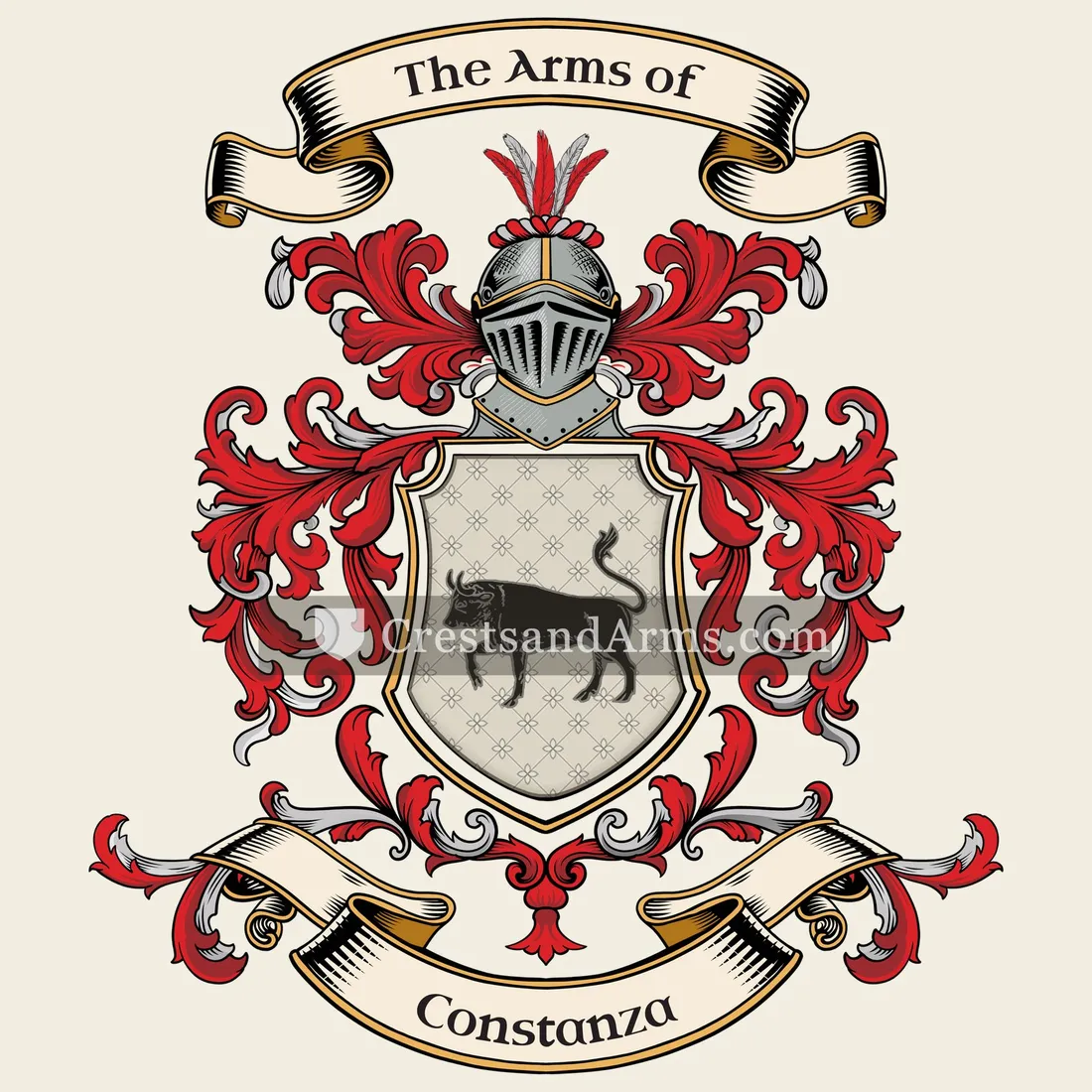
bullValour and generosity
Colours
Silver (Argent)Means: Peace and sincerity
Black (Sable)Means: Constancy
Historical info
Source
J. B. Rietstap, Armorial Général, Gouda: G. B. van Goor Zonen, 1884–87
Blazon (the actual original written record)
“D'arg. à un taureau de sa.”
LorraineLorraine, c. 1476
Digital archive packCoat of arms PNG, gold border print PDF, vector SVG and the certificate of authenticity. Sent to your email in minutes.
Map of France showing where the Constanza arms are recorded
The Constanza arms were recorded in Lorraine, c. 1476.
Lorraine sat on the border between France and the German lands, and border country bred soldiers. Families here held small estates and served in arms, and a fighting man was exactly the sort who carried a shield of his own.
This is where the arms were entered in the register. Families often moved to other parts of the country, so the same name can turn up in more than one region.
The body that granted and recorded arms in France in this period.
Louis XI of France
Sovereign of the period
Louis XI of France
1461–1483
Reigning in Netherlands when the Constanza arms are first recorded.
How Arms Worked in France
In France, a coat of arms was a mark of honor that passed down through the male line to all legitimate descendants. Families often used the same shield without changes to show their shared heritage. If a branch wanted to stand out, they could add a small mark to their shield to show their specific place in the family tree.
Granting authority
The Juge d'armes de France acted as the official authority that regulated and verified coats of arms across the country.
How they got arms
Families typically inherited their arms from ancestors, though they could also receive them through royal grants or by proving their noble status.
Where arms were recorded
Coats of arms were officially recorded in the Armorial Général de France, which began its main collection in the year 1696.
The family's standing
Recorded among the armigerous families of Lorraine.
Origin & History of the Constanza Family in France
The history of the Constanza name in France is deeply rooted in the historical region of Lorraine, where records confirm the presence of the family as early as 1476. During this period, Lorraine served as a vital crossroads between the Holy Roman Empire and the Kingdom of France, making it a place of significant political and social movement. Families residing in this area often navigated the complex loyalties of the Duchy of Lorraine, which maintained a distinct cultural identity while balancing influence from its powerful neighbors. By establishing themselves in this territory during the late fifteenth century, the early members of the Constanza family became part of the local fabric of the region. They lived through a time of transition as the area moved toward greater integration with the French crown, eventually shaping the family’s long-term presence within the borders of modern France.
Meaning of the Constanza family crest colors & symbols
Symbols on this shield
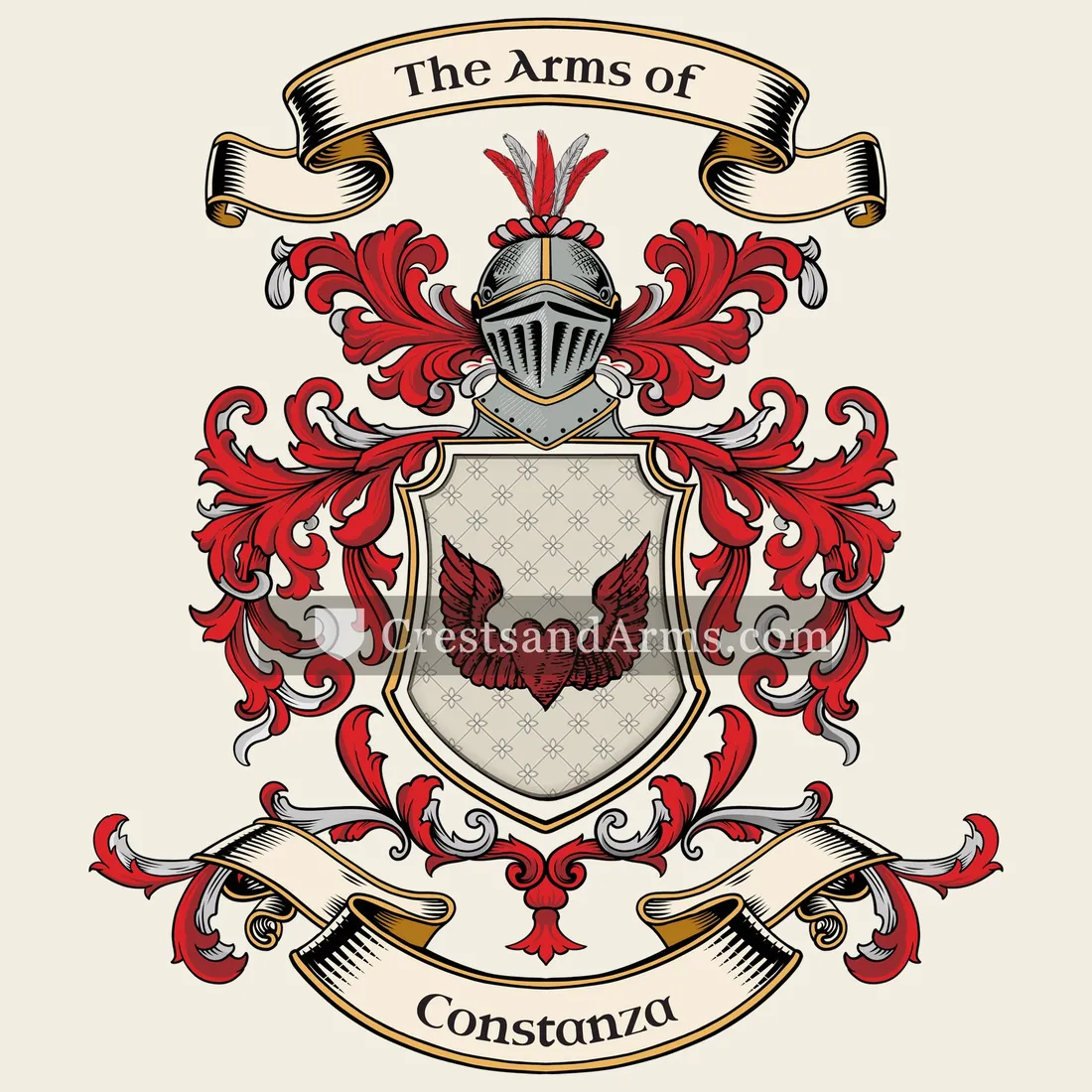
heartSincerity, charity and true affection
Colours
Silver (Argent)Means: Peace and sincerity
Red (Gules)Means: Military strength
Historical info
Source
Sir Bernard Burke, The General Armory of England, Scotland, Ireland and Wales, London: Harrison & Sons, 1884
Blazon (the actual original written record)
“Ar. a human heart gu”
Englandc. 1620
Digital archive packCoat of arms PNG, gold border print PDF, vector SVG and the certificate of authenticity. Sent to your email in minutes.
Map of England showing where the Constanza arms are recorded
The Constanza arms were recorded in England, c. 1620.
Arms such as these were typically recorded in York.
Yorkshire is the largest of the English counties, and it held more gentry families than any other. Land there was split among a great many households rather than a few, so a great many of them carried arms.
This is where the arms were entered in the register. Families often moved to other parts of the country, so the same name can turn up in more than one region.
The body that granted and recorded arms in England in this period.
James VI and I
Sovereign of the period
James VI and I
1603–1625
Reigning in Netherlands when the Constanza arms are first recorded.
How Arms Worked in England
English heraldry allowed arms to be shared by all legitimate descendants of the original owner. These symbols were treated as personal property that moved through the generations to all children. While the eldest son kept the original design, other family members could use the same shield without needing to change it or register their own unique versions.
Granting authority
The College of Arms in London has regulated the use of coats of arms throughout England and Wales since 1484.
How they got arms
Families typically obtained their coats of arms through a formal grant from the Crown or by proving their ancient right to them.
Where arms were recorded
All official coats of arms are recorded in the registers kept at the College of Arms, which date back to the fifteenth century.
The family's standing
Recorded among the armigerous families of England.
Origin & History of the Constanza Family in England
The family name Constanza first appeared in the historical record of York during the early seventeenth century. By 1620, members of the family had established a presence in this northern English city, which was a major center for trade and religious life at the time. The name itself reflects a Mediterranean origin, likely arriving in England through the movement of merchants or travelers who navigated the busy maritime routes connecting the continent to the British Isles. Settling in York allowed the family to integrate into a society defined by its medieval architecture and its role as a regional hub for the wool and cloth industries. While the name remained relatively rare in local parish registers, its presence in York suggests that the family was part of the small but significant population of continental Europeans who chose to build new lives in northern England during the Stuart period.
Constanza Meaning & Related Branches
Root word
Constantia
Latin term meaning steadfastness or perseverance.
This name
ConstanzaDerived from the Latin word for constant, signifying someone who is steadfast, faithful, and enduring.
also spelled
Constante
Constent
Constaunt
Documented Sources
J. B. Rietstap, Armorial Général, Gouda: G. B. van Goor Zonen, 1884–87
Tresoar (Fries Historisch en Letterkundig Centrum), Burgerlijke Stand van Friesland, 1811-1950
Centraal Bureau voor Genealogie, Nederland’s Patriciaat
H.K. Schippers, De bevolking van Friesland in de negentiende eeuw, 1988
Digital archive packCoat of arms PNG, gold border print PDF, vector SVG and the certificate of authenticity. Sent to your email in minutes.


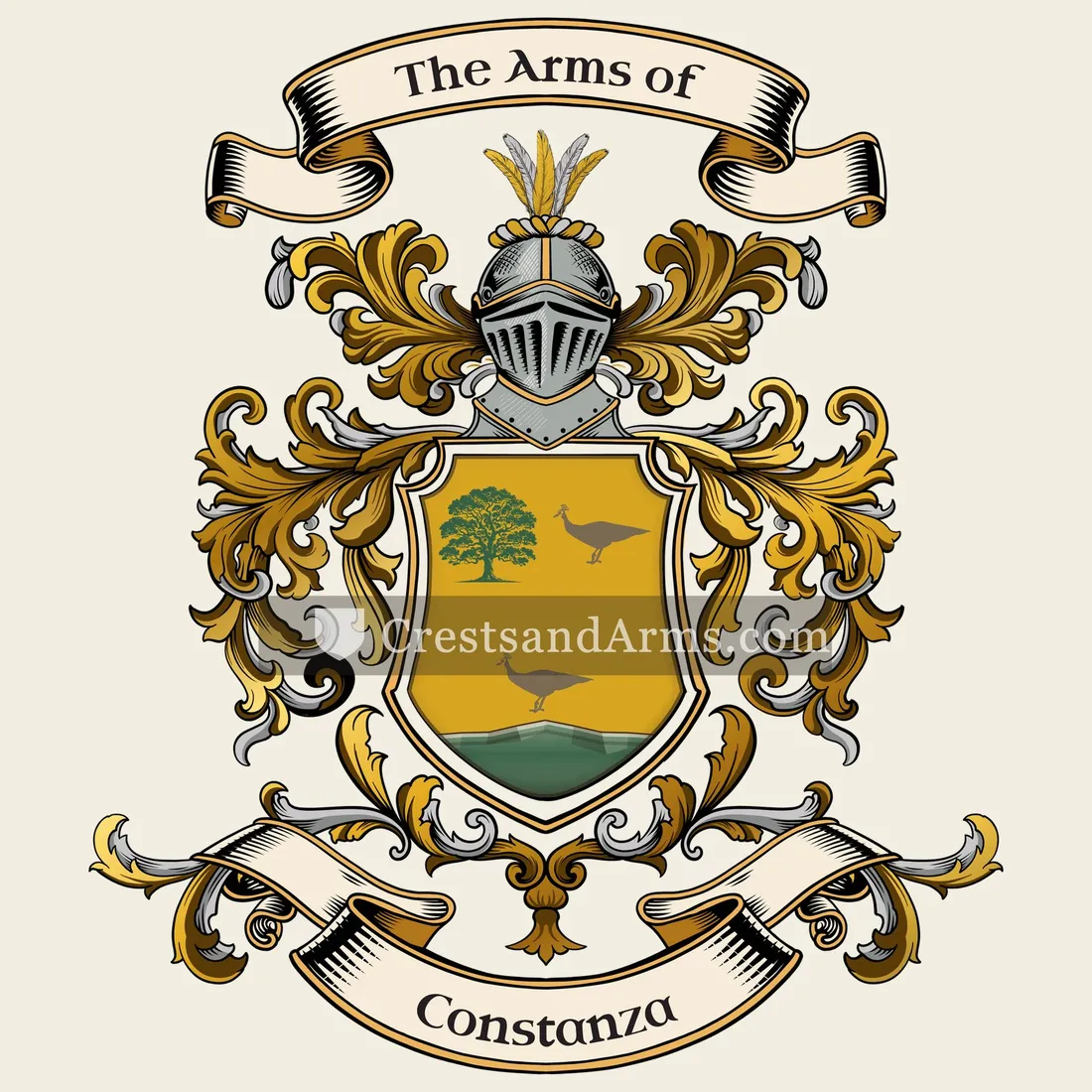
 mountThe ground held, and steadfastness upon it
 treeLife, endurance and deep roots
 peacockBeauty, power and knowledge
 mountThe ground held, and steadfastness upon it
 treeLife, endurance and deep roots
 peacockBeauty, power and knowledge


 bullValour and generosity


 heartSincerity, charity and true affection