Map of Spain showing where the Coomes arms are recorded
The Coomes arms were recorded in Spain, c. 1722.
Arms such as these were typically recorded in Castile.
Castile was the heart of Spain and the source of most of its noble families. Land won in the long wars against the Moors was granted out to fighting men, and a man granted land was granted arms along with it.
This is where the arms were entered in the register. Families often moved to other parts of the country, so the same name can turn up in more than one region.
The body that granted and recorded arms in Spain in this period.
Philip V of Spain
Sovereign of the period
Philip V of Spain
1714–1724
Reigning in Spain when the Coomes arms are first recorded.
How Arms Worked in Spain
In Spain, a coat of arms was considered a form of property that belonged to the entire family line. These arms were passed down from a father to all his children equally. Younger branches of the family usually kept the original design without needing to add any special marks to distinguish their specific line.
Granting authority
The Cronista Rey de Armas was the official body that regulated and granted coats of arms throughout Spain.
How they got arms
Families often obtained their arms through royal grants or by proving their noble status to the official heraldic authority.
Where arms were recorded
Coats of arms were officially recorded in the registers of the Cronista Rey de Armas starting in 1496.
The family's standing
Recorded among the armigerous families of Spain.
Origin & History of the Coomes Family in Spain
The history of the Coomes family in Spain is deeply rooted in the rugged landscape of the Castile region during the early eighteenth century. By 1722, records indicate that members of the family were established residents in this central plateau, a time when the area was defined by its transition toward modern administrative structures. Families living in Castile during this era were often involved in the agricultural and merchant networks that supported the growing Spanish economy. The name itself reflects the linguistic shifts common to the Iberian Peninsula, where local dialects often influenced the spelling and pronunciation of surnames as families moved between provinces. Living in Castile placed the family at the heart of Spanish political and social life, providing them with access to the trade routes that connected the interior of the country to the major cities. Their presence in these historical records highlights a family that was integrated into the local community and subject to the evolving laws and census requirements of the Spanish Crown.
Coat of Arms & Family Crest Details
Symbols on this shield
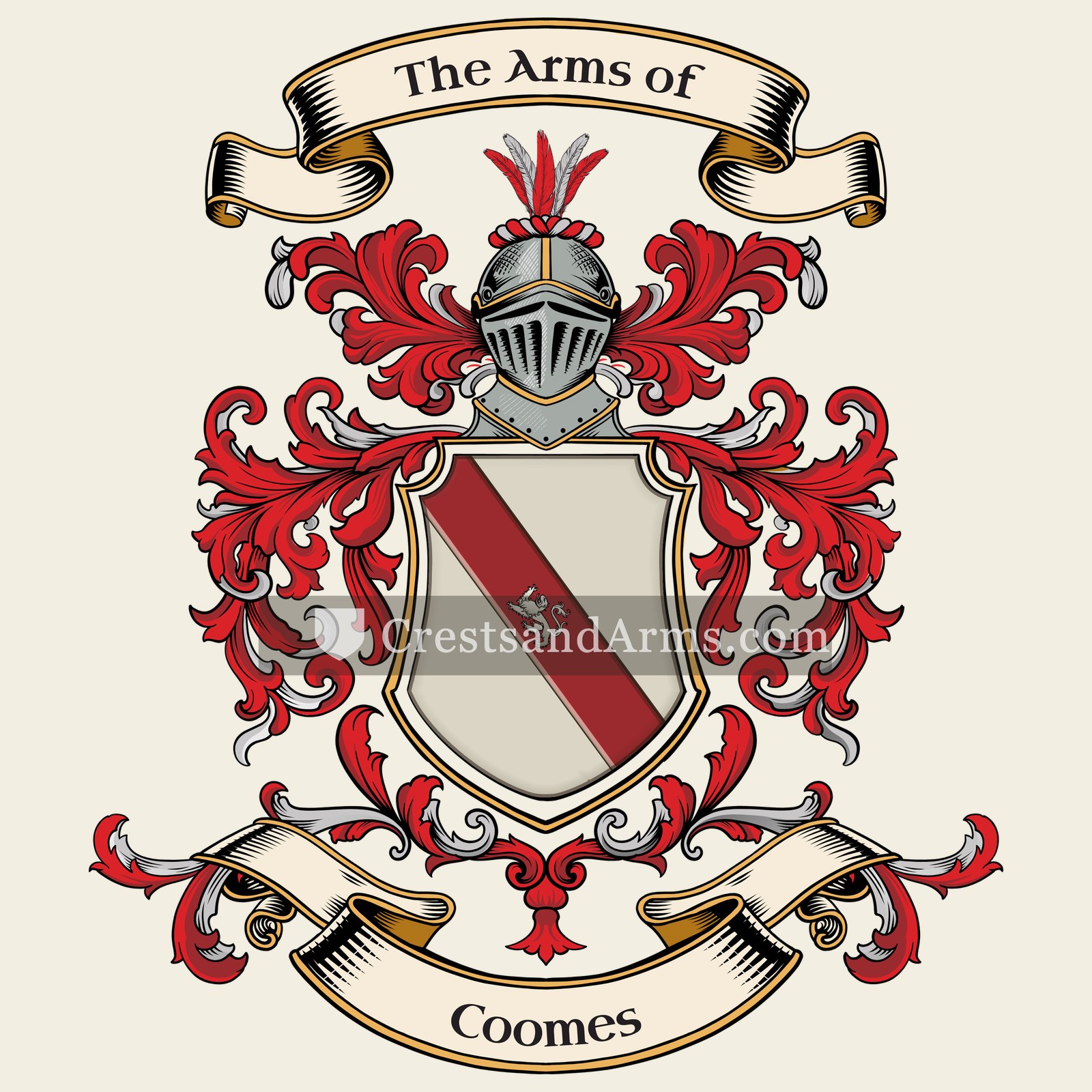
bendDefence, and the scarf of a commander
lionCourage, strength and royalty
Colours
Silver (Argent)Means: Peace and sincerity
Red (Gules)Means: Military strength
Historical info
Source
Sir Bernard Burke, The General Armory of England, Scotland, Ireland and Wales, London: Harrison & Sons, 1884
Blazon (the actual original written record)
“Ar. on a bend raguly gu. a lion pass. of the field”
EnglandLondon, c. 1620
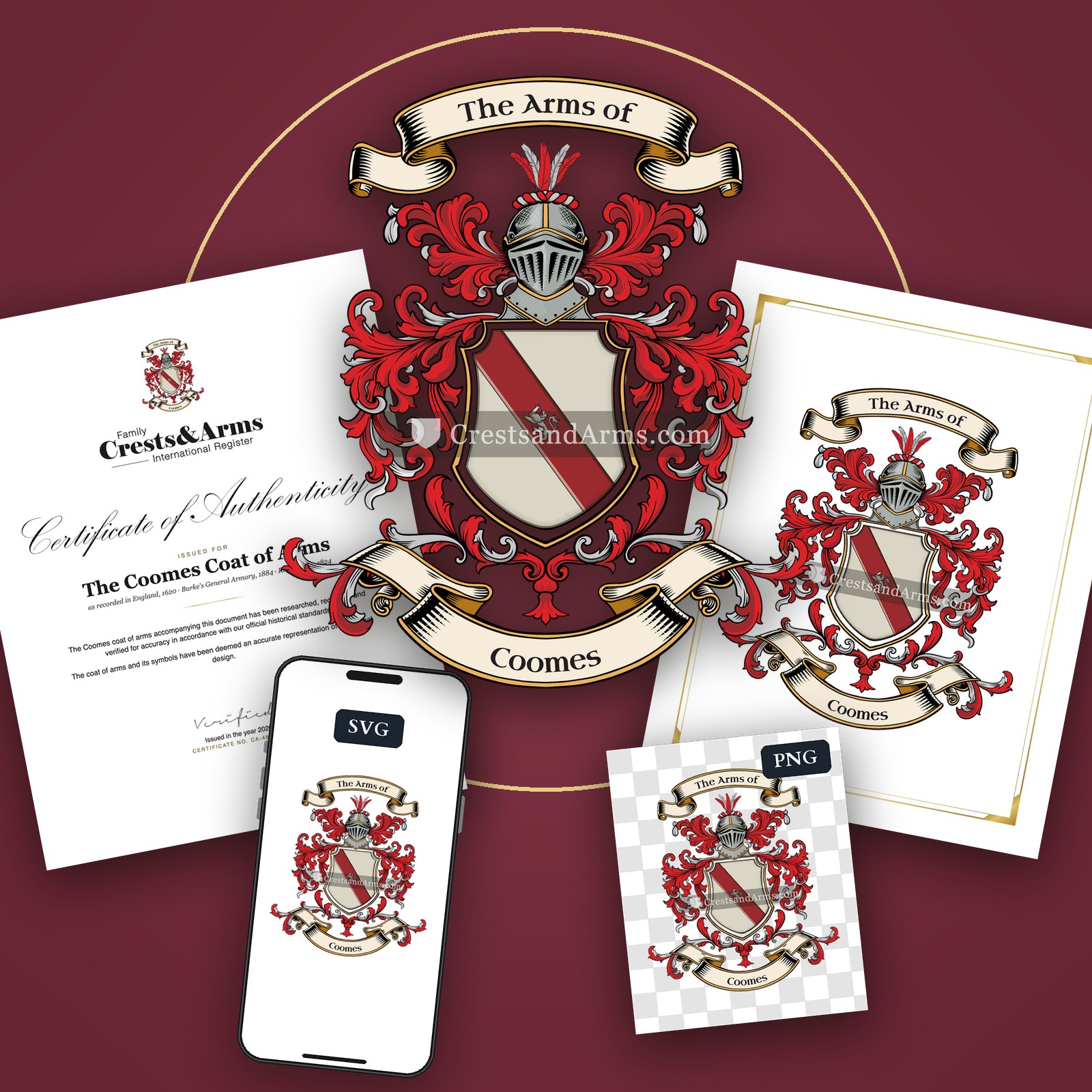
Digital archive packCoat of arms PNG, gold border print PDF, vector SVG and the certificate of authenticity. Sent to your email in minutes.
Map of England showing where the Coomes arms are recorded
The Coomes arms were recorded in London, c. 1620.
This is where the arms were entered in the register. Families often moved to other parts of the country, so the same name can turn up in more than one region.
The body that granted and recorded arms in England in this period.
James VI and I
Sovereign of the period
James VI and I
1603–1625
Reigning in Spain when the Coomes arms are first recorded.
How Arms Worked in England
English heraldry allowed arms to be shared by all legitimate descendants of the original owner. These symbols were treated as personal property that moved through the generations to all children. While the eldest son kept the original design, other family members could use the same shield without needing to change it or register their own unique versions.
Granting authority
The College of Arms in London has regulated the use of coats of arms throughout England and Wales since 1484.
How they got arms
Families typically obtained their coats of arms through a formal grant from the Crown or by proving their ancient right to them.
Where arms were recorded
All official coats of arms are recorded in the registers kept at the College of Arms, which date back to the fifteenth century.
The family's standing
Recorded among the armigerous families of England.
Origin & History of the Coomes Family in England
The family name Coomes originates from the medieval period in England, where it functioned as a topographical surname. It was typically used to describe people who lived near a small valley or a hollow, which was known in Middle English as a combe. By the early seventeenth century, the family had established a notable presence in London. Records confirm that individuals bearing this name were living in the city by 1620, a time when London was a rapidly growing center of trade and social change. These early residents likely worked as skilled tradespeople or merchants, contributing to the bustling economy of the capital. As the family grew, they became part of the urban fabric of England, moving through the social shifts of the Stuart era and helping to shape the history of their local parishes.
Coomes Meaning & Related Branches
Root word
Comes
Latin term for a companion or an attendant of a noble.
This name
CoomesRefers to a descendant of someone who held the rank of count.
also spelled
Commes
Comis
Come
Komes
Coms
Documented Sources
J. B. Rietstap, Armorial Général, Gouda: G. B. van Goor Zonen, 1884–87
Archivo General de Simancas, Registro del Sello de Corte, 1722
Ladero Quesada, Miguel Ángel, La España de los Reyes Católicos, 1999
Vicens Vives, Jaime, An Economic History of Spain, 1969
Digital archive packCoat of arms PNG, gold border print PDF, vector SVG and the certificate of authenticity. Sent to your email in minutes.


 fessThe military belt, and readiness to serve
 fessThe military belt, and readiness to serve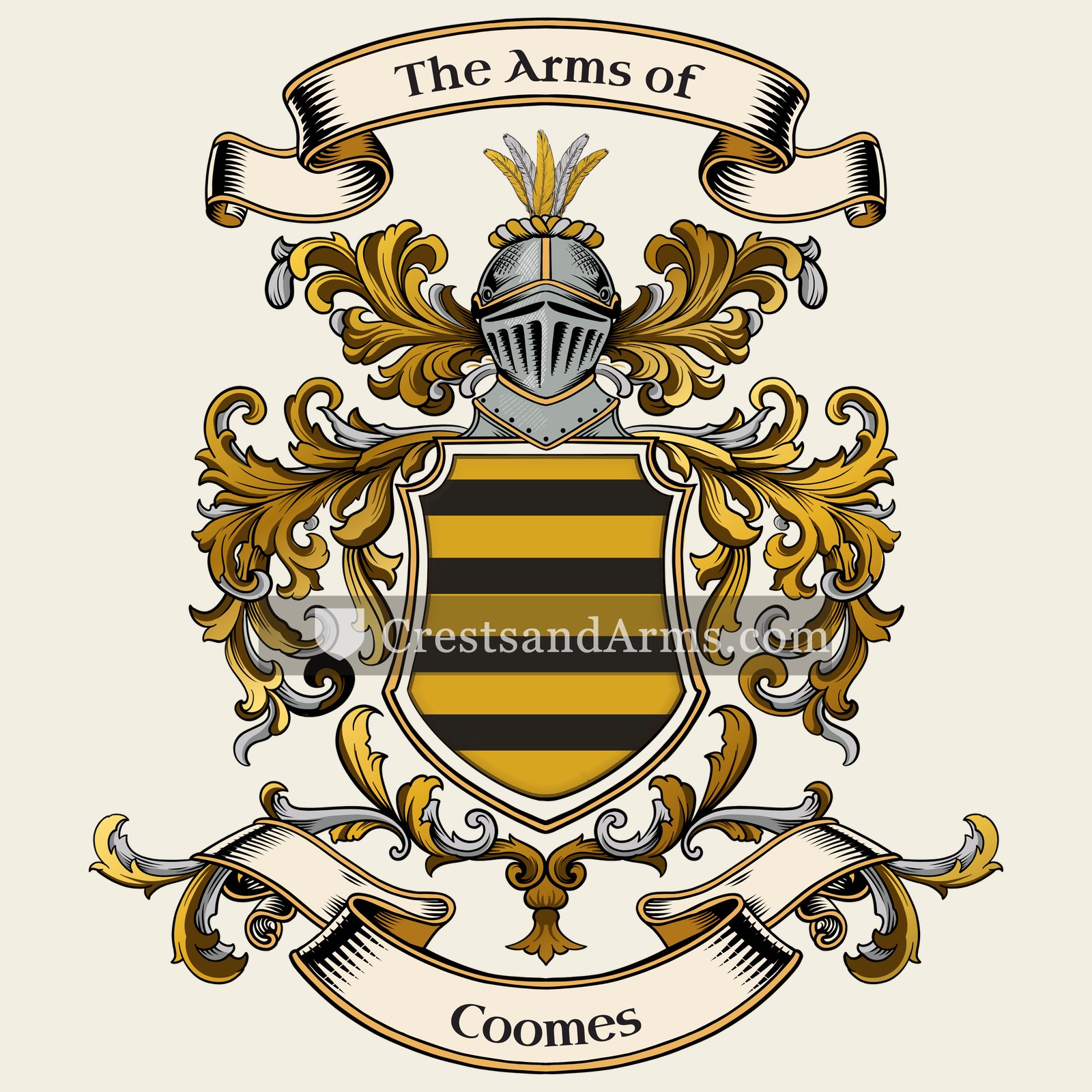


 bendDefence, and the scarf of a commander
 lionCourage, strength and royalty