Map of England showing where the Coover arms are recorded
The Coover arms were recorded in Lincoln, c. 1620.
Lincolnshire was rich farming country, and its wealth was spread across many middling families. Households of that size bought land and took arms, and the county holds a large share of English names.
This is where the arms were entered in the register. Families often moved to other parts of the country, so the same name can turn up in more than one region.
The body that granted and recorded arms in England in this period.
James VI and I
Sovereign of the period
James VI and I
1603–1625
Reigning in England when the Coover arms are first recorded.
How Arms Worked in England
English heraldry allowed arms to be shared by all legitimate descendants of the original owner. These symbols were treated as personal property that moved through the generations to all children. While the eldest son kept the original design, other family members could use the same shield without needing to change it or register their own unique versions.
Granting authority
The College of Arms in London has regulated the use of coats of arms throughout England and Wales since 1484.
How they got arms
Families typically obtained their coats of arms through a formal grant from the Crown or by proving their ancient right to them.
Where arms were recorded
All official coats of arms are recorded in the registers kept at the College of Arms, which date back to the fifteenth century.
The family's standing
Recorded among the armigerous families of Lincoln.
Origin & History of the Coover Family in England
The family name Coover is deeply rooted in the historical landscape of England, with records confirming the presence of the family in the city of Lincoln as early as 1620. During this period, Lincoln was a significant regional hub, and families living there were often involved in the local trade guilds or the agricultural life of the surrounding Lincolnshire countryside. The name itself likely evolved from older linguistic roots common to the East Midlands, reflecting the way surnames were often shaped by local dialects and the specific occupations or geographic features associated with a family’s home. By the early seventeenth century, the Coovers were part of a stable community that navigated the social and economic shifts of pre-industrial England. Their presence in Lincoln suggests that they were integrated into the civic life of the city, living through a time of great transition before many families of that era began to look toward the opportunities emerging in the wider world.
Meaning of the Coover family crest colors & symbols
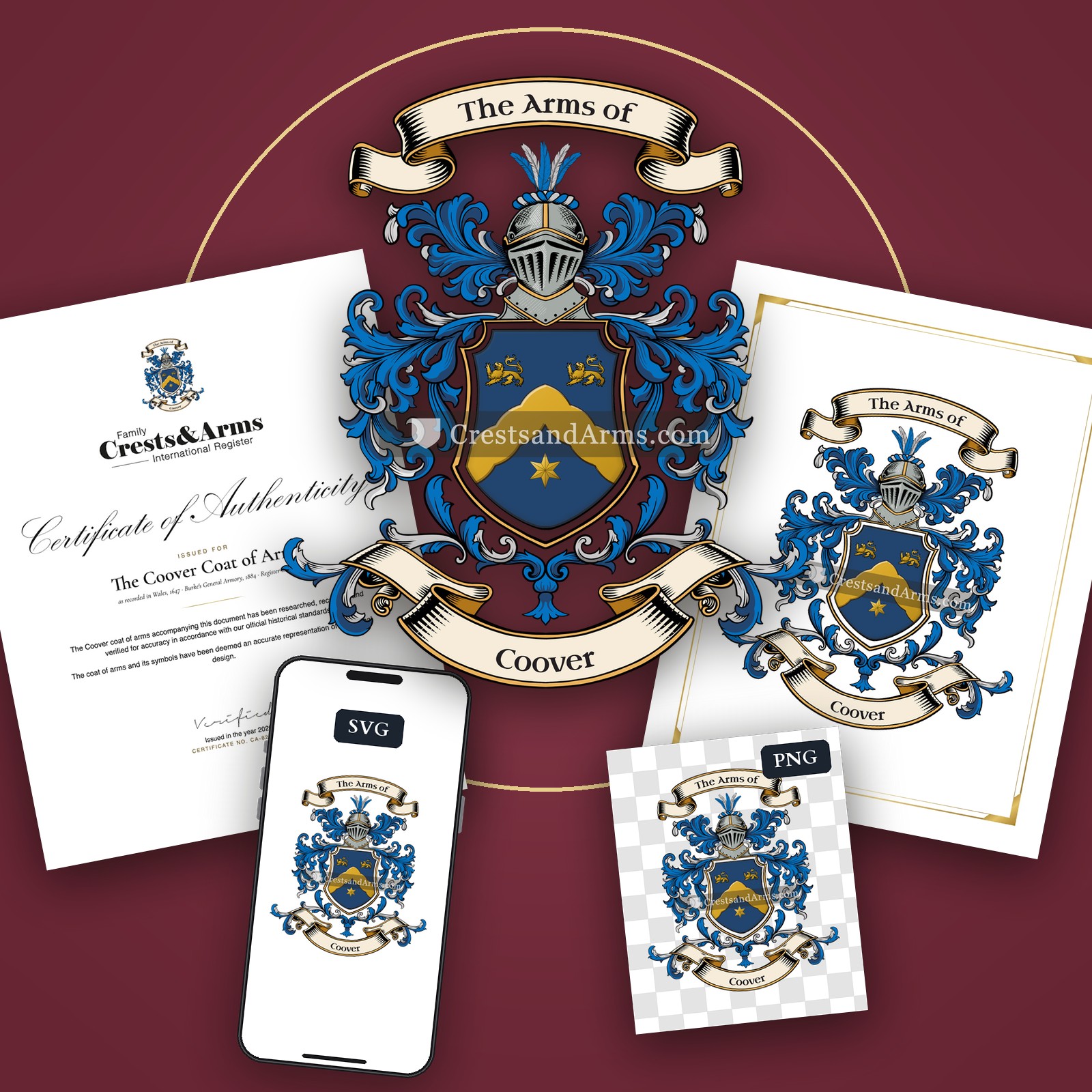
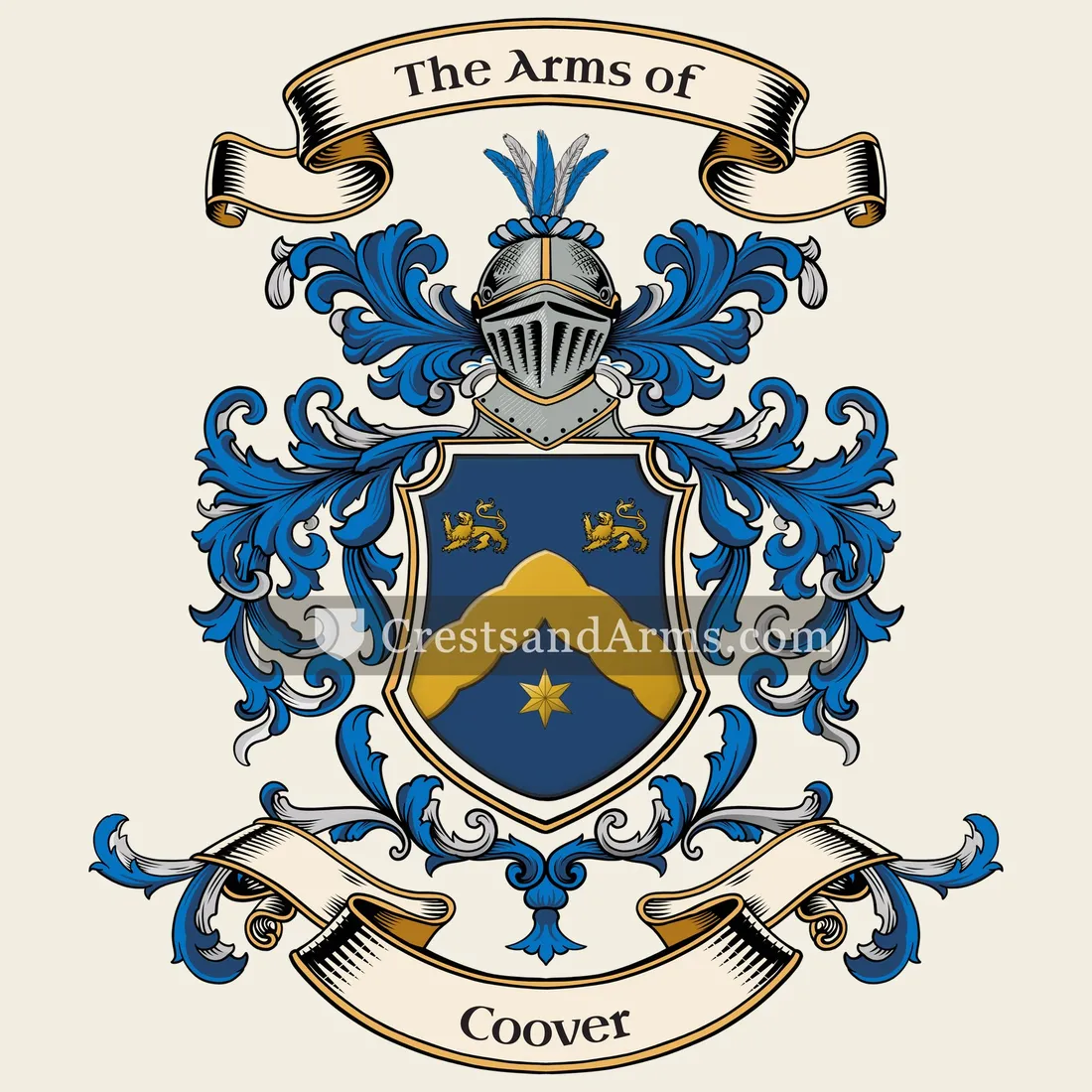
Symbols on this shield
chevronProtection, and faithful service completed
lionCourage, strength and royalty
starThe celestial goddess, and nobility
Colours
Blue (Azure)Means: Loyalty and truth
Gold (Or)Means: Generosity
Historical info
Source
Sir Bernard Burke, The General Armory of England, Scotland, Ireland and Wales, London: Harrison & Sons, 1884
Blazon (the actual original written record)
“Az. a chev. engr. betw. two lions pass. in chief and an estoile of eight points in base or”
LancasterWoolhara · Lancaster, c. 1647
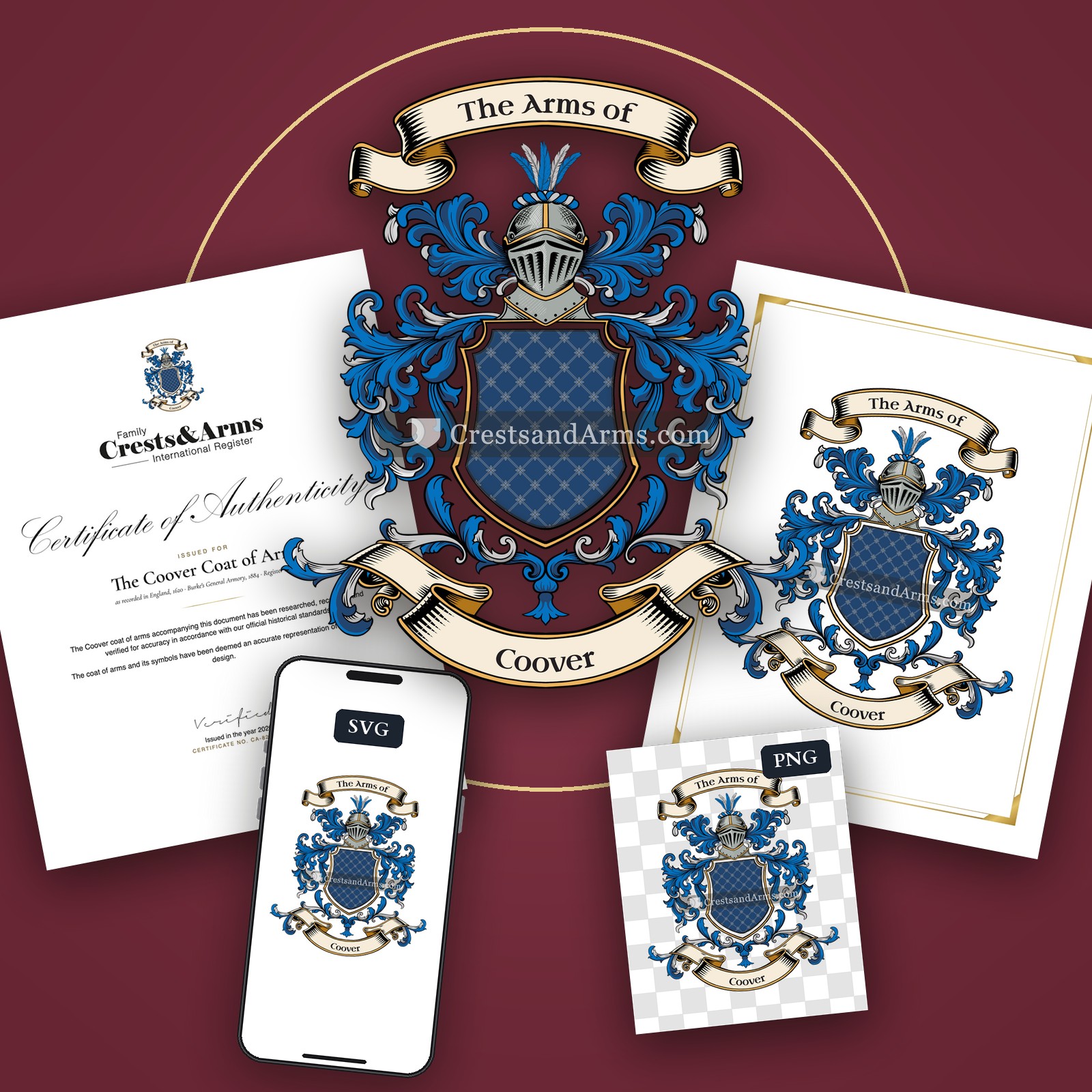
Digital archive packCoat of arms PNG, gold border print PDF, vector SVG and the certificate of authenticity. Sent to your email in minutes.
Map of Wales showing where the Coover arms are recorded
The Coover arms were recorded in Lancaster, c. 1647.
Lancashire was divided among a great many small landed families, more than most northern counties. Estates were passed down whole rather than split up, so the same names hold the same ground for centuries in the records.
This is where the arms were entered in the register. Families often moved to other parts of the country, so the same name can turn up in more than one region.
The body that granted and recorded arms in Wales in this period.
Charles I of England
Sovereign of the period
Charles I of England
1625–1649
Reigning in England when the Coover arms are first recorded.
How Arms Worked in Wales
English heraldry allowed arms to be shared by all legitimate descendants of the original owner. These symbols were treated as personal property that moved through the generations to all children. While the eldest son kept the original design, other family members could use the same shield without needing to change it or register their own unique versions.
Granting authority
The College of Arms in London has regulated the use of coats of arms throughout England and Wales since 1484.
How they got arms
Families typically obtained their coats of arms through a formal grant from the Crown or by proving their ancient right to them.
Where arms were recorded
All official coats of arms are recorded in the registers kept at the College of Arms, which date back to the fifteenth century.
The family's standing
Recorded among the armigerous families of Lancaster.
Origin & History of the Coover Family in Wales
The family name Coover is often associated with the migration patterns of families moving from the British Isles to the American colonies during the seventeenth century. While the name has deep roots in the linguistic traditions of Wales, it evolved as families adapted to new regions and shifting phonetic spellings. By 1647, records confirm that members of the family were established in Lancaster, which was a significant hub for early settlers. This movement suggests that the family was part of a broader wave of people seeking new opportunities in the colonial landscape. The transition from their Welsh origins to the Pennsylvania frontier reflects the resilience of families who navigated changing borders and cultural environments during this formative period of history.
Meaning of the Coover family crest colors & symbols
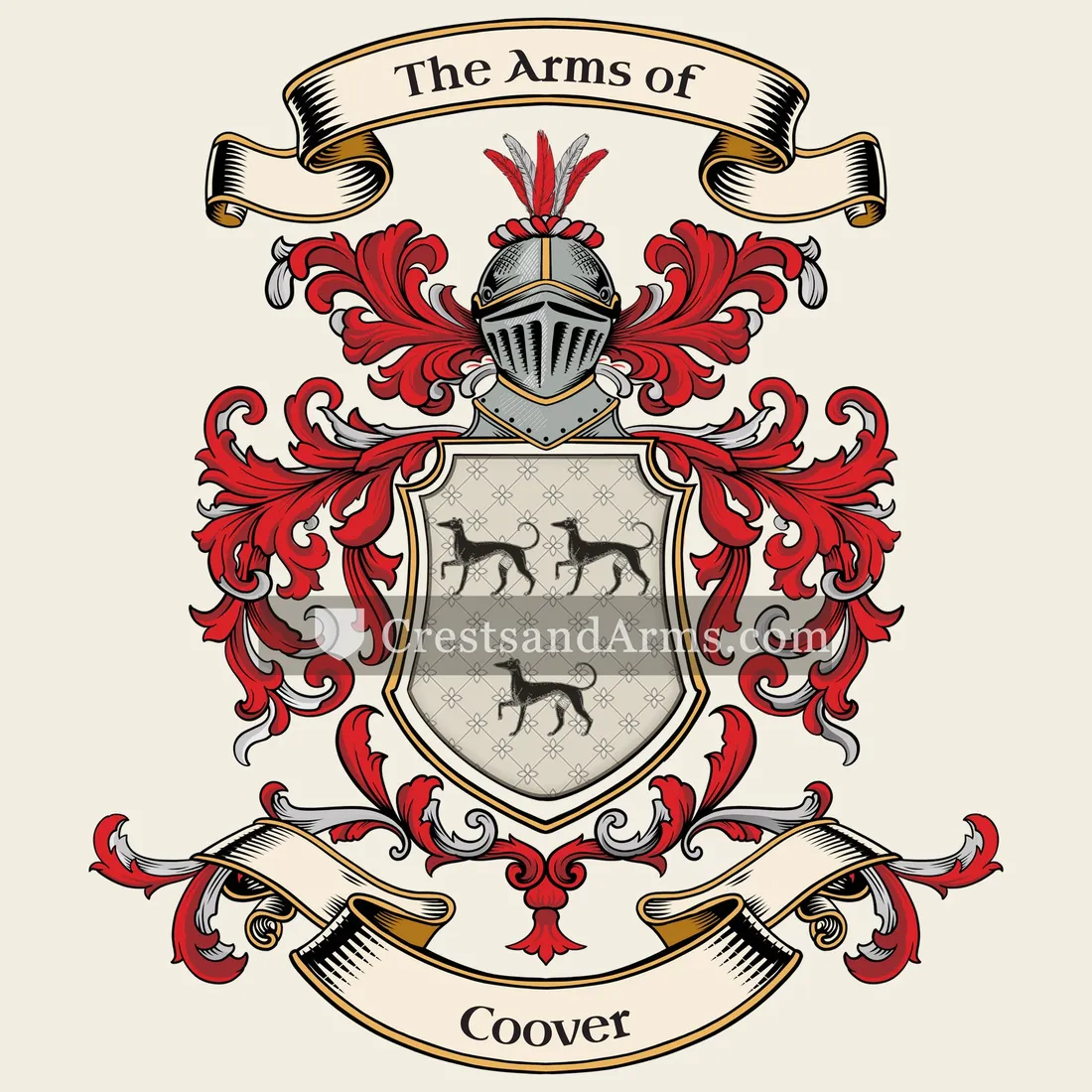
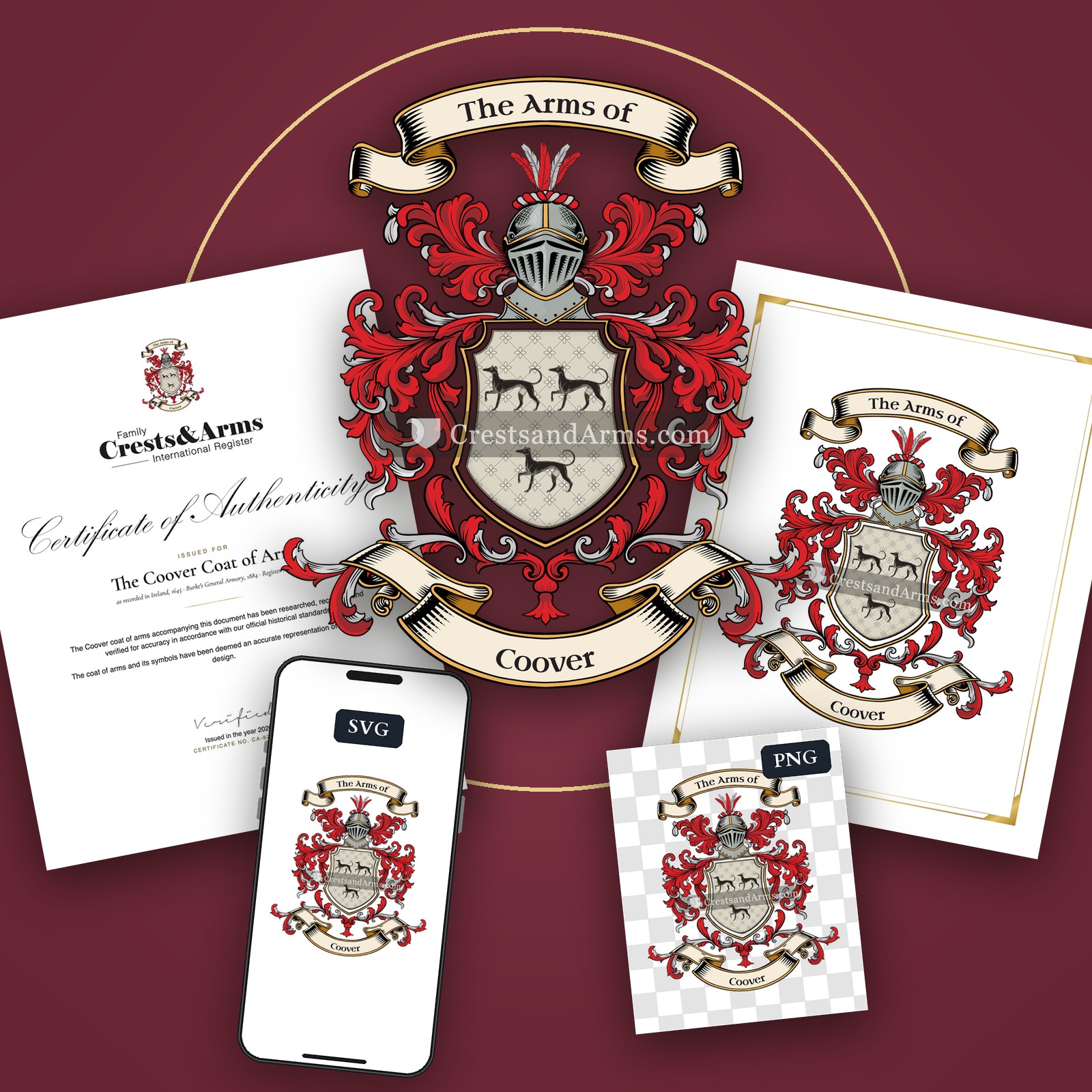
Symbols on this shield
greyhoundCourage, vigilance and loyalty
Colours
Silver (Argent)Means: Peace and sincerity
Black (Sable)Means: Constancy
Historical info
Source
Sir Bernard Burke, The General Armory of England, Scotland, Ireland and Wales, London: Harrison & Sons, 1884
Blazon (the actual original written record)
“Ar. three greyhounds courant in pale sa”
Irelandc. 1645
Digital archive packCoat of arms PNG, gold border print PDF, vector SVG and the certificate of authenticity. Sent to your email in minutes.
Map of Ireland showing where the Coover arms are recorded
The Coover arms were recorded in Ireland, c. 1645.
Arms such as these were typically recorded in Dublin.
Dublin was the seat of government in Ireland and the place where grants were sought and recorded. Families with business at the castle or the courts settled nearby, and settling there put their arms on record.
This is where the arms were entered in the register. Families often moved to other parts of the country, so the same name can turn up in more than one region.
The body that granted and recorded arms in Ireland in this period.
Charles I of England
Sovereign of the period
Charles I of England
1625–1649
Reigning in England when the Coover arms are first recorded.
How Arms Worked in Ireland
The Ulster King of Arms granted coats of arms to individuals who proved their social standing and good character. These symbols were typically inherited by all legitimate descendants of the original holder. If a family branch wanted a unique look, they could apply for a specific change to their design through the office to ensure their identity remained distinct.
Granting authority
The Ulster King of Arms acted as the official body that regulated and issued all coats of arms throughout Ireland.
How they got arms
Families obtained their arms through formal grants issued by the office after proving their eligibility and paying the required fees.
Where arms were recorded
All official grants were recorded in the registers held by the Ulster King of Arms starting from the year 1552.
The family's standing
Recorded among the armigerous families of Ireland.
Origin & History of the Coover Family in Ireland
The history of the Coover name in Ireland begins with a notable presence in Dublin by the year 1645. During this period, Dublin was a bustling center of trade and political transition, making it a common destination for families seeking new opportunities or fleeing instability in other parts of Europe. While the name is often associated with later migrations to North America, its early roots in Ireland suggest that the family integrated into the urban life of the capital city during the mid-seventeenth century. These early settlers likely worked as merchants or skilled tradespeople, contributing to the growing commercial landscape of a city recovering from decades of regional conflict. By establishing themselves in Dublin, the Coover family became part of the diverse social fabric that defined Ireland’s urban centers during the seventeenth century.
Coover Meaning & Related Branches
Root word
Cuver
Old French term for a maker or seller of tubs or barrels.
This name
CooverAn occupational surname for a cooper or barrel maker.
also spelled
Couper
Kuper
Cowper
Documented Sources
Sir Bernard Burke, The General Armory of England, Scotland, Ireland and Wales, London: Harrison & Sons, 1884
Lincolnshire Archives, Lincoln Consistory Court Wills, 1620
Lincolnshire Archives, Bishop’s Transcripts of Parish Registers for the City of Lincoln, 1620
Digital archive packCoat of arms PNG, gold border print PDF, vector SVG and the certificate of authenticity. Sent to your email in minutes.




 chevronProtection, and faithful service completed
 lionCourage, strength and royalty
 starThe celestial goddess, and nobility

 greyhoundCourage, vigilance and loyalty