Map of Belgium showing where the Corby arms are recorded
The Corby arms were recorded in Tournaisis, c. 1737.
This is where the arms were entered in the register. Families often moved to other parts of the country, so the same name can turn up in more than one region.
The body that granted and recorded arms in Belgium in this period.
Charles VI, Holy Roman Emperor
Sovereign of the period
Charles VI, Holy Roman Emperor
1711–1740
Reigning in Belgium when the Corby arms are first recorded.
How Arms Worked in Belgium
In Belgium, a coat of arms is considered personal property that is passed down through the male line to legitimate descendants. Families often use the same shield design across generations to show their shared heritage. If a branch of the family wants to change the design, they must apply for an official update to their specific version of the arms.
Granting authority
The Conseil héraldique is the official body that regulates and approves all coats of arms in Belgium.
How they got arms
Families obtain their coats of arms through formal royal grants or by confirming their historical right to use existing designs.
Where arms were recorded
All approved coats of arms are officially recorded in the public registers of the Conseil héraldique since 1844.
The family's standing
Recorded among the armigerous families of Belgium.
Origin & History of the Corby Family in Belgium
The history of the Corby family in the region of Tournaisis is deeply rooted in the agricultural and social landscape of the eighteenth century. By 1737, records confirm that family members were established in this area, which was then part of the Austrian Netherlands. During this period, the people of Tournaisis lived through a time of transition as the region shifted between the influence of French and Austrian powers. Families like the Corbys were often tied to the land or local trade networks that defined the economy of the Scheldt River valley. Because the area was a frequent site of military movement and political change, the Corby family likely navigated these shifts by maintaining strong local ties to their parish and community. Their presence in the historical record during this time suggests they were part of the stable population that helped sustain the local culture and economy of the region throughout the century.
Coat of Arms & Family Crest Details
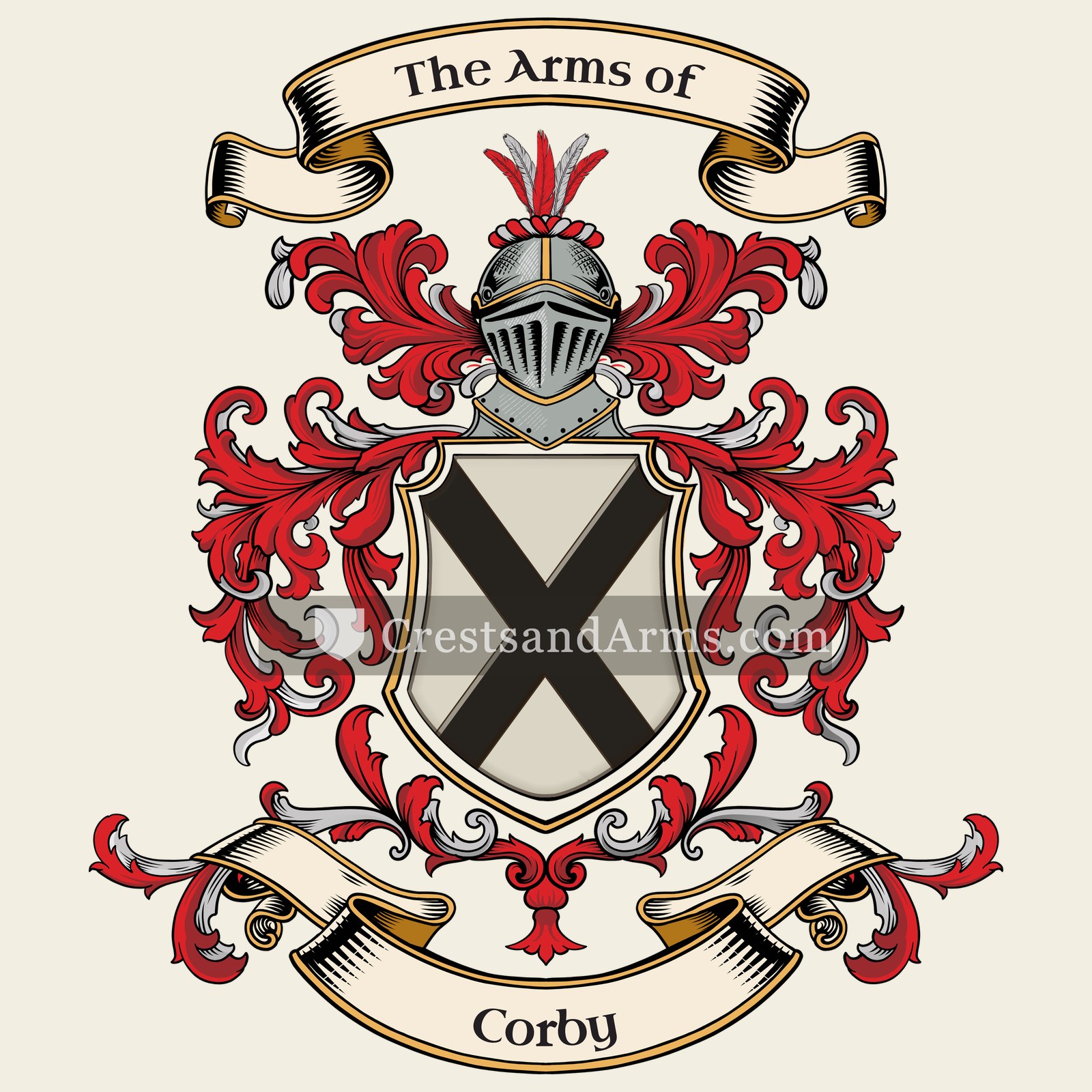
Symbols on this shield
saltireResolution, and St Andrew's cross
Colours
Silver (Argent)Means: Peace and sincerity
Black (Sable)Means: Constancy
Historical info
Source
Sir Bernard Burke, The General Armory of England, Scotland, Ireland and Wales, London: Harrison & Sons, 1884
Blazon (the actual original written record)
“Ar. a saltire engr. sa”
Englandc. 1620
Digital archive packCoat of arms PNG, gold border print PDF, vector SVG and the certificate of authenticity. Sent to your email in minutes.
Map of England showing where the Corby arms are recorded
The Corby arms were recorded in England, c. 1620.
Arms such as these were typically recorded in York.
Yorkshire is the largest of the English counties, and it held more gentry families than any other. Land there was split among a great many households rather than a few, so a great many of them carried arms.
This is where the arms were entered in the register. Families often moved to other parts of the country, so the same name can turn up in more than one region.
The body that granted and recorded arms in England in this period.
James VI and I
Sovereign of the period
James VI and I
1603–1625
Reigning in Belgium when the Corby arms are first recorded.
How Arms Worked in England
English heraldry allowed arms to be shared by all legitimate descendants of the original owner. These symbols were treated as personal property that moved through the generations to all children. While the eldest son kept the original design, other family members could use the same shield without needing to change it or register their own unique versions.
Granting authority
The College of Arms in London has regulated the use of coats of arms throughout England and Wales since 1484.
How they got arms
Families typically obtained their coats of arms through a formal grant from the Crown or by proving their ancient right to them.
Where arms were recorded
All official coats of arms are recorded in the registers kept at the College of Arms, which date back to the fifteenth century.
The family's standing
Recorded among the armigerous families of England.
Origin & History of the Corby Family in England
The surname Corby originated as a locational name, derived from towns of the same name found in regions like Lincolnshire and Northamptonshire. In the medieval period, people often adopted the name of their home village as a way to identify themselves when they traveled to new areas. By the early 17th century, the family had established a notable presence in the city of York. Records from 1620 confirm that members of the Corby family were active residents in this historic northern hub, which was a major center for trade and religion at the time. As the family settled in York, they became part of the local social fabric, contributing to the growth and daily life of one of England’s most important cities. This transition from rural origins to urban life reflects the broader movement of families across England as they sought new opportunities in growing trade centers during the Stuart era.
Corby Meaning & Related Branches
Root word
corvus
Latin term referring to a raven or crow.
This name
CorbyDerived from a place name or nickname associated with a raven or dark-haired person.
also spelled
Corbie
Corbey
Korbi
Corbe
Related arms
Corbievariant spelling
Documented Sources
J. B. Rietstap, Armorial Général, Gouda: G. B. van Goor Zonen, 1884–87
State Archives in Tournai, État civil et registres paroissiaux du Tournaisis
Duvosquel, Jean-Marie, Tournai et le Tournaisis au XVIIIe siècle, 1985
Roland, C. G., Histoire de la ville de Tournai, 1928
Digital archive packCoat of arms PNG, gold border print PDF, vector SVG and the certificate of authenticity. Sent to your email in minutes.


 crownSovereignty, authority and just reward
 crownSovereignty, authority and just reward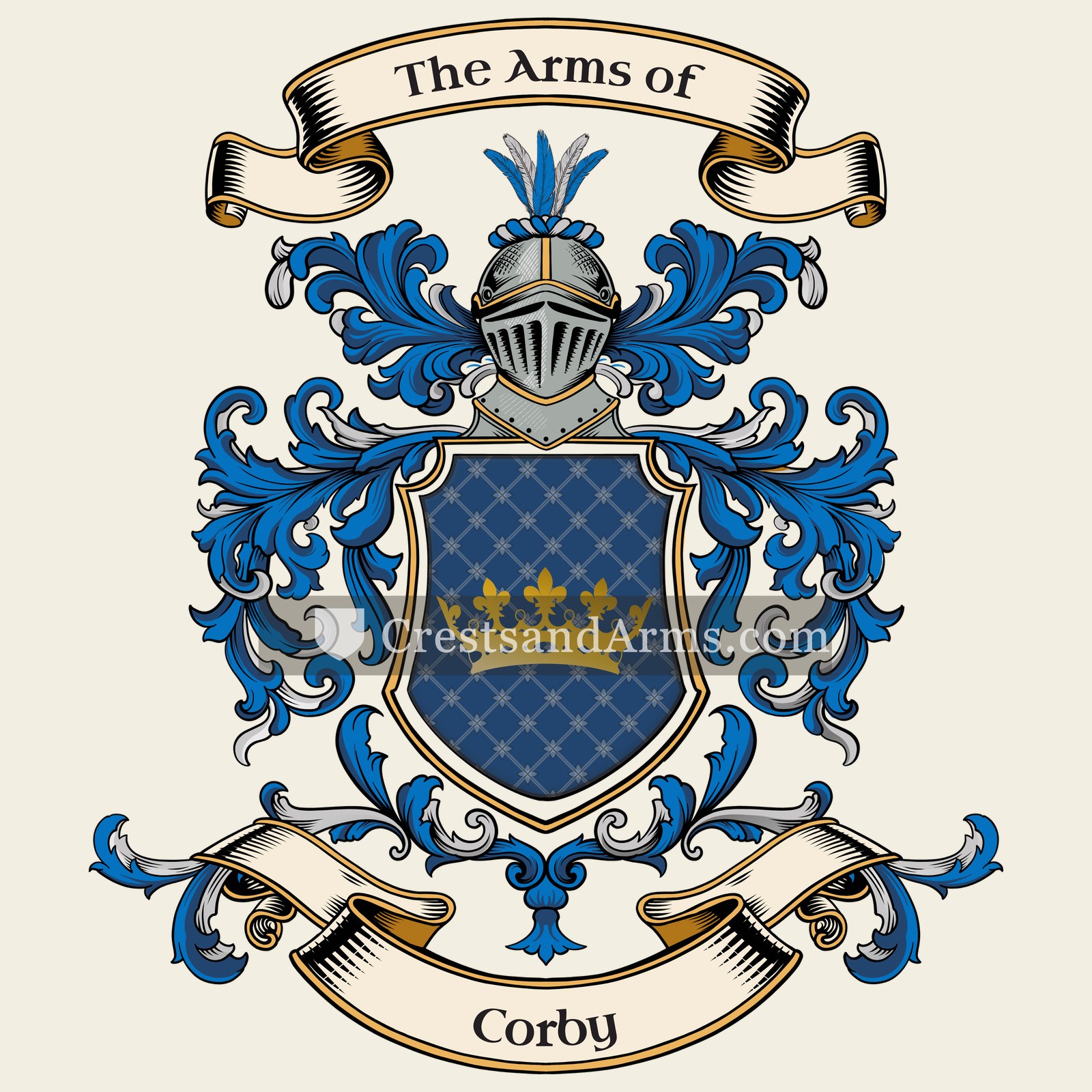


 saltireResolution, and St Andrew's cross