Map of France showing where the Cortès arms are recorded
The Cortès arms were recorded in Marseille, c. 1663.
This is where the arms were entered in the register. Families often moved to other parts of the country, so the same name can turn up in more than one region.
The body that granted and recorded arms in France in this period.
Louis XIV of France
Sovereign of the period
Louis XIV of France
1643–1715
Reigning in France when the Cortès arms are first recorded.
How Arms Worked in France
In France, a coat of arms was a mark of honor that passed down through the male line to all legitimate descendants. Families often used the same shield without changes to show their shared heritage. If a branch wanted to stand out, they could add a small mark to their shield to show their specific place in the family tree.
Granting authority
The Juge d'armes de France acted as the official authority that regulated and verified coats of arms across the country.
How they got arms
Families typically inherited their arms from ancestors, though they could also receive them through royal grants or by proving their noble status.
Where arms were recorded
Coats of arms were officially recorded in the Armorial Général de France, which began its main collection in the year 1696.
The family's standing
Recorded among the armigerous families of France.
Origin & History of the Cortès Family in France
The family name Cortès carries a rich history that reflects the movement of people across the Mediterranean during the seventeenth century. While the name is often associated with Spanish origins, the presence of the family in Marseille by 1663 highlights their role in the vibrant maritime culture of southern France. During this period, Marseille served as a crucial hub for trade and cultural exchange between Europe and the wider Mediterranean world. Families like the Cortès were often part of a mobile merchant class that navigated these busy port cities to establish new lives and business connections. By settling in a major French port, these early family members became part of the local social fabric, contributing to the growth of the city as it expanded its influence under the French crown. Their transition into French society illustrates how surnames traveled alongside individuals, eventually becoming deeply rooted in the history of the regions where they chose to settle.
Coat of Arms & Family Crest Details
Symbols on this shield
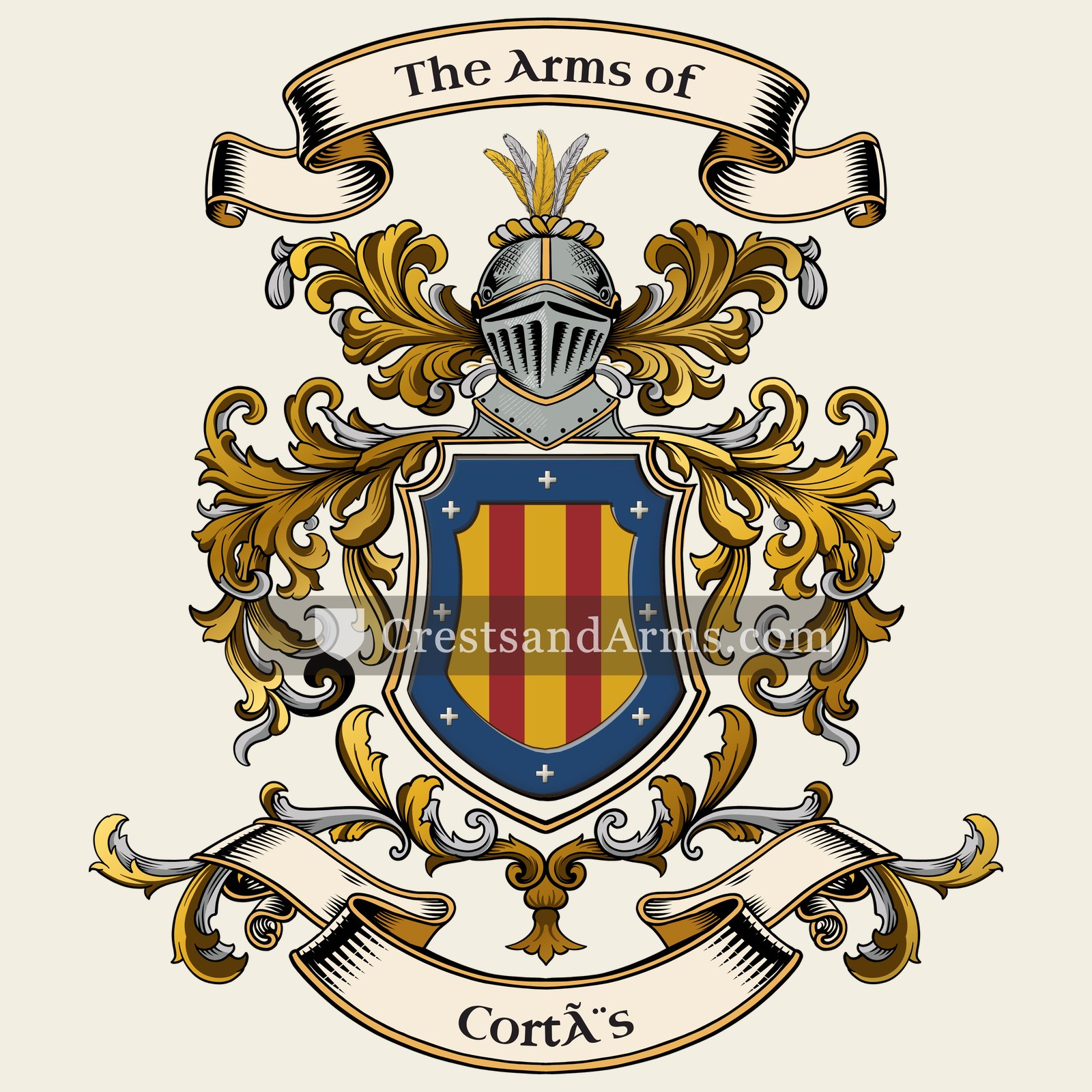
paleMilitary strength, and a fortified defence
cross symbolChristian faith and service
Colours
Gold (Or)Means: Generosity
Red (Gules)Means: Military strength
Blue (Azure)Means: Loyalty and truth
Silver (Argent)Means: Peace and sincerity
Historical info
Source
J. B. Rietstap, Armorial Général, Gouda: G. B. van Goor Zonen, 1884–87
Blazon (the actual original written record)
“D'or à quatre pals de gu.; à la bord. d'azur, ch. de huit croix potencées d'arg.”
CastileCastile, c. 1722
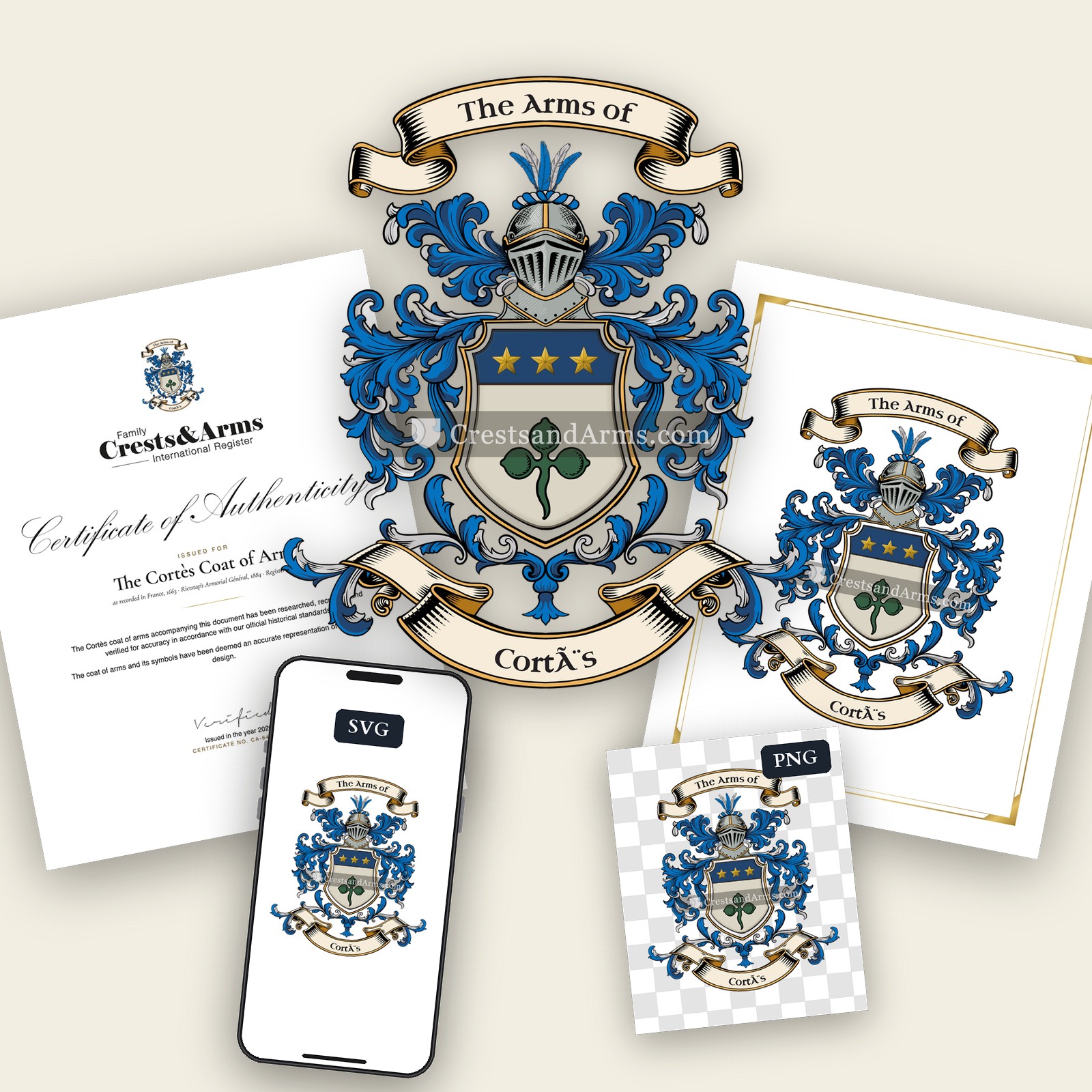
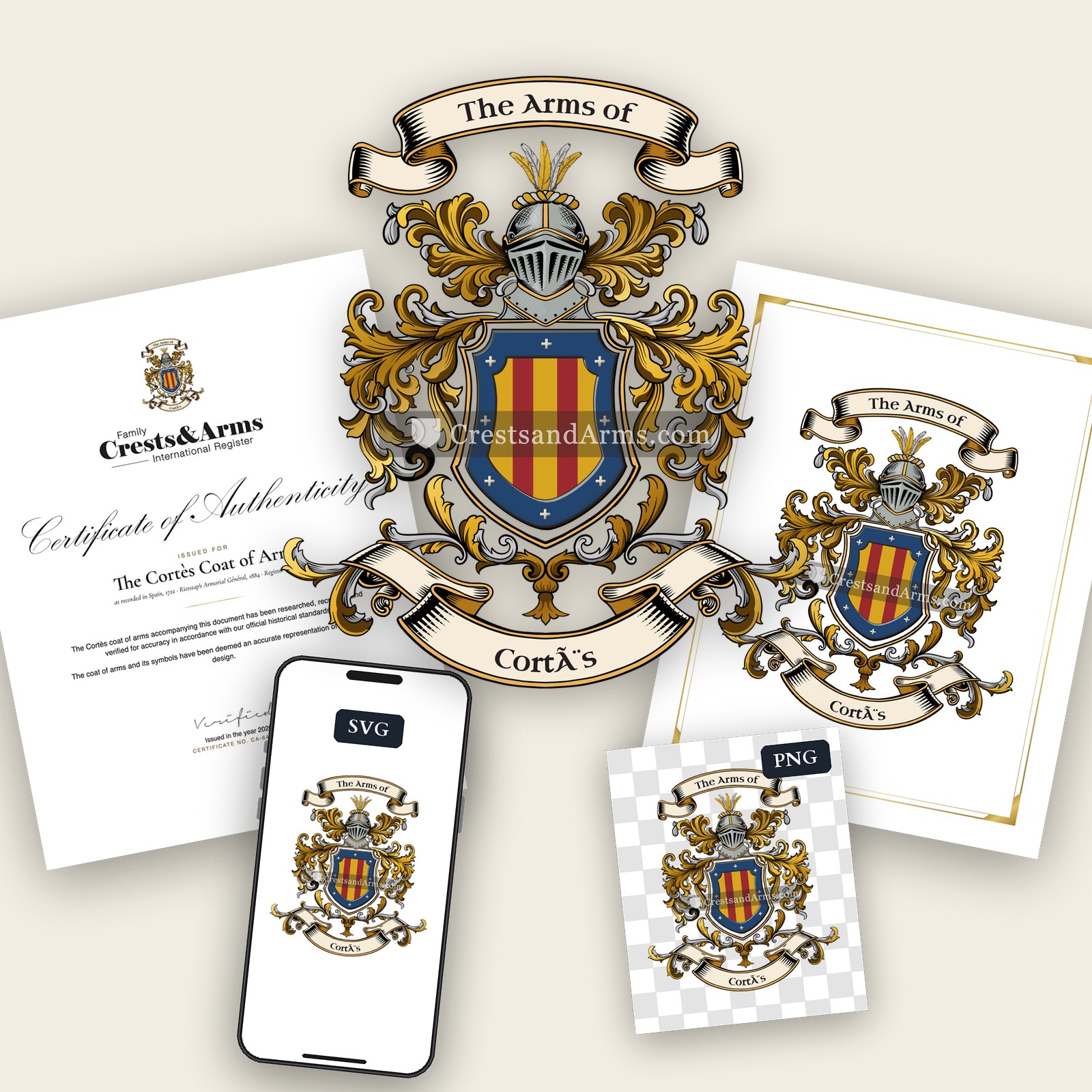
Digital archive packCoat of arms PNG, gold border print PDF, vector SVG and the certificate of authenticity. Sent to your email in minutes.
Map of Spain showing where the Cortès arms are recorded
The Cortès arms were recorded in Castile, c. 1722.
Castile was the heart of Spain and the source of most of its noble families. Land won in the long wars against the Moors was granted out to fighting men, and a man granted land was granted arms along with it.
This is where the arms were entered in the register. Families often moved to other parts of the country, so the same name can turn up in more than one region.
The body that granted and recorded arms in Spain in this period.
Philip V of Spain
Sovereign of the period
Philip V of Spain
1714–1724
Reigning in France when the Cortès arms are first recorded.
How Arms Worked in Spain
In Spain, a coat of arms was considered a form of property that belonged to the entire family line. These arms were passed down from a father to all his children equally. Younger branches of the family usually kept the original design without needing to add any special marks to distinguish their specific line.
Granting authority
The Cronista Rey de Armas was the official body that regulated and granted coats of arms throughout Spain.
How they got arms
Families often obtained their arms through royal grants or by proving their noble status to the official heraldic authority.
Where arms were recorded
Coats of arms were officially recorded in the registers of the Cronista Rey de Armas starting in 1496.
The family's standing
Recorded among the armigerous families of Castile.
Origin & History of the Cortès Family in Spain
The surname Cortès finds its roots in the medieval period of the Iberian Peninsula, where it functioned as a descriptive nickname for a person who displayed refined manners or lived near a royal court. Derived from the Old Spanish word *cortés*, meaning courteous or polite, the name became a common way to distinguish individuals within the growing communities of the Kingdom of Castile. By the early eighteenth century, families bearing this name were well-established across the Castilian landscape, contributing to the local social and economic fabric of the region. Records from 1722 confirm that members of the Cortès lineage were active participants in the civic life of these Spanish territories, where they worked as landowners, tradespeople, and local officials. This history reflects a broader trend of surnames evolving from personal traits into hereditary family identifiers that helped organize society during the expansion of the Spanish state.
Cortès Meaning & Related Branches
Root word
cort
derived from the Latin word cohors meaning an enclosed yard or court
This name
Cortèsrefers to a person who is refined, elegant, or courtly in their manners
also spelled
Cortez
Cortis
Related arms
Salamancasimilar arms
Corthesvariant spelling
Cortsvariant spelling
Documented Sources
J. B. Rietstap, Armorial Général, Gouda: G. B. van Goor Zonen, 1884–87
Archives Départementales des Bouches-du-Rhône, Registres paroissiaux de Marseille, 1663
Rambert, Gaston, Histoire du commerce de Marseille, 1954
Digital archive packCoat of arms PNG, gold border print PDF, vector SVG and the certificate of authenticity. Sent to your email in minutes.


 chiefAuthority, wisdom and dominion
 trefoilPerpetuity, and the Trinity
 mulletThe third son, and a divine quality from above
 chiefAuthority, wisdom and dominion
 trefoilPerpetuity, and the Trinity
 mulletThe third son, and a divine quality from above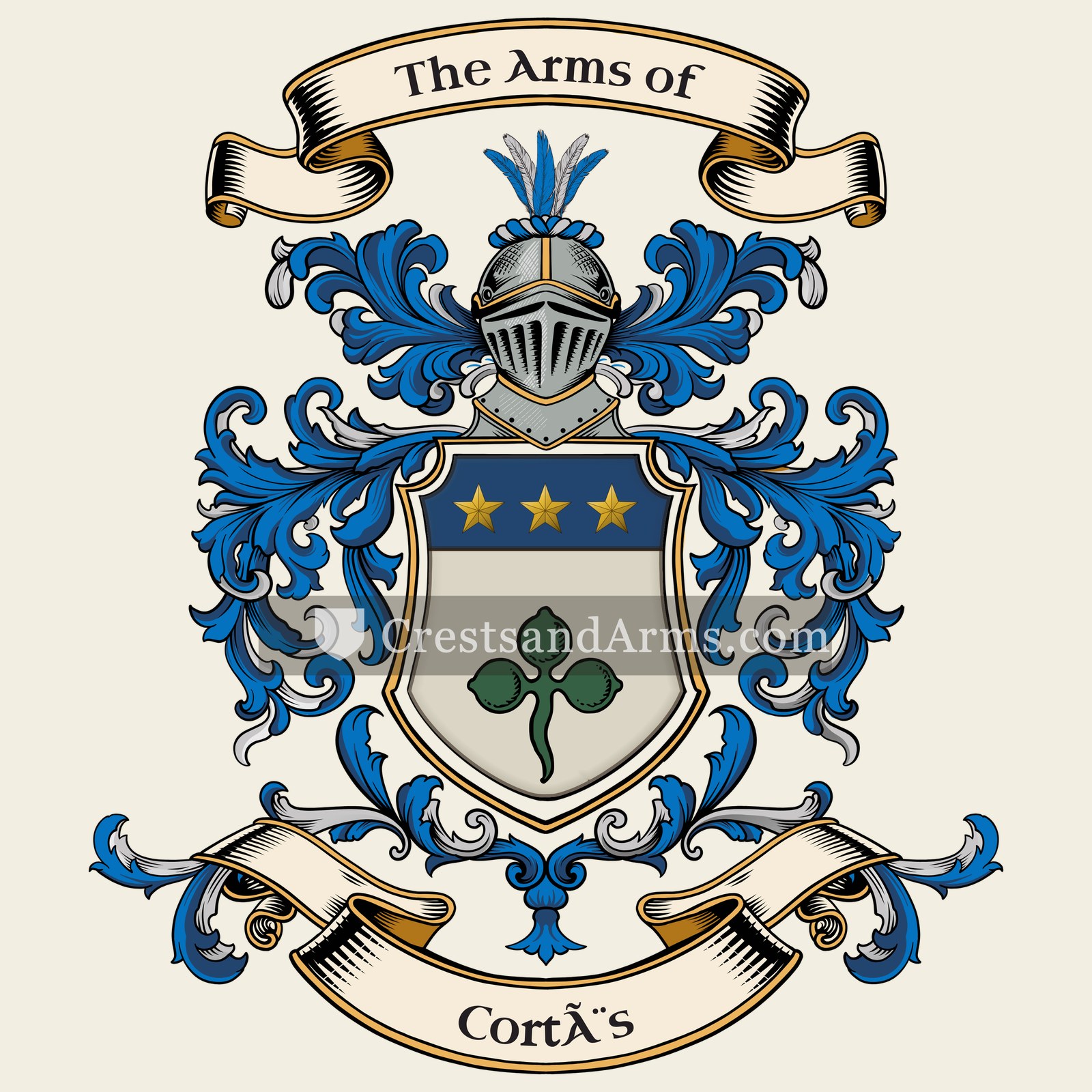


 paleMilitary strength, and a fortified defence
 cross symbolChristian faith and service