Map of France showing where the Cortesi arms are recorded
The Cortesi arms were recorded in Marseille, c. 1663.
This is where the arms were entered in the register. Families often moved to other parts of the country, so the same name can turn up in more than one region.
The body that granted and recorded arms in France in this period.
Louis XIV of France
Sovereign of the period
Louis XIV of France
1643–1715
Reigning in France when the Cortesi arms are first recorded.
How Arms Worked in France
In France, a coat of arms was a mark of honor that passed down through the male line to all legitimate descendants. Families often used the same shield without changes to show their shared heritage. If a branch wanted to stand out, they could add a small mark to their shield to show their specific place in the family tree.
Granting authority
The Juge d'armes de France acted as the official authority that regulated and verified coats of arms across the country.
How they got arms
Families typically inherited their arms from ancestors, though they could also receive them through royal grants or by proving their noble status.
Where arms were recorded
Coats of arms were officially recorded in the Armorial Général de France, which began its main collection in the year 1696.
The family's standing
Recorded among the armigerous families of France.
Origin & History of the Cortesi Family in France
The Cortesi family name carries a deep connection to the Mediterranean trade routes that defined the coastal life of southern France. By 1663, records confirm that members of the family were firmly established in the bustling port city of Marseille. This location was a vital hub for merchants and sailors who moved goods between France and the Italian peninsula. Because the name itself shares linguistic roots with the Italian word for courteous or courtly, it is likely that the family arrived in France as part of the steady migration of skilled workers and traders moving across the border. Living in Marseille allowed the Cortesi family to integrate into a society that valued maritime commerce and international exchange. Over time, they transitioned from being newcomers to becoming a recognized part of the local population, contributing to the unique cultural blend that characterized the French Mediterranean coast during the seventeenth century.
Meaning of the Cortesi family crest colors & symbols
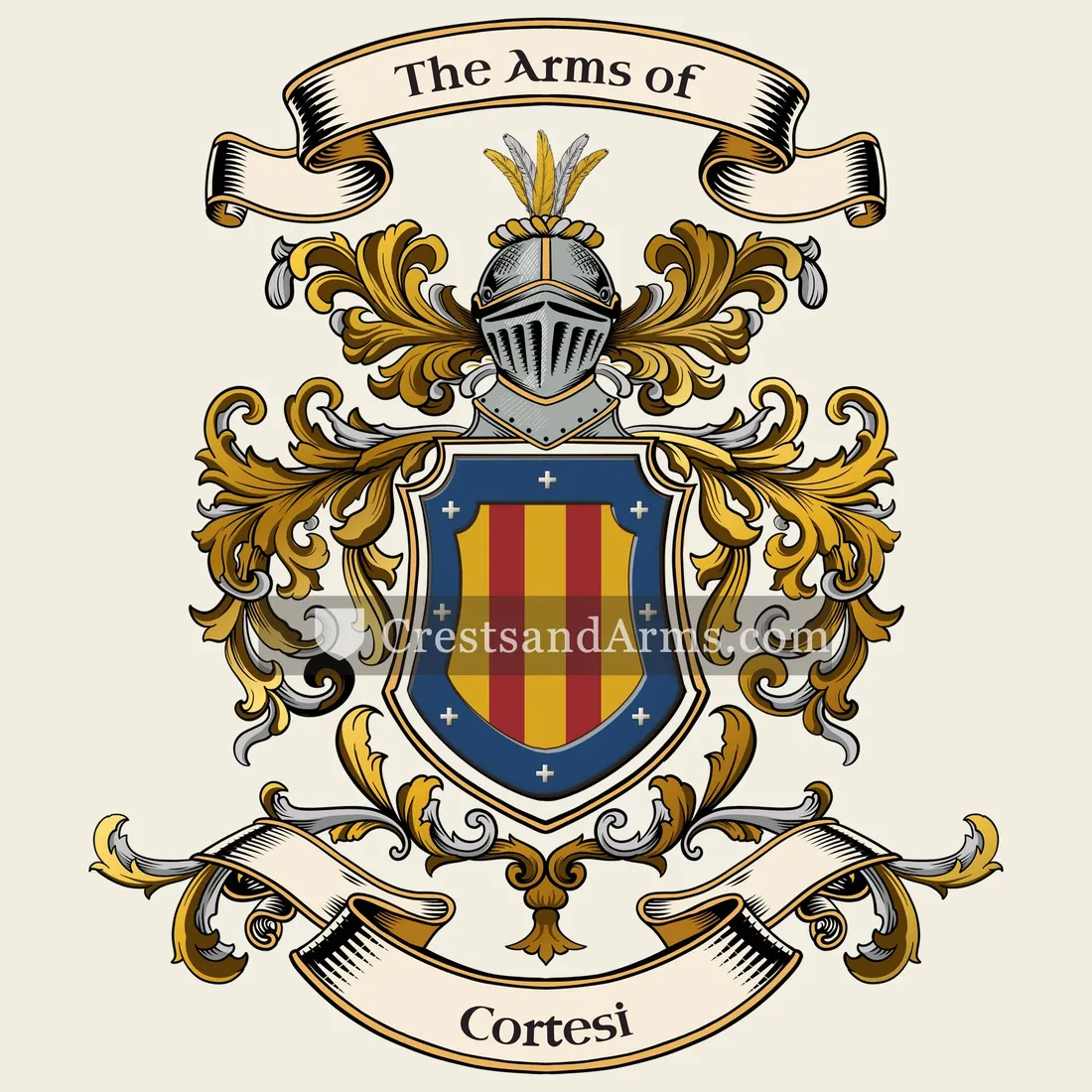
Symbols on this shield
paleMilitary strength, and a fortified defence
cross symbolChristian faith and service
Colours
Gold (Or)Means: Generosity
Red (Gules)Means: Military strength
Blue (Azure)Means: Loyalty and truth
Silver (Argent)Means: Peace and sincerity
Historical info
Source
J. B. Rietstap, Armorial Général, Gouda: G. B. van Goor Zonen, 1884–87
Blazon (the actual original written record)
“D'or à quatre pals de gu.; à la bord. d'azur, ch. de huit croix potencées d'arg.”
CastileCastile, c. 1722
Digital archive packCoat of arms PNG, gold border print PDF, vector SVG and the certificate of authenticity. Sent to your email in minutes.
Map of Spain showing where the Cortesi arms are recorded
The Cortesi arms were recorded in Castile, c. 1722.
Castile was the heart of Spain and the source of most of its noble families. Land won in the long wars against the Moors was granted out to fighting men, and a man granted land was granted arms along with it.
This is where the arms were entered in the register. Families often moved to other parts of the country, so the same name can turn up in more than one region.
The body that granted and recorded arms in Spain in this period.
Philip V of Spain
Sovereign of the period
Philip V of Spain
1714–1724
Reigning in France when the Cortesi arms are first recorded.
How Arms Worked in Spain
In Spain, a coat of arms was considered a form of property that belonged to the entire family line. These arms were passed down from a father to all his children equally. Younger branches of the family usually kept the original design without needing to add any special marks to distinguish their specific line.
Granting authority
The Cronista Rey de Armas was the official body that regulated and granted coats of arms throughout Spain.
How they got arms
Families often obtained their arms through royal grants or by proving their noble status to the official heraldic authority.
Where arms were recorded
Coats of arms were officially recorded in the registers of the Cronista Rey de Armas starting in 1496.
The family's standing
Recorded among the armigerous families of Castile.
Origin & History of the Cortesi Family in Spain
The Cortesi family name carries a history deeply rooted in the social and administrative landscape of the Iberian Peninsula. By the early 18th century, records confirm that members of the family were established in the region of Castile, a territory that served as the political and cultural heart of the Spanish kingdom. During this period, families with names like Cortesi often integrated into the local bureaucracy or the merchant classes that supported the growing urban centers. Because Castile was a hub for legal and land documentation, the presence of the family in 1722 suggests they were part of a stable social structure that relied on written records to manage property and civic duties. Over time, the family name became a marker of their specific lineage within the complex social hierarchy of colonial and peninsular Spain, reflecting a history of migration and settlement that defined many families of that era.
Cortesi Meaning & Related Branches
Root word
Cortis
Latin term referring to a courtyard, farm, or enclosed piece of land.
This name
CortesiDerived from a topographic name for someone who lived near a farmstead or manor.
also spelled
Cortez
Cortis
Documented Sources
J. B. Rietstap, Armorial Général, Gouda: G. B. van Goor Zonen, 1884–87
Archives départementales des Bouches-du-Rhône, Registres paroissiaux de Marseille
Rambert, Gaston, Histoire du commerce de Marseille, 1954
Villani, Pasquale, La France et l'Italie au XVIIIe siècle, 1963
Digital archive packCoat of arms PNG, gold border print PDF, vector SVG and the certificate of authenticity. Sent to your email in minutes.


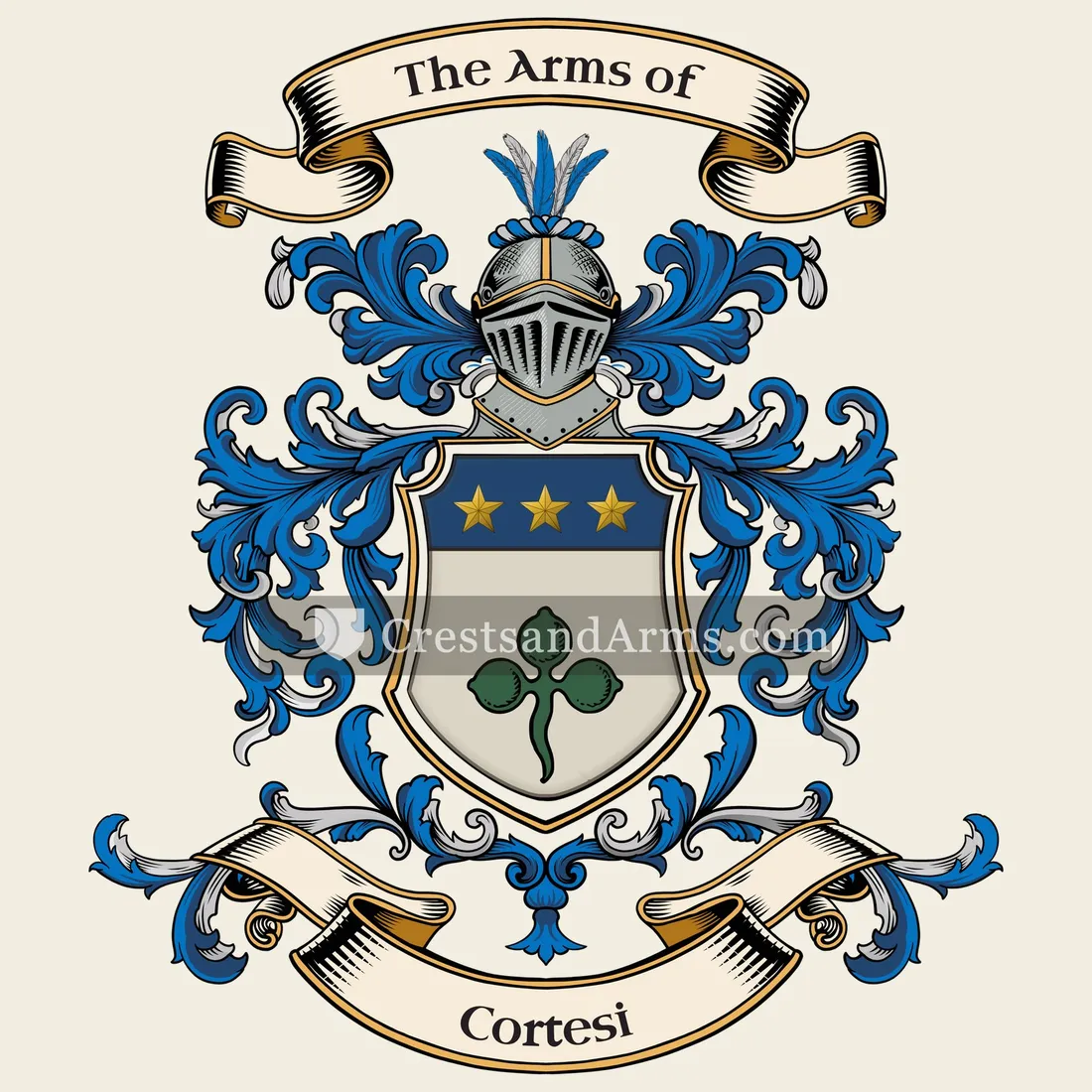
 chiefAuthority, wisdom and dominion
 trefoilPerpetuity, and the Trinity
 mulletThe third son, and a divine quality from above
 chiefAuthority, wisdom and dominion
 trefoilPerpetuity, and the Trinity
 mulletThe third son, and a divine quality from above


 paleMilitary strength, and a fortified defence
 cross symbolChristian faith and service