Map of Spain showing where the Corts arms are recorded
The Corts arms were recorded in Catalonia, c. 1722.
Catalonia lived by sea trade, and its merchant houses were as powerful as its landowners. Both sorts of family took arms, and Barcelona kept records of the houses entitled to bear them.
This is where the arms were entered in the register. Families often moved to other parts of the country, so the same name can turn up in more than one region.
The body that granted and recorded arms in Spain in this period.
Philip V of Spain
Sovereign of the period
Philip V of Spain
1714–1724
Reigning in Spain when the Corts arms are first recorded.
How Arms Worked in Spain
In Spain, a coat of arms was considered a form of property that belonged to the entire family line. These arms were passed down from a father to all his children equally. Younger branches of the family usually kept the original design without needing to add any special marks to distinguish their specific line.
Granting authority
The Cronista Rey de Armas was the official body that regulated and granted coats of arms throughout Spain.
How they got arms
Families often obtained their arms through royal grants or by proving their noble status to the official heraldic authority.
Where arms were recorded
Coats of arms were officially recorded in the registers of the Cronista Rey de Armas starting in 1496.
The family's standing
Recorded among the armigerous families of Catalonia.
Origin & History of the Corts Family in Spain
The surname Corts finds its deep roots in the northeastern region of Spain known as Catalonia. Historically, the name is derived from the Catalan word for courts, which often referred to the royal assemblies or the local administrative centers where legal and social business took place. Families bearing this name were often associated with these central hubs of community life, suggesting that early ancestors may have been officials, landowners, or individuals who lived near the prominent courtyards of the region. By the early 18th century, records confirm that the Corts family was well established within the Catalan social fabric. During this period, the family lived through a time of significant political transition following the War of the Spanish Succession, which reshaped the administration of Catalonia. As members of a society deeply tied to the land and local governance, the Corts family contributed to the agricultural and civic development of their towns, leaving a lasting mark on the history of the region.
Coat of Arms & Family Crest Details
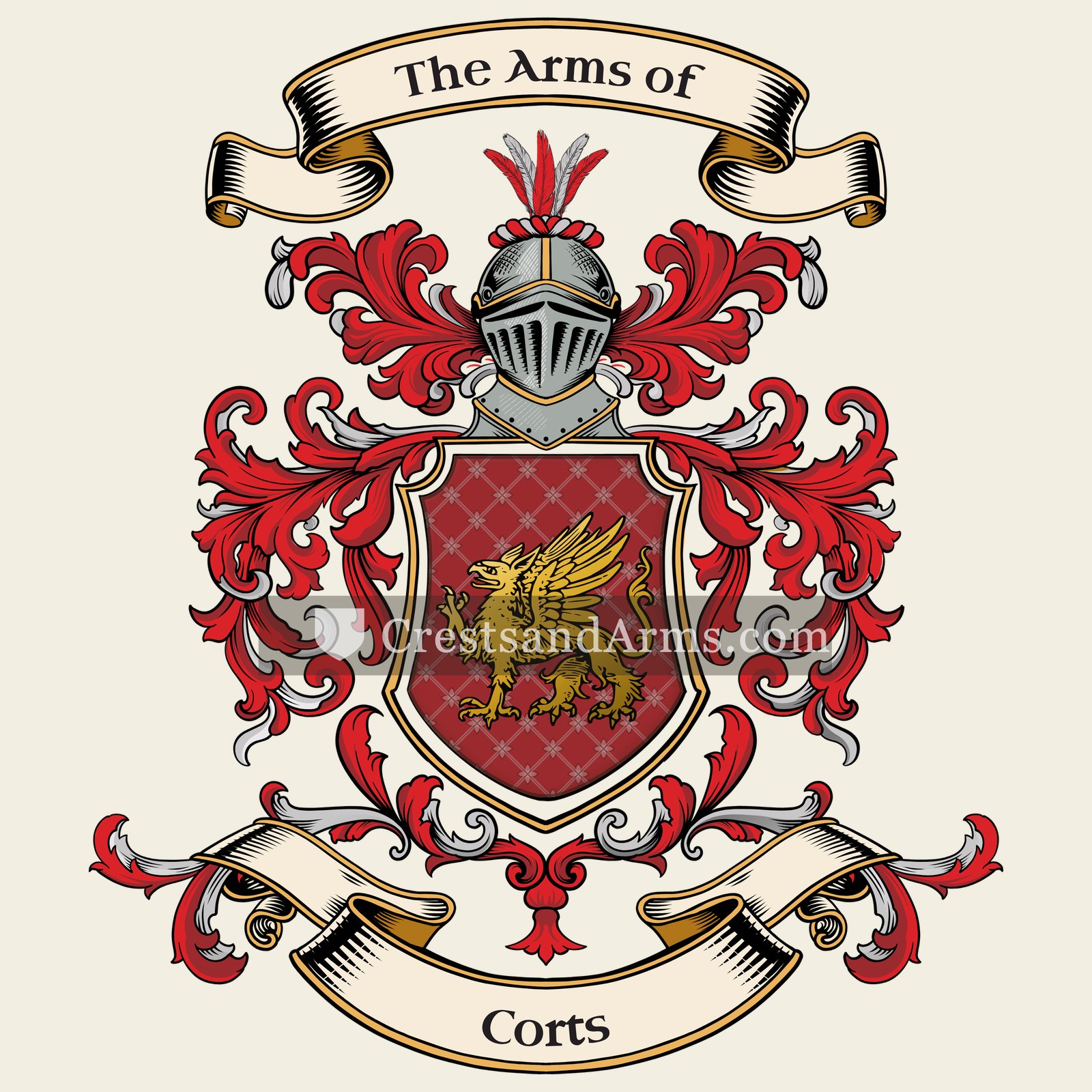
Symbols on this shield
griffinValour and vigilance, guarding great treasure
Colours
Red (Gules)Means: Military strength
Gold (Or)Means: Generosity
Historical info
Source
Sir Bernard Burke, The General Armory of England, Scotland, Ireland and Wales, London: Harrison & Sons, 1884
Blazon (the actual original written record)
“Gu. a griffin segreant or”
Englandc. 1620
Digital archive packCoat of arms PNG, gold border print PDF, vector SVG and the certificate of authenticity. Sent to your email in minutes.
Map of England showing where the Corts arms are recorded
The Corts arms were recorded in England, c. 1620.
Arms such as these were typically recorded in York.
Yorkshire is the largest of the English counties, and it held more gentry families than any other. Land there was split among a great many households rather than a few, so a great many of them carried arms.
This is where the arms were entered in the register. Families often moved to other parts of the country, so the same name can turn up in more than one region.
The body that granted and recorded arms in England in this period.
James VI and I
Sovereign of the period
James VI and I
1603–1625
Reigning in Spain when the Corts arms are first recorded.
How Arms Worked in England
English heraldry allowed arms to be shared by all legitimate descendants of the original owner. These symbols were treated as personal property that moved through the generations to all children. While the eldest son kept the original design, other family members could use the same shield without needing to change it or register their own unique versions.
Granting authority
The College of Arms in London has regulated the use of coats of arms throughout England and Wales since 1484.
How they got arms
Families typically obtained their coats of arms through a formal grant from the Crown or by proving their ancient right to them.
Where arms were recorded
All official coats of arms are recorded in the registers kept at the College of Arms, which date back to the fifteenth century.
The family's standing
Recorded among the armigerous families of England.
Origin & History of the Corts Family in England
The family name Corts has roots that trace back to the bustling northern city of York during the early seventeenth century. By the year 1620, records indicate that members of the family were already established residents within this historic region. The name likely evolved from descriptive nicknames or occupational titles common in medieval England, where surnames were often adopted to reflect a person’s physical traits or their trade. As York was a major center for commerce and religious life at the time, families like the Corts were often involved in the local merchant guilds or the skilled craft trades that defined the city’s economy. Living in a walled city with deep Roman and Viking roots, these early ancestors would have navigated a society shaped by the transition from the Elizabethan era into the Stuart period. Their presence in the parish registers of York suggests they were part of a stable community that helped build the social and economic foundations of northern England.
Corts Meaning & Related Branches
Root word
Cohors
A Latin term referring to an enclosure, yard, or military cohort.
This name
CortsRefers to someone who lived near a court or served in a royal household.
also spelled
Korts
Cortz
Cortes
Cortess
Related arms
Cortèsvariant spelling
Cortessvariant spelling
Documented Sources
J. B. Rietstap, Armorial Général, Gouda: G. B. van Goor Zonen, 1884–87
Alcover, Antoni Maria and Moll, Francesc de Borja. Diccionari català-valencià-balear. 1962
Moll, Francesc de Borja. Els llinatges catalans. 1959
Arxiu de la Corona d'Aragó, Generalitat de Catalunya, Sèrie de Patrimoni
Digital archive packCoat of arms PNG, gold border print PDF, vector SVG and the certificate of authenticity. Sent to your email in minutes.


 heartSincerity, charity and true affection
 heartSincerity, charity and true affection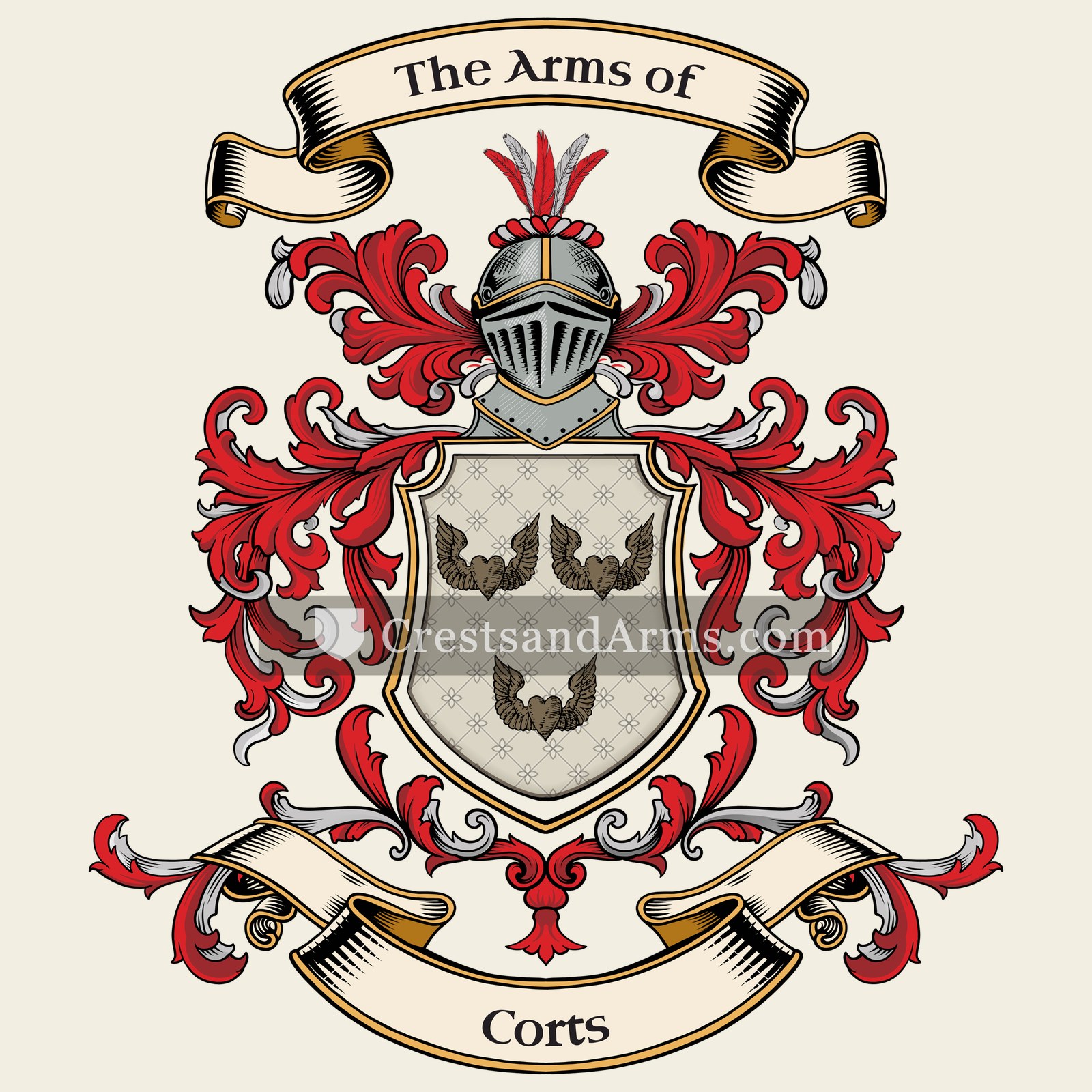


 griffinValour and vigilance, guarding great treasure