Map of Italy showing where the Coryea arms are recorded
The Coryea arms were recorded in Rome, c. 1775.
This is where the arms were entered in the register. Families often moved to other parts of the country, so the same name can turn up in more than one region.
The body that granted and recorded arms in Italy in this period.
Alvise Giovanni Mocenigo
Sovereign of the period
Alvise Giovanni Mocenigo
1763–1778
Reigning in Italy when the Coryea arms are first recorded.
How Arms Worked in Italy
In the Italian states, coats of arms were often used by noble families to show their status and history. These symbols were passed down through the generations to all legitimate male descendants. Younger branches of a family usually kept the original design but sometimes added small changes to distinguish their specific line from the main branch.
Granting authority
Various local rulers and city governments controlled the use of coats of arms across the different Italian states.
How they got arms
Families often assumed their own arms or received them as official grants from local lords, popes, or city councils.
Where arms were recorded
Arms were recorded in local city archives or private family books rather than in one single national register.
The family's standing
Recorded among the armigerous families of Italy.
Origin & History of the Coryea Family in Italy
The family name Coryea finds its early roots within the vibrant cultural landscape of eighteenth-century Rome. By 1775, records confirm that members of the family were established residents of the city, living during a time when Rome was a major center for art, religion, and European intellectual life. As the city transitioned through the late Enlightenment, the family likely navigated the complex social structures of the Papal States, where identity was often tied to local parish records and community standing. Because the name reflects the linguistic evolution of the region, it is probable that the family was integrated into the daily commerce and civic activities of the Roman populace. This period of residency suggests a history deeply connected to the urban development of Italy, placing the family in the heart of a city that served as the crossroads for travelers and scholars from across the continent.
Coat of Arms & Family Crest Details
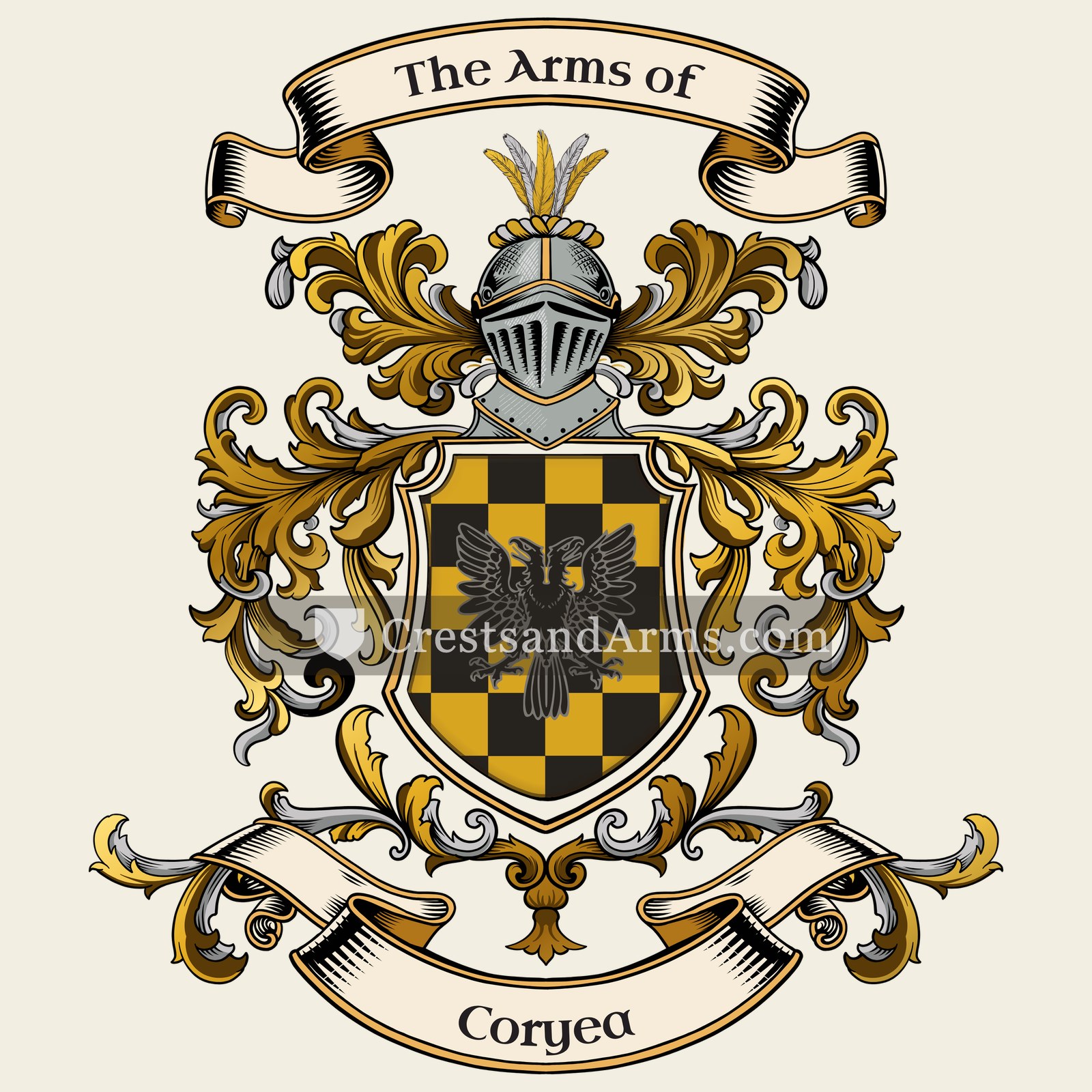
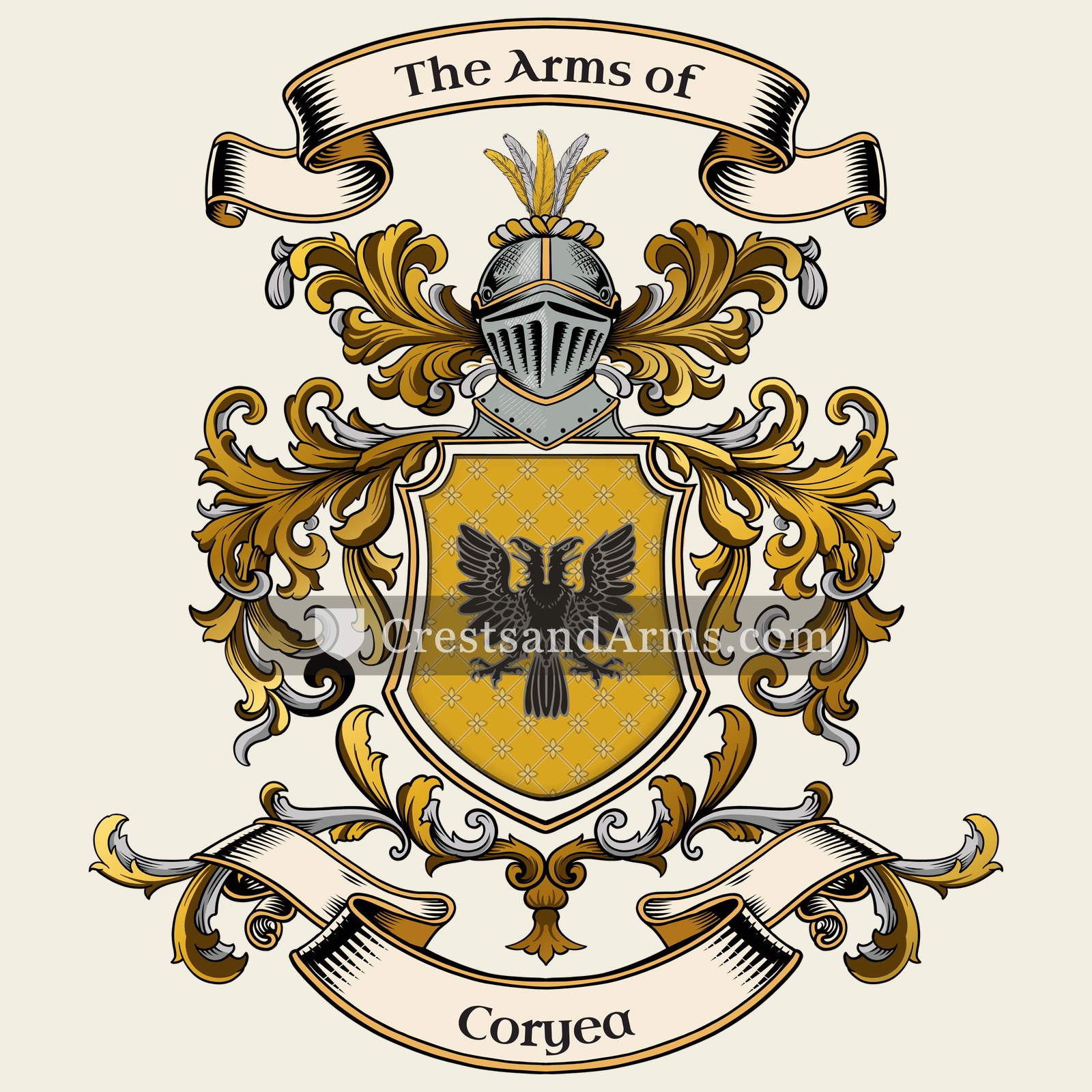
Symbols on this shield
eagleNobility, strength and a keen mind
Colours
Gold (Or)Means: Generosity
Black (Sable)Means: Constancy
Historical info
Source
J. B. Rietstap, Armorial Général, Gouda: G. B. van Goor Zonen, 1884–87
Blazon (the actual original written record)
“D'or à l'aigle de sa., bq. et m. d'or, et treize courroies de gu., percées de trous de sa., disposées en forme d'étoile, br. sur le tout et mouv. de la poitrine de ladite aigle.”
CastileCastile, c. 1722
Digital archive packCoat of arms PNG, gold border print PDF, vector SVG and the certificate of authenticity. Sent to your email in minutes.
Map of Spain showing where the Coryea arms are recorded
The Coryea arms were recorded in Castile, c. 1722.
Castile was the heart of Spain and the source of most of its noble families. Land won in the long wars against the Moors was granted out to fighting men, and a man granted land was granted arms along with it.
This is where the arms were entered in the register. Families often moved to other parts of the country, so the same name can turn up in more than one region.
The body that granted and recorded arms in Spain in this period.
Philip V of Spain
Sovereign of the period
Philip V of Spain
1714–1724
Reigning in Italy when the Coryea arms are first recorded.
How Arms Worked in Spain
In Spain, a coat of arms was considered a form of property that belonged to the entire family line. These arms were passed down from a father to all his children equally. Younger branches of the family usually kept the original design without needing to add any special marks to distinguish their specific line.
Granting authority
The Cronista Rey de Armas was the official body that regulated and granted coats of arms throughout Spain.
How they got arms
Families often obtained their arms through royal grants or by proving their noble status to the official heraldic authority.
Where arms were recorded
Coats of arms were officially recorded in the registers of the Cronista Rey de Armas starting in 1496.
The family's standing
Recorded among the armigerous families of Castile.
Origin & History of the Coryea Family in Spain
The family name Coryea finds its early roots in the historical region of Castile, Spain, where records confirm the presence of family members by the year 1722. During this period, Castile was the political and cultural heart of the Spanish Empire, and families living there were often deeply connected to the local agricultural or administrative systems that defined the landscape. The name likely evolved from regional dialects spoken in the northern provinces, reflecting the linguistic shifts common in Spain during the eighteenth century. As members of the family navigated the social structures of the time, they participated in the daily life of a kingdom undergoing significant transition under the early Bourbon monarchs. This era was marked by a focus on land management and local governance, providing a stable environment for families to establish their presence in the region before later generations eventually expanded their reach beyond the Iberian Peninsula.
Related Branches & Arms
Root word
Coriarius
Latin term referring to a person who works with leather or hides.
This name
CoryeaAn occupational surname historically identifying a leather worker or tanner.
also spelled
Corea
Correaa
Corray
Documented Sources
J. B. Rietstap, Armorial Général, Gouda: G. B. van Goor Zonen, 1884–87
Archivio Storico Capitolino, Stato delle anime della parrocchia di San Lorenzo in Lucina, 1775
Delumeau, Jean, Vie économique et sociale de Rome dans la seconde moitié du XVIe siècle, 1957
Gross, Hanns, Rome in the Age of Enlightenment: The Post-Tridentine Syndrome and the Ancien Régime, 1990
Digital archive packCoat of arms PNG, gold border print PDF, vector SVG and the certificate of authenticity. Sent to your email in minutes.


 chequyConstancy, and the counting-board
 eagleNobility, strength and a keen mind
 chequyConstancy, and the counting-board
 eagleNobility, strength and a keen mind