Map of Spain showing where the Countries arms are recorded
The Countries arms were recorded in Castile, c. 1722.
Castile was the heart of Spain and the source of most of its noble families. Land won in the long wars against the Moors was granted out to fighting men, and a man granted land was granted arms along with it.
This is where the arms were entered in the register. Families often moved to other parts of the country, so the same name can turn up in more than one region.
The body that granted and recorded arms in Spain in this period.
Philip V of Spain
Sovereign of the period
Philip V of Spain
1714–1724
Reigning in Spain when the Countries arms are first recorded.
How Arms Worked in Spain
In Spain, a coat of arms was considered a form of property that belonged to the entire family line. These arms were passed down from a father to all his children equally. Younger branches of the family usually kept the original design without needing to add any special marks to distinguish their specific line.
Granting authority
The Cronista Rey de Armas was the official body that regulated and granted coats of arms throughout Spain.
How they got arms
Families often obtained their arms through royal grants or by proving their noble status to the official heraldic authority.
Where arms were recorded
Coats of arms were officially recorded in the registers of the Cronista Rey de Armas starting in 1496.
The family's standing
Recorded among the armigerous families of Castile.
Origin & History of the Countries Family in Spain
The family name Countries, while rare, traces its documented roots to the heart of the Kingdom of Castile during the early eighteenth century. By 1722, records confirm that members of the family were established within this region, which served as the political and cultural center of Spain at the time. During this era, families in Castile were often deeply tied to the land and the shifting administrative structures of the Spanish Crown. Because the name appears in local registers during this period, it suggests that the family was part of the growing demographic of citizens who lived through the transition following the War of the Spanish Succession. These early ancestors likely navigated the social and economic changes of the Bourbon reforms, which sought to modernize the administration of Spanish territories. Their presence in Castile indicates a history rooted in the traditional heartland of the nation, where they participated in the daily life and evolving societal structures of the Spanish interior.
Coat of Arms & Family Crest Details
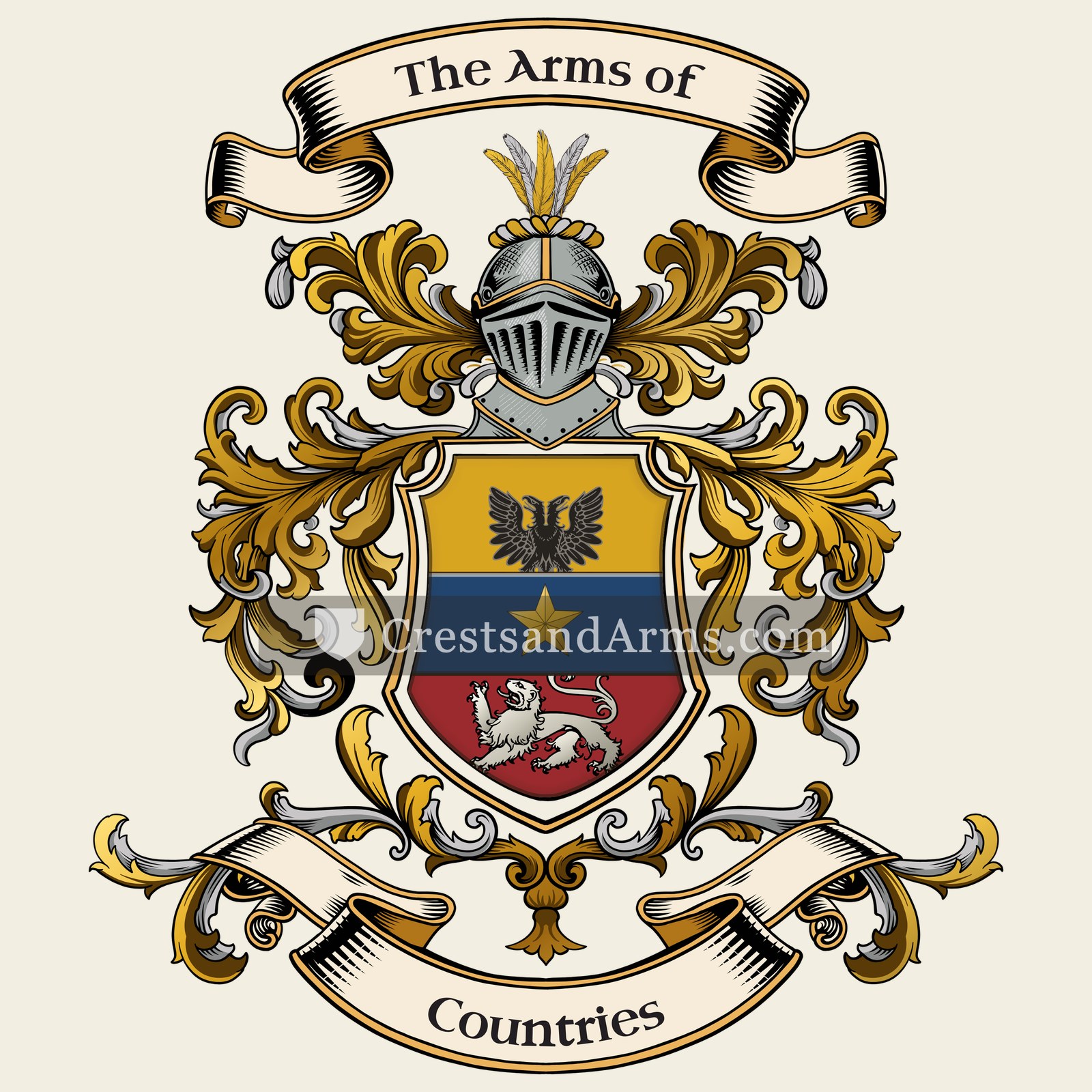
Symbols on this shield
fessThe military belt, and readiness to serve
mulletThe third son, and a divine quality from above
eagleNobility, strength and a keen mind
lionCourage, strength and royalty
Colours
Gold (Or)Means: Generosity
Red (Gules)Means: Military strength
Blue (Azure)Means: Loyalty and truth
Black (Sable)Means: Constancy
Silver (Argent)Means: Peace and sincerity
Historical info
Source
J. B. Rietstap, Armorial Général, Gouda: G. B. van Goor Zonen, 1884–87
Blazon (the actual original written record)
“Coupé, d'or à l'aigle de sa., cour. d'or, sur gu. au lion d'arg., cour. d'or; à la fasce d'azur, br. sur le coupé et ch. d'une étoile d'or. Cq. cour. C.: l'aigle, iss. L.: à dextre d'or et de sa., à sen. d'arg. et de gu.”
Austriac. 1680
Digital archive packCoat of arms PNG, gold border print PDF, vector SVG and the certificate of authenticity. Sent to your email in minutes.
Map of Austria showing where the Countries arms are recorded
The Countries arms were recorded in Austria, c. 1680.
Arms such as these were typically recorded in Tyrol.
Tyrol was mountain country in western Austria, where the valleys were held by families who had been there a very long time. Old tenure counted for more than money, and old families carried arms.
This is where the arms were entered in the register. Families often moved to other parts of the country, so the same name can turn up in more than one region.
Region
Tyrol
First recorded
1680
Granting Authority for the Countries Arms
Imperial and Royal chancery
Sodacan · CC BY-SA 3.0
The body that granted and recorded arms in Austria in this period.
Leopold I, Holy Roman Emperor
Sovereign of the period
Leopold I, Holy Roman Emperor
1658–1705
Reigning in Spain when the Countries arms are first recorded.
How Arms Worked in Austria
Austrian coats of arms were often linked directly to noble titles granted by the Emperor. These symbols belonged to the entire family line rather than just one individual. When a family grew, new branches kept the original design without needing to change it. This system allowed all members of a noble house to share the same identity across many generations.
Granting authority
The Imperial and Royal chancery managed all heraldic matters and controlled the official granting of arms throughout the Austrian lands.
How they got arms
Families typically received their arms through a formal imperial decree that often accompanied the elevation of a person to noble status.
Where arms were recorded
Official records of these grants were kept in the Imperial Register of Nobility which began its formal documentation process in 1453.
The family's standing
Recorded among the armigerous families of Austria.
Origin & History of the Countries Family in Austria
The history of the Countries family name in Austria begins in the rugged, mountainous region of Tyrol during the late seventeenth century. By 1680, records indicate that members of this family were already established within the local community, likely working as skilled laborers or farmers in the alpine valleys. Because Tyrol served as a vital crossroads for trade routes connecting northern Europe to Italy, families living there often adapted to a mix of cultural influences and shifting regional borders. The name itself suggests a connection to the concept of land or territory, which may have originally identified these ancestors as people who managed specific tracts of property or traveled between different jurisdictions. Throughout the late 1600s, these early family members lived through a period of significant social change as the Habsburg monarchy consolidated its power over the Austrian lands. Their presence in the historical record during this time reflects the steady growth of rural populations who helped shape the identity of the Tyrol region.
Related Branches & Arms
Root word
Contrata
Latin term referring to a contract, agreement, or a specific territory.
This name
CountriesA topographic or habitational name for someone living in or from a specific region.
also spelled
Contrera
Documented Sources
J. B. Rietstap, Armorial Général, Gouda: G. B. van Goor Zonen, 1884–87
Archivo de la Real Chancillería de Valladolid, Registro de Ejecutorias
Archivo Histórico Nacional, Sección Nobleza
Domínguez Ortiz, Antonio, La sociedad española en el siglo XVIII, 1955
Lynch, John, Bourbon Spain 1700-1808, 1989
Digital archive packCoat of arms PNG, gold border print PDF, vector SVG and the certificate of authenticity. Sent to your email in minutes.


 paleMilitary strength, and a fortified defence
 saltire coupedResolution, and the cross of St Andrew
 paleMilitary strength, and a fortified defence
 saltire coupedResolution, and the cross of St Andrew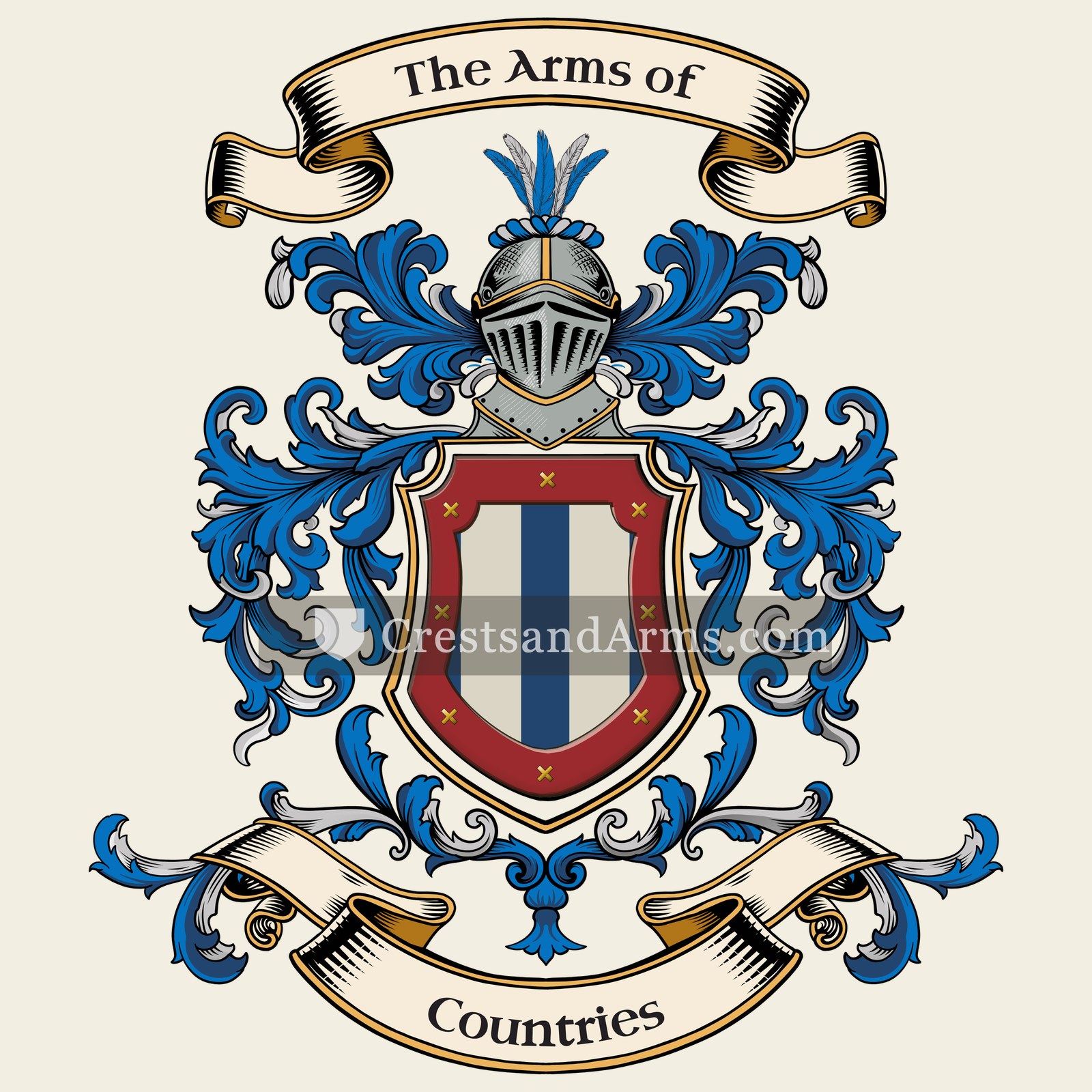


 fessThe military belt, and readiness to serve
 mulletThe third son, and a divine quality from above
 eagleNobility, strength and a keen mind
 lionCourage, strength and royalty