Map of Germany showing where the Cramer arms are recorded
The Cramer arms were recorded in Han, c. 1742.
This is where the arms were entered in the register. Families often moved to other parts of the country, so the same name can turn up in more than one region.
The body that granted and recorded arms in Germany in this period.
Charles VII, Holy Roman Emperor
Sovereign of the period
Charles VII, Holy Roman Emperor
1742–1745
Reigning in Germany when the Cramer arms are first recorded.
How Arms Worked in Germany
In the Holy Roman Empire, coats of arms were often granted to individuals by the Emperor or his representatives. These arms were then passed down through the generations to all legitimate descendants of the original holder. Younger branches of a family usually kept the same shield design without needing to change it, as the arms belonged to the entire lineage.
Granting authority
The Holy Roman Emperor held the sole power to grant new coats of arms throughout his vast imperial territories.
How they got arms
Families typically obtained their coats of arms through a formal imperial grant or by proving their noble status to the authorities.
Where arms were recorded
These grants were officially recorded in the Imperial Chancery registers, which began keeping formal records of such honors during the Middle Ages.
The family's standing
Recorded among the armigerous families of Germany.
Origin & History of the Cramer Family in Germany
The surname Cramer is an occupational name that emerged in medieval Germany to describe a merchant or a shopkeeper. The word comes from the Middle High German term *kramer*, which referred to someone who sold goods from a small booth or a stall at a market. As towns began to grow during the Middle Ages, these traders became essential figures in local economies. By the time members of the family were documented in the village of Han in 1742, the name was already well-established across various German-speaking regions. Families with this name were often part of the rising middle class, moving goods between rural areas and developing urban centers. Because the name was tied to a common profession, it appeared independently in many different locations rather than originating from a single ancestor. This history reflects the broader movement of people who helped shape the trade networks of early modern Germany.
Coat of Arms & Family Crest Details
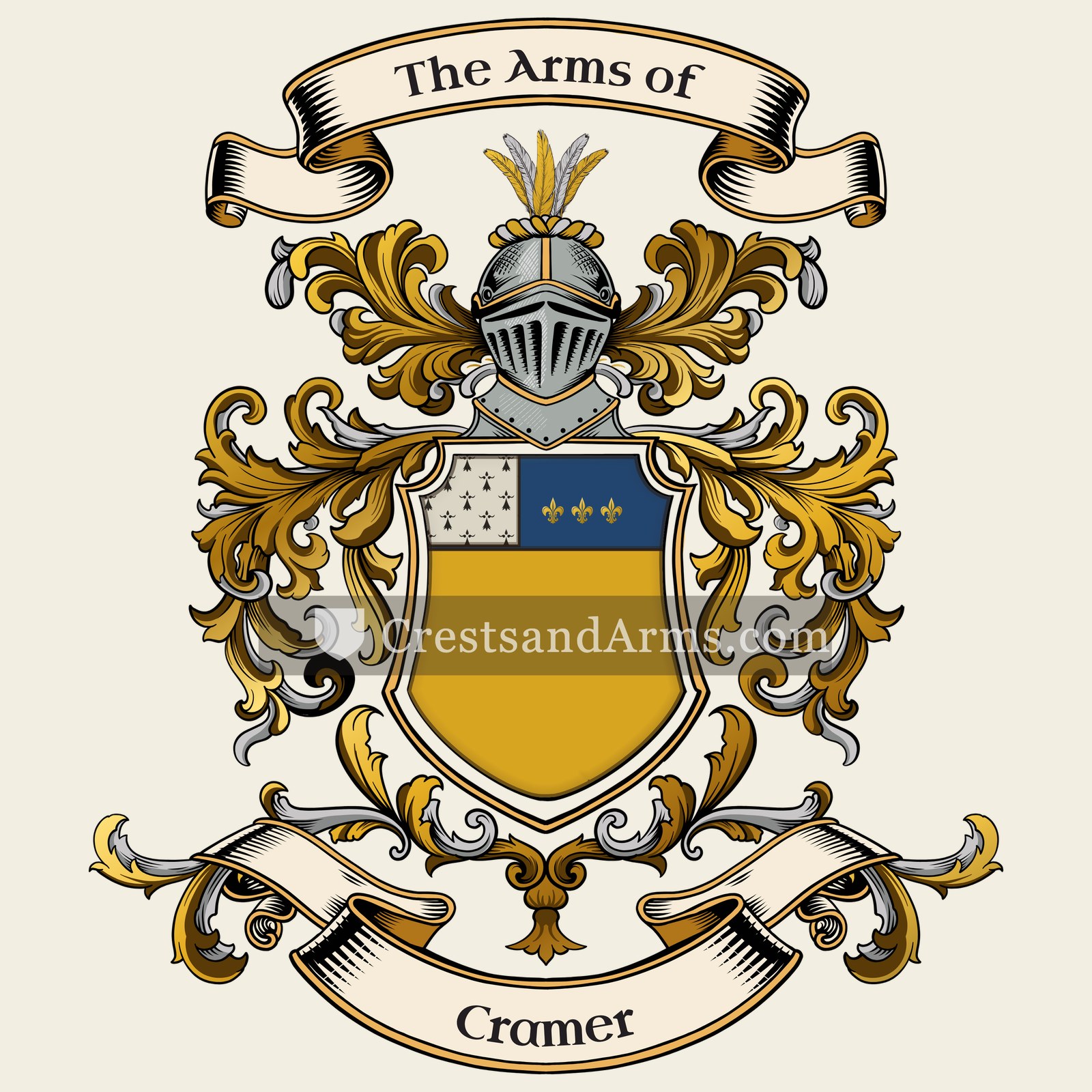
Symbols on this shield
treeLife, endurance and deep roots
Colours
Blue (Azure)Means: Loyalty and truth
Silver (Argent)Means: Peace and sincerity
Historical info
Source
J. B. Rietstap, Armorial Général, Gouda: G. B. van Goor Zonen, 1884–87
Blazon (the actual original written record)
“Coupé: au 1 d'azur à deux grues affr. d'or, avec leur vigilance de gu.; au 2 d'arg. à un tronc d'arbre, mouv. de la p., poussant deux branches feuillées, l'une à dextre et l'autre à sen., le tout au nat. C.: une grue d'or, avec sa vigilance de gu. L. d'or et d'azur.”
NetherlandsAmsterdam, c. 1815
Digital archive packCoat of arms PNG, gold border print PDF, vector SVG and the certificate of authenticity. Sent to your email in minutes.
Map of Netherlands showing where the Cramer arms are recorded
The Cramer arms were recorded in Amsterdam, c. 1815.
This is where the arms were entered in the register. Families often moved to other parts of the country, so the same name can turn up in more than one region.
Region
Amsterdam
Town
Amsterdam
First recorded
1815
Granting Authority for the Cramer Arms
Hoge Raad van Adel
Photograph made by me · CC BY-SA 3.0
The body that granted and recorded arms in Netherlands in this period.
William I of the Netherlands
Sovereign of the period
William I of the Netherlands
1815–1840
Reigning in Germany when the Cramer arms are first recorded.
How Arms Worked in Netherlands
In the Netherlands, coats of arms were often used by noble families and those who held specific public offices. These arms were passed down through the generations to legitimate descendants. Younger branches of a family usually kept the original design without needing to add special marks. This system ensured that the family identity remained clear and consistent over many years.
Granting authority
The Hoge Raad van Adel is the official body that regulates and manages noble titles and coats of arms in the Netherlands.
How they got arms
Families typically obtained their coats of arms through official royal grants or by proving their long-standing historical use of the symbols.
Where arms were recorded
Coats of arms are officially recorded in the registers held by the Hoge Raad van Adel, which began its work in 1814.
The family's standing
Recorded among the armigerous families of Netherlands.
Origin & History of the Cramer Family in Netherlands
The surname Cramer has deep roots in the Dutch language, originating as an occupational name for a merchant or a small-scale trader. In the Netherlands, the word "kramer" historically referred to a shopkeeper or a peddler who sold goods from a stall or a pack. By the early 19th century, the name was well-established among the urban population of Amsterdam. Records from 1815 show that families bearing this name were active participants in the city's vibrant commercial life during a time of significant national transition. As the Netherlands emerged from the Napoleonic era and moved toward the formation of the United Kingdom of the Netherlands, these individuals were likely part of the growing middle class that helped rebuild the city's economy. The name serves as a direct link to the trade-focused culture that defined Amsterdam for centuries, reflecting a family history built on the industrious spirit of the Dutch marketplace.
Coat of Arms & Family Crest Details
Symbols on this shield
chiefAuthority, wisdom and dominion
cantonA mark of honour granted by the sovereign
fleur de lisPurity, light, and the sixth son
Colours
Gold (Or)Means: Generosity
Blue (Azure)Means: Loyalty and truth
ErmineMeans: Dignity
Historical info
Source
Sir Bernard Burke, The General Armory of England, Scotland, Ireland and Wales, London: Harrison & Sons, 1884
Blazon (the actual original written record)
“Or, on a chief indented az. three fleurs-de-lis of the field, a canton erm”
Irelandc. 1645
Digital archive packCoat of arms PNG, gold border print PDF, vector SVG and the certificate of authenticity. Sent to your email in minutes.
Map of Ireland showing where the Cramer arms are recorded
The Cramer arms were recorded in Ireland, c. 1645.
Arms such as these were typically recorded in Dublin.
Dublin was the seat of government in Ireland and the place where grants were sought and recorded. Families with business at the castle or the courts settled nearby, and settling there put their arms on record.
This is where the arms were entered in the register. Families often moved to other parts of the country, so the same name can turn up in more than one region.
The body that granted and recorded arms in Ireland in this period.
Charles I of England
Sovereign of the period
Charles I of England
1625–1649
Reigning in Germany when the Cramer arms are first recorded.
How Arms Worked in Ireland
The Ulster King of Arms granted coats of arms to individuals who proved their social standing and good character. These symbols were typically inherited by all legitimate descendants of the original holder. If a family branch wanted a unique look, they could apply for a specific change to their design through the office to ensure their identity remained distinct.
Granting authority
The Ulster King of Arms acted as the official body that regulated and issued all coats of arms throughout Ireland.
How they got arms
Families obtained their arms through formal grants issued by the office after proving their eligibility and paying the required fees.
Where arms were recorded
All official grants were recorded in the registers held by the Ulster King of Arms starting from the year 1552.
The family's standing
Recorded among the armigerous families of Ireland.
Origin & History of the Cramer Family in Ireland
The Cramer family name established a notable presence in Ireland by the mid-seventeenth century, with records confirming family members were living in Dublin as early as 1645. The name itself is of Germanic origin, typically functioning as an occupational surname for a merchant or a shopkeeper. When these individuals arrived in Ireland during a period of significant political and social upheaval, they integrated into the administrative and professional life of the capital city. Over the following decades, the family transitioned from newcomers into established members of the Dublin community. By settling in urban centers, they were able to participate in the growing trade networks that defined the Irish economy during the Restoration era. This early history reflects a broader pattern of migration where families moved across borders to pursue new opportunities in commerce and civic service.
Cramer Meaning & Related Branches
Root word
Kramer
A merchant or shopkeeper who sells goods from a stall.
This name
CramerAn occupational surname for a retail trader or peddler in medieval Germany.
also spelled
Kramer
Krammer
Related arms
Beaulieusimilar arms
Gütlesimilar arms
Mecséry de Tsóorsimilar arms
Kramervariant spelling
Documented Sources
J. B. Rietstap, Armorial Général, Gouda: G. B. van Goor Zonen, 1884–87
Bahlow, Hans. Deutsches Namenlexikon: Familien- und Vornamen nach Ursprung und Sinn erklärt. 1967
Heintze, Albert. Die deutschen Familiennamen: geschichtlich, geographisch, sprachlich. 1903
Hessisches Staatsarchiv Marburg, Kirchenbuch der evangelischen Kirchengemeinde Han (Kirchenbücher)
Digital archive packCoat of arms PNG, gold border print PDF, vector SVG and the certificate of authenticity. Sent to your email in minutes.


 lionCourage, strength and royalty
 oakGreat age, strength and steadfastness
 lionCourage, strength and royalty
 oakGreat age, strength and steadfastness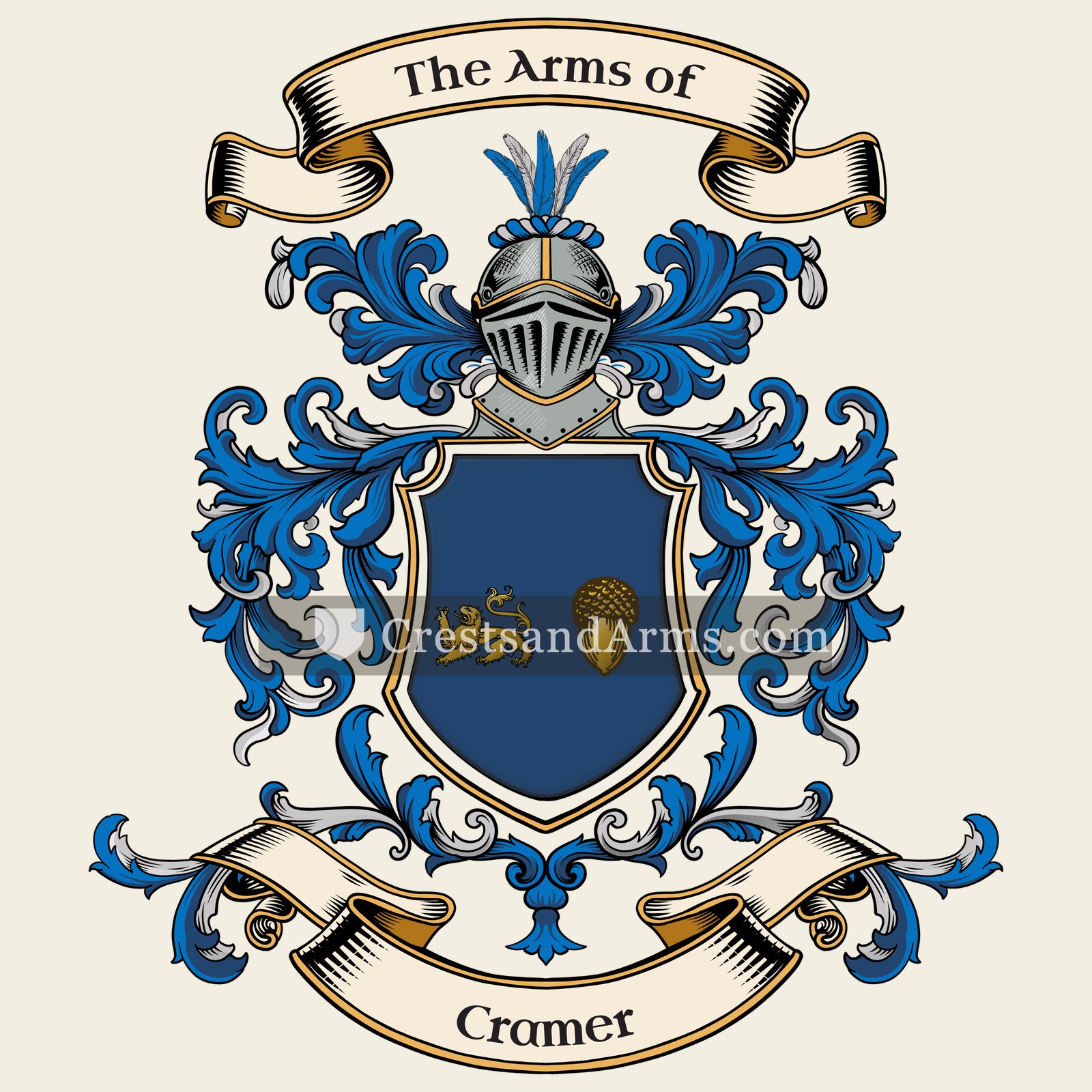


 treeLife, endurance and deep roots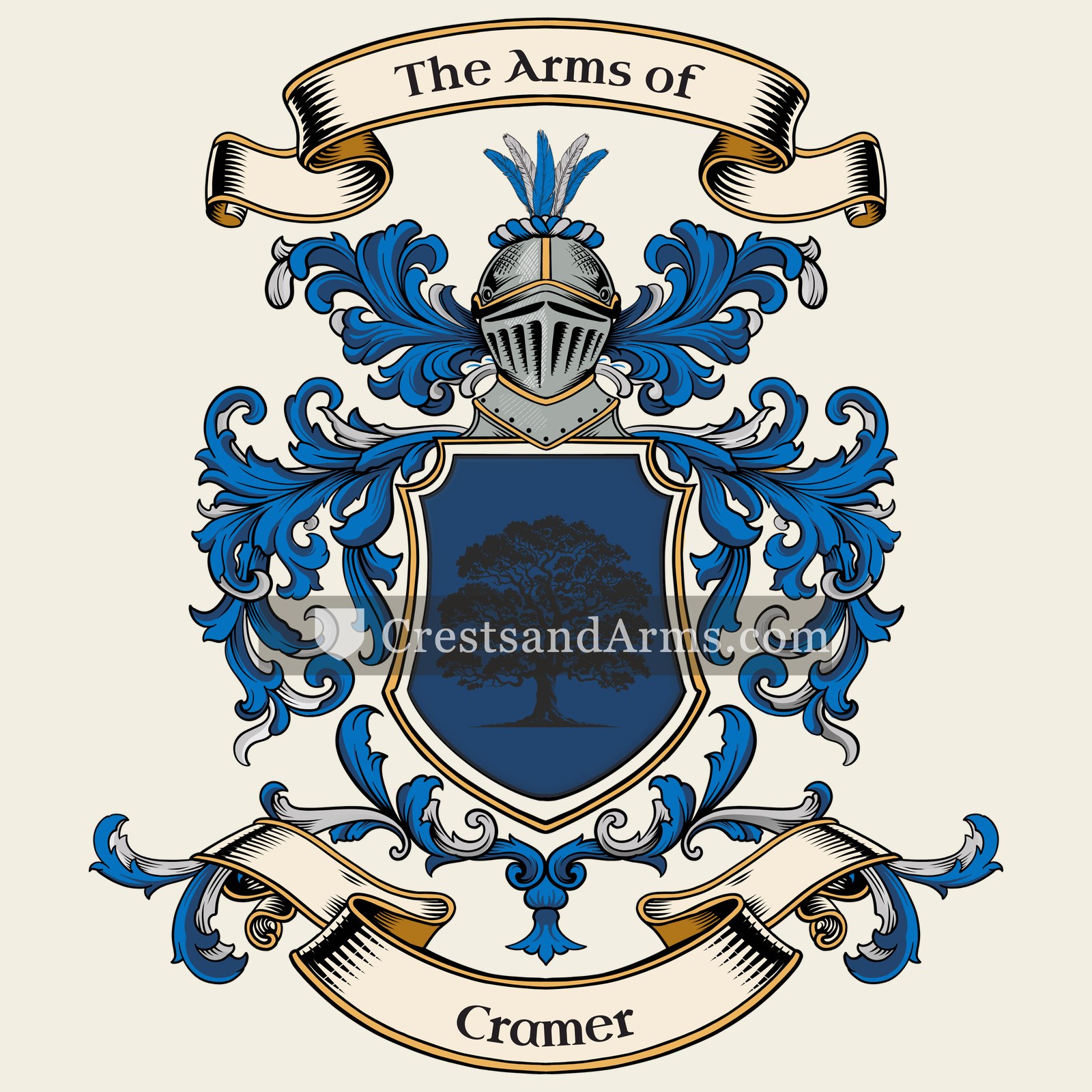


 chiefAuthority, wisdom and dominion
 cantonA mark of honour granted by the sovereign
 fleur de lisPurity, light, and the sixth son