Map of France showing where the Cray arms are recorded
The Cray arms were recorded in Languedoc, c. 1663.
Languedoc stretched across the south of France, a country of small towns, vineyards and old local families. Its gentry were numerous rather than grand, and a great many of them held arms even where their estates were modest.
This is where the arms were entered in the register. Families often moved to other parts of the country, so the same name can turn up in more than one region.
The body that granted and recorded arms in France in this period.
Louis XIV of France
Sovereign of the period
Louis XIV of France
1643–1715
Reigning in France when the Cray arms are first recorded.
How Arms Worked in France
In France, a coat of arms was a mark of honor that passed down through the male line to all legitimate descendants. Families often used the same shield without changes to show their shared heritage. If a branch wanted to stand out, they could add a small mark to their shield to show their specific place in the family tree.
Granting authority
The Juge d'armes de France acted as the official authority that regulated and verified coats of arms across the country.
How they got arms
Families typically inherited their arms from ancestors, though they could also receive them through royal grants or by proving their noble status.
Where arms were recorded
Coats of arms were officially recorded in the Armorial Général de France, which began its main collection in the year 1696.
The family's standing
Recorded among the armigerous families of Languedoc.
Origin & History of the Cray Family in France
The family name Cray finds its early roots in the sun-drenched region of Languedoc in southern France. By the year 1663, records confirm that members of the family were established within this historic area, which was known for its unique culture and distinct local language. During this period, Languedoc was a center of agricultural production and trade, and families living there were often deeply connected to the land and the local parish communities. The name likely evolved as a way to identify individuals based on their specific location or a notable physical trait common among their ancestors. As the family navigated the social shifts of the seventeenth century, they remained part of a region defined by its long history of independence and its role as a crossroads for travelers moving between the Mediterranean coast and the rest of France.
Coat of Arms & Family Crest Details
Symbols on this shield
chevronProtection, and faithful service completed
ravenConstancy and divine providence
Colours
Silver (Argent)Means: Peace and sincerity
Blue (Azure)Means: Loyalty and truth
Black (Sable)Means: Constancy
Historical info
Source
J. B. Rietstap, Armorial Général, Gouda: G. B. van Goor Zonen, 1884–87
Blazon (the actual original written record)
“D'arg. au chev. d'azur, acc. de trois corneilles de sa., cour. à l'antique d'or. C.: une corneille de l'écu.”
NetherlandsHarlem, c. 1815
Digital archive packCoat of arms PNG, gold border print PDF, vector SVG and the certificate of authenticity. Sent to your email in minutes.
Map of Netherlands showing where the Cray arms are recorded
The Cray arms were recorded in Harlem, c. 1815.
This is where the arms were entered in the register. Families often moved to other parts of the country, so the same name can turn up in more than one region.
Region
Harlem
Town
Harlem
First recorded
1815
Granting Authority for the Cray Arms
Hoge Raad van Adel
Photograph made by me · CC BY-SA 3.0
The body that granted and recorded arms in Netherlands in this period.
William I of the Netherlands
Sovereign of the period
William I of the Netherlands
1815–1840
Reigning in France when the Cray arms are first recorded.
How Arms Worked in Netherlands
In the Netherlands, coats of arms were often used by noble families and those who held specific public offices. These arms were passed down through the generations to legitimate descendants. Younger branches of a family usually kept the original design without needing to add special marks. This system ensured that the family identity remained clear and consistent over many years.
Granting authority
The Hoge Raad van Adel is the official body that regulates and manages noble titles and coats of arms in the Netherlands.
How they got arms
Families typically obtained their coats of arms through official royal grants or by proving their long-standing historical use of the symbols.
Where arms were recorded
Coats of arms are officially recorded in the registers held by the Hoge Raad van Adel, which began its work in 1814.
The family's standing
Recorded among the armigerous families of Netherlands.
Origin & History of the Cray Family in Netherlands
The family name Cray has deep roots tied to the movement of people within the Netherlands during the early nineteenth century. By 1815, records confirm that members of the family were established in the city of Haarlem. During this period, Haarlem was a bustling center of trade and industry, serving as a hub for families looking to build new lives after the end of the Napoleonic Wars. The name likely evolved from local linguistic patterns or regional nicknames common in the North Holland province. As the family integrated into the urban life of Haarlem, they became part of a growing middle class that helped shape the city’s post-war recovery. Their presence in official municipal documents from this era suggests they were settled residents who participated in the administrative and social growth of the region during a time of significant national transition.
Coat of Arms & Family Crest Details
Symbols on this shield
cross symbolChristian faith and service
bendDefence, and the scarf of a commander
Colours
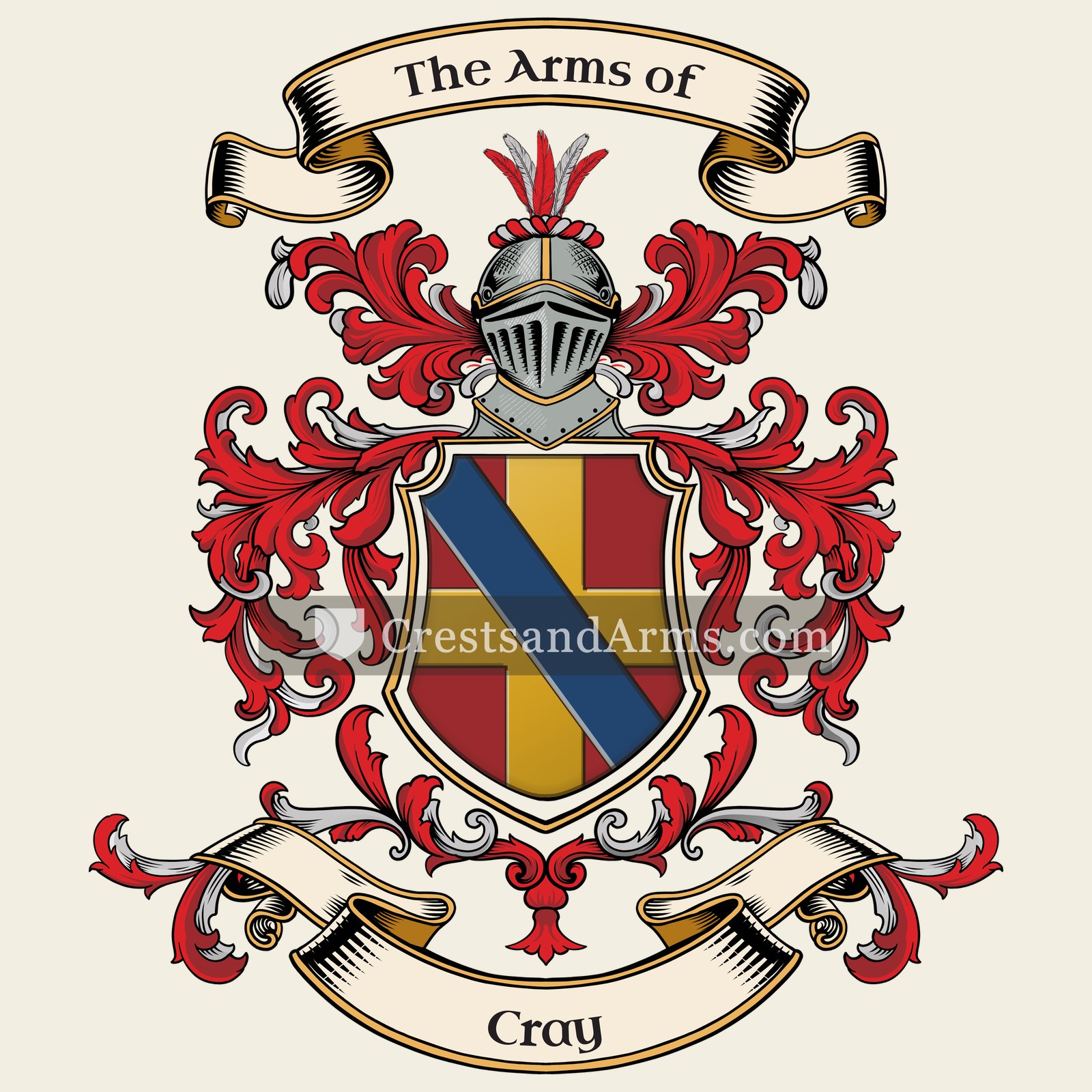
Red (Gules)Means: Military strength
Gold (Or)Means: Generosity
Blue (Azure)Means: Loyalty and truth
Historical info
Source
Sir Bernard Burke, The General Armory of England, Scotland, Ireland and Wales, London: Harrison & Sons, 1884
Blazon (the actual original written record)
“Gu. a cross engr. or, over all a bend az”
KentKent, c. 1620
Digital archive packCoat of arms PNG, gold border print PDF, vector SVG and the certificate of authenticity. Sent to your email in minutes.
Map of England showing where the Cray arms are recorded
The Cray arms were recorded in Kent, c. 1620.
Kent sits between London and the short crossing to Europe, and the trade passing through made it wealthy. Merchant families bought land with that money, and it was landowners who took coats of arms.
This is where the arms were entered in the register. Families often moved to other parts of the country, so the same name can turn up in more than one region.
The body that granted and recorded arms in England in this period.
James VI and I
Sovereign of the period
James VI and I
1603–1625
Reigning in France when the Cray arms are first recorded.
How Arms Worked in England
English heraldry allowed arms to be shared by all legitimate descendants of the original owner. These symbols were treated as personal property that moved through the generations to all children. While the eldest son kept the original design, other family members could use the same shield without needing to change it or register their own unique versions.
Granting authority
The College of Arms in London has regulated the use of coats of arms throughout England and Wales since 1484.
How they got arms
Families typically obtained their coats of arms through a formal grant from the Crown or by proving their ancient right to them.
Where arms were recorded
All official coats of arms are recorded in the registers kept at the College of Arms, which date back to the fifteenth century.
The family's standing
Recorded among the armigerous families of Kent.
Origin & History of the Cray Family in England
The family name Cray has deep roots in the English county of Kent, where records confirm members of the family were established by the early seventeenth century. During this period, Kent was a bustling region shaped by its proximity to London and the English Channel, making it a place where families often engaged in agriculture, local trade, or maritime industries. The name itself likely evolved as a topographical descriptor, potentially referring to people who lived near the River Cray or the surrounding valley. As the family settled into the local community, they became part of the social fabric of the region, participating in the daily life and parish activities that defined English village existence in the 1600s. By staying rooted in this specific landscape, the early members of the Cray family helped preserve their name as a distinct part of Kentish history for generations to come.
Cray Meaning & Related Branches
Root word
Creta
Latin term referring to chalk or clay earth.
This name
CrayA topographic name for someone who lived near a chalky or clay-rich soil deposit.
also spelled
Kray
Craye
Crey
Related arms
Craayvariant spelling
Creyvariant spelling
Documented Sources
J. B. Rietstap, Armorial Général, Gouda: G. B. van Goor Zonen, 1884–87
Archives départementales de l'Hérault, Registres paroissiaux et d'état civil, 1663
Le Roy Ladurie, Emmanuel, Les Paysans de Languedoc, 1966
Digital archive packCoat of arms PNG, gold border print PDF, vector SVG and the certificate of authenticity. Sent to your email in minutes.


 fleur de lisPurity, light, and the sixth son
 eagleNobility, strength and a keen mind
 columnFortitude and constancy
 fleur de lisPurity, light, and the sixth son
 eagleNobility, strength and a keen mind
 columnFortitude and constancy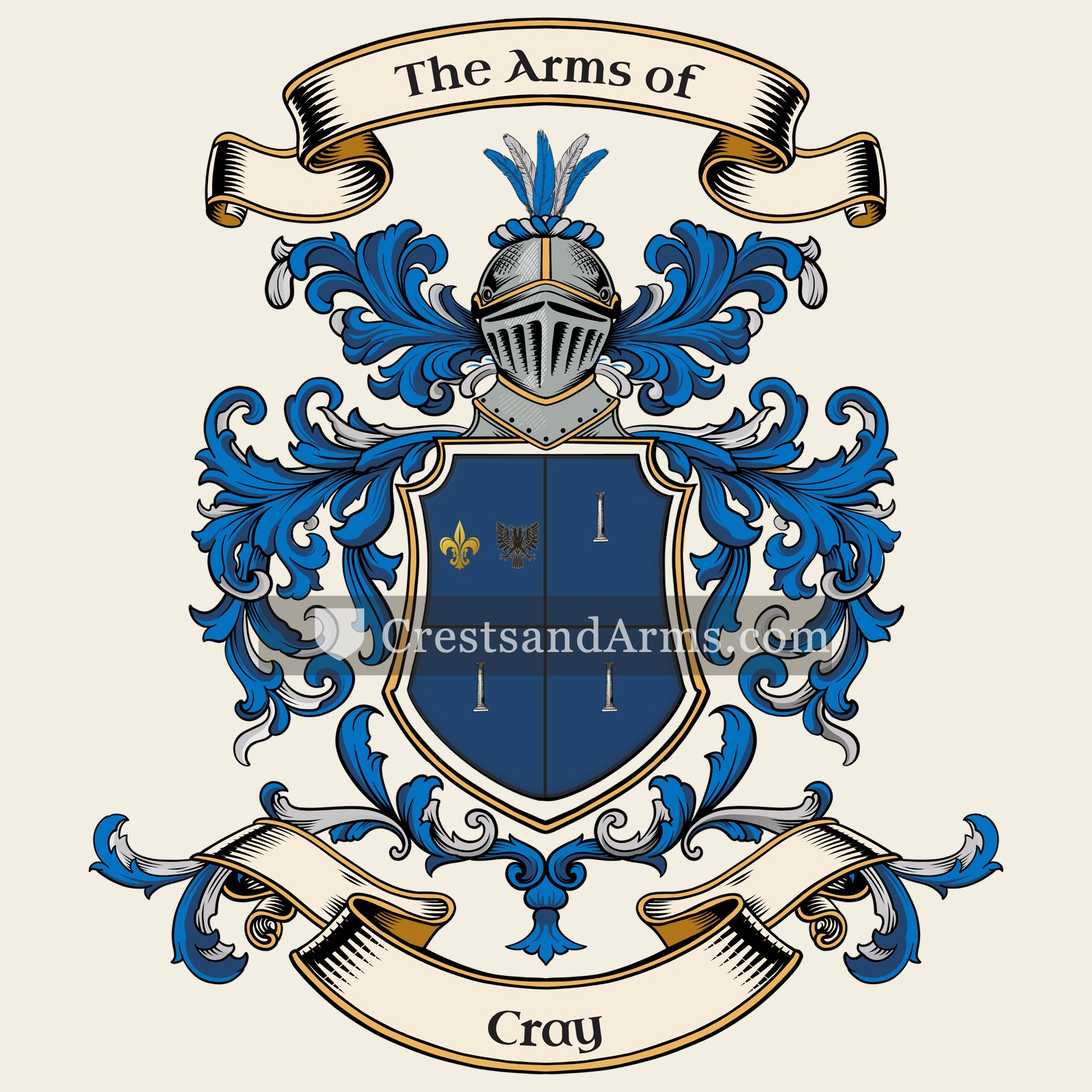


 chevronProtection, and faithful service completed
 ravenConstancy and divine providence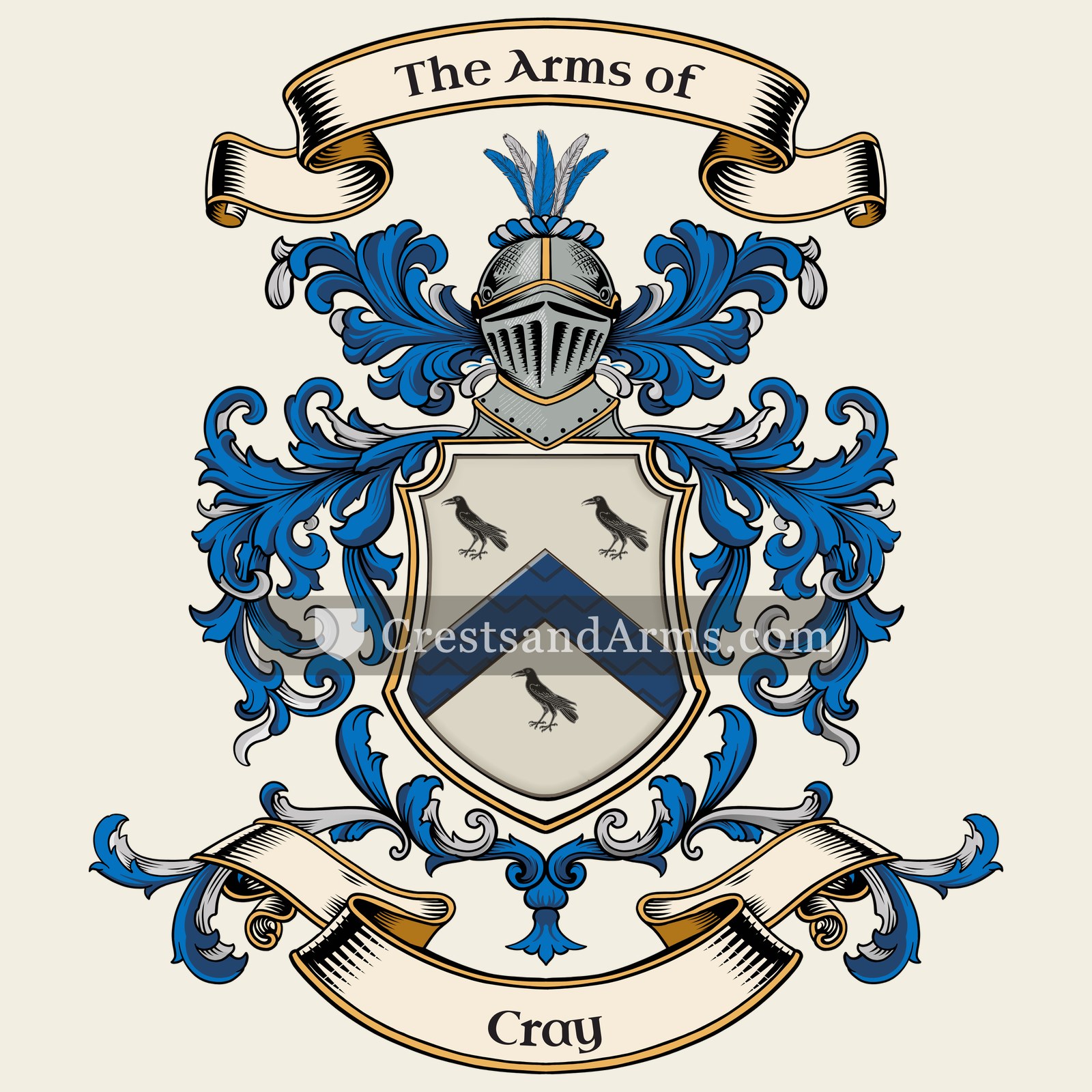


 cross symbolChristian faith and service
 bendDefence, and the scarf of a commander