Map of Netherlands showing where the Cremer arms are recorded
The Cremer arms were recorded in Netherlands, c. 1815.
Arms such as these were typically recorded in Friesland.
Friesland was low, wet country on the northern coast of the Netherlands, farmed by families who had held the same land for centuries. Free landholders were unusually common there, and a free landholder could carry arms.
This is where the arms were entered in the register. Families often moved to other parts of the country, so the same name can turn up in more than one region.
Region
Friesland
First recorded
1815
Granting Authority for the Cremer Arms
Hoge Raad van Adel
Photograph made by me · CC BY-SA 3.0
The body that granted and recorded arms in Netherlands in this period.
William I of the Netherlands
Sovereign of the period
William I of the Netherlands
1815–1840
Reigning in Netherlands when the Cremer arms are first recorded.
How Arms Worked in Netherlands
In the Netherlands, coats of arms were often used by noble families and those who held specific public offices. These arms were passed down through the generations to legitimate descendants. Younger branches of a family usually kept the original design without needing to add special marks. This system ensured that the family identity remained clear and consistent over many years.
Granting authority
The Hoge Raad van Adel is the official body that regulates and manages noble titles and coats of arms in the Netherlands.
How they got arms
Families typically obtained their coats of arms through official royal grants or by proving their long-standing historical use of the symbols.
Where arms were recorded
Coats of arms are officially recorded in the registers held by the Hoge Raad van Adel, which began its work in 1814.
The family's standing
Recorded among the armigerous families of Netherlands.
Origin & History of the Cremer Family in Netherlands
The surname Cremer finds its roots in the medieval trade practices of the Low Countries, where it originated as an occupational name for a merchant or a shopkeeper. The term itself is derived from the Middle Dutch word "cremer," which referred to a peddler or someone who sold goods in a market stall. By the time the family was firmly established in the northern province of Friesland in 1815, the name had transitioned from a simple job description into a formal hereditary surname. During this period, the Napoleonic administration required citizens to register permanent family names for tax and military purposes, which solidified the spelling and usage of Cremer across the region. Members of the family in Friesland were often integrated into the local mercantile and agricultural communities, reflecting the historical connection between their name and the active trade networks that defined Dutch economic life for centuries.
Coat of Arms & Family Crest Details
Symbols on this shield
chevronProtection, and faithful service completed
griffinValour and vigilance, guarding great treasure
ravenConstancy and divine providence
Colours
Black (Sable)Means: Constancy
Red (Gules)Means: Military strength
Gold (Or)Means: Generosity
Historical info
Source
J. B. Rietstap, Armorial Général, Gouda: G. B. van Goor Zonen, 1884–87
Blazon (the actual original written record)
“Ec.: aux 1 et 4 de sa. au griffon d'or, cour. du même; aux 2 et 3 d'arg. à trois chev. de gu. Sur le tout d'or à un corbeau de sa., assis sur une branche effeuillée au nat., en bande. L'écu encadré d'un amphiptère de sin., ailé d'azur. Deux cq cour. C.: 1º un demi-vol cont. d'azur. avec quatre flammes d'or entre les plumes ext.; l. d'or et d'azur; 2º le griffon, iss.; l. d'arg. et de gu.”
Austriac. 1772
Digital archive packCoat of arms PNG, gold border print PDF, vector SVG and the certificate of authenticity. Sent to your email in minutes.
Map of Austria showing where the Cremer arms are recorded
The Cremer arms were recorded in Austria, c. 1772.
Arms such as these were typically recorded in Tyrol.
Tyrol was mountain country in western Austria, where the valleys were held by families who had been there a very long time. Old tenure counted for more than money, and old families carried arms.
This is where the arms were entered in the register. Families often moved to other parts of the country, so the same name can turn up in more than one region.
Region
Tyrol
First recorded
1772
Granting Authority for the Cremer Arms
Imperial and Royal chancery
Sodacan · CC BY-SA 3.0
The body that granted and recorded arms in Austria in this period.
Joseph II, Holy Roman Emperor
Sovereign of the period
Joseph II, Holy Roman Emperor
1765–1790
Reigning in Netherlands when the Cremer arms are first recorded.
How Arms Worked in Austria
Austrian coats of arms were often linked directly to noble titles granted by the Emperor. These symbols belonged to the entire family line rather than just one individual. When a family grew, new branches kept the original design without needing to change it. This system allowed all members of a noble house to share the same identity across many generations.
Granting authority
The Imperial and Royal chancery managed all heraldic matters and controlled the official granting of arms throughout the Austrian lands.
How they got arms
Families typically received their arms through a formal imperial decree that often accompanied the elevation of a person to noble status.
Where arms were recorded
Official records of these grants were kept in the Imperial Register of Nobility which began its formal documentation process in 1453.
The family's standing
Recorded among the armigerous families of Austria.
Origin & History of the Cremer Family in Austria
The family name Cremer has deep roots in the Alpine regions of Austria, particularly within the rugged landscape of Tyrol. By the year 1772, records confirm that members of the family were well-established residents in this area. The name itself is occupational in origin, derived from the Middle High German word "kremer," which referred to a merchant or a shopkeeper. During the eighteenth century, families with this name were often involved in the local trade networks that connected the mountain valleys to larger markets in Central Europe. As merchants, these early ancestors played a vital role in the economic life of their communities by transporting goods through the difficult mountain passes. Their presence in Tyrol reflects a history of resilience and social integration, as they helped sustain the local economy long before the modern era of industrialization.
Coat of Arms & Family Crest Details
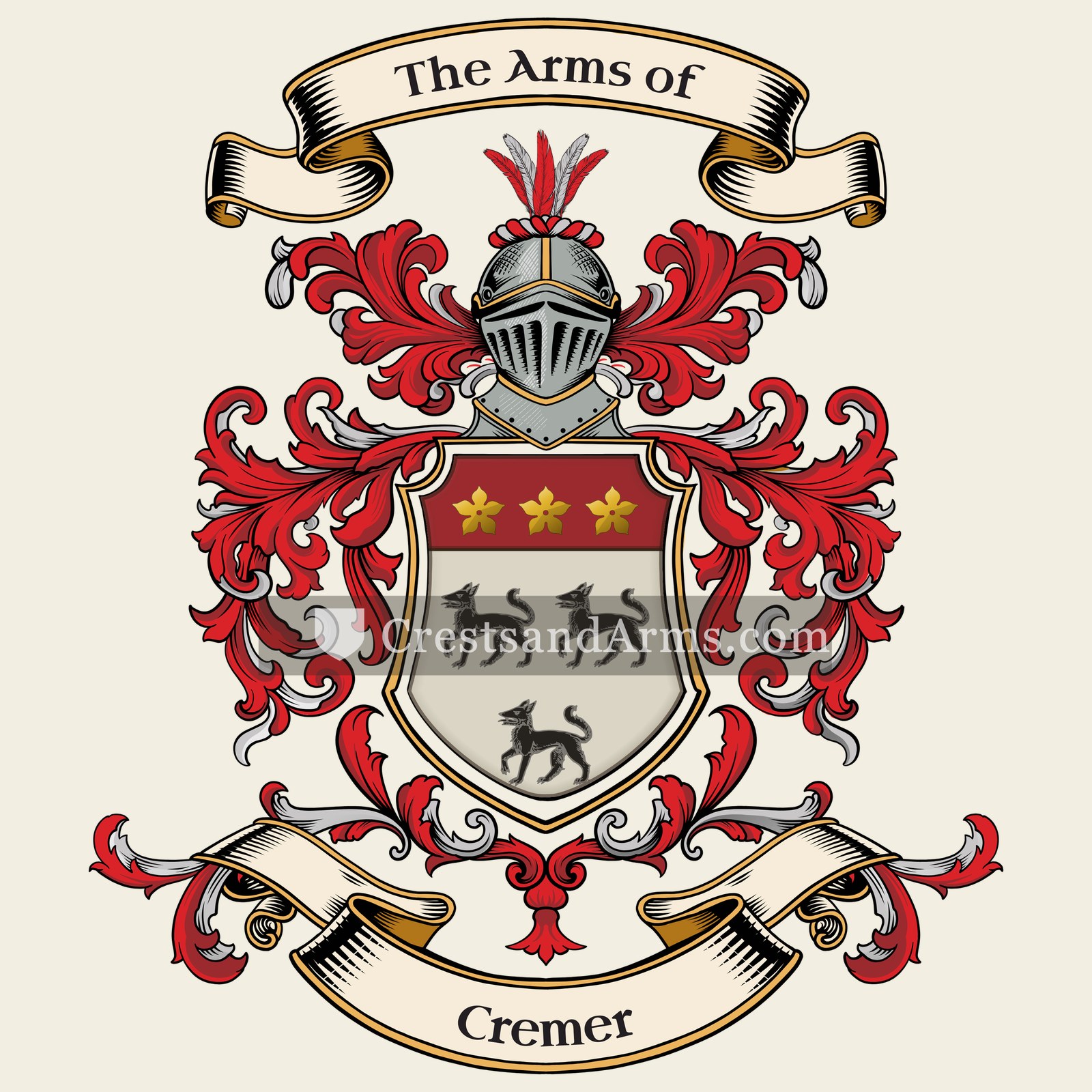
Symbols on this shield
chiefAuthority, wisdom and dominion
wolfReward from long service and hard work
cinquefoilHope and joy
Colours
Silver (Argent)Means: Peace and sincerity
Red (Gules)Means: Military strength
Black (Sable)Means: Constancy
Gold (Or)Means: Generosity
Historical info
Source
Sir Bernard Burke, The General Armory of England, Scotland, Ireland and Wales, London: Harrison & Sons, 1884
Blazon (the actual original written record)
“Ar. three wolves' heads erased sa. on a chief gu. as many cinquefoils pierced or”
NorfolkLondon · Norfolk, c. 1620
Digital archive packCoat of arms PNG, gold border print PDF, vector SVG and the certificate of authenticity. Sent to your email in minutes.
Map of England showing where the Cremer arms are recorded
The Cremer arms were recorded in Norfolk, c. 1620.
Norfolk grew rich on wool and grain, and its wealth was spread among many middling families rather than a few great ones. Households of that kind bought land and took arms, and the county holds a large share of English names.
This is where the arms were entered in the register. Families often moved to other parts of the country, so the same name can turn up in more than one region.
The body that granted and recorded arms in England in this period.
James VI and I
Sovereign of the period
James VI and I
1603–1625
Reigning in Netherlands when the Cremer arms are first recorded.
How Arms Worked in England
English heraldry allowed arms to be shared by all legitimate descendants of the original owner. These symbols were treated as personal property that moved through the generations to all children. While the eldest son kept the original design, other family members could use the same shield without needing to change it or register their own unique versions.
Granting authority
The College of Arms in London has regulated the use of coats of arms throughout England and Wales since 1484.
How they got arms
Families typically obtained their coats of arms through a formal grant from the Crown or by proving their ancient right to them.
Where arms were recorded
All official coats of arms are recorded in the registers kept at the College of Arms, which date back to the fifteenth century.
The family's standing
Recorded among the armigerous families of Norfolk.
Origin & History of the Cremer Family in England
The surname Cremer is an occupational name that originated from the Middle English word "cremer," which described a merchant or a peddler who sold goods at a market stall. By the early 17th century, the family had firmly established itself in the county of Norfolk, where they became notable landowners and members of the local gentry. Records from 1620 confirm their presence in this region, particularly around the town of King’s Lynn. During this period, the family integrated into the social and economic fabric of East Anglia, often serving in local administrative roles. Their transition from market traders to established country residents reflects the broader social mobility seen in England during the late Tudor and early Stuart eras. This shift allowed the family to secure their status within the Norfolk community for several generations.
Cremer Meaning & Related Branches
Root word
Kramer
A merchant or shopkeeper who sells goods from a stall.
This name
CremerAn occupational surname for a person who worked as a retail merchant or peddler.
also spelled
Kremer
Cramer
Creamer
Cremor
Related arms
Goedeckesimilar arms
Rouffaersimilar arms
Schmiterlöwsimilar arms
Kremervariant spelling
Documented Sources
J. B. Rietstap, Armorial Général, Gouda: G. B. van Goor Zonen, 1884–87
Debrabandere, Frans. Woordenboek van de familienamen in België en Noord-Frankrijk. 2003
Meertens, P.J. De betekenis van de Nederlandse familienamen. 1993
Tresoar (Fries Historisch en Letterkundig Centrum), Burgerlijke Stand van Friesland (Civil Registry of Friesland), 1811–1950
Digital archive packCoat of arms PNG, gold border print PDF, vector SVG and the certificate of authenticity. Sent to your email in minutes.


 knightChivalry and service in arms
 knightChivalry and service in arms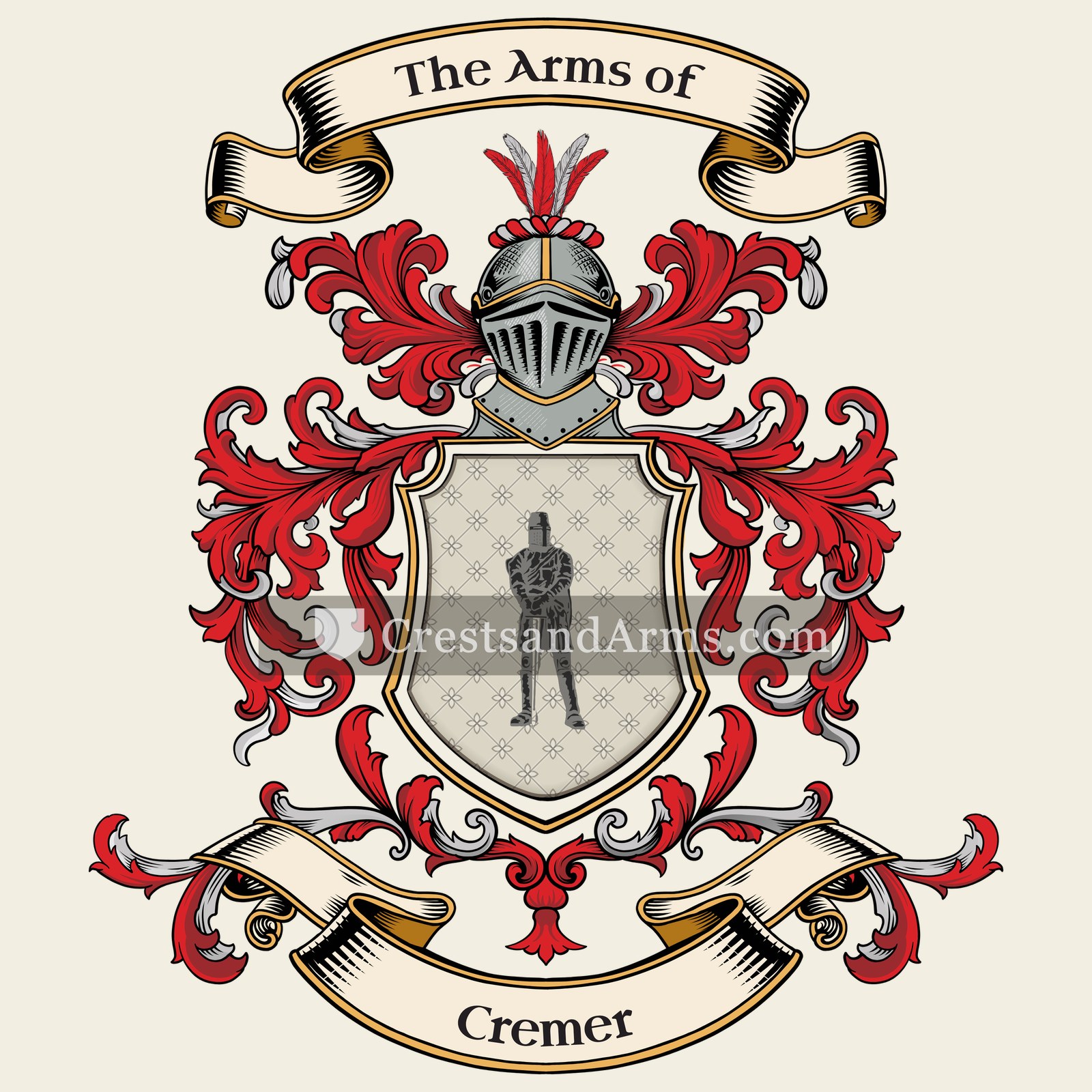


 chevronProtection, and faithful service completed
 griffinValour and vigilance, guarding great treasure
 ravenConstancy and divine providence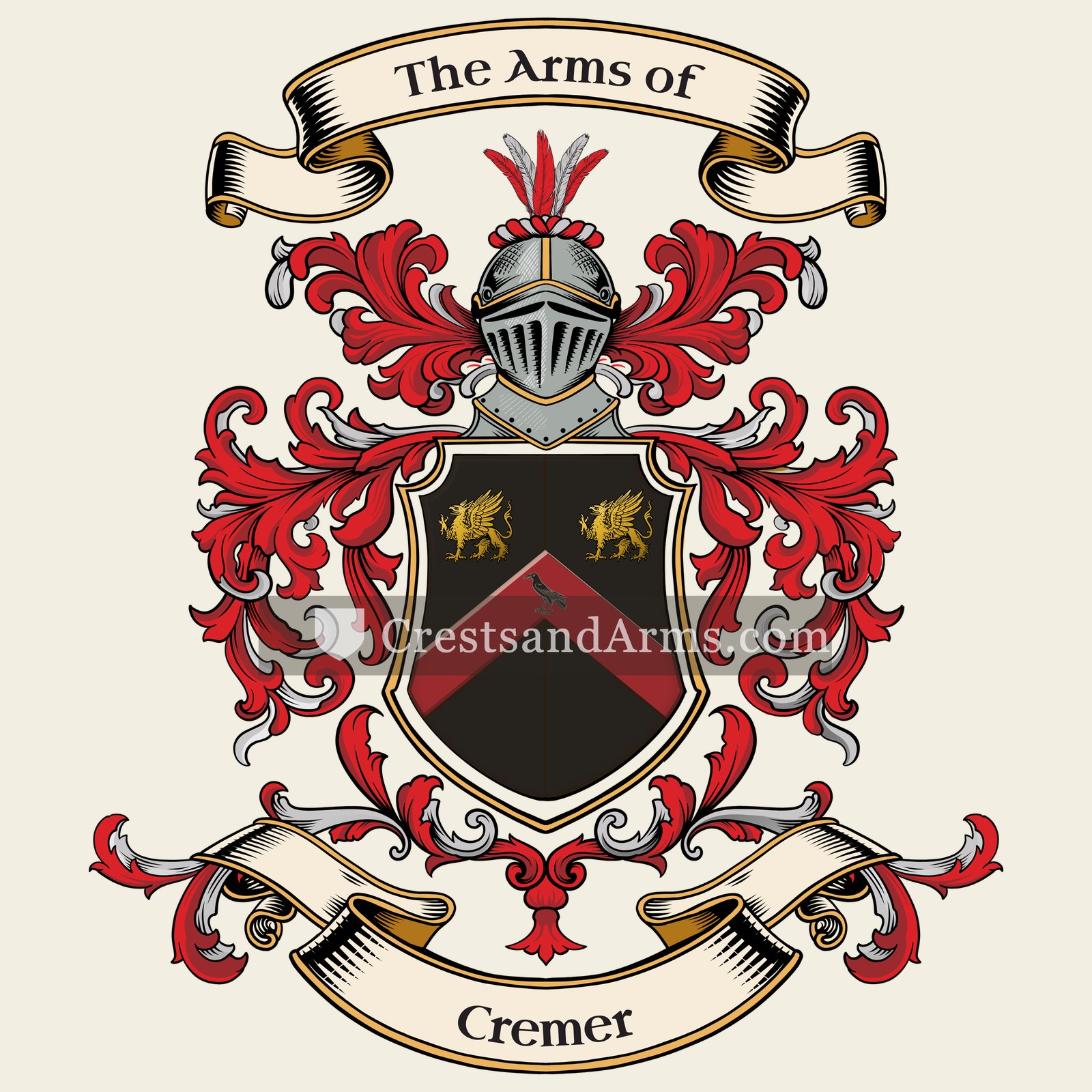


 chiefAuthority, wisdom and dominion
 wolfReward from long service and hard work
 cinquefoilHope and joy