Map of Italy showing where the Cremonese arms are recorded
The Cremonese arms were recorded in Rome, c. 1775.
This is where the arms were entered in the register. Families often moved to other parts of the country, so the same name can turn up in more than one region.
The body that granted and recorded arms in Italy in this period.
Alvise Giovanni Mocenigo
Sovereign of the period
Alvise Giovanni Mocenigo
1763–1778
Reigning in Italy when the Cremonese arms are first recorded.
How Arms Worked in Italy
In the Italian states, coats of arms were often used by noble families to show their status and history. These symbols were passed down through the generations to all legitimate male descendants. Younger branches of a family usually kept the original design but sometimes added small changes to distinguish their specific line from the main branch.
Granting authority
Various local rulers and city governments controlled the use of coats of arms across the different Italian states.
How they got arms
Families often assumed their own arms or received them as official grants from local lords, popes, or city councils.
Where arms were recorded
Arms were recorded in local city archives or private family books rather than in one single national register.
The family's standing
Recorded among the armigerous families of Italy.
Origin & History of the Cremonese Family in Italy
The surname Cremonese serves as a geographical identifier, traditionally denoting an individual who originated from the city of Cremona in the Lombardy region of northern Italy. During the late eighteenth century, the family established a notable presence in Rome, a city that functioned as a major cultural and administrative hub under the Papal States. By 1775, records indicate that members of the family were integrated into the urban fabric of Rome, likely drawn there by the promise of professional opportunities within the church or the growing mercantile sectors of the capital. As people moved across the Italian peninsula for work or trade, they often carried their place of origin as a permanent surname to distinguish themselves from local residents. This migration pattern explains how a name rooted in the northern traditions of Lombardy became firmly planted in the heart of central Italy, reflecting the broader history of internal movement and identity formation in pre-unification Italy.
Coat of Arms & Family Crest Details
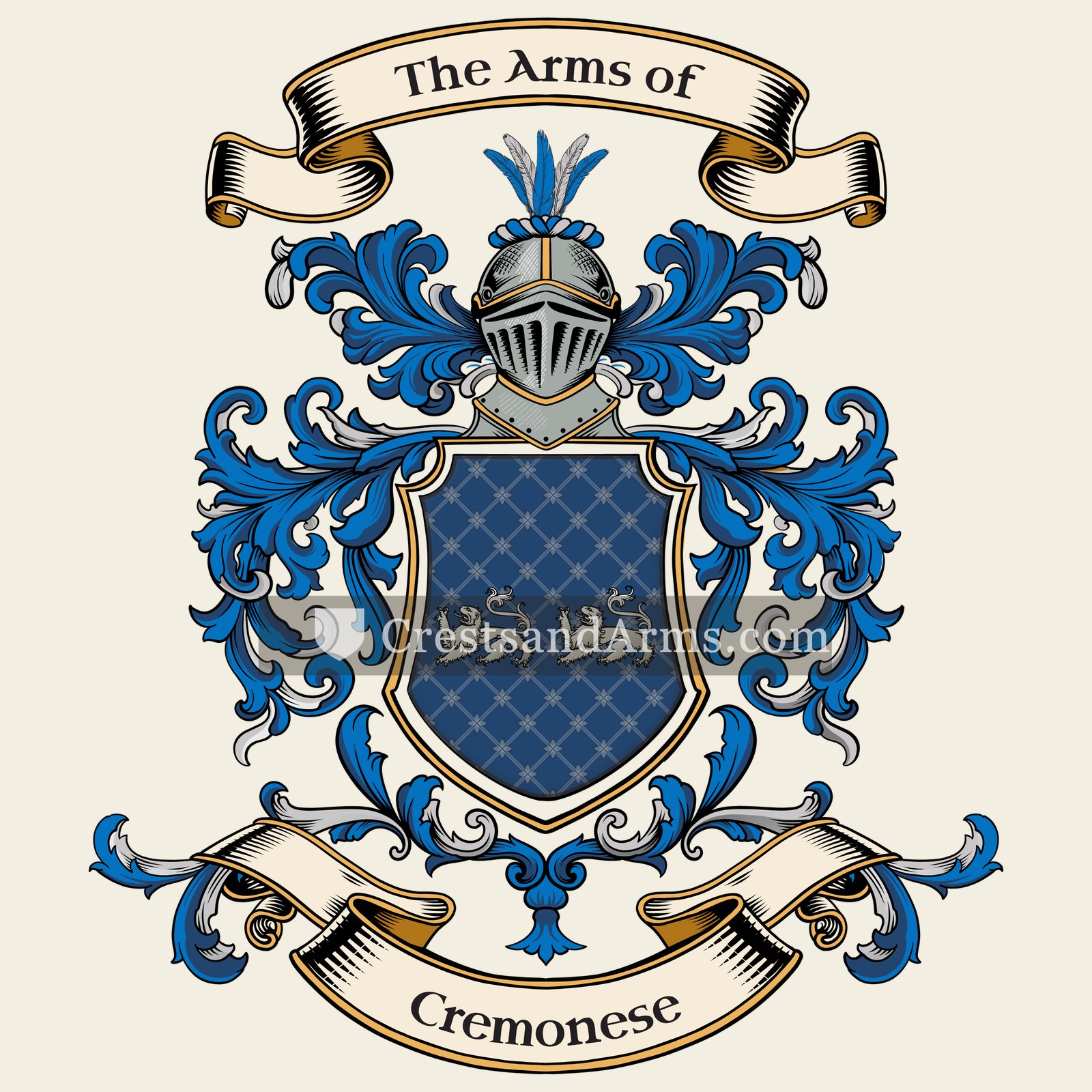
Symbols on this shield
lionCourage, strength and royalty
Colours
Blue (Azure)Means: Loyalty and truth
Silver (Argent)Means: Peace and sincerity
Historical info
Source
J. B. Rietstap, Armorial Général, Gouda: G. B. van Goor Zonen, 1884–87
Blazon (the actual original written record)
“D'azur à deux léopards d'arg., cour. d'or, l'un sur l'autre.”
Spainc. 1722
Digital archive packCoat of arms PNG, gold border print PDF, vector SVG and the certificate of authenticity. Sent to your email in minutes.
Map of Spain showing where the Cremonese arms are recorded
The Cremonese arms were recorded in Spain, c. 1722.
Arms such as these were typically recorded in Castile.
Castile was the heart of Spain and the source of most of its noble families. Land won in the long wars against the Moors was granted out to fighting men, and a man granted land was granted arms along with it.
This is where the arms were entered in the register. Families often moved to other parts of the country, so the same name can turn up in more than one region.
The body that granted and recorded arms in Spain in this period.
Philip V of Spain
Sovereign of the period
Philip V of Spain
1714–1724
Reigning in Italy when the Cremonese arms are first recorded.
How Arms Worked in Spain
In Spain, a coat of arms was considered a form of property that belonged to the entire family line. These arms were passed down from a father to all his children equally. Younger branches of the family usually kept the original design without needing to add any special marks to distinguish their specific line.
Granting authority
The Cronista Rey de Armas was the official body that regulated and granted coats of arms throughout Spain.
How they got arms
Families often obtained their arms through royal grants or by proving their noble status to the official heraldic authority.
Where arms were recorded
Coats of arms were officially recorded in the registers of the Cronista Rey de Armas starting in 1496.
The family's standing
Recorded among the armigerous families of Spain.
Origin & History of the Cremonese Family in Spain
The surname Cremonese traces its roots to the Italian city of Cremona, serving as a geographic identifier for individuals who migrated away from their ancestral home. By the early 18th century, members of this family had established a presence in the Kingdom of Castile, a region that was then a major center of political and administrative power in Spain. Records from 1722 confirm that these settlers were integrated into the local social fabric, likely drawn to the area by the opportunities available in the growing urban centers of the Spanish interior. As they settled into Castilian life, the family name functioned as a bridge between their Italian heritage and their new identity within the Spanish legal and social systems. This transition reflects a broader pattern of movement across Europe during the Enlightenment era, where skilled individuals and families frequently relocated to serve the interests of the burgeoning Spanish monarchy.
Related Branches & Arms
Root word
Cremona
A city in Lombardy, Italy, of ancient Celtic or Ligurian origin.
This name
CremoneseRefers to a person who originated from or lived in the city of Cremona.
also spelled
Cremone
Kremona
Documented Sources
J. B. Rietstap, Armorial Général, Gouda: G. B. van Goor Zonen, 1884–87
De Felice, Emidio. Dizionario dei cognomi italiani. 1978
Fucilla, Joseph G. Our Italian Surnames. 1949
Archivio di Stato di Roma, Stato delle Anime
Digital archive packCoat of arms PNG, gold border print PDF, vector SVG and the certificate of authenticity. Sent to your email in minutes.


 fessThe military belt, and readiness to serve
 chiefAuthority, wisdom and dominion
 treeLife, endurance and deep roots
 eagleNobility, strength and a keen mind
 escutcheonA shield within a shield, and a claim inherited
 fessThe military belt, and readiness to serve
 chiefAuthority, wisdom and dominion
 treeLife, endurance and deep roots
 eagleNobility, strength and a keen mind
 escutcheonA shield within a shield, and a claim inherited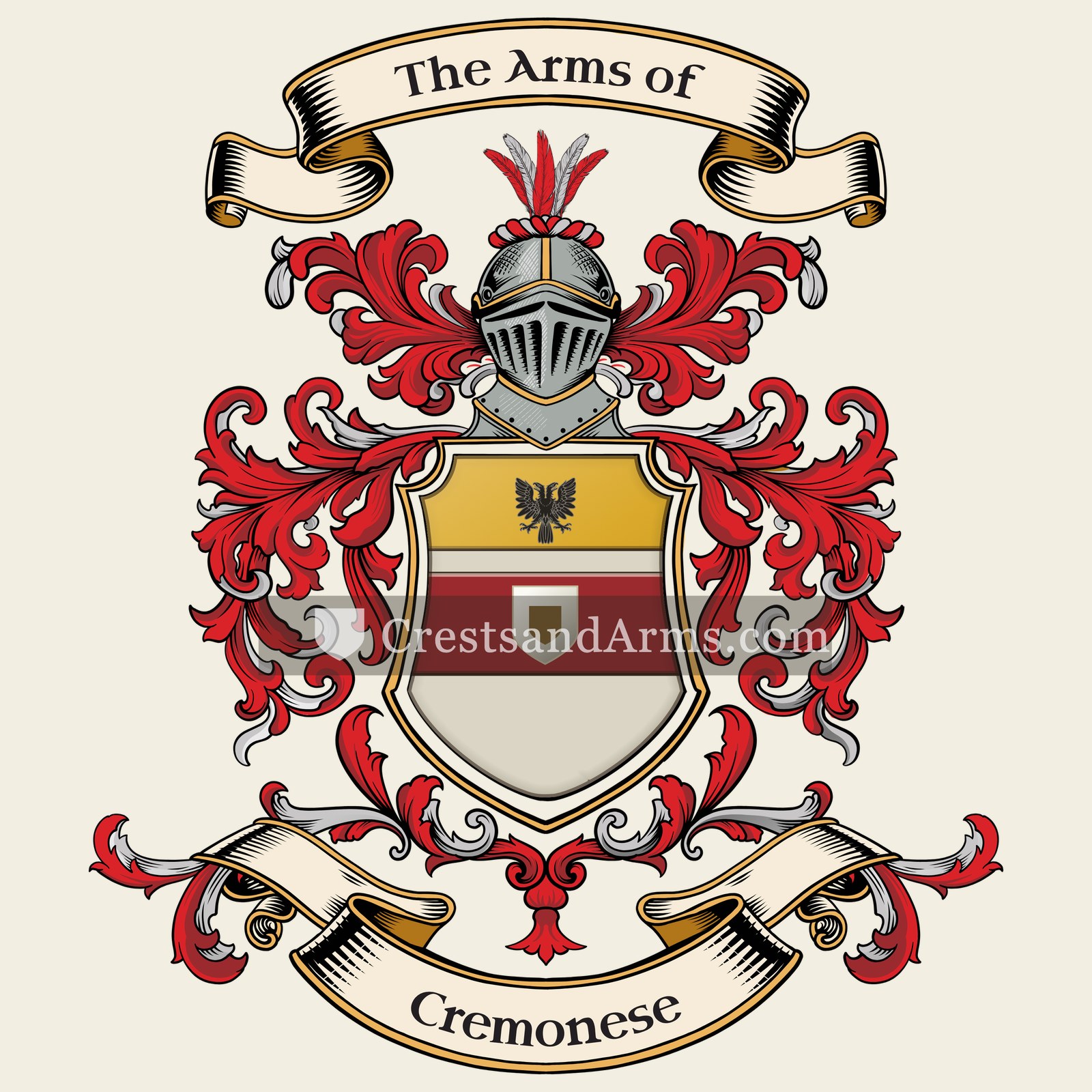


 lionCourage, strength and royalty