A record of documented arms, meaning and origin, researched for the Cribbin family lines. Documented in 2 countries.
Reg. 1286 · German, A–C
Coat of Arms & Family Crest Details
Symbols on this shield
chevronProtection, and faithful service completed
fessThe military belt, and readiness to serve
martletA younger son, who must win his own land
roundelA coin, and one who has been to the crusades
Colours
Silver (Argent)Means: Peace and sincerity
Red (Gules)Means: Military strength
Black (Sable)Means: Constancy
Historical info
Source
J. B. Rietstap, Armorial Général, Gouda: G. B. van Goor Zonen, 1884–87
Blazon (the actual original written record)
“D'arg. au chev. de gu., acc. de trois oiseaux de sa. posés chacun sur une boule du sec.; le tout surm. d'une fasce en divise de gu. L'écu bordé de sa. Cq. cour. C.: un bras, arm. de sa., tenant un grèlier d'or. L. d'arg., de gu. et de sa.”
Germanyc. 1786
Digital archive packCoat of arms PNG, gold border print PDF, vector SVG and the certificate of authenticity. Sent to your email in minutes.
Map of Germany showing where the Cribbin arms are recorded
The Cribbin arms were recorded in Germany, c. 1786.
Arms such as these were typically recorded in Bavaria.
Bavaria was a country of old landed families and walled market towns. Estates passed down the same line for centuries, and both the landowners and the leading townsmen kept arms, which is why so many Bavarian names sit in the registers.
This is where the arms were entered in the register. Families often moved to other parts of the country, so the same name can turn up in more than one region.
The body that granted and recorded arms in Germany in this period.
Joseph II, Holy Roman Emperor
Sovereign of the period
Joseph II, Holy Roman Emperor
1765–1790
Reigning in Germany when the Cribbin arms are first recorded.
How Arms Worked in Germany
In the Holy Roman Empire, coats of arms were often granted to individuals by the Emperor or his representatives. These arms were then passed down through the generations to all legitimate descendants of the original holder. Younger branches of a family usually kept the same shield design without needing to change it, as the arms belonged to the entire lineage.
Granting authority
The Holy Roman Emperor held the sole power to grant new coats of arms throughout his vast imperial territories.
How they got arms
Families typically obtained their coats of arms through a formal imperial grant or by proving their noble status to the authorities.
Where arms were recorded
These grants were officially recorded in the Imperial Chancery registers, which began keeping formal records of such honors during the Middle Ages.
The family's standing
Recorded among the armigerous families of Germany.
Origin & History of the Cribbin Family in Germany
The family name Cribbin carries a distinct history rooted in the southern regions of Germany. By the year 1786, records confirm that members of the family were well-established residents of Bavaria. During this era, Bavaria was a center of agricultural development and local craftsmanship, and families often settled in specific villages to maintain trade connections or work the land. The name likely evolved from regional dialects spoken in the Bavarian countryside, where surnames were often shaped by the specific phonetic patterns of the local population. As these early ancestors lived through the late eighteenth century, they participated in the social and economic shifts that defined the Bavarian Electorate. Their presence in the region suggests a life tied to the traditions and community structures that characterized life in the Holy Roman Empire before the major political changes of the nineteenth century.
Coat of Arms & Family Crest Details
Symbols on this shield
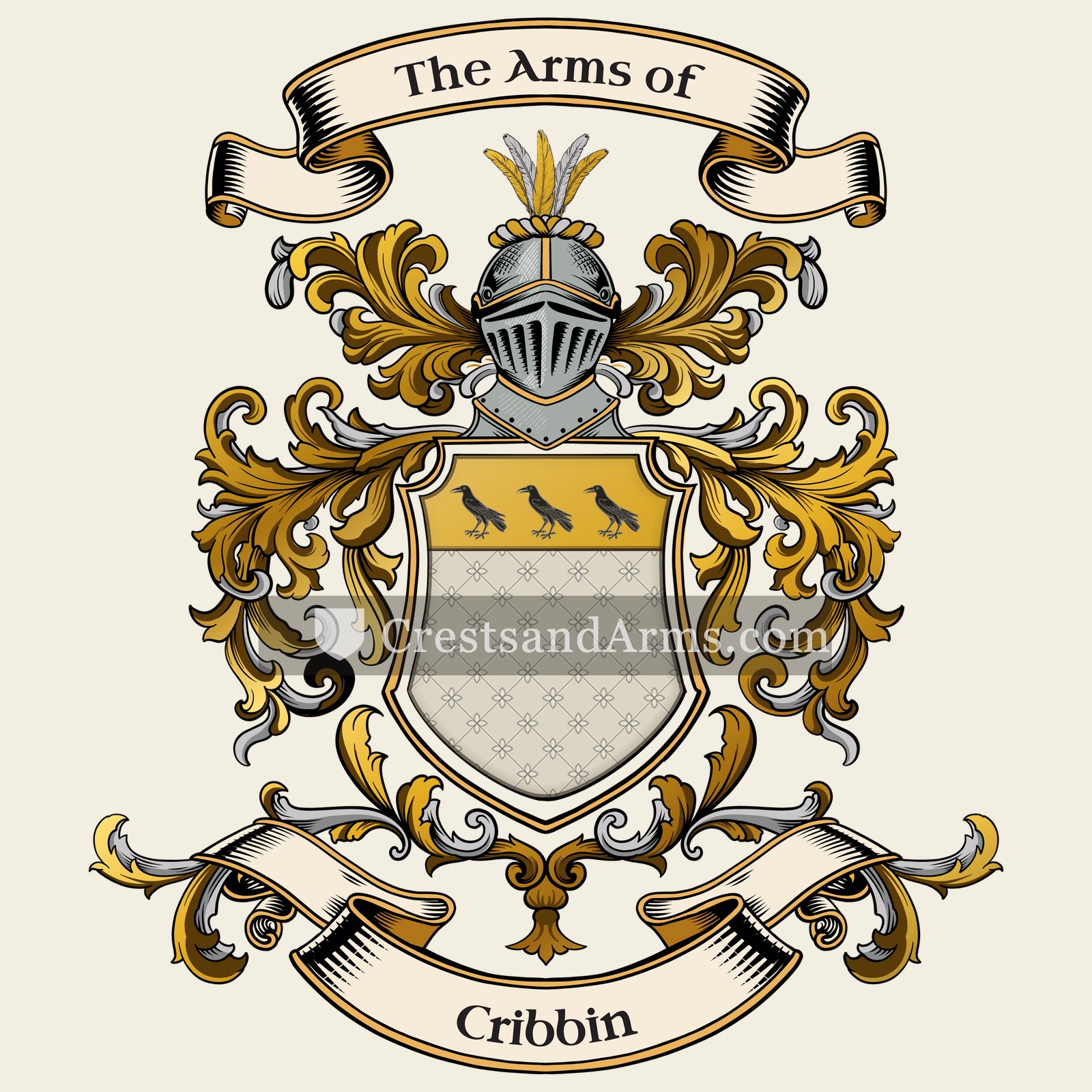
chiefAuthority, wisdom and dominion
ravenConstancy and divine providence
Colours
Silver (Argent)Means: Peace and sincerity
Gold (Or)Means: Generosity
Black (Sable)Means: Constancy
Historical info
Source
Sir Bernard Burke, The General Armory of England, Scotland, Ireland and Wales, London: Harrison & Sons, 1884
Blazon (the actual original written record)
“Ar. on a chief or, three ravens sa. (another) per pale gu. and az. on a chief engr. or, three ravens ppr. each charged on the breast with an erm. spot of the third”
GuernseyGuernsey, c. 1688
Digital archive packCoat of arms PNG, gold border print PDF, vector SVG and the certificate of authenticity. Sent to your email in minutes.
The body that granted and recorded arms in Guernsey in this period.
James II of England
Sovereign of the period
James II of England
1685–1688
Reigning in Germany when the Cribbin arms are first recorded.
How Arms Worked in Guernsey
Arms in the Channel Islands were granted and recorded by the College of Arms in London, under the same law of arms as England. They could be used by all legitimate descendants of the original owner: the eldest son kept the original design, and other family members used the same shield without registering a version of their own.
Granting authority
The College of Arms in London has regulated the use of coats of arms for Guernsey and the other Channel Islands since 1484.
How they got arms
Families typically obtained their coats of arms through a formal grant from the Crown or by proving their ancient right to them.
Where arms were recorded
All official coats of arms are recorded in the registers kept at the College of Arms, which date back to the fifteenth century.
The family's standing
Recorded among the armigerous families of Guernsey.
Origin & History of the Cribbin Family in Guernsey
The Cribbin family name has a distinct presence in the history of Guernsey, with documented roots tracing back to at least 1688. During this period, the island was a unique cultural crossroads where French and English influences blended together. Families like the Cribbins often integrated into the tight-knit maritime community, where they likely contributed to the local economy through trade, fishing, or agriculture. Because Guernsey operated under its own legal customs and traditions, the name became firmly embedded in the island’s parish records. These early members of the family lived through a time of significant transition for the Channel Islands, as they navigated the complexities of island life while maintaining their own identity. By establishing themselves in the late 17th century, the Cribbins became part of the enduring social fabric that defines the history of the island today.
Related Branches & Arms
Root word
Krippen
Derived from the Middle High German word for a manger or crib.
This name
CribbinAn occupational or topographic name for someone who lived near or made mangers for livestock.
also spelled
Corbyn
Korban
Corben
Documented Sources
J. B. Rietstap, Armorial Général, Gouda: G. B. van Goor Zonen, 1884–87


 chevronProtection, and faithful service completed
 fessThe military belt, and readiness to serve
 martletA younger son, who must win his own land
 roundelA coin, and one who has been to the crusades
 chevronProtection, and faithful service completed
 fessThe military belt, and readiness to serve
 martletA younger son, who must win his own land
 roundelA coin, and one who has been to the crusades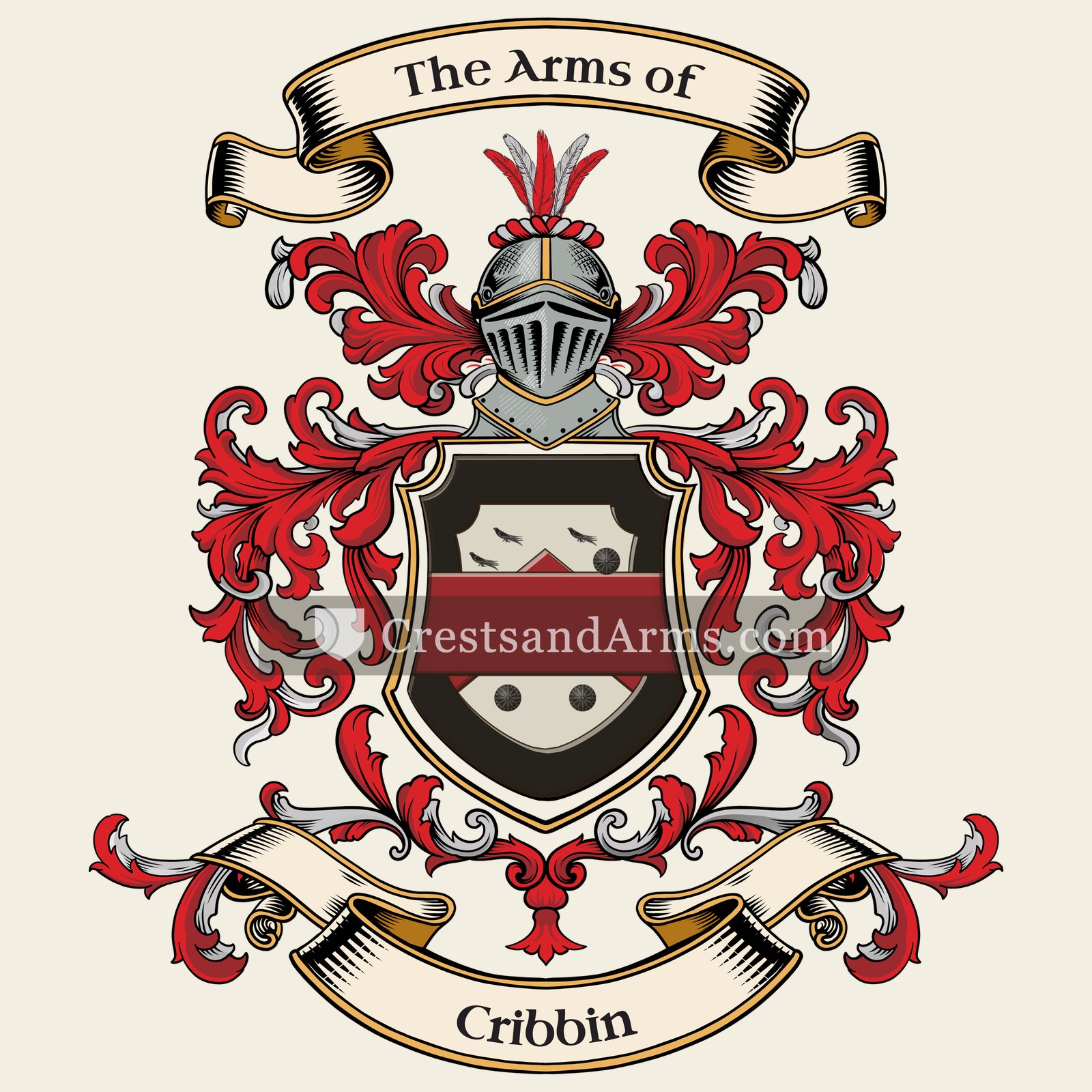


 chiefAuthority, wisdom and dominion
 ravenConstancy and divine providence