A record of documented arms, meaning and origin, researched for the Croix family lines. Documented in 3 countries.
Reg. 8775 · French, A–C
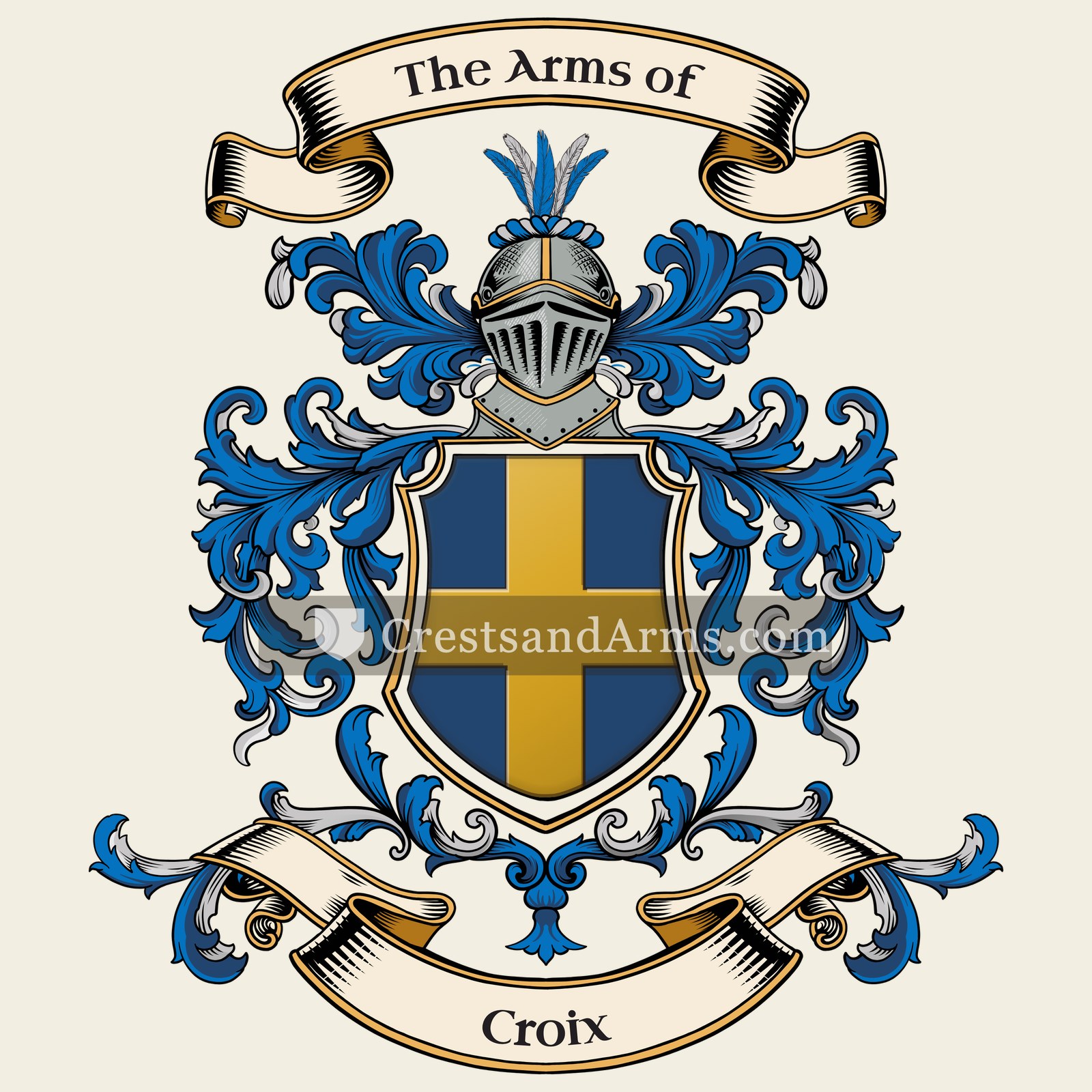
Coat of Arms & Family Crest Details
Symbols on this shield
cross symbolChristian faith and service
Colours
Blue (Azure)Means: Loyalty and truth
Gold (Or)Means: Generosity
Historical info
Source
J. B. Rietstap, Armorial Général, Gouda: G. B. van Goor Zonen, 1884–87
Blazon (the actual original written record)
“D'azur à la croix d'or. S.: deux licornes. D.: FIDÈLE À SON ROI ET À L'HONNEUR.”
Francec. 1495
Where the Croix Arms Were Recorded
Bretagne
Map of France showing where the Croix arms are recorded
The Croix arms were recorded in France, c. 1495.
Arms such as these were typically recorded in Bretagne.
More families held coats of arms in Bretagne than anywhere else in France. The land was divided into many small estates rather than a few large ones, so far more households counted as gentry, and each needed a shield of its own to be told apart.
This is where the arms were entered in the register. Families often moved to other parts of the country, so the same name can turn up in more than one region.
The body that granted and recorded arms in France in this period.
Charles VIII of France
Sovereign of the period
Charles VIII of France
1483–1498
Reigning in France when the Croix arms are first recorded.
How Arms Worked in France
In France, a coat of arms was a mark of honor that passed down through the male line to all legitimate descendants. Families often used the same shield without changes to show their shared heritage. If a branch wanted to stand out, they could add a small mark to their shield to show their specific place in the family tree.
Granting authority
The Juge d'armes de France acted as the official authority that regulated and verified coats of arms across the country.
How they got arms
Families typically inherited their arms from ancestors, though they could also receive them through royal grants or by proving their noble status.
Where arms were recorded
Coats of arms were officially recorded in the Armorial Général de France, which began its main collection in the year 1696.
The family's standing
Recorded among the armigerous families of France.
Origin & History of the Croix Family in France
The family name Croix finds its roots in the linguistic landscape of medieval France, where it originated as a topographic surname for people living near a prominent cross or a crossroads. By the late fifteenth century, the family established a clear presence in the region of Bretagne. Records confirm that members of the family were active in this area by 1495, a time when the duchy was undergoing significant political shifts as it moved toward a permanent union with the French crown. During this period, the family likely participated in the local social structures of the Breton countryside, where surnames were becoming increasingly fixed to distinguish between growing populations. As the name spread from these early settlements, it mirrored the broader patterns of migration and land ownership that defined the lives of provincial families in pre-revolutionary France.
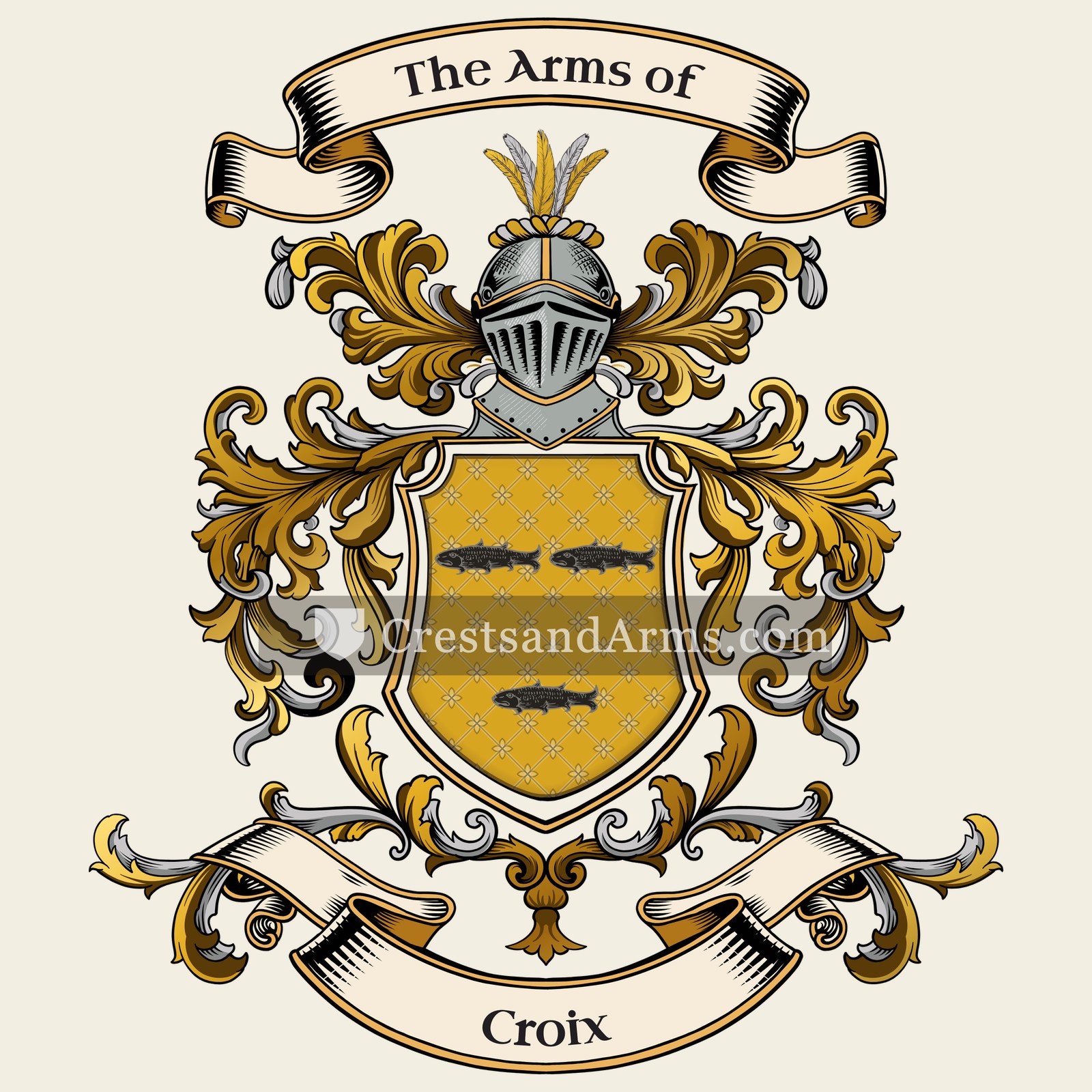
Coat of Arms & Family Crest Details
Symbols on this shield
paleMilitary strength, and a fortified defence
fishA true and generous mind, and Christian faith
Colours
Gold (Or)Means: Generosity
Black (Sable)Means: Constancy
Historical info
Source
J. B. Rietstap, Armorial Général, Gouda: G. B. van Goor Zonen, 1884–87
Blazon (the actual original written record)
“D'or à trois poissons de sa., posés en pals, rangés en fasce.”
HainautHainaut, c. 1737
Where the Croix Arms Were Recorded
Hainaut
Map of Belgium showing where the Croix arms are recorded
The Croix arms were recorded in Hainaut, c. 1737.
Hainaut sat on the border between France and the Low Countries and was fought over for centuries. Families there held their land under arms and expected to defend it, so a shield was a working thing.
This is where the arms were entered in the register. Families often moved to other parts of the country, so the same name can turn up in more than one region.
The body that granted and recorded arms in Belgium in this period.
Charles VI, Holy Roman Emperor
Sovereign of the period
Charles VI, Holy Roman Emperor
1711–1740
Reigning in France when the Croix arms are first recorded.
How Arms Worked in Belgium
In Belgium, a coat of arms is considered personal property that is passed down through the male line to legitimate descendants. Families often use the same shield design across generations to show their shared heritage. If a branch of the family wants to change the design, they must apply for an official update to their specific version of the arms.
Granting authority
The Conseil héraldique is the official body that regulates and approves all coats of arms in Belgium.
How they got arms
Families obtain their coats of arms through formal royal grants or by confirming their historical right to use existing designs.
Where arms were recorded
All approved coats of arms are officially recorded in the public registers of the Conseil héraldique since 1844.
The family's standing
Recorded among the armigerous families of Hainaut.
Origin & History of the Croix Family in Belgium
The family name Croix has deep roots in the historical region of Hainaut, which is located in what is now modern-day Belgium. By the year 1737, records confirm that members of this family were already established as active participants in the local community. During this period, Hainaut was a landscape defined by shifting borders and agricultural traditions, where families often identified closely with their specific parish or village. The name itself is derived from the French word for cross, which suggests that the earliest ancestors may have lived near a prominent roadside cross or a local religious landmark. As the family grew, they integrated into the social and economic fabric of the region, likely working as skilled tradespeople or landowners who helped shape the rural development of the area. Their presence in 1737 serves as a clear marker of a lineage that had already taken hold in the Belgian provinces long before the industrial changes of the following century.
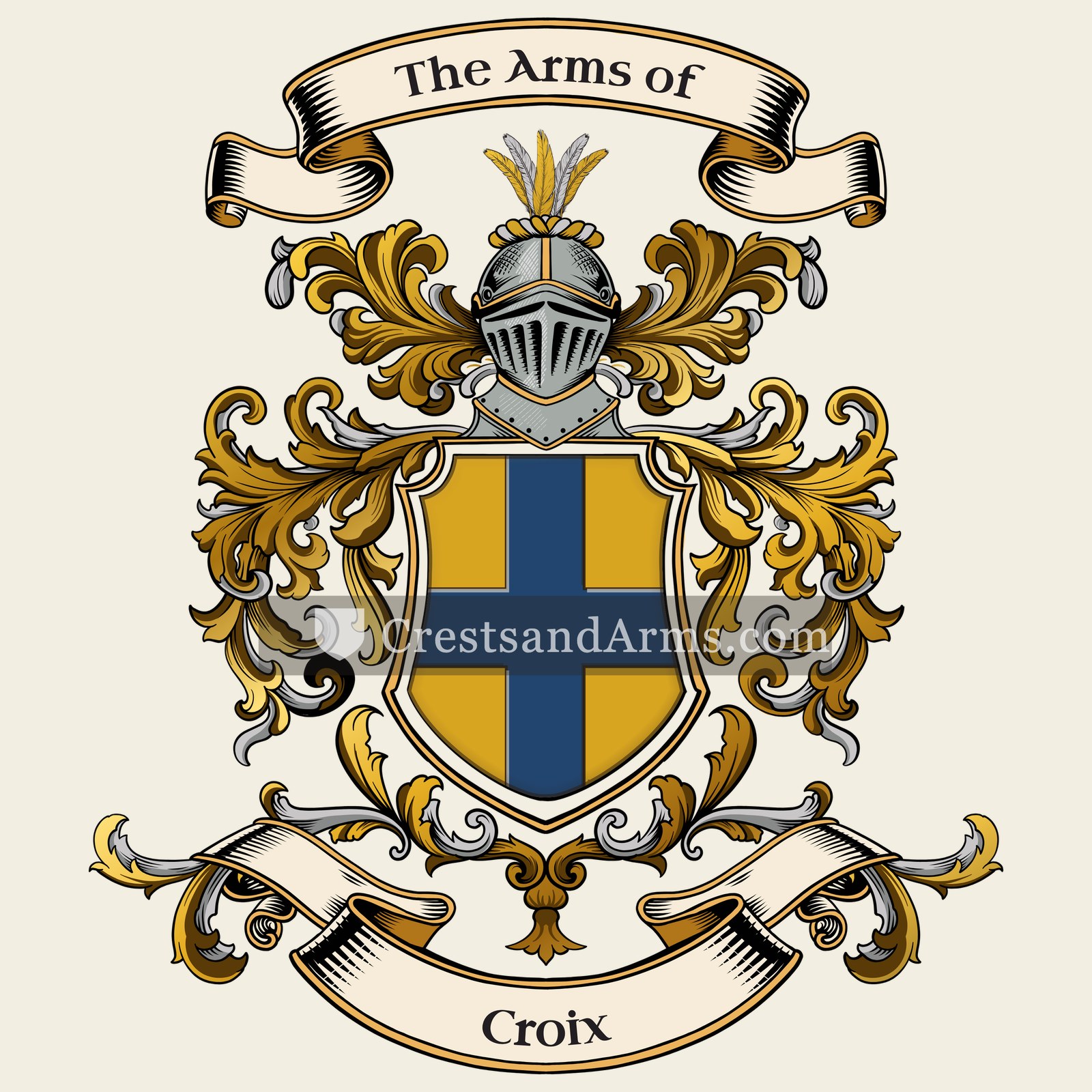
Coat of Arms & Family Crest Details
Symbols on this shield
cross symbolChristian faith and service
Colours
Gold (Or)Means: Generosity
Red (Gules)Means: Military strength
Blue (Azure)Means: Loyalty and truth
Historical info
Source
J. B. Rietstap, Armorial Général, Gouda: G. B. van Goor Zonen, 1884–87
Blazon (the actual original written record)
“Parti d'or et de gu.; à la croix d'azur, br. sur le tout.”
SwitzerlandGenève, c. 1745
Where the Croix Arms Were Recorded
Genève
Map of Switzerland showing where the Croix arms are recorded
The Croix arms were recorded in Genève, c. 1745.
This is where the arms were entered in the register. Families often moved to other parts of the country, so the same name can turn up in more than one region.
The body that granted and recorded arms in Switzerland in this period.
How Arms Worked in Switzerland
In Switzerland, coats of arms were not restricted to the nobility and were often adopted by common citizens and families. These symbols were passed down through generations to show family identity. When branches of a family grew, they often changed small details of the design to distinguish their own line from the original group.
Granting authority
Cantonal and civic authorities managed the use of coats of arms within their specific regions and local jurisdictions.
How they got arms
Families typically assumed their own coats of arms based on local custom rather than receiving them from a central monarch.
Where arms were recorded
Arms were recorded in various cantonal and civic registers starting from the fourteenth century throughout the Swiss region.
The family's standing
Recorded among the armigerous families of Switzerland.
Origin & History of the Croix Family in Switzerland
The history of the Croix family in Switzerland is deeply tied to the intellectual and social landscape of Geneva during the eighteenth century. By 1745, records confirm that members of the family were established residents within the city, a period when Geneva served as a major crossroads for European trade and Enlightenment philosophy. The name itself reflects the strong influence of French linguistic traditions in the region, as many families during this era adopted surnames that denoted geographic markers or religious devotion. As the family integrated into Genevan society, they likely participated in the city’s thriving watchmaking and banking industries, which were the primary drivers of the local economy at the time. Their presence in the city archives suggests they were part of the growing middle class that helped shape the civic identity of Geneva before the political upheavals of the late 1700s. Through their daily work and community involvement, the early Croix family helped build the foundation for their long-standing connection to this historic Swiss canton.
Related Branches & Arms
Root word
Crux
A Latin term referring to a wooden frame or cross.
This name
CroixA topographic name for someone who lived near a roadside cross or a church.
also spelled
Kroix
Kroa
Related arms
Göttlingrecorded with Croix, same area
Guerikerecorded with Croix, same area
Documented Sources
J. B. Rietstap, Armorial Général, Gouda: G. B. van Goor Zonen, 1884–87
Dauzat, Albert. Dictionnaire étymologique des noms et prénoms de France. 1951
Morice, Pierre-Hyacinthe. Mémoires pour servir de preuves à l'histoire ecclésiastique et civile de Bretagne. 1742
Archives départementales d'Ille-et-Vilaine, Fonds de la série E (Familles et seigneuries)
Digital archive packCoat of arms PNG, gold border print PDF, vector SVG and the certificate of authenticity. Sent to your email in minutes.


 cross symbolChristian faith and service
 cross symbolChristian faith and service

 paleMilitary strength, and a fortified defence
 fishA true and generous mind, and Christian faith