Map of Italy showing where the Crona arms are recorded
The Crona arms were recorded in Trévise, c. 1775.
This is where the arms were entered in the register. Families often moved to other parts of the country, so the same name can turn up in more than one region.
The body that granted and recorded arms in Italy in this period.
Alvise Giovanni Mocenigo
Sovereign of the period
Alvise Giovanni Mocenigo
1763–1778
Reigning in Italy when the Crona arms are first recorded.
How Arms Worked in Italy
In the Italian states, coats of arms were often used by noble families to show their status and history. These symbols were passed down through the generations to all legitimate male descendants. Younger branches of a family usually kept the original design but sometimes added small changes to distinguish their specific line from the main branch.
Granting authority
Various local rulers and city governments controlled the use of coats of arms across the different Italian states.
How they got arms
Families often assumed their own arms or received them as official grants from local lords, popes, or city councils.
Where arms were recorded
Arms were recorded in local city archives or private family books rather than in one single national register.
The family's standing
Recorded among the armigerous families of Italy.
Origin & History of the Crona Family in Italy
The family name Crona has deep roots in the northern Italian region of Veneto, specifically within the historic city of Treviso. By the year 1775, records confirm that members of the family were established residents of this area, which was then a prosperous hub under the influence of the Republic of Venice. The name itself is thought to be linked to the Italian word *corona*, which refers to a crown or a wreath, suggesting that the earliest ancestors may have been associated with local craftsmanship or held a specific position of respect within their community. During the late 18th century, families in Treviso often played active roles in the local agricultural and mercantile trade, benefiting from the city’s strategic location along the Sile River. As the family grew, they became part of the social fabric of the region, contributing to the local culture and economy that defined this period of Italian history.
Meaning of the Crona family crest colors & symbols
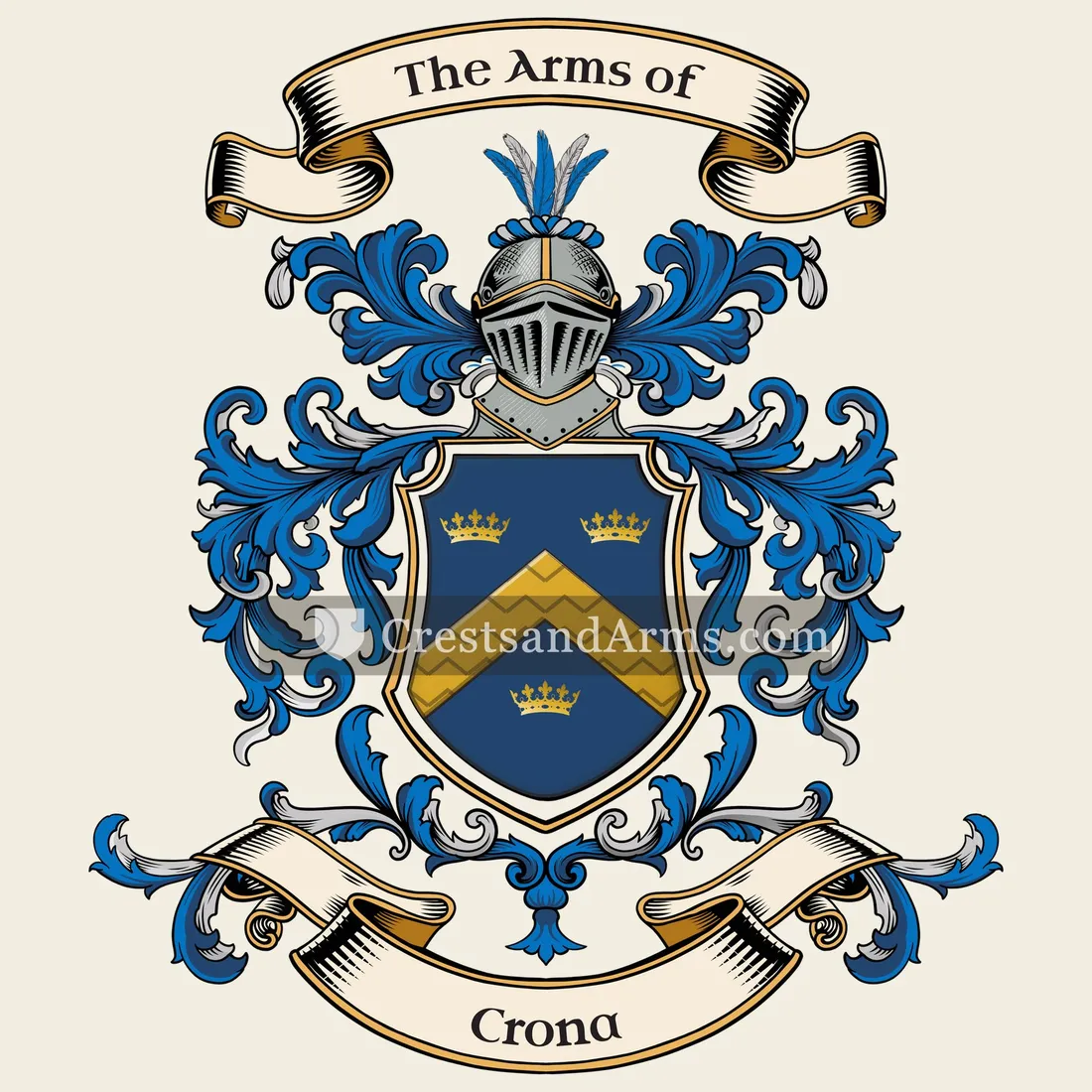
Symbols on this shield
chevronProtection, and faithful service completed
crownSovereignty, authority and just reward
Colours
Blue (Azure)Means: Loyalty and truth
Gold (Or)Means: Generosity
Historical info
Source
Sir Bernard Burke, The General Armory of England, Scotland, Ireland and Wales, London: Harrison & Sons, 1884
Blazon (the actual original written record)
“Az. a chev. betw. three ducal coronets or”
ChesterAdlington · Chester, c. 1620
Digital archive packCoat of arms PNG, gold border print PDF, vector SVG and the certificate of authenticity. Sent to your email in minutes.
Map of England showing where the Crona arms are recorded
The Crona arms were recorded in Chester, c. 1620.
Cheshire was governed apart from the rest of England for much of its history, with its own courts and its own gentry. That separateness bred a strong local landed class, and landed families carried arms.
This is where the arms were entered in the register. Families often moved to other parts of the country, so the same name can turn up in more than one region.
The body that granted and recorded arms in England in this period.
James VI and I
Sovereign of the period
James VI and I
1603–1625
Reigning in Italy when the Crona arms are first recorded.
How Arms Worked in England
English heraldry allowed arms to be shared by all legitimate descendants of the original owner. These symbols were treated as personal property that moved through the generations to all children. While the eldest son kept the original design, other family members could use the same shield without needing to change it or register their own unique versions.
Granting authority
The College of Arms in London has regulated the use of coats of arms throughout England and Wales since 1484.
How they got arms
Families typically obtained their coats of arms through a formal grant from the Crown or by proving their ancient right to them.
Where arms were recorded
All official coats of arms are recorded in the registers kept at the College of Arms, which date back to the fifteenth century.
The family's standing
Recorded among the armigerous families of Chester.
Origin & History of the Crona Family in England
The history of the Crona name in England is deeply tied to the city of Chester, where records confirm family members were established by the year 1620. During the early seventeenth century, Chester served as a vital hub for trade and migration, acting as a gateway between England and Ireland. Families living in this region often occupied roles in local commerce or skilled trades, benefiting from the city’s status as a major port. The name likely evolved from regional dialects or linguistic shifts common in the Northwest of England during this period. By settling in a prominent administrative center like Chester, the early Crona family became part of a vibrant urban community that was experiencing significant social and economic change. Their presence in the city archives suggests they were integrated into the local life of the region during a time of great historical transition.
Crona Meaning & Related Branches
Root word
Corona
Latin term for a crown or a circular garland.
This name
CronaRefers to a person who lived near a crown-shaped landmark or served as a crown-bearer.
also spelled
Coron
Coronah
Coronna
Corone
Documented Sources
J. B. Rietstap, Armorial Général, Gouda: G. B. van Goor Zonen, 1884–87
Archivio di Stato di Treviso, Stato delle anime della parrocchia di San Leonardo, 1775
Cenni, G., Storia di Treviso e della sua provincia, 1858
Comune di Treviso, Archivio storico comunale: Registri dei battesimi e matrimoni, 1770-1780
Digital archive packCoat of arms PNG, gold border print PDF, vector SVG and the certificate of authenticity. Sent to your email in minutes.


 crownSovereignty, authority and just reward
 crownSovereignty, authority and just reward
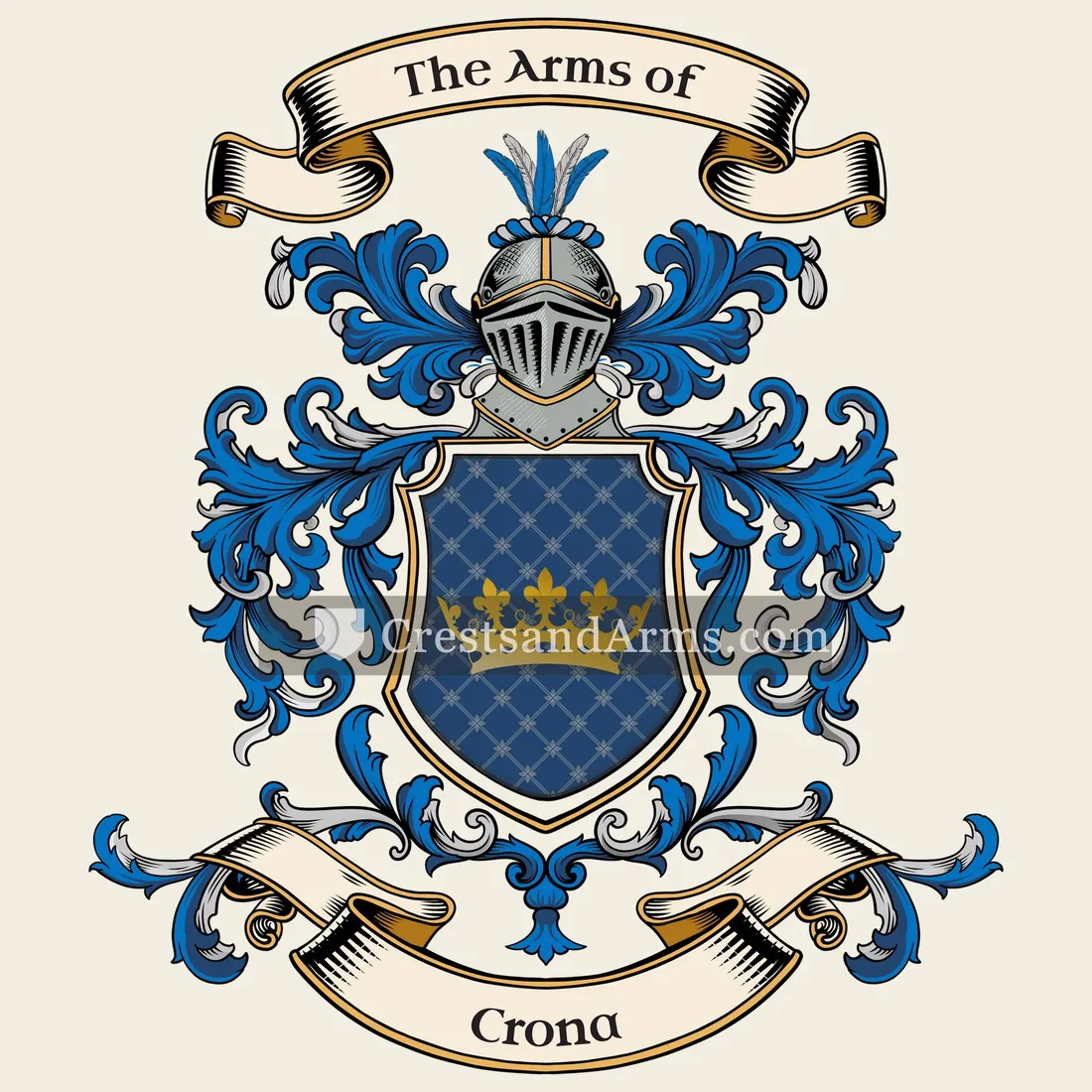


 chevronProtection, and faithful service completed