Map of France showing where the Culpepper arms are recorded
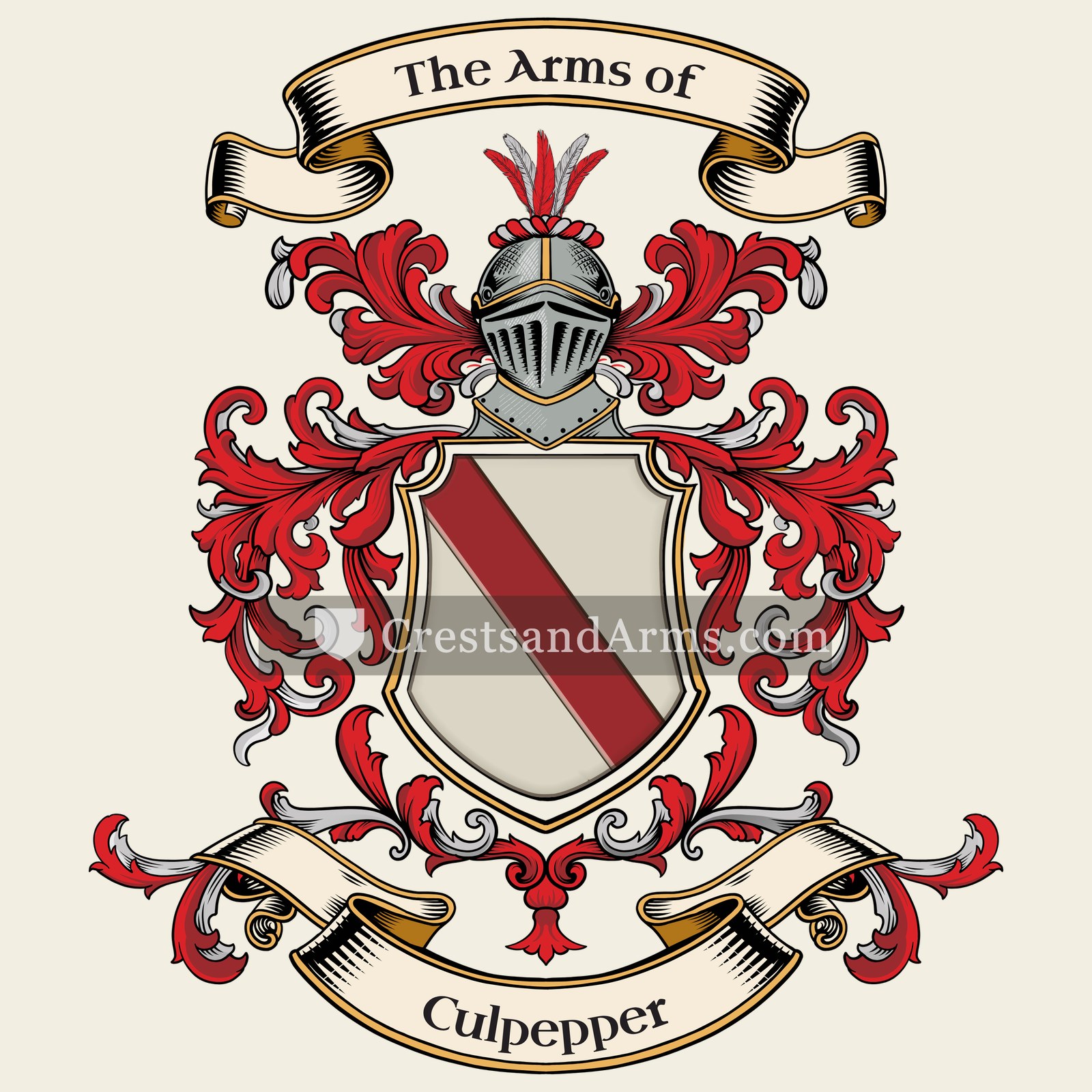
The Culpepper arms were recorded in France, c. 1725.
Arms such as these were typically recorded in Bretagne.
More families held coats of arms in Bretagne than anywhere else in France. The land was divided into many small estates rather than a few large ones, so far more households counted as gentry, and each needed a shield of its own to be told apart.
This is where the arms were entered in the register. Families often moved to other parts of the country, so the same name can turn up in more than one region.
The body that granted and recorded arms in France in this period.
Louis XV of France
Sovereign of the period
Louis XV of France
1715–1774
Reigning in France when the Culpepper arms are first recorded.
How Arms Worked in France
In France, a coat of arms was a mark of honor that passed down through the male line to all legitimate descendants. Families often used the same shield without changes to show their shared heritage. If a branch wanted to stand out, they could add a small mark to their shield to show their specific place in the family tree.
Granting authority
The Juge d'armes de France acted as the official authority that regulated and verified coats of arms across the country.
How they got arms
Families typically inherited their arms from ancestors, though they could also receive them through royal grants or by proving their noble status.
Where arms were recorded
Coats of arms were officially recorded in the Armorial Général de France, which began its main collection in the year 1696.
The family's standing
Recorded among the armigerous families of France.
Origin & History of the Culpepper Family in France
The history of the Culpepper name in France is deeply tied to the coastal region of Bretagne, where records confirm the family’s presence by the early eighteenth century. While the name is often associated with English roots, its appearance in French parish registers suggests a period of migration or cross-channel movement during a time of significant social change. Families in this region during the 1700s were frequently involved in maritime trade or local agriculture, which likely influenced how the name was recorded by local clerks. Because the spelling of surnames was not standardized at the time, the name often appeared in various forms as it was adapted to the phonetic patterns of the Breton language. This transition into the French administrative system highlights the family’s ability to integrate into new communities while maintaining their distinct identity across generations.
Coat of Arms & Family Crest Details
Symbols on this shield
bendDefence, and the scarf of a commander
Colours
Silver (Argent)Means: Peace and sincerity
Red (Gules)Means: Military strength
Historical info
Source
Sir Bernard Burke, The General Armory of England, Scotland, Ireland and Wales, London: Harrison & Sons, 1884
Blazon (the actual original written record)
“Ar. a bend engr. gu”
KentPreston Hall · Kent, c. 1627
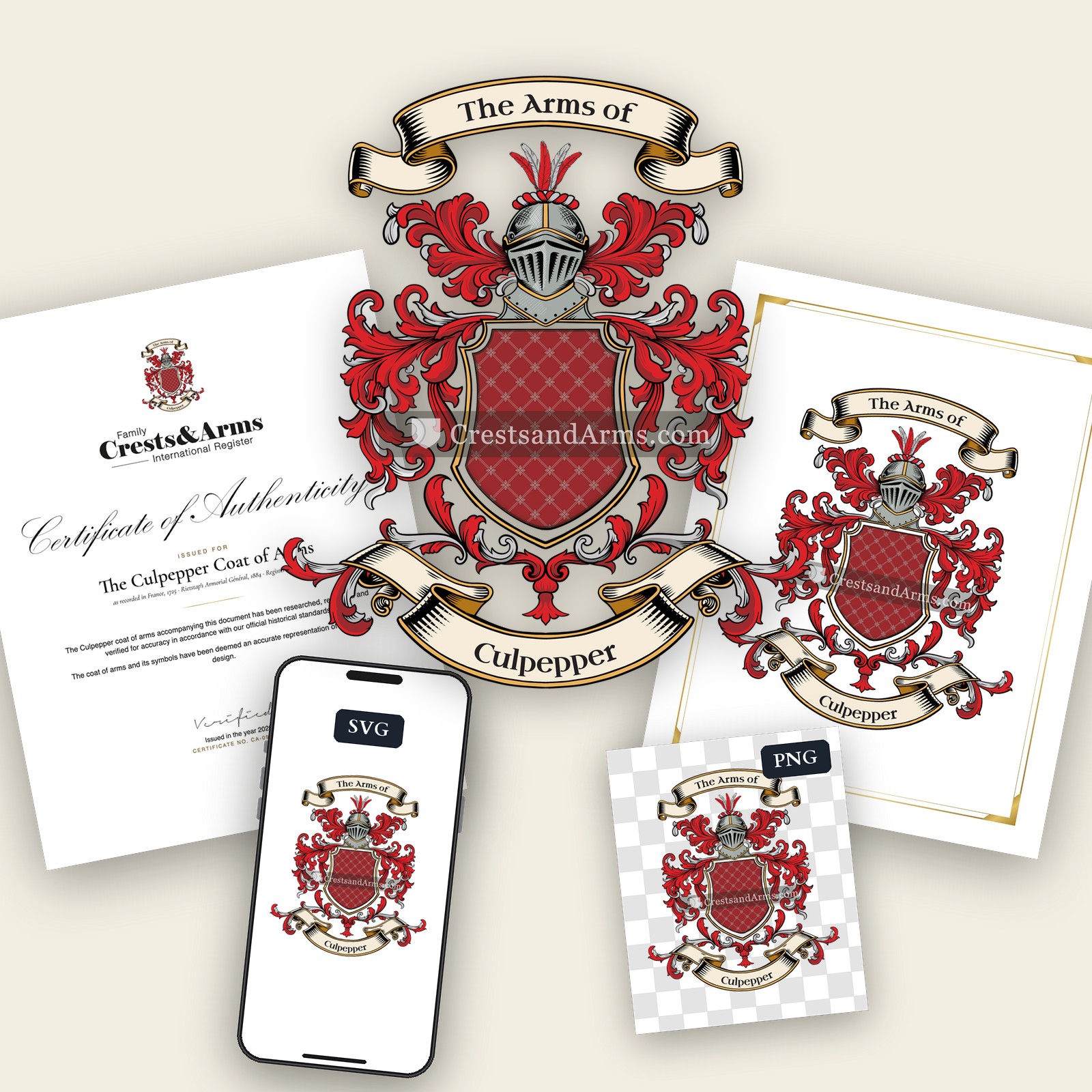
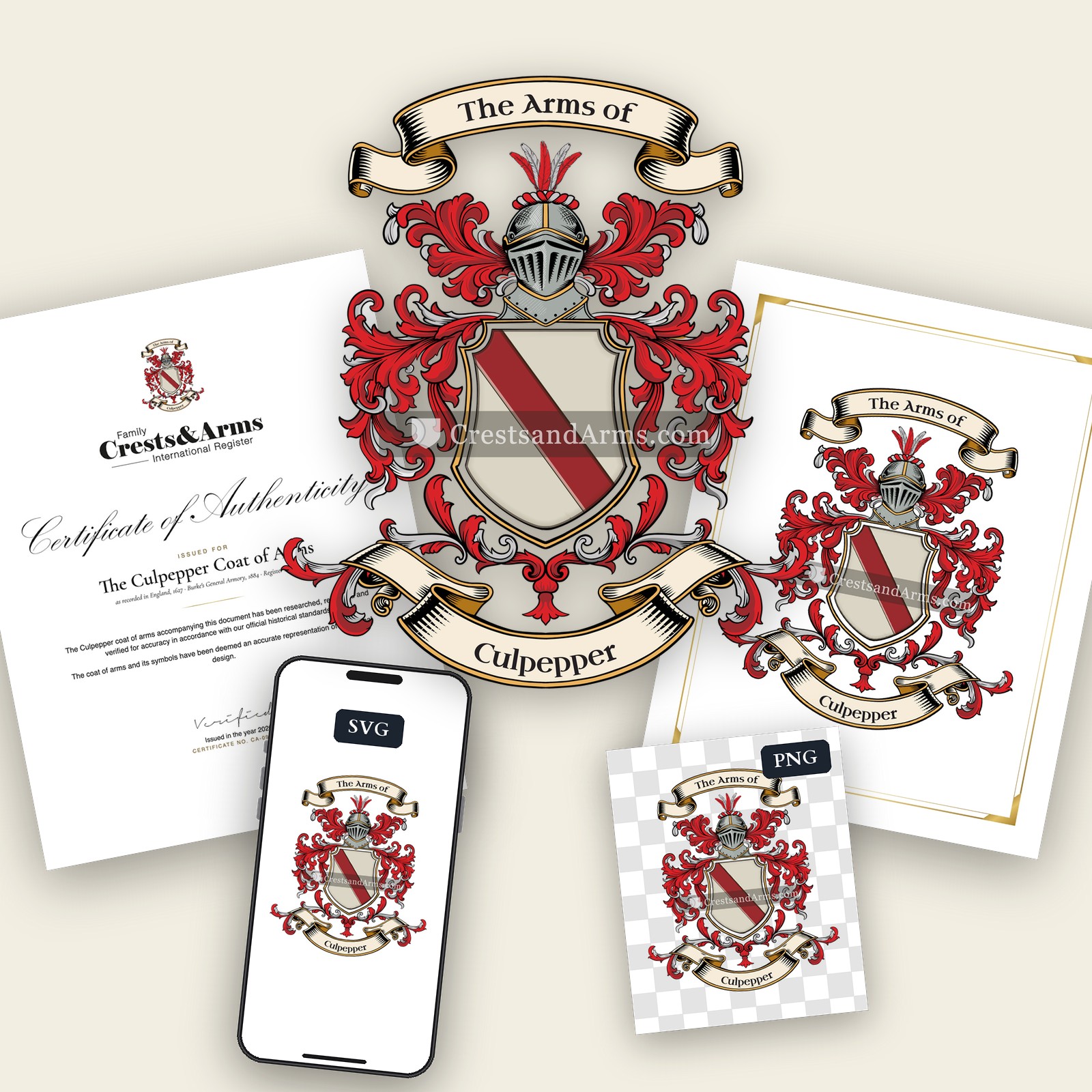
Digital archive packCoat of arms PNG, gold border print PDF, vector SVG and the certificate of authenticity. Sent to your email in minutes.
Map of England showing where the Culpepper arms are recorded
The Culpepper arms were recorded in Kent, c. 1627.
Kent sits between London and the short crossing to Europe, and the trade passing through made it wealthy. Merchant families bought land with that money, and it was landowners who took coats of arms.
This is where the arms were entered in the register. Families often moved to other parts of the country, so the same name can turn up in more than one region.
The body that granted and recorded arms in England in this period.
Charles I of England
Sovereign of the period
Charles I of England
1625–1649
Reigning in France when the Culpepper arms are first recorded.
How Arms Worked in England
English heraldry allowed arms to be shared by all legitimate descendants of the original owner. These symbols were treated as personal property that moved through the generations to all children. While the eldest son kept the original design, other family members could use the same shield without needing to change it or register their own unique versions.
Granting authority
The College of Arms in London has regulated the use of coats of arms throughout England and Wales since 1484.
How they got arms
Families typically obtained their coats of arms through a formal grant from the Crown or by proving their ancient right to them.
Where arms were recorded
All official coats of arms are recorded in the registers kept at the College of Arms, which date back to the fifteenth century.
The family's standing
Recorded among the armigerous families of Kent.
Origin & History of the Culpepper Family in England
The Culpepper family name is deeply rooted in the landscape of Kent, England, where the family established themselves as prominent landowners long before the seventeenth century. The name is topographical in origin, likely derived from a combination of words relating to a specific location or a place where pepper was once traded or grown. By the time the family appeared in official records during the early 1600s, they had already built a reputation as influential figures within the local gentry. They were deeply involved in the social and political life of the region, often serving in roles that required them to manage large estates and represent the interests of their community. Their presence in Kent by 1627 reflects a long history of stability and regional authority that allowed the family to thrive during a time of significant transition in English history.
Culpepper Meaning & Related Branches
Root word
culpeper
derived from the latin culcita meaning cushion or pillow
This name
Culpeppera topographic name for someone living near a patch of wild pepper plants
also spelled
Culpepper
Kulpeper
Related arms
Colepepervariant spelling
Colepeppervariant spelling
Colpeppervariant spelling
Documented Sources
J. B. Rietstap, Armorial Général, Gouda: G. B. van Goor Zonen, 1884–87
Archives départementales du Finistère, Registres paroissiaux et d'état civil, 1725
Archives départementales du Morbihan, Série E: État civil et registres paroissiaux, 1725
Deshayes, Albert, Dictionnaire des noms de famille bretons, 1995
Digital archive packCoat of arms PNG, gold border print PDF, vector SVG and the certificate of authenticity. Sent to your email in minutes.


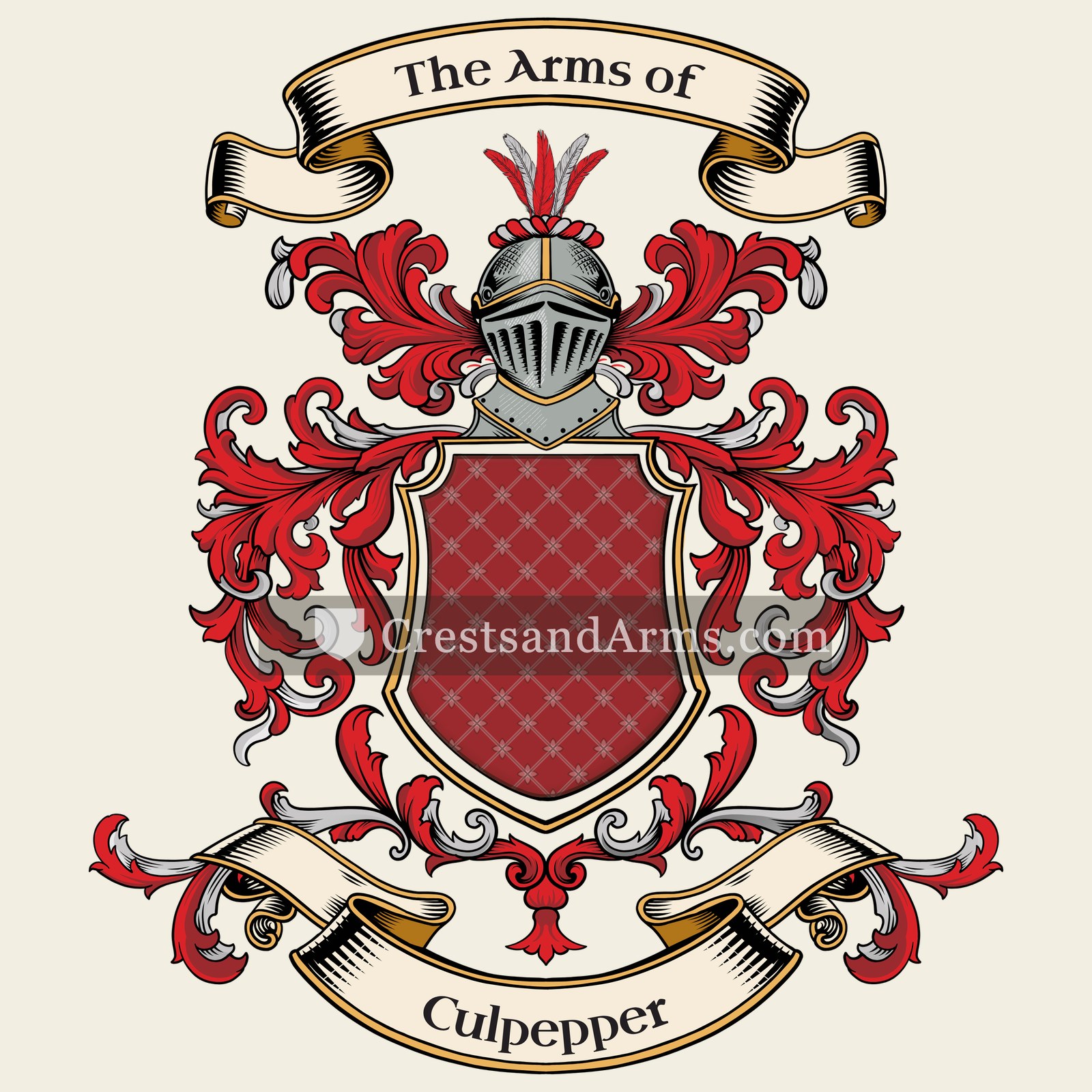


 bendDefence, and the scarf of a commander