Map of England showing where the Cuthbert arms are recorded
The Cuthbert arms were recorded in Essex, c. 1620.
Essex lay close enough to London for City money to buy land there. Merchants who prospered moved out to estates within a day's ride, and a new landowner almost always wanted arms to go with the ground.
This is where the arms were entered in the register. Families often moved to other parts of the country, so the same name can turn up in more than one region.
The body that granted and recorded arms in England in this period.
James VI and I
Sovereign of the period
James VI and I
1603–1625
Reigning in England when the Cuthbert arms are first recorded.
How Arms Worked in England
English heraldry allowed arms to be shared by all legitimate descendants of the original owner. These symbols were treated as personal property that moved through the generations to all children. While the eldest son kept the original design, other family members could use the same shield without needing to change it or register their own unique versions.
Granting authority
The College of Arms in London has regulated the use of coats of arms throughout England and Wales since 1484.
How they got arms
Families typically obtained their coats of arms through a formal grant from the Crown or by proving their ancient right to them.
Where arms were recorded
All official coats of arms are recorded in the registers kept at the College of Arms, which date back to the fifteenth century.
The family's standing
Recorded among the armigerous families of Essex.
Origin & History of the Cuthbert Family in England
The surname Cuthbert originates from the Old English name Cuthberht, which combines the words for "famous" and "bright." While the name was famously associated with Saint Cuthbert of Lindisfarne in the seventh century, it eventually evolved into a hereditary family name used by common people across Northern England. By the early 17th century, members of the family had moved southward, establishing a notable presence in Essex by 1620. During this period, the family likely worked as farmers or tradespeople, contributing to the local economy as England began to expand its reach across the Atlantic. These early settlers in Essex were part of a broader movement of families who helped shape the social landscape of the region before many of their descendants eventually sought new opportunities in the American colonies.
Coat of Arms & Family Crest Details
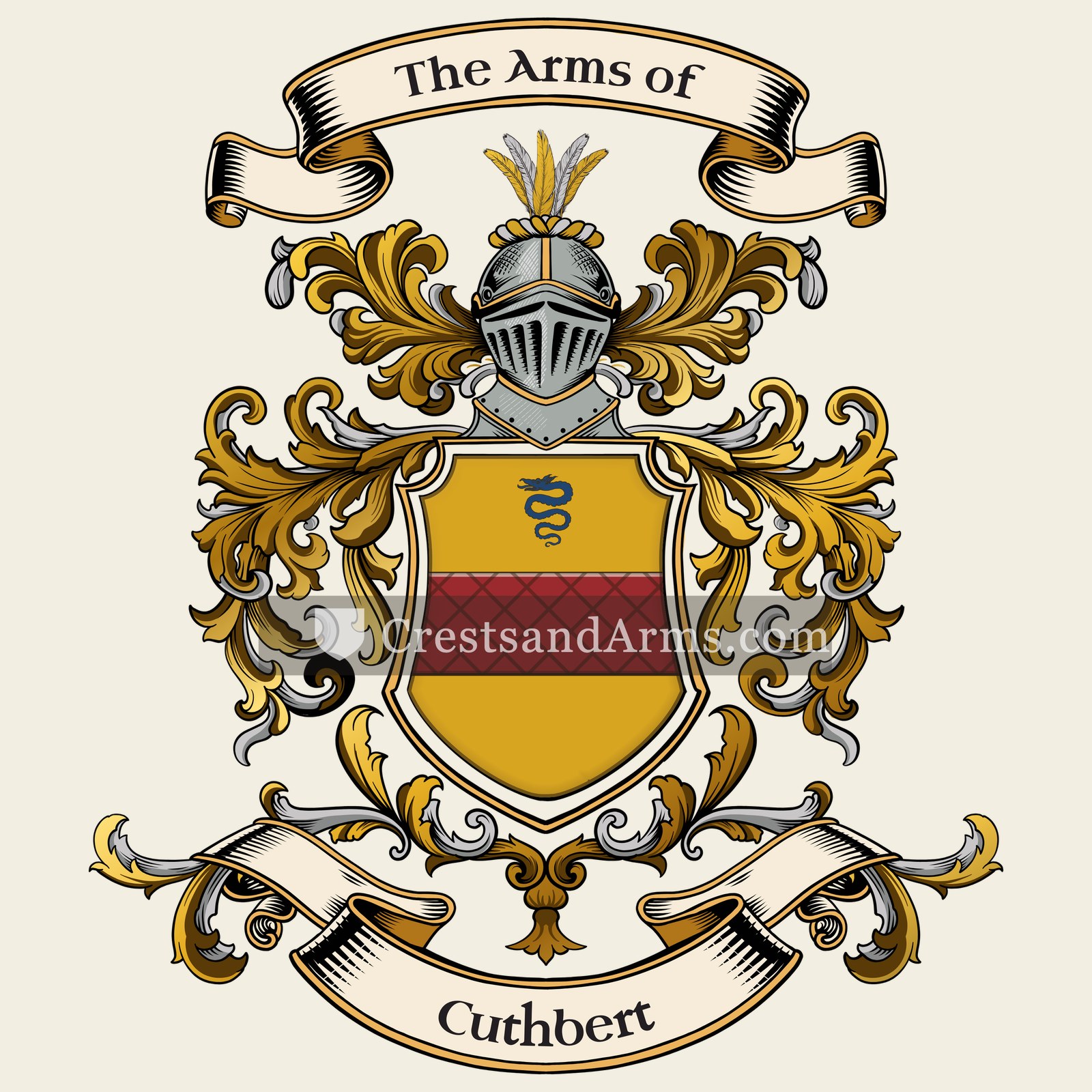
Symbols on this shield
fessThe military belt, and readiness to serve
serpentWisdom, healing and prudence
Colours
Gold (Or)Means: Generosity
Red (Gules)Means: Military strength
Blue (Azure)Means: Loyalty and truth
Historical info
Source
Sir Bernard Burke, The General Armory of England, Scotland, Ireland and Wales, London: Harrison & Sons, 1884
Blazon (the actual original written record)
“Or, a fesse gu. in chief a serpent az”
InvernessCastlehill · Inverness, c. 1748
Digital archive packCoat of arms PNG, gold border print PDF, vector SVG and the certificate of authenticity. Sent to your email in minutes.
Map of Scotland showing where the Cuthbert arms are recorded
The Cuthbert arms were recorded in Inverness, c. 1748.
Inverness was the largest Highland county, clan country of glens and long sea lochs. Chiefs recorded arms to mark the head of a family, and cadet branches recorded their own to show their place.
This is where the arms were entered in the register. Families often moved to other parts of the country, so the same name can turn up in more than one region.
The body that granted and recorded arms in Scotland in this period.
George II of Great Britain
Sovereign of the period
George II of Great Britain
1727–1760
Reigning in England when the Cuthbert arms are first recorded.
How Arms Worked in Scotland
Scottish heraldry is unique because it treats a coat of arms as a piece of personal property protected by law. Only one person can own a specific design at any given time. When a family grows, the head keeps the original shield while other relatives must apply for their own distinct version with slight changes to prove their specific identity.
Granting authority
The Court of the Lord Lyon acts as the official body that regulates and controls all heraldic matters throughout Scotland.
How they got arms
Individuals obtain a legal right to their arms through a formal petition process that confirms their identity and family connection.
Where arms were recorded
All valid coats of arms are officially entered into the Public Register of All Arms and Bearings starting from 1672.
The family's standing
Recorded among the armigerous families of Inverness.
Origin & History of the Cuthbert Family in Scotland
The name Cuthbert originates from the Old English name Cuthberht, which combines the words for famous and bright. While the name has deep roots in Northumbria, it became well established in the Scottish Highlands by the early eighteenth century. By 1748, the Cuthbert family was firmly settled in the town of Inverness, where they played an active role in the local community and regional commerce. During this era, Inverness served as a vital hub for trade and political life in the north of Scotland. Families like the Cuthberts often held positions of influence, contributing to the growth of the town as it navigated the complex social changes of the time. Their presence in the Highlands during this period reflects the broader movement of families who helped shape the development of Scottish urban centers throughout the eighteenth century.
Cuthbert Meaning & Related Branches
Root word
Cuthbeorht
Derived from Old English elements meaning famous and bright.
This name
CuthbertA name signifying someone who is renowned for their brilliance or shining reputation.
also spelled
Cuthberd
Cuthberth
Related arms
Blawrecorded with Cuthbert, same area
Crayerecorded with Cuthbert, same area
D'Arcyrecorded with Cuthbert, same area
Douglasrecorded with Cuthbert, same area
Documented Sources
Sir Bernard Burke, The General Armory of England, Scotland, Ireland and Wales, London: Harrison & Sons, 1884
Reaney, P.H., A Dictionary of British Surnames, 1958
Hanks, Patrick and Hodges, Flavia, A Dictionary of Surnames, 1988
Essex Record Office, Quarter Sessions Rolls, 1620
Digital archive packCoat of arms PNG, gold border print PDF, vector SVG and the certificate of authenticity. Sent to your email in minutes.


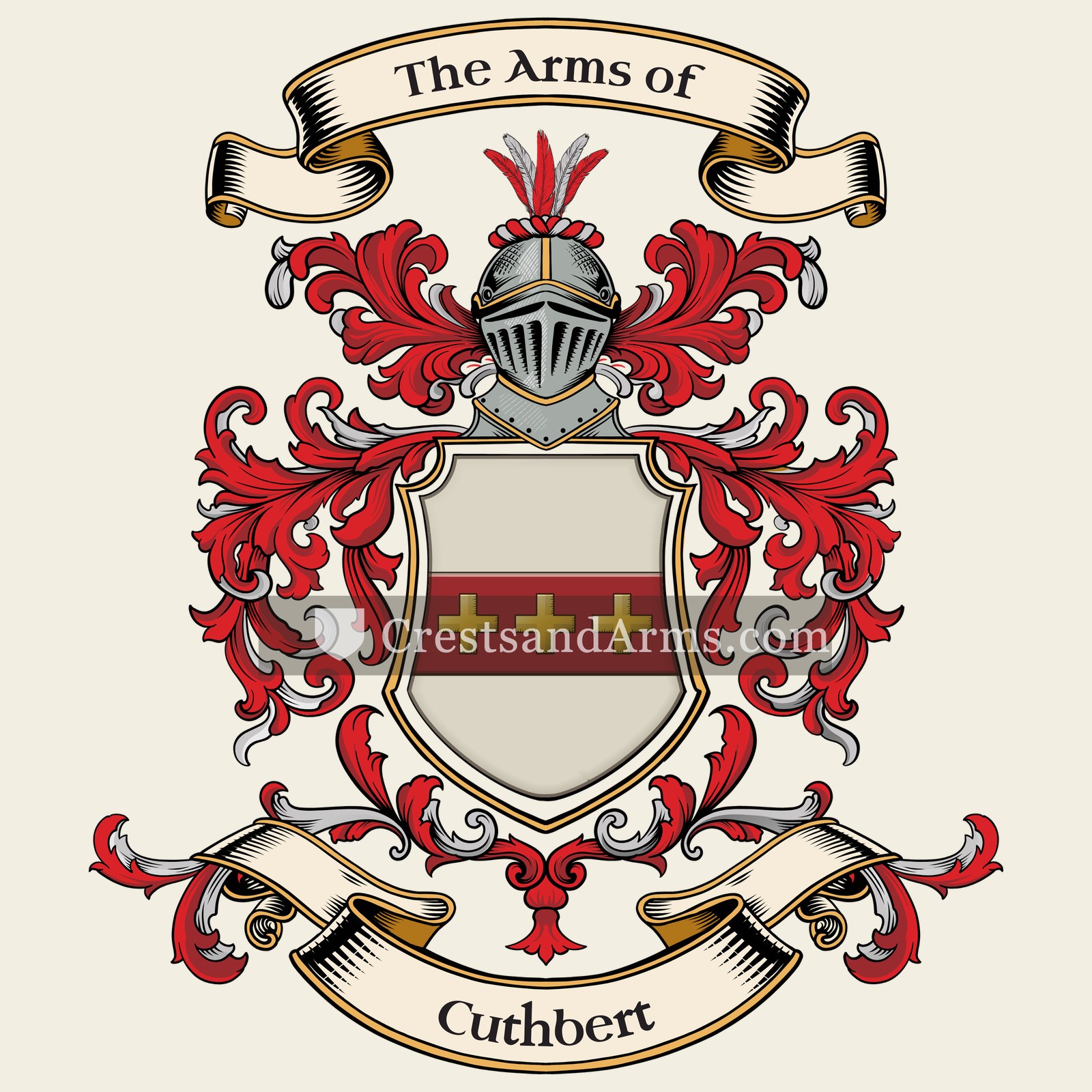
 fessThe military belt, and readiness to serve
 cross symbolChristian faith and service
 fessThe military belt, and readiness to serve
 cross symbolChristian faith and service


 serpentWisdom, healing and prudence