Map of Netherlands showing where the Danae arms are recorded
The Danae arms were recorded in Rotterdam, c. 1815.
This is where the arms were entered in the register. Families often moved to other parts of the country, so the same name can turn up in more than one region.
Region
Rotterdam
Town
Rotterdam
First recorded
1815
Granting Authority for the Danae Arms
Hoge Raad van Adel
Photograph made by me · CC BY-SA 3.0
The body that granted and recorded arms in Netherlands in this period.
William I of the Netherlands
Sovereign of the period
William I of the Netherlands
1815–1840
Reigning in Netherlands when the Danae arms are first recorded.
How Arms Worked in Netherlands
In the Netherlands, coats of arms were often used by noble families and those who held specific public offices. These arms were passed down through the generations to legitimate descendants. Younger branches of a family usually kept the original design without needing to add special marks. This system ensured that the family identity remained clear and consistent over many years.
Granting authority
The Hoge Raad van Adel is the official body that regulates and manages noble titles and coats of arms in the Netherlands.
How they got arms
Families typically obtained their coats of arms through official royal grants or by proving their long-standing historical use of the symbols.
Where arms were recorded
Coats of arms are officially recorded in the registers held by the Hoge Raad van Adel, which began its work in 1814.
The family's standing
Recorded among the armigerous families of Netherlands.
Origin & History of the Danae Family in Netherlands
The history of the Danae family in the Netherlands is rooted in the bustling maritime environment of Rotterdam during the early nineteenth century. By 1815, records confirm that members of the family were established residents of this major port city, which was then recovering from the period of French occupation. During this era, Rotterdam served as a vital hub for trade and shipping, and families like the Danaes were often integrated into the local merchant class or the skilled labor force required to maintain the city's busy docks. The name itself likely existed within the local population as a distinct identifier during a time when the Dutch government began formalizing civil registration and standardized naming practices. As the city grew into a global center for commerce throughout the 1800s, the Danae family became part of the urban fabric of Rotterdam, contributing to the social and economic development of the region as it transitioned into the modern industrial age.
Meaning of the Danae family crest colors & symbols
Symbols on this shield
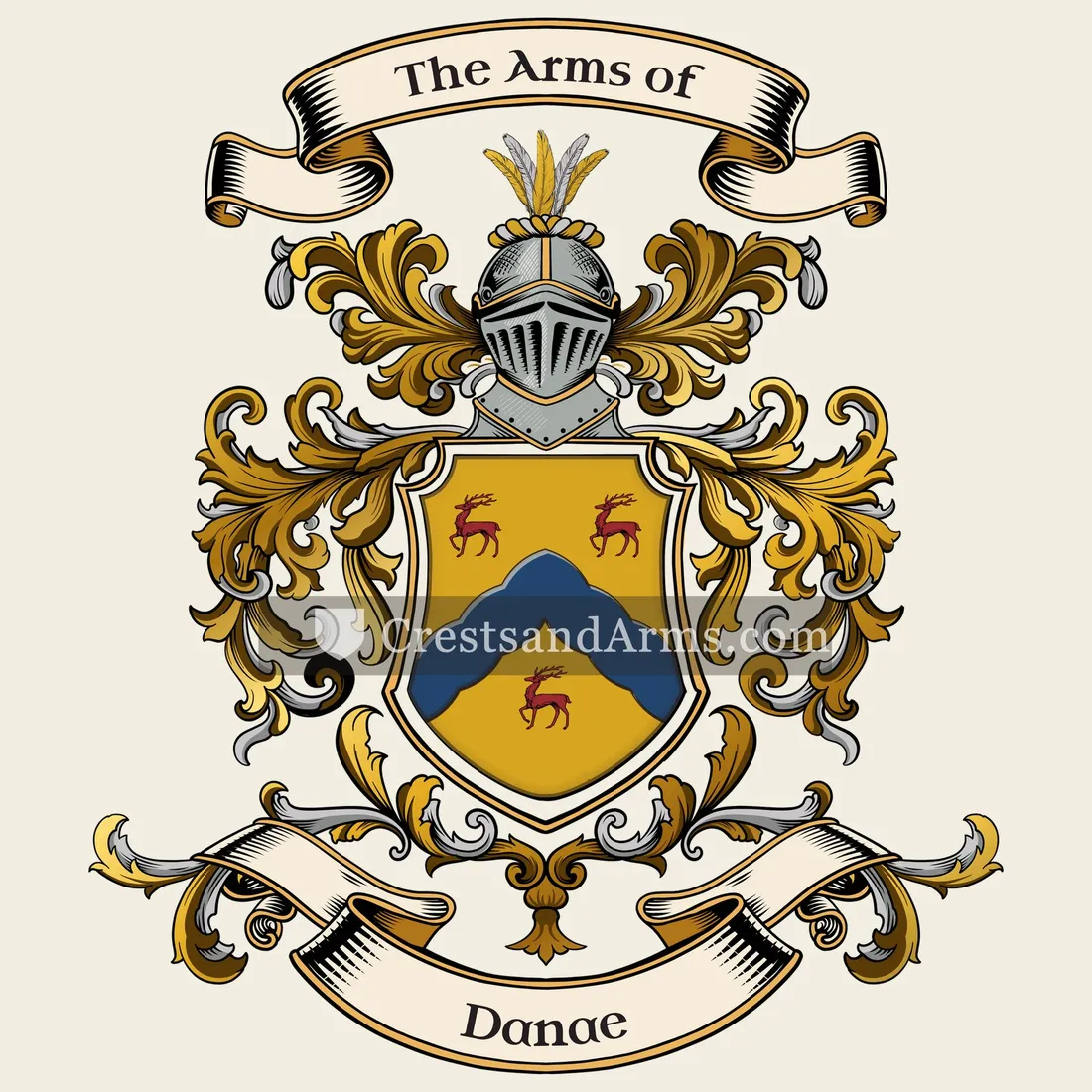
chevronProtection, and faithful service completed
stagPeace and harmony, and one who will not fight unprovoked
Colours
Gold (Or)Means: Generosity
Blue (Azure)Means: Loyalty and truth
Red (Gules)Means: Military strength
Historical info
Source
Sir Bernard Burke, The General Armory of England, Scotland, Ireland and Wales, London: Harrison & Sons, 1884
Blazon (the actual original written record)
“Or, a chev. engr. az. betw. three hinds pass. gu”
HerefordStortford · Hereford, c. 1568
Digital archive packCoat of arms PNG, gold border print PDF, vector SVG and the certificate of authenticity. Sent to your email in minutes.
Map of England showing where the Danae arms are recorded
The Danae arms were recorded in Hereford, c. 1568.
Herefordshire lay on the Welsh border, where land was held in return for military service. Families there were expected to arm and to fight, and a fighting household needed a shield it could be known by.
This is where the arms were entered in the register. Families often moved to other parts of the country, so the same name can turn up in more than one region.
The body that granted and recorded arms in England in this period.
Elizabeth I of England
Sovereign of the period
Elizabeth I of England
1558–1603
Reigning in Netherlands when the Danae arms are first recorded.
How Arms Worked in England
English heraldry allowed arms to be shared by all legitimate descendants of the original owner. These symbols were treated as personal property that moved through the generations to all children. While the eldest son kept the original design, other family members could use the same shield without needing to change it or register their own unique versions.
Granting authority
The College of Arms in London has regulated the use of coats of arms throughout England and Wales since 1484.
How they got arms
Families typically obtained their coats of arms through a formal grant from the Crown or by proving their ancient right to them.
Where arms were recorded
All official coats of arms are recorded in the registers kept at the College of Arms, which date back to the fifteenth century.
The family's standing
Recorded among the armigerous families of Hereford.
Origin & History of the Danae Family in England
The history of the Danae name in England is rooted in the rural landscape of the sixteenth century, with documented evidence placing the family in Hereford by 1568. During this period, the name likely emerged as a localized identifier for residents living near the borderlands between England and Wales. Life in Hereford at the time was defined by the wool trade and the influence of the nearby cathedral, which served as a central hub for legal and social record-keeping. Families like the Danaes often lived as tenant farmers or tradespeople who contributed to the steady growth of the regional economy. As the family established their presence in the county, they became part of the shifting social fabric of the English Midlands. Their survival through the late Tudor era suggests a stable integration into the local community, where they participated in the daily customs and agricultural cycles that shaped life in the West Country.
Danae Meaning & Related Branches
Root word
Danaos
Ancient Greek term referring to a person from Argos or Greece.
This name
DanaeDerived from Greek mythology, often interpreted as the judge or the one who decides.
also spelled
Danes
Daine
Dayne
Documented Sources
J. B. Rietstap, Armorial Général, Gouda: G. B. van Goor Zonen, 1884–87
Stadsarchief Rotterdam, Bevolkingsregister Rotterdam (Population Register of Rotterdam)
Nationaal Archief, Burgerlijke Stand in Nederland (Civil Registry of the Netherlands)
Blok, D.P., Algemene Geschiedenis der Nederlanden (1977)
Van der Horst, Han, Rotterdam: Een geschiedenis van de stad (2005)
Digital archive packCoat of arms PNG, gold border print PDF, vector SVG and the certificate of authenticity. Sent to your email in minutes.


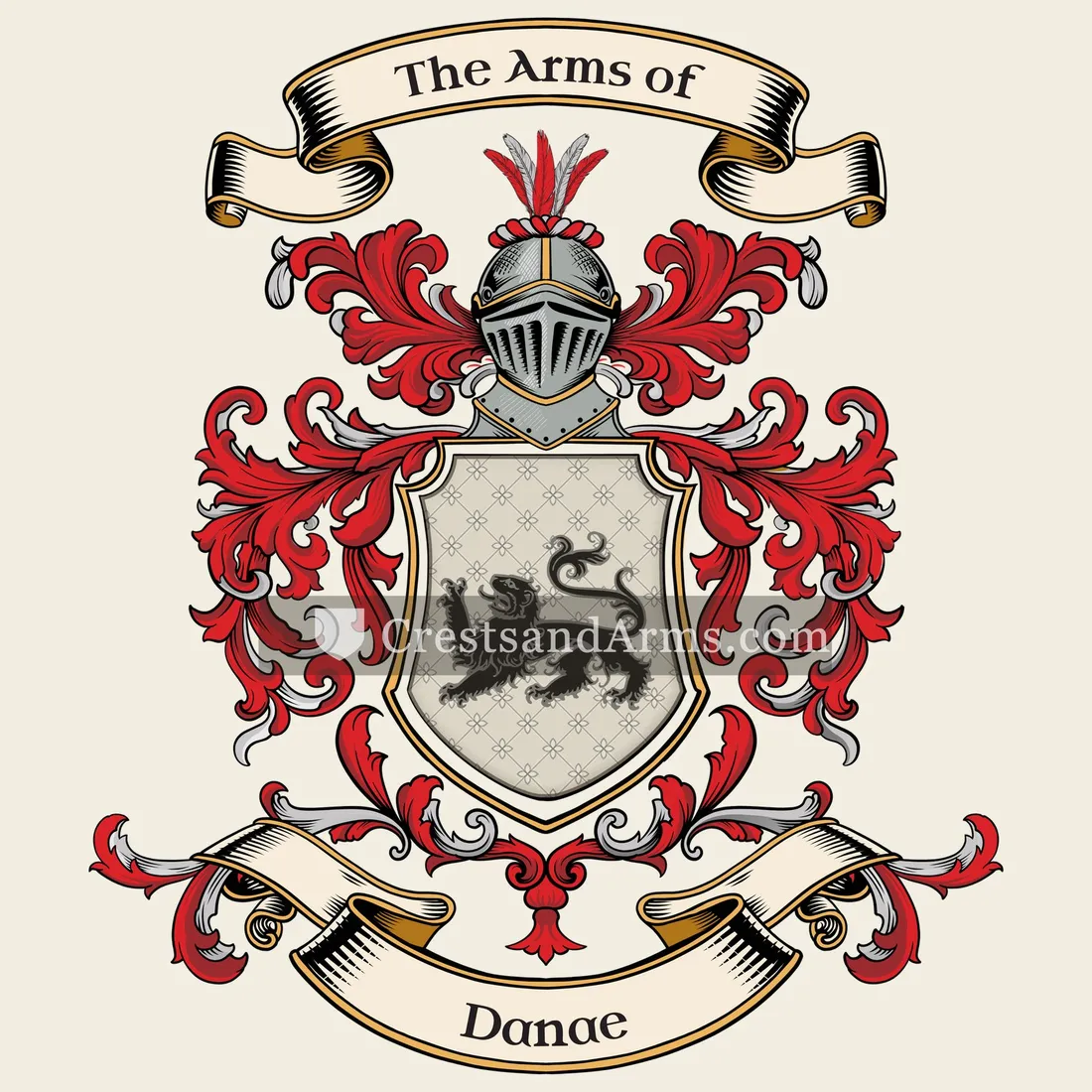
 lionCourage, strength and royalty
 lionCourage, strength and royalty


 chevronProtection, and faithful service completed
 stagPeace and harmony, and one who will not fight unprovoked