Map of France showing where the Dargon arms are recorded
The Dargon arms were recorded in Flandre, c. 1640.
Flandre grew rich on cloth, and its towns were among the busiest in Europe. Merchant families bought land with their profits and took arms to go with it, so trade put as many names in the registers here as land did.
This is where the arms were entered in the register. Families often moved to other parts of the country, so the same name can turn up in more than one region.
The body that granted and recorded arms in France in this period.
Louis XIII of France
Sovereign of the period
Louis XIII of France
1617–1643
Reigning in France when the Dargon arms are first recorded.
How Arms Worked in France
In France, a coat of arms was a mark of honor that passed down through the male line to all legitimate descendants. Families often used the same shield without changes to show their shared heritage. If a branch wanted to stand out, they could add a small mark to their shield to show their specific place in the family tree.
Granting authority
The Juge d'armes de France acted as the official authority that regulated and verified coats of arms across the country.
How they got arms
Families typically inherited their arms from ancestors, though they could also receive them through royal grants or by proving their noble status.
Where arms were recorded
Coats of arms were officially recorded in the Armorial Général de France, which began its main collection in the year 1696.
The family's standing
Recorded among the armigerous families of Flandre.
Origin & History of the Dargon Family in France
The family name Dargon traces its roots to the northern regions of France, specifically within the historic territory of Flandre. By the year 1640, records indicate that members of this family were already established in the area, living amidst a landscape defined by its proximity to the border and its unique cultural blend. During this period, the region was a bustling hub of trade and agriculture, which likely influenced the daily lives and occupations of the early Dargon ancestors. As residents of Flandre, they navigated a time of significant political transition as the region shifted between various European powers. The family name likely evolved from local dialects common to the northern French provinces, reflecting the linguistic traditions of the people who worked the land and participated in the growing urban centers of the seventeenth century. By remaining in this specific corner of France, the early Dargons became part of a resilient community that shaped the social and economic fabric of the region for generations.
Meaning of the Dargon family crest colors & symbols
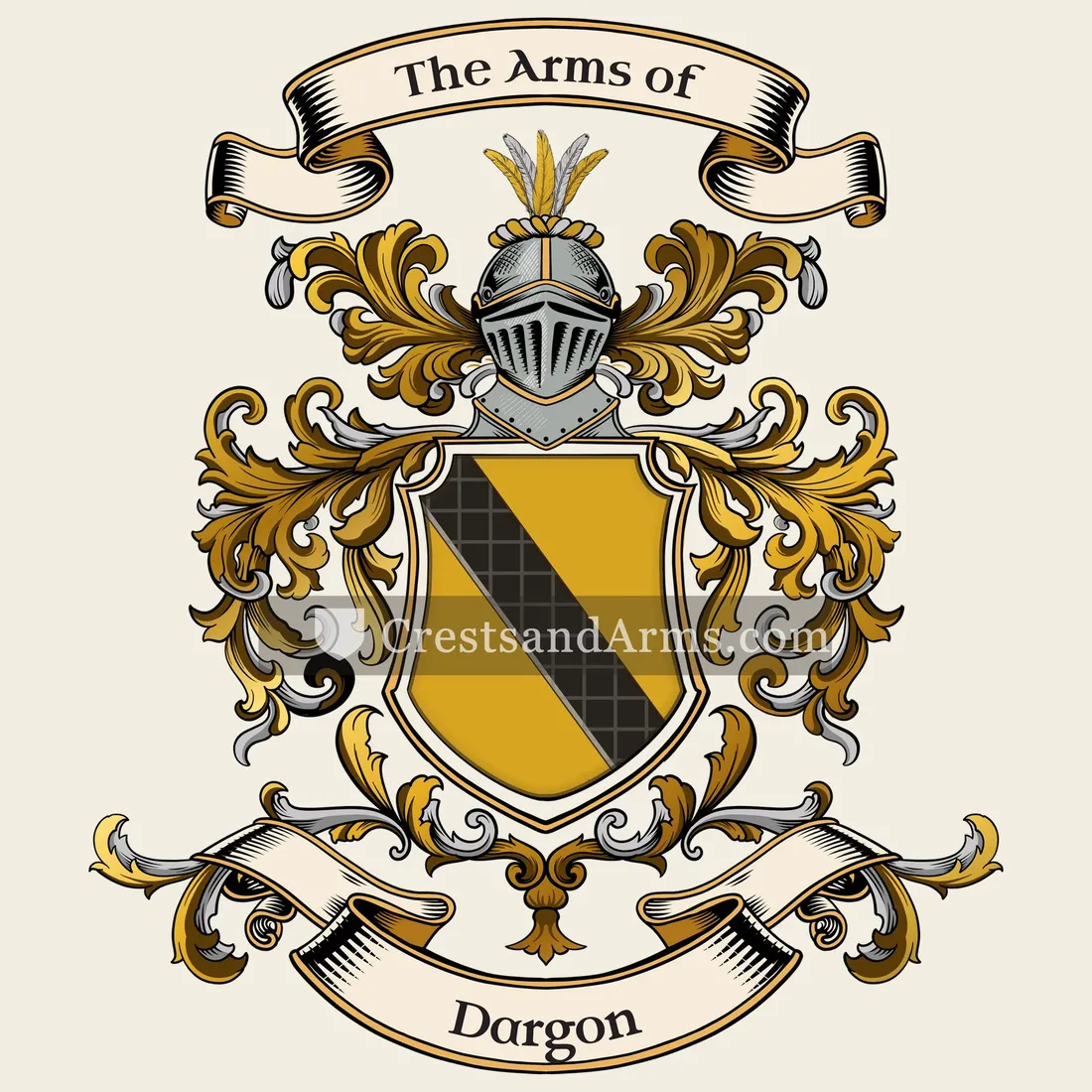
Symbols on this shield
bendDefence, and the scarf of a commander
Colours
Gold (Or)Means: Generosity
Black (Sable)Means: Constancy
Historical info
Source
J. B. Rietstap, Armorial Général, Gouda: G. B. van Goor Zonen, 1884–87
Blazon (the actual original written record)
“D'or à la bande de sa. Cq. cour. C.: un dragon iss. d'or. S.: deux dragons d'or.”
BrabantBrabant, c. 1737
Digital archive packCoat of arms PNG, gold border print PDF, vector SVG and the certificate of authenticity. Sent to your email in minutes.
Map of Belgium showing where the Dargon arms are recorded
The Dargon arms were recorded in Brabant, c. 1737.
Brabant lay at the heart of the Low Countries, where the trade routes met. Its towns were wealthy and its landowners many, and both kinds of family kept arms, which is why the region is so heavily represented.
This is where the arms were entered in the register. Families often moved to other parts of the country, so the same name can turn up in more than one region.
The body that granted and recorded arms in Belgium in this period.
Charles VI, Holy Roman Emperor
Sovereign of the period
Charles VI, Holy Roman Emperor
1711–1740
Reigning in France when the Dargon arms are first recorded.
How Arms Worked in Belgium
In Belgium, a coat of arms is considered personal property that is passed down through the male line to legitimate descendants. Families often use the same shield design across generations to show their shared heritage. If a branch of the family wants to change the design, they must apply for an official update to their specific version of the arms.
Granting authority
The Conseil héraldique is the official body that regulates and approves all coats of arms in Belgium.
How they got arms
Families obtain their coats of arms through formal royal grants or by confirming their historical right to use existing designs.
Where arms were recorded
All approved coats of arms are officially recorded in the public registers of the Conseil héraldique since 1844.
The family's standing
Recorded among the armigerous families of Brabant.
Origin & History of the Dargon Family in Belgium
The family name Dargon has deep roots in the historical region of Brabant, where records confirm members of the family were established by 1737. During this period, Brabant was a central hub of the Austrian Netherlands, characterized by a mix of agricultural life and growing trade networks. Families like the Dargons often lived in small rural communities or burgeoning market towns where they contributed to the local economy through farming or craftsmanship. Because surnames were becoming more formalized during the eighteenth century, the presence of the Dargon name in official parish registers suggests that the family was well-integrated into the social fabric of the region. They likely navigated the complexities of life under Austrian rule, which brought both periods of stability and the challenges of regional conflicts. By maintaining a steady presence in Brabant, the early Dargon family helped shape the local identity of a territory that would eventually become a core part of modern Belgium.
Dargon Meaning & Related Branches
Root word
Draco
Latin term for a dragon or a serpent.
This name
DargonA habitational name derived from a place associated with dragons or serpents.
also spelled
Dragone
Dragons
Documented Sources
J. B. Rietstap, Armorial Général, Gouda: G. B. van Goor Zonen, 1884–87
Archives départementales du Nord, Série G: Clergé séculier et paroisses
Archives départementales du Pas-de-Calais, Série E: Familles, seigneuries et notaires
Lottin, Alain, Histoire des provinces françaises du Nord, 1989
Pirenne, Henri, Histoire de Belgique, 1900
Digital archive packCoat of arms PNG, gold border print PDF, vector SVG and the certificate of authenticity. Sent to your email in minutes.


 chiefAuthority, wisdom and dominion
 dragonA most valiant defender of treasure
 chiefAuthority, wisdom and dominion
 dragonA most valiant defender of treasure
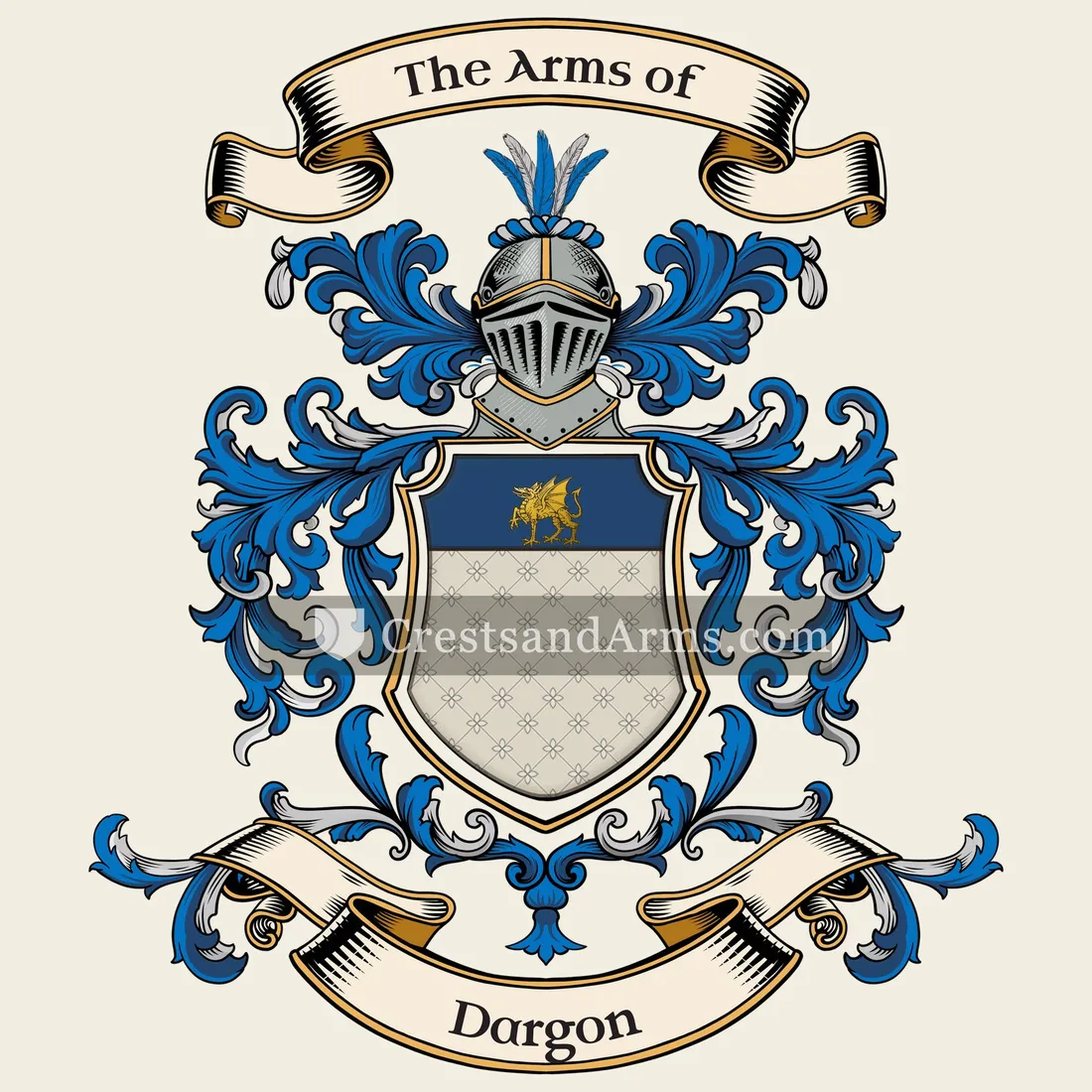


 bendDefence, and the scarf of a commander