Map of Netherlands showing where the Dart arms are recorded
The Dart arms were recorded in Netherlands, c. 1815.
Arms such as these were typically recorded in Friesland.
Friesland was low, wet country on the northern coast of the Netherlands, farmed by families who had held the same land for centuries. Free landholders were unusually common there, and a free landholder could carry arms.
This is where the arms were entered in the register. Families often moved to other parts of the country, so the same name can turn up in more than one region.
Region
Friesland
First recorded
1815
Granting Authority for the Dart Arms
Hoge Raad van Adel
Photograph made by me · CC BY-SA 3.0
The body that granted and recorded arms in Netherlands in this period.
William I of the Netherlands
Sovereign of the period
William I of the Netherlands
1815–1840
Reigning in Netherlands when the Dart arms are first recorded.
How Arms Worked in Netherlands
In the Netherlands, coats of arms were often used by noble families and those who held specific public offices. These arms were passed down through the generations to legitimate descendants. Younger branches of a family usually kept the original design without needing to add special marks. This system ensured that the family identity remained clear and consistent over many years.
Granting authority
The Hoge Raad van Adel is the official body that regulates and manages noble titles and coats of arms in the Netherlands.
How they got arms
Families typically obtained their coats of arms through official royal grants or by proving their long-standing historical use of the symbols.
Where arms were recorded
Coats of arms are officially recorded in the registers held by the Hoge Raad van Adel, which began its work in 1814.
The family's standing
Recorded among the armigerous families of Netherlands.
Origin & History of the Dart Family in Netherlands
The history of the Dart family in the Netherlands is deeply rooted in the northern province of Friesland, where records confirm their presence by 1815. During this period, the region was undergoing significant social changes following the end of French rule and the establishment of the Kingdom of the Netherlands. Families living in Friesland often held strong ties to the local agricultural economy and the unique maritime culture of the coastal areas. The name itself likely evolved from older Germanic or Frisian linguistic roots, reflecting the descriptive naming customs common among families in the northern provinces. As the nineteenth century progressed, members of the Dart family participated in the typical life of the region, which included navigating the complex legal and civil registration systems that were being standardized across the country at that time. Their presence in Friesland suggests a long-standing connection to the local community and the specific historical development of the Dutch northern territories.
Coat of Arms & Family Crest Details
Symbols on this shield
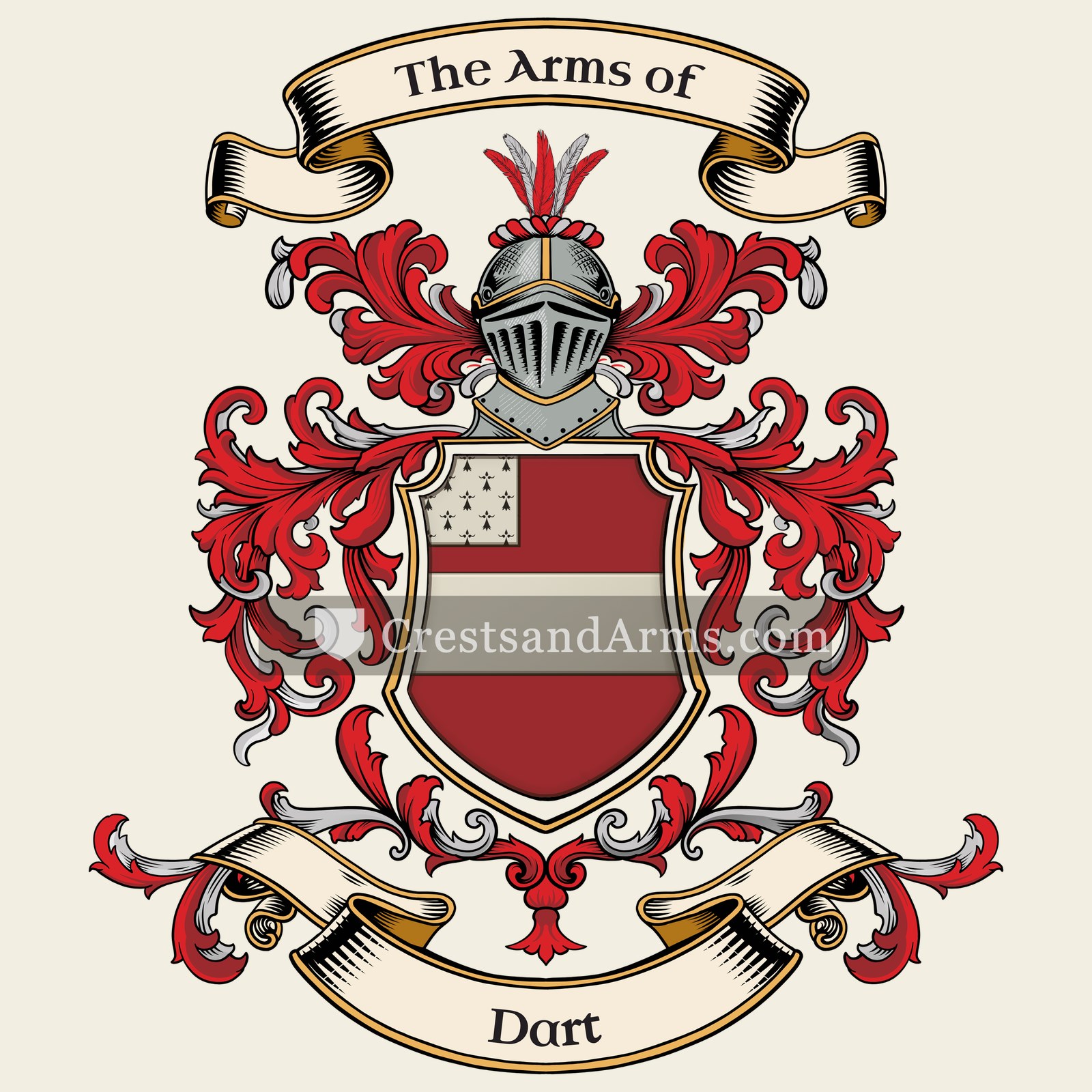
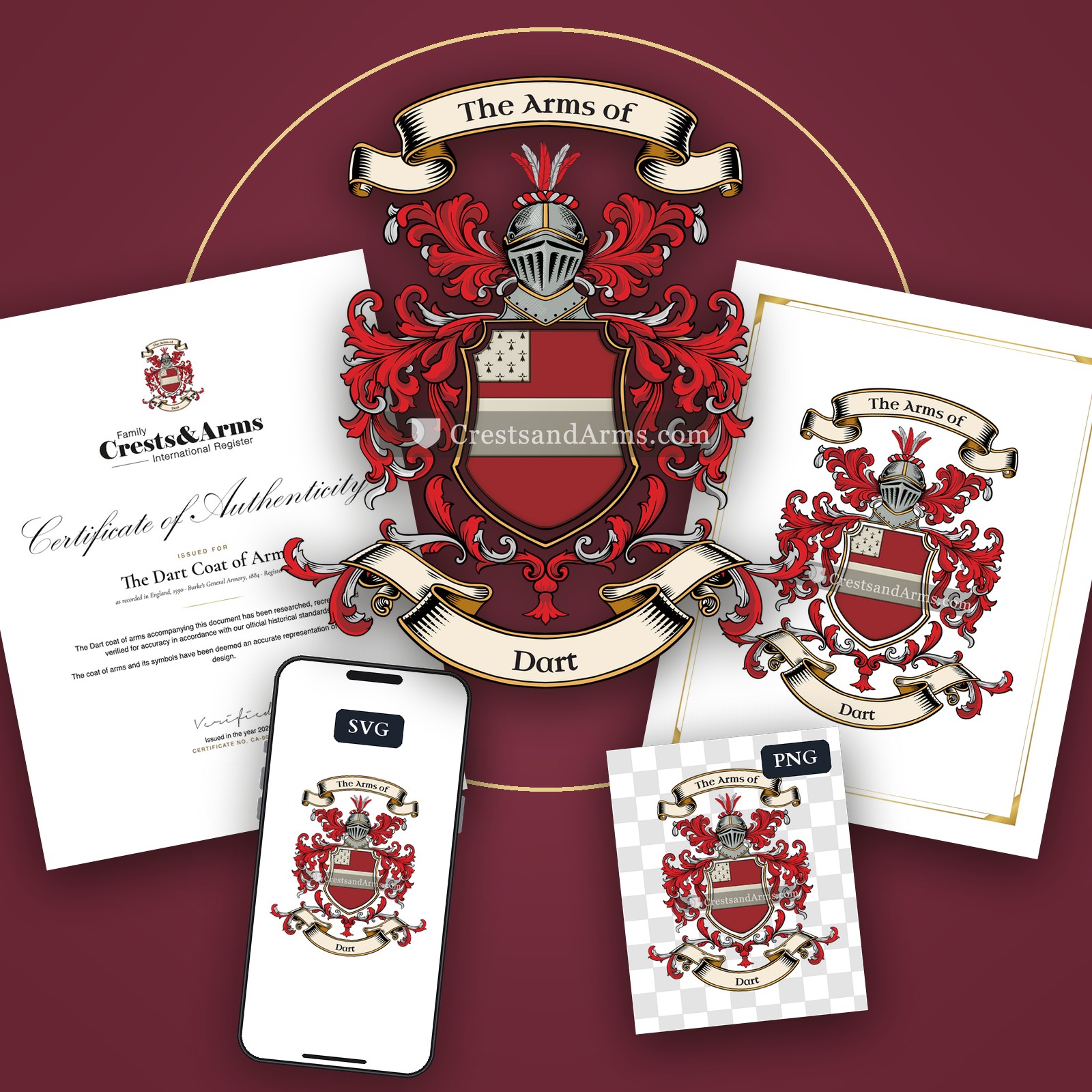
fessThe military belt, and readiness to serve
cantonA mark of honour granted by the sovereign
Colours
Red (Gules)Means: Military strength
ErmineMeans: Dignity
Historical info
Source
Sir Bernard Burke, The General Armory of England, Scotland, Ireland and Wales, London: Harrison & Sons, 1884
Blazon (the actual original written record)
“Gu. a fesse and canton erm”
DevonDevon, c. 1590
Digital archive packCoat of arms PNG, gold border print PDF, vector SVG and the certificate of authenticity. Sent to your email in minutes.
Map of England showing where the Dart arms are recorded
The Dart arms were recorded in Devon, c. 1590.
Devon was a county of small manors and seafaring families. Its gentry were spread thickly across the countryside, and money made at sea often bought an estate, which in turn brought a coat of arms.
This is where the arms were entered in the register. Families often moved to other parts of the country, so the same name can turn up in more than one region.
The body that granted and recorded arms in England in this period.
Elizabeth I of England
Sovereign of the period
Elizabeth I of England
1558–1603
Reigning in Netherlands when the Dart arms are first recorded.
How Arms Worked in England
English heraldry allowed arms to be shared by all legitimate descendants of the original owner. These symbols were treated as personal property that moved through the generations to all children. While the eldest son kept the original design, other family members could use the same shield without needing to change it or register their own unique versions.
Granting authority
The College of Arms in London has regulated the use of coats of arms throughout England and Wales since 1484.
How they got arms
Families typically obtained their coats of arms through a formal grant from the Crown or by proving their ancient right to them.
Where arms were recorded
All official coats of arms are recorded in the registers kept at the College of Arms, which date back to the fifteenth century.
The family's standing
Recorded among the armigerous families of Devon.
Origin & History of the Dart Family in England
The surname Dart is deeply rooted in the landscape of Devon, England, where the family has maintained a presence since at least the late sixteenth century. The name is locational in origin, meaning it was likely adopted by individuals who lived near the River Dart or in one of the settlements named after it. During the 1590s, records show that members of the Dart family were established as part of the local community in the southwestern corner of the country. Life in Devon at this time was defined by agriculture, maritime trade, and the wool industry, all of which shaped the daily experiences of families living in the region. As the name spread from these early settlements, it became a permanent fixture of the Devonshire countryside, reflecting the strong connection between the people and the geography of their ancestral home.
Dart Meaning & Related Branches
Root word
Dard
A Germanic term referring to a spear or a pointed weapon.
This name
DartA topographic name for someone living near a spear-shaped piece of land or a spear-maker.
also spelled
Darte
Darty
Documented Sources
J. B. Rietstap, Armorial Général, Gouda: G. B. van Goor Zonen, 1884–87
Tresoar (Fries Historisch en Letterkundig Centrum), Bevolkingsregisters van Friesland
Nationaal Archief, Burgerlijke Stand in Nederland
Meertens Instituut, Nederlandse Familienamenbank
Digital archive packCoat of arms PNG, gold border print PDF, vector SVG and the certificate of authenticity. Sent to your email in minutes.


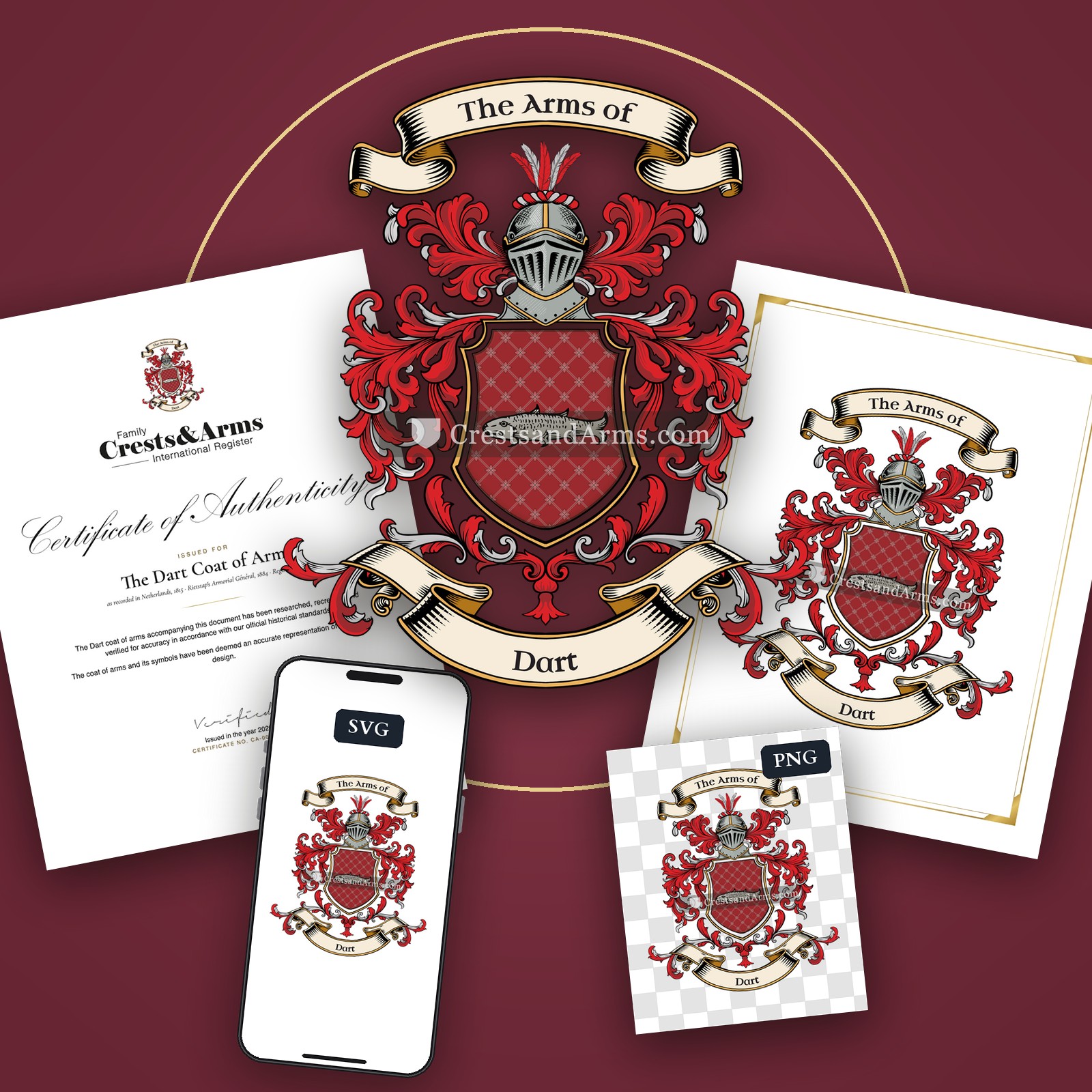
 fishA true and generous mind, and Christian faith
 fishA true and generous mind, and Christian faith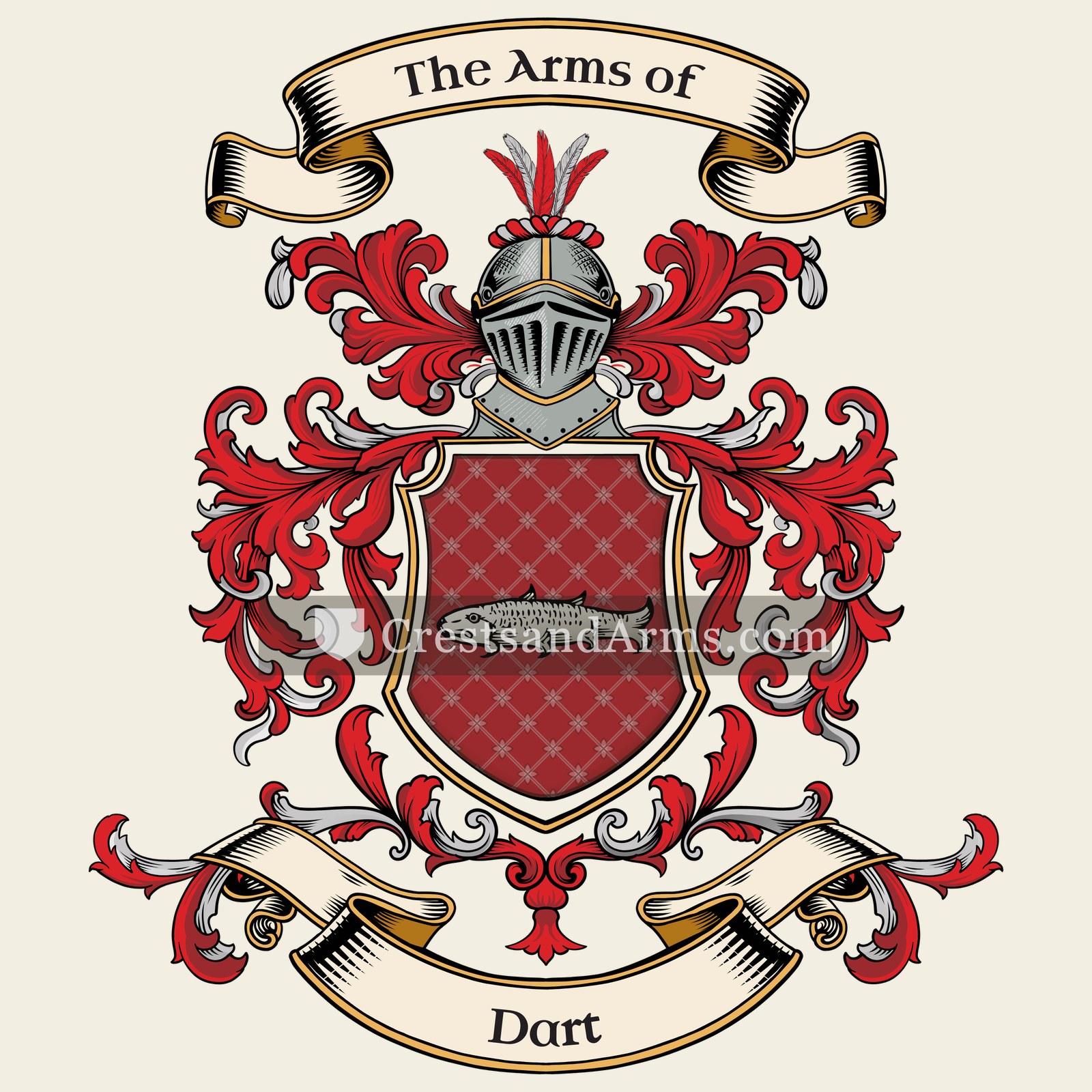


 fessThe military belt, and readiness to serve
 cantonA mark of honour granted by the sovereign