Map of Britain showing where the Dcosta arms are recorded
The Dcosta arms were recorded in Londres, c. 1700.
Arms such as these were typically recorded in Kent.
Kent sits between London and the short crossing to Europe, and the trade passing through made it wealthy. Merchant families bought land with that money, and it was landowners who took coats of arms.
This is where the arms were entered in the register. Families often moved to other parts of the country, so the same name can turn up in more than one region.
The body that granted and recorded arms in Britain in this period.
William III of England
Sovereign of the period
William III of England
1694–1702
Reigning in Britain when the Dcosta arms are first recorded.
How Arms Worked in Britain
English heraldry allowed arms to be shared by all legitimate descendants of the original owner. These symbols were treated as personal property that moved through the generations to all children. While the eldest son kept the original design, other family members could use the same shield without needing to change it or register their own unique versions.
Granting authority
The College of Arms in London has regulated the use of coats of arms throughout England and Wales since 1484.
How they got arms
Families typically obtained their coats of arms through a formal grant from the Crown or by proving their ancient right to them.
Where arms were recorded
All official coats of arms are recorded in the registers kept at the College of Arms, which date back to the fifteenth century.
The family's standing
Recorded among the armigerous families of Britain.
Origin & History of the Dcosta Family in Britain
The family name Dcosta, often spelled as Da Costa, carries a rich history that reflects the movement of people across Europe and into Britain. By the year 1700, members of the family were firmly established in the county of Kent, where they integrated into the local social and economic landscape. The name itself is of Sephardic Jewish origin, meaning "of the coast," and it was carried by families who navigated the complex political and religious shifts of the seventeenth century. Many individuals bearing this name were part of a wider migration of merchant families who sought stability and new opportunities in English port towns and surrounding areas. These early settlers in Kent often worked in trade and commerce, contributing to the growing mercantile influence of the region. Their presence in the historical records of the time highlights how families with international roots helped shape the local communities of southern England during the turn of the eighteenth century.
Coat of Arms & Family Crest Details
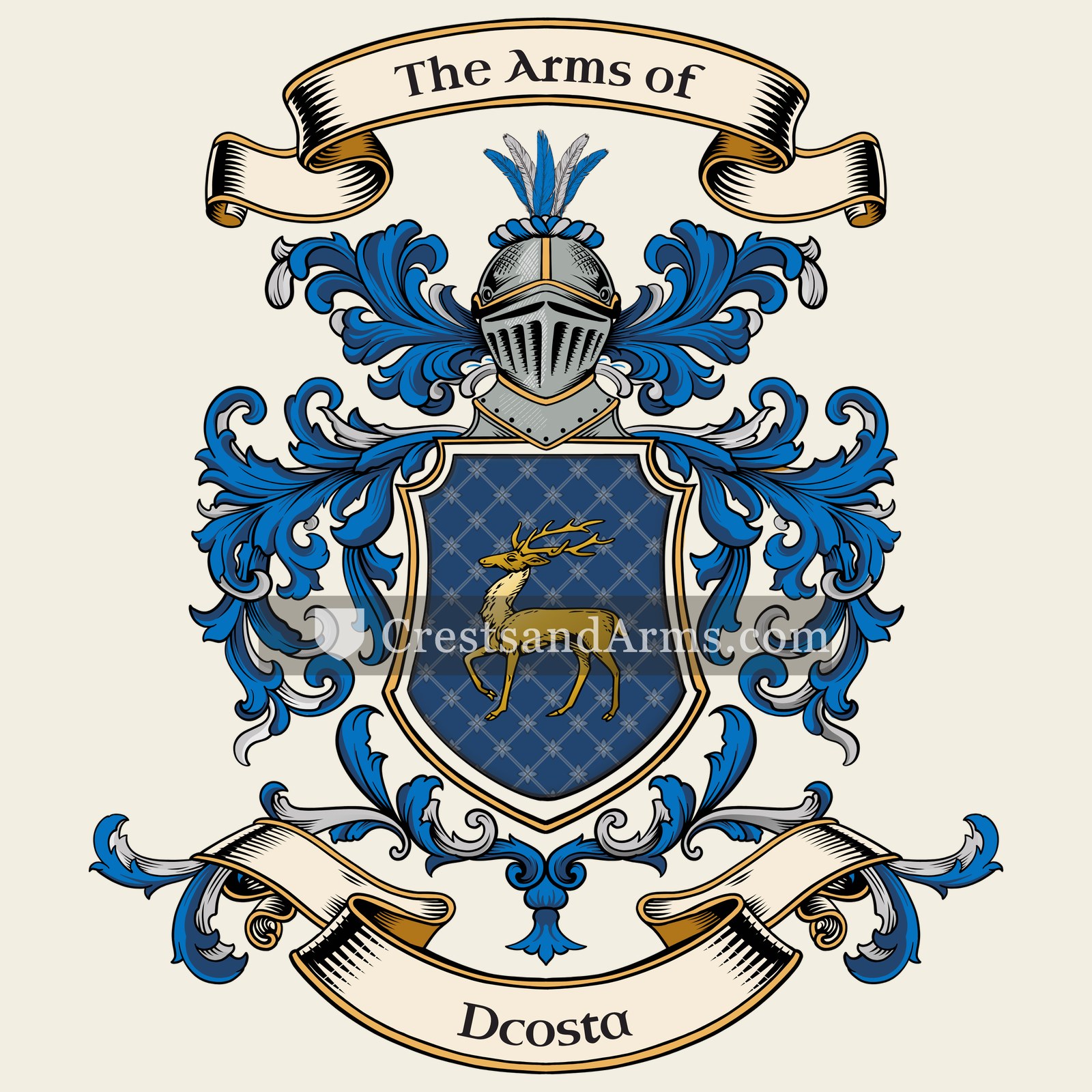
Symbols on this shield
stagPeace and harmony, and one who will not fight unprovoked
Colours
Blue (Azure)Means: Loyalty and truth
Gold (Or)Means: Generosity
Historical info
Source
J. B. Rietstap, Armorial Général, Gouda: G. B. van Goor Zonen, 1884–87
Blazon (the actual original written record)
“D'azur à un cerf d'or, ramp. sur une côte d'arg., posée à dextre.”
FranceToulouse, c. 1663
Digital archive packCoat of arms PNG, gold border print PDF, vector SVG and the certificate of authenticity. Sent to your email in minutes.
Map of France showing where the Dcosta arms are recorded
The Dcosta arms were recorded in Toulouse, c. 1663.
This is where the arms were entered in the register. Families often moved to other parts of the country, so the same name can turn up in more than one region.
The body that granted and recorded arms in France in this period.
Louis XIV of France
Sovereign of the period
Louis XIV of France
1643–1715
Reigning in Britain when the Dcosta arms are first recorded.
How Arms Worked in France
In France, a coat of arms was a mark of honor that passed down through the male line to all legitimate descendants. Families often used the same shield without changes to show their shared heritage. If a branch wanted to stand out, they could add a small mark to their shield to show their specific place in the family tree.
Granting authority
The Juge d'armes de France acted as the official authority that regulated and verified coats of arms across the country.
How they got arms
Families typically inherited their arms from ancestors, though they could also receive them through royal grants or by proving their noble status.
Where arms were recorded
Coats of arms were officially recorded in the Armorial Général de France, which began its main collection in the year 1696.
The family's standing
Recorded among the armigerous families of France.
Origin & History of the Dcosta Family in France
The family name Dcosta, often written as Da Costa, carries a rich history that traces back to the vibrant cultural landscape of seventeenth-century France. By 1663, records confirm that members of this family were established in the city of Toulouse, a major hub of commerce and intellectual life in the south of France. During this era, families with this name were frequently associated with the Sephardic Jewish diaspora, as many individuals moved across borders to escape religious persecution and seek new opportunities in European trade centers. Settling in Toulouse allowed the family to integrate into the local economy, where they likely engaged in merchant activities or professional trades common among the urban middle class of the time. Their presence in the region reflects the broader movement of families who navigated the complex social and political shifts of the French seventeenth century while maintaining their distinct cultural identity.
Coat of Arms & Family Crest Details
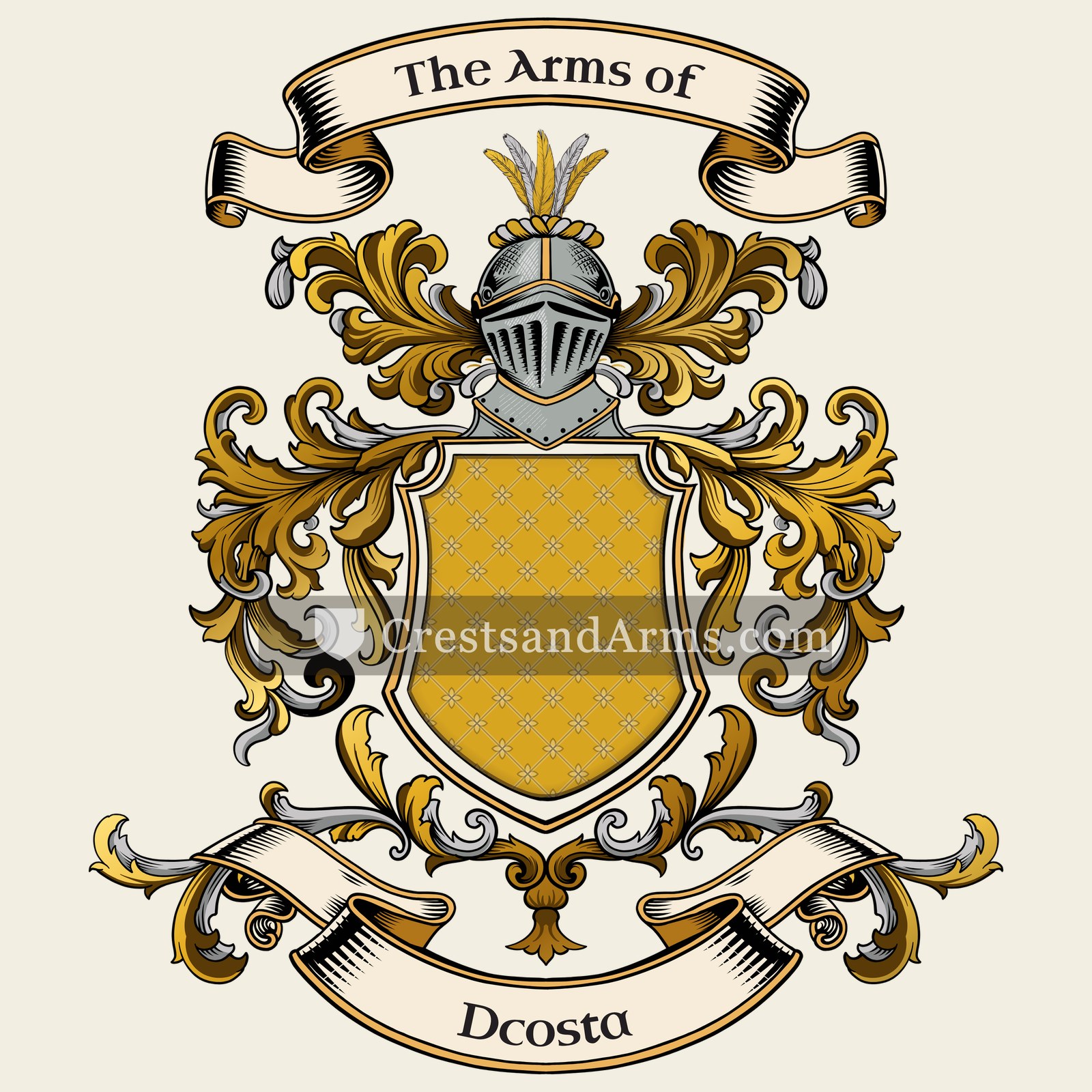
Colours
Gold (Or)Means: Generosity
Historical info
Source
Sir Bernard Burke, The General Armory of England, Scotland, Ireland and Wales, London: Harrison & Sons, 1884
Blazon (the actual original written record)
“Or, six broken bones, two, two, and two, barways ar. the joints almost meeting in pale gu”
EnglandLondon, c. 1620
Digital archive packCoat of arms PNG, gold border print PDF, vector SVG and the certificate of authenticity. Sent to your email in minutes.
Map of England showing where the Dcosta arms are recorded
The Dcosta arms were recorded in London, c. 1620.
This is where the arms were entered in the register. Families often moved to other parts of the country, so the same name can turn up in more than one region.
The body that granted and recorded arms in England in this period.
James VI and I
Sovereign of the period
James VI and I
1603–1625
Reigning in Britain when the Dcosta arms are first recorded.
How Arms Worked in England
English heraldry allowed arms to be shared by all legitimate descendants of the original owner. These symbols were treated as personal property that moved through the generations to all children. While the eldest son kept the original design, other family members could use the same shield without needing to change it or register their own unique versions.
Granting authority
The College of Arms in London has regulated the use of coats of arms throughout England and Wales since 1484.
How they got arms
Families typically obtained their coats of arms through a formal grant from the Crown or by proving their ancient right to them.
Where arms were recorded
All official coats of arms are recorded in the registers kept at the College of Arms, which date back to the fifteenth century.
The family's standing
Recorded among the armigerous families of England.
Origin & History of the Dcosta Family in England
The D’Costa family name first appeared in the historical records of London around 1620, marking the arrival of individuals who were likely part of the Sephardic Jewish diaspora. During this period, many families of Iberian origin sought refuge in England to escape religious persecution and to pursue new economic opportunities in the growing merchant hubs of the city. These early settlers were often involved in international trade, utilizing their existing connections across Europe and the Atlantic to establish themselves as prominent members of the mercantile class. By settling in London, the D’Costa family became part of a small but influential community that helped shape the city’s role as a global center for finance and commerce. Their presence in the early seventeenth century reflects a broader movement of people who navigated complex political landscapes to build new lives while maintaining their distinct cultural and familial identity.
Related Branches & Arms
Root word
de Costa
Derived from the Latin word costa meaning rib or side.
This name
DcostaRefers to someone who lived on the side of a hill or slope.
also spelled
Decost
Costa
de Kosta
DaCosta
Documented Sources
J. B. Rietstap, Armorial Général, Gouda: G. B. van Goor Zonen, 1884–87
Endelman, Todd M., The Jews of Britain, 1656 to 2000, 2002
Katz, David S., The Jews in the History of England, 1485–1850, 1994
The National Archives, Naturalization and Denization Records, 1603–1700
Kent Archives and Local History Service, Parish Registers of Kent, 1700
Digital archive packCoat of arms PNG, gold border print PDF, vector SVG and the certificate of authenticity. Sent to your email in minutes.


 paleMilitary strength, and a fortified defence
 paleMilitary strength, and a fortified defence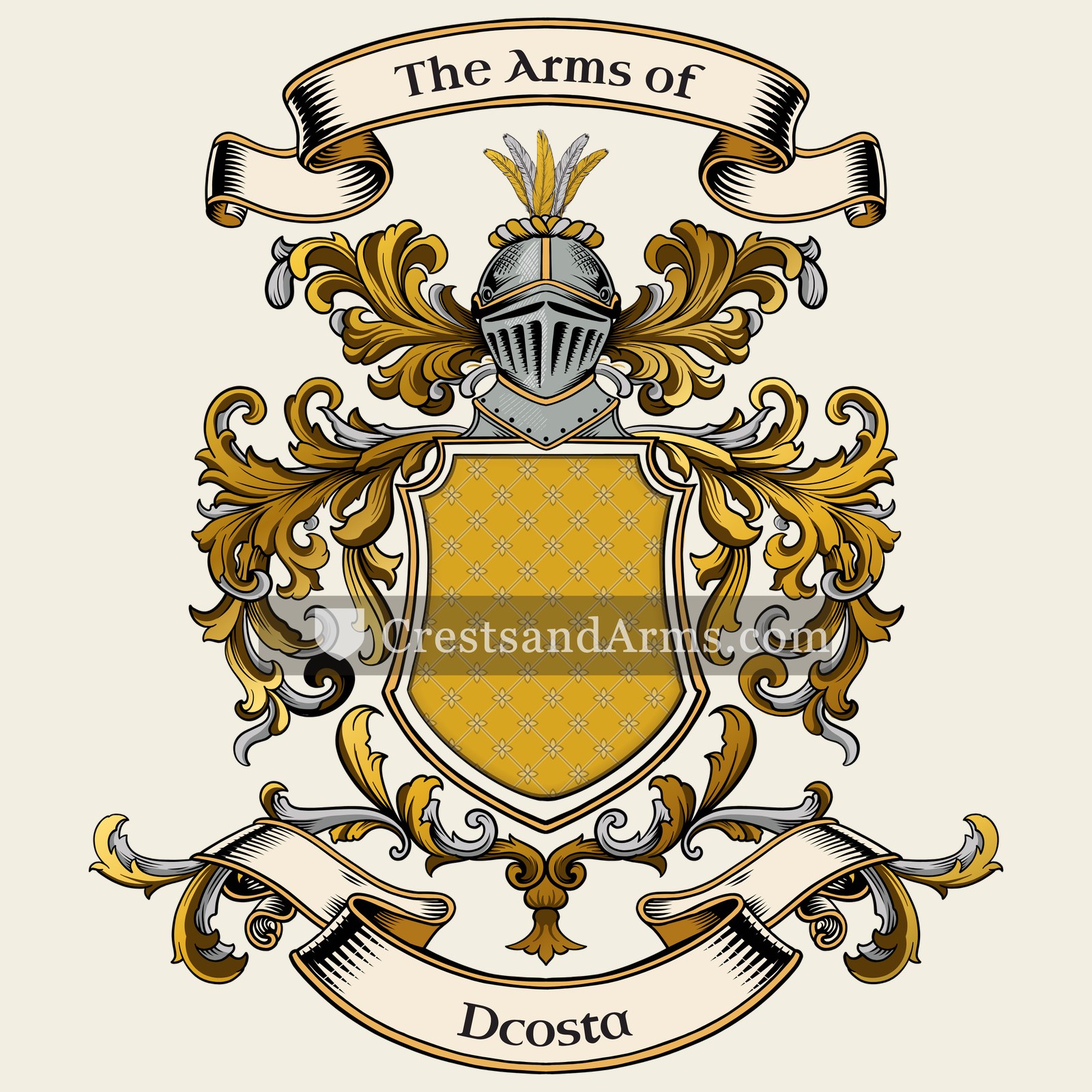


 stagPeace and harmony, and one who will not fight unprovoked