Map of Belgium showing where the De Brito arms are recorded
The De Brito arms were recorded in Bruxelles, c. 1853.
This is where the arms were entered in the register. Families often moved to other parts of the country, so the same name can turn up in more than one region.
The body that granted and recorded arms in Belgium in this period.
Leopold I of Belgium
Sovereign of the period
Leopold I of Belgium
1831–1865
Reigning in Belgium when the De Brito arms are first recorded.
How Arms Worked in Belgium
In Belgium, a coat of arms is considered personal property that is passed down through the male line to legitimate descendants. Families often use the same shield design across generations to show their shared heritage. If a branch of the family wants to change the design, they must apply for an official update to their specific version of the arms.
Granting authority
The Conseil héraldique is the official body that regulates and approves all coats of arms in Belgium.
How they got arms
Families obtain their coats of arms through formal royal grants or by confirming their historical right to use existing designs.
Where arms were recorded
All approved coats of arms are officially recorded in the public registers of the Conseil héraldique since 1844.
The family's standing
Recorded among the armigerous families of Belgium.
Origin & History of the De Brito Family in Belgium
The family name De Brito originates from the Iberian Peninsula, specifically linked to the Portuguese term for a bridge or a small settlement near a river. While the name is deeply rooted in Portuguese history, branches of the family expanded across Europe as trade and political ties grew stronger during the nineteenth century. By 1853, records confirm that members of the De Brito family were established in Bruxelles. During this period, Bruxelles served as a major crossroads for international commerce and diplomacy, making it a common destination for families moving from southern Europe to seek new opportunities in the heart of the continent. The presence of the family in this city reflects the broader movement of people who helped shape the urban and professional landscape of Belgium during the mid-1800s.
De Brito Meaning & Related Branches
Root word
Britus
Latin term referring to a person from Britain or Brittany.
This name
De BritoA topographic or habitational name denoting someone from the region of Brittany.
also spelled
Deberio
de Beryo
Beriot
Documented Sources
J. B. Rietstap, Armorial Général, Gouda: G. B. van Goor Zonen, 1884–87
Archives: Archives de la Ville de Bruxelles, État civil, Registres des naissances, mariages et décès (1853)
Book: Machado, José Pedro, Dicionário Onomástico Etimológico da Língua Portuguesa, 1981
Book: Piel, Joseph M., Contribuição para o estudo da antroponímia portuguesa, 1945
Digital archive packCoat of arms PNG, gold border print PDF, vector SVG and the certificate of authenticity. Sent to your email in minutes.


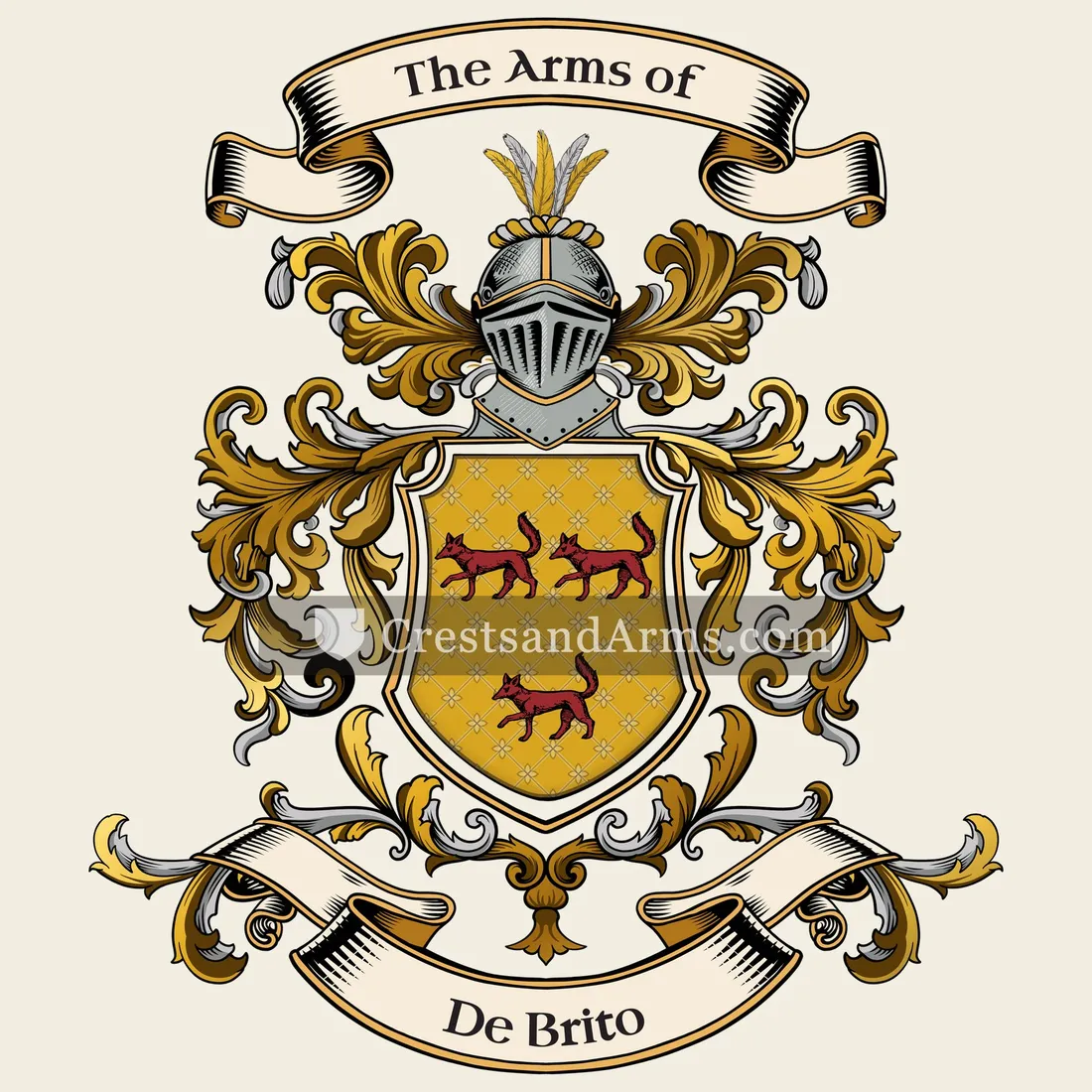
 foxWit and wisdom in defence
 foxWit and wisdom in defence