A record of documented arms, meaning and origin, researched for the de Coninck family lines. Documented in 3 countries.
Reg. 0256 · Dutch, D–F
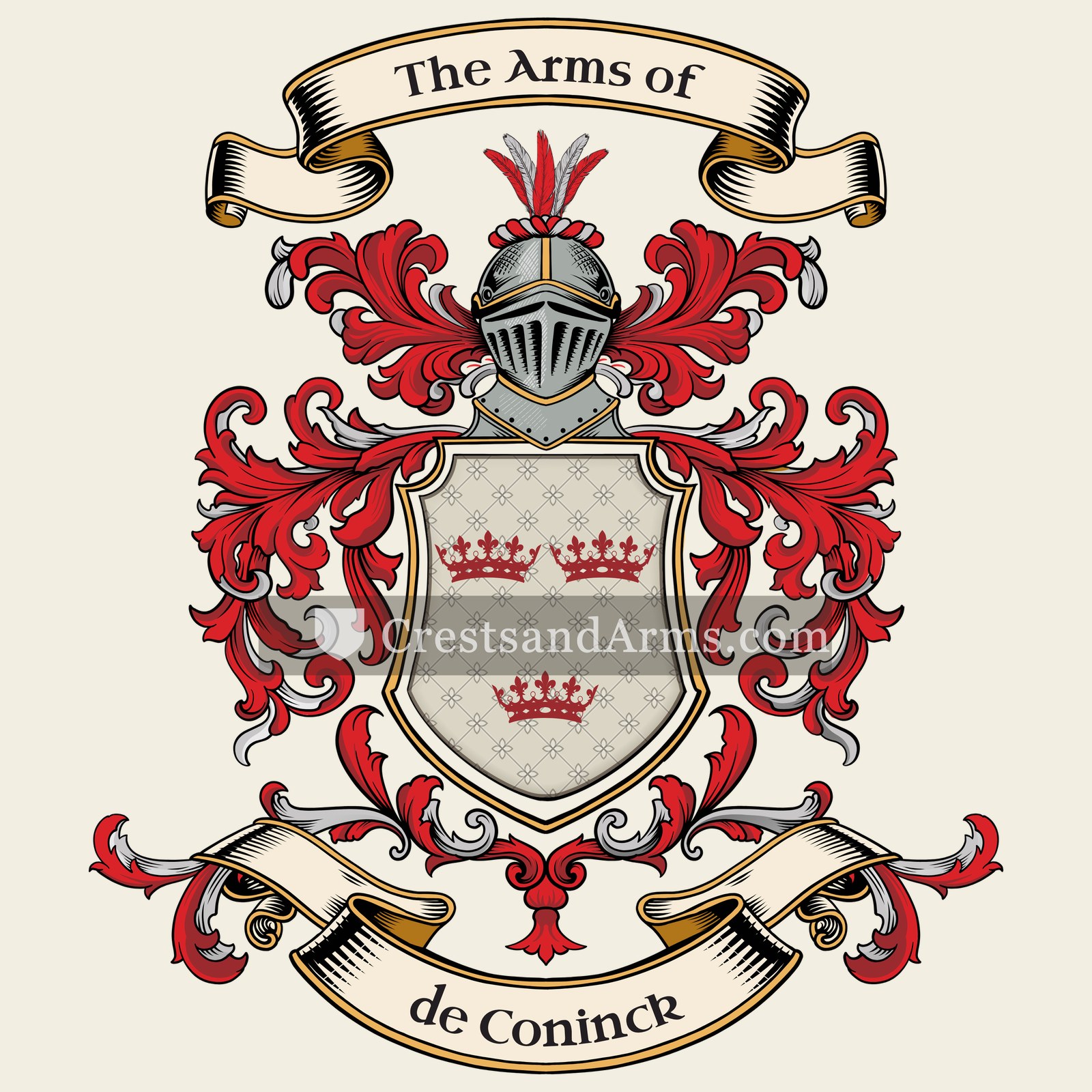
Coat of Arms & Family Crest Details
Symbols on this shield
crownSovereignty, authority and just reward
Colours
Silver (Argent)Means: Peace and sincerity
Red (Gules)Means: Military strength
Historical info
Source
J. B. Rietstap, Armorial Général, Gouda: G. B. van Goor Zonen, 1884–87
Blazon (the actual original written record)
“D'arg. à trois couronnes de gu. Cq. cour. C.: deux pattes d'ours au nat.; ou: deux bras, parés de gu., les mains de carn.”
ZeelandZeeland, c. 1815
Where the de Coninck Arms Were Recorded
Zeeland
Map of Netherlands showing where the de Coninck arms are recorded
The de Coninck arms were recorded in Zeeland, c. 1815.
Zeeland was a scatter of islands in the south-west of the Netherlands, living on the sea and on land reclaimed from it. Families who drained and held that land were counted among the gentry, and gentry carried arms.
This is where the arms were entered in the register. Families often moved to other parts of the country, so the same name can turn up in more than one region.
Region
Zeeland
First recorded
1815
Granting Authority for the de Coninck Arms
Hoge Raad van Adel
Photograph made by me · CC BY-SA 3.0
The body that granted and recorded arms in Netherlands in this period.
William I of the Netherlands
Sovereign of the period
William I of the Netherlands
1815–1840
Reigning in Netherlands when the de Coninck arms are first recorded.
How Arms Worked in Netherlands
In the Netherlands, coats of arms were often used by noble families and those who held specific public offices. These arms were passed down through the generations to legitimate descendants. Younger branches of a family usually kept the original design without needing to add special marks. This system ensured that the family identity remained clear and consistent over many years.
Granting authority
The Hoge Raad van Adel is the official body that regulates and manages noble titles and coats of arms in the Netherlands.
How they got arms
Families typically obtained their coats of arms through official royal grants or by proving their long-standing historical use of the symbols.
Where arms were recorded
Coats of arms are officially recorded in the registers held by the Hoge Raad van Adel, which began its work in 1814.
The family's standing
Recorded among the armigerous families of Zeeland.
Origin & History of the de Coninck Family in Netherlands
The surname de Coninck is a classic example of a name derived from a nickname, as it translates to "the king" in Middle Dutch. Historically, this name was often given to someone who acted in a regal manner, played the role of a king in local festivals, or perhaps served a high-ranking official. By the early 19th century, the family had established a clear presence in the province of Zeeland. This region of the Netherlands is defined by its complex relationship with the sea and its history of land reclamation, which likely shaped the daily lives and occupations of the family members living there in 1815. During this period, the Netherlands was transitioning into a new era as the United Kingdom of the Netherlands, and families like the de Conincks were part of the local social fabric that helped rebuild the nation after the Napoleonic Wars. The name reflects a long history of Dutch naming traditions where descriptive titles eventually became permanent family identifiers passed down through generations.
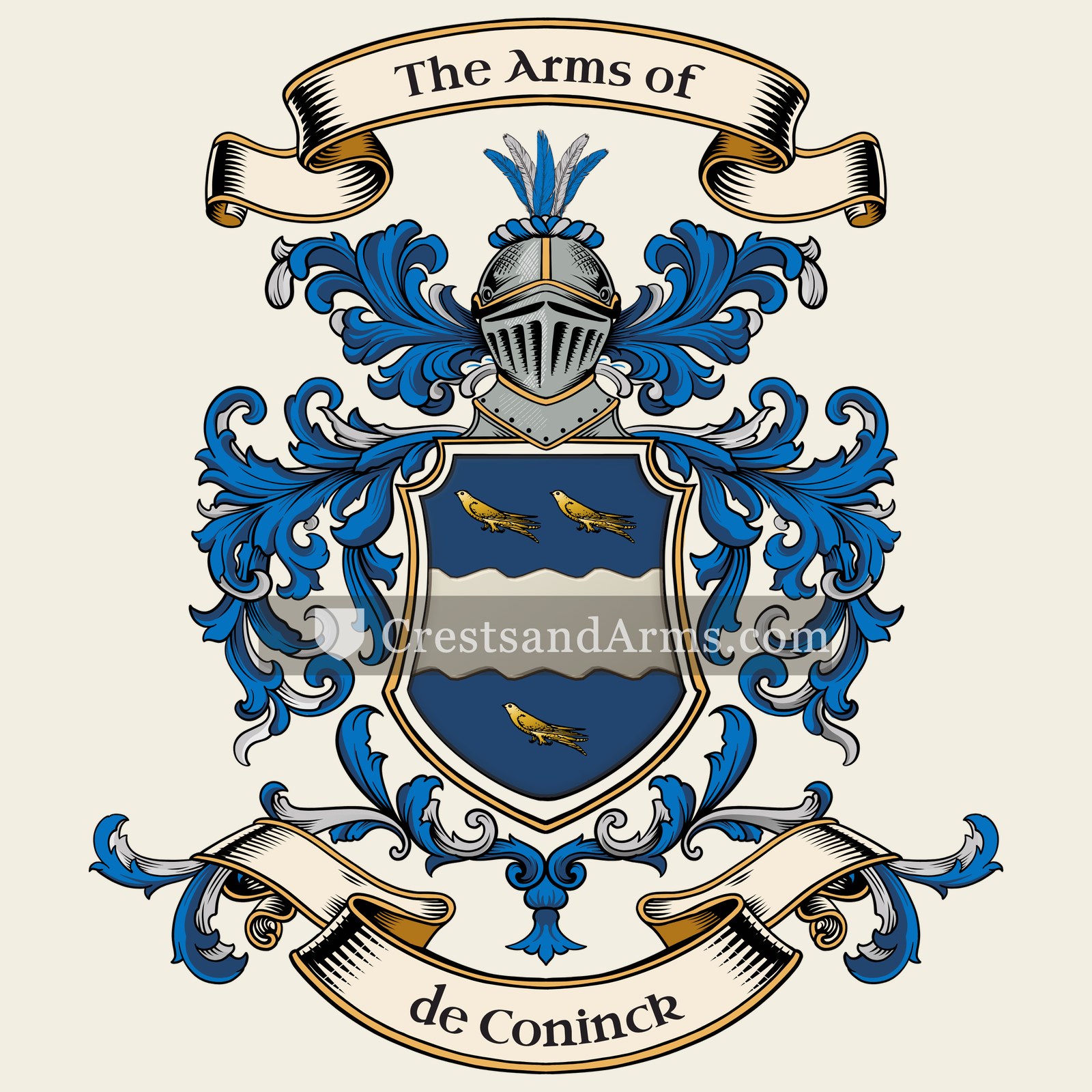
Coat of Arms & Family Crest Details
Symbols on this shield
fessThe military belt, and readiness to serve
martletA younger son, who must win his own land
Colours
Blue (Azure)Means: Loyalty and truth
Silver (Argent)Means: Peace and sincerity
Gold (Or)Means: Generosity
Historical info
Source
J. B. Rietstap, Armorial Général, Gouda: G. B. van Goor Zonen, 1884–87
Blazon (the actual original written record)
“D'azur à la fasce ondée d'arg., acc. de trois roitelets d'or. Cq. cour. C.: un roitelet d'or, entre un vol d'azur. L. d'or, d'azur et d'arg. D.: REX, GREX, LEX. [Les barons ont pour S.: deux griffons reg. d'or, arm. et lamp. de gu.]”
BelgiumBruges, c. 1737
Where the de Coninck Arms Were Recorded
Bruges
Map of Belgium showing where the de Coninck arms are recorded
The de Coninck arms were recorded in Bruges, c. 1737.
This is where the arms were entered in the register. Families often moved to other parts of the country, so the same name can turn up in more than one region.
The body that granted and recorded arms in Belgium in this period.
Charles VI, Holy Roman Emperor
Sovereign of the period
Charles VI, Holy Roman Emperor
1711–1740
Reigning in Netherlands when the de Coninck arms are first recorded.
How Arms Worked in Belgium
In Belgium, a coat of arms is considered personal property that is passed down through the male line to legitimate descendants. Families often use the same shield design across generations to show their shared heritage. If a branch of the family wants to change the design, they must apply for an official update to their specific version of the arms.
Granting authority
The Conseil héraldique is the official body that regulates and approves all coats of arms in Belgium.
How they got arms
Families obtain their coats of arms through formal royal grants or by confirming their historical right to use existing designs.
Where arms were recorded
All approved coats of arms are officially recorded in the public registers of the Conseil héraldique since 1844.
The family's standing
Recorded among the armigerous families of Belgium.
Origin & History of the de Coninck Family in Belgium
The family name de Coninck has deep roots in the Flemish region of Belgium, particularly within the historic city of Bruges. The name itself is derived from the Middle Dutch word for king, which suggests that the earliest ancestors may have held a position of local importance or served in a royal administrative capacity. By the year 1737, records confirm that the family was well-established in Bruges, a city that served as a vital center for trade and craftsmanship during that era. Members of the family during this time were likely integrated into the urban fabric of the city, participating in the guilds or the merchant classes that defined the economic life of the Low Countries. As the family grew, they remained closely tied to the cultural and social developments of the region, reflecting the broader history of Flemish families who helped shape the identity of coastal Belgium through centuries of change.
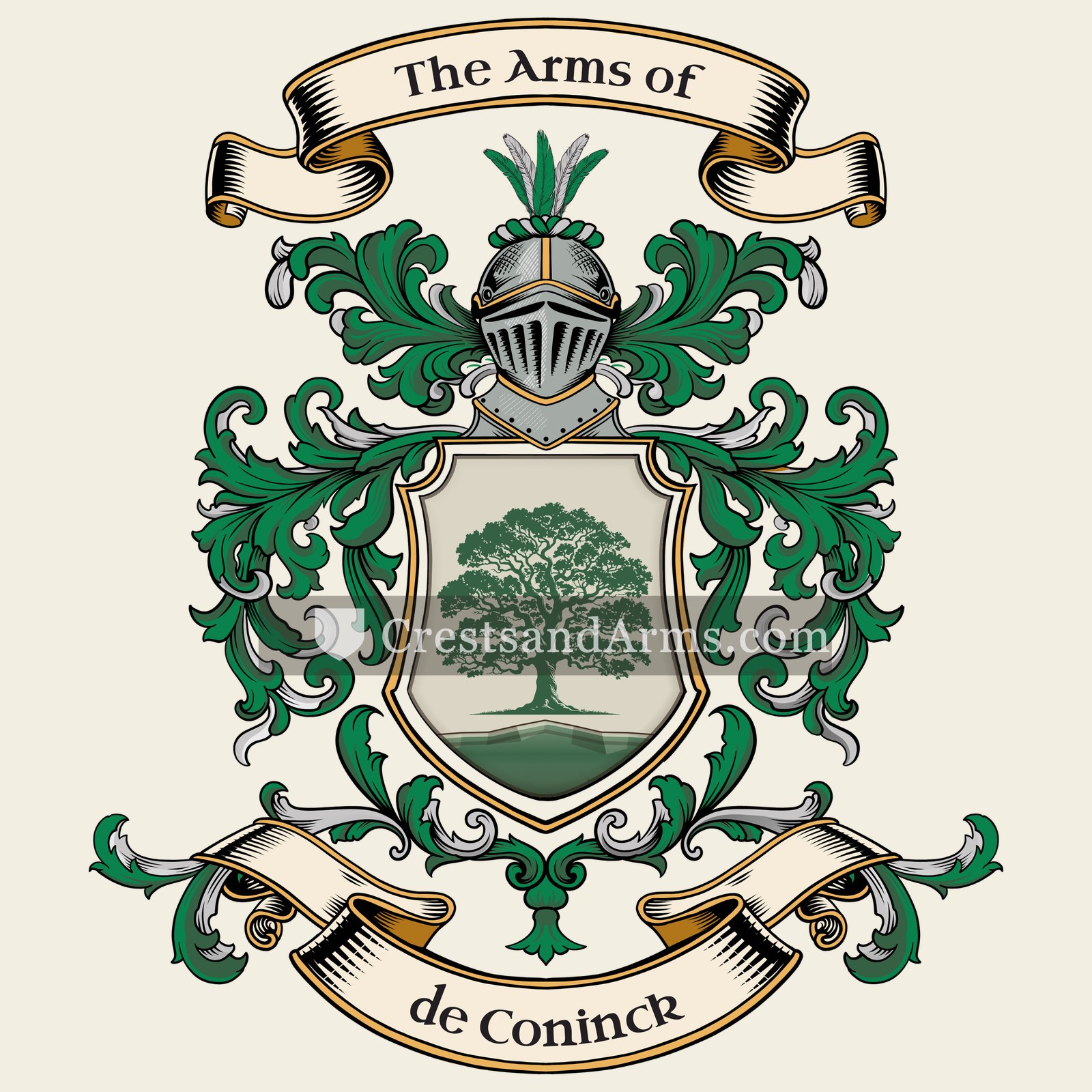
Coat of Arms & Family Crest Details
Symbols on this shield
mountThe ground held, and steadfastness upon it
treeLife, endurance and deep roots
Colours
Silver (Argent)Means: Peace and sincerity
Green (Vert)Means: Hope
Historical info
Source
J. B. Rietstap, Armorial Général, Gouda: G. B. van Goor Zonen, 1884–87
Blazon (the actual original written record)
“D'arg. à un arbre terrassé de sin., la cime ch. d'une merlette de sa.”
FlandreFlandre, c. 1663
Where the de Coninck Arms Were Recorded
Flandre
Map of France showing where the de Coninck arms are recorded
The de Coninck arms were recorded in Flandre, c. 1663.
Flandre grew rich on cloth, and its towns were among the busiest in Europe. Merchant families bought land with their profits and took arms to go with it, so trade put as many names in the registers here as land did.
This is where the arms were entered in the register. Families often moved to other parts of the country, so the same name can turn up in more than one region.
The body that granted and recorded arms in France in this period.
Louis XIV of France
Sovereign of the period
Louis XIV of France
1643–1715
Reigning in Netherlands when the de Coninck arms are first recorded.
How Arms Worked in France
In France, a coat of arms was a mark of honor that passed down through the male line to all legitimate descendants. Families often used the same shield without changes to show their shared heritage. If a branch wanted to stand out, they could add a small mark to their shield to show their specific place in the family tree.
Granting authority
The Juge d'armes de France acted as the official authority that regulated and verified coats of arms across the country.
How they got arms
Families typically inherited their arms from ancestors, though they could also receive them through royal grants or by proving their noble status.
Where arms were recorded
Coats of arms were officially recorded in the Armorial Général de France, which began its main collection in the year 1696.
The family's standing
Recorded among the armigerous families of Flandre.
Origin & History of the de Coninck Family in France
The family name de Coninck originates from the Middle Dutch word for king, serving as a descriptive surname that likely identified a person who acted like a ruler or perhaps worked for a royal household. By 1663, records confirm that members of the family were firmly established in the region of Flandre, which was a territory defined by its complex cultural and political ties between France and the Low Countries. During this period, the border areas of northern France were frequently shifting due to ongoing conflicts and treaties, meaning families in Flandre often navigated a blend of French and Flemish identities. As the name spread through these administrative zones, it evolved from a simple nickname into a formal family identifier. This transition reflects the broader historical trend of families settling into specific regions and solidifying their social standing within the local community during the seventeenth century.
Related Branches & Arms
Root word
Koning
A monarch or sovereign ruler of a kingdom.
This name
de ConinckRefers to someone who served the king or acted in a kingly manner.
also spelled
Coninck
de Konink
Related arms
Coninckvariant spelling
Documented Sources
J. B. Rietstap, Armorial Général, Gouda: G. B. van Goor Zonen, 1884–87
Debrabandere, Frans. Woordenboek van de familienamen in België en Noord-Frankrijk. 2003
Meertens Instituut. Nederlandse Familienamenbank. 2024
Zeeuws Archief. Bevolkingsregisters van Zeeland. 1815
Digital archive packCoat of arms PNG, gold border print PDF, vector SVG and the certificate of authenticity. Sent to your email in minutes.


 crownSovereignty, authority and just reward
 crownSovereignty, authority and just reward

 fessThe military belt, and readiness to serve
 martletA younger son, who must win his own land

 mountThe ground held, and steadfastness upon it
 treeLife, endurance and deep roots