Map of Belgium showing where the De Leon arms are recorded
The De Leon arms were recorded in Belgium, c. 1737.
Arms such as these were typically recorded in Brabant.
Brabant lay at the heart of the Low Countries, where the trade routes met. Its towns were wealthy and its landowners many, and both kinds of family kept arms, which is why the region is so heavily represented.
This is where the arms were entered in the register. Families often moved to other parts of the country, so the same name can turn up in more than one region.
The body that granted and recorded arms in Belgium in this period.
Charles VI, Holy Roman Emperor
Sovereign of the period
Charles VI, Holy Roman Emperor
1711–1740
Reigning in Belgium when the De Leon arms are first recorded.
How Arms Worked in Belgium
In Belgium, a coat of arms is considered personal property that is passed down through the male line to legitimate descendants. Families often use the same shield design across generations to show their shared heritage. If a branch of the family wants to change the design, they must apply for an official update to their specific version of the arms.
Granting authority
The Conseil héraldique is the official body that regulates and approves all coats of arms in Belgium.
How they got arms
Families obtain their coats of arms through formal royal grants or by confirming their historical right to use existing designs.
Where arms were recorded
All approved coats of arms are officially recorded in the public registers of the Conseil héraldique since 1844.
The family's standing
Recorded among the armigerous families of Belgium.
Origin & History of the De Leon Family in Belgium
The history of the De Leon family in Belgium is deeply rooted in the social and economic landscape of the Duchy of Brabant during the eighteenth century. By 1737, records confirm that members of the family were already established residents in this region, which was then under the control of the Austrian Netherlands. The name itself reflects a historical connection to the Iberian Peninsula, suggesting that the family likely migrated north due to shifting trade routes or religious movements that defined European life in earlier centuries. Once settled in Brabant, the family integrated into the local community by participating in the active urban life of cities like Brussels or Leuven. They likely engaged in the merchant classes or local administration, as these were common paths for families of foreign origin to gain stability in the region. Over time, the De Leon name became a permanent part of the local demographic, representing the long history of movement and cultural blending that shaped the Belgian population.
Coat of Arms & Family Crest Details
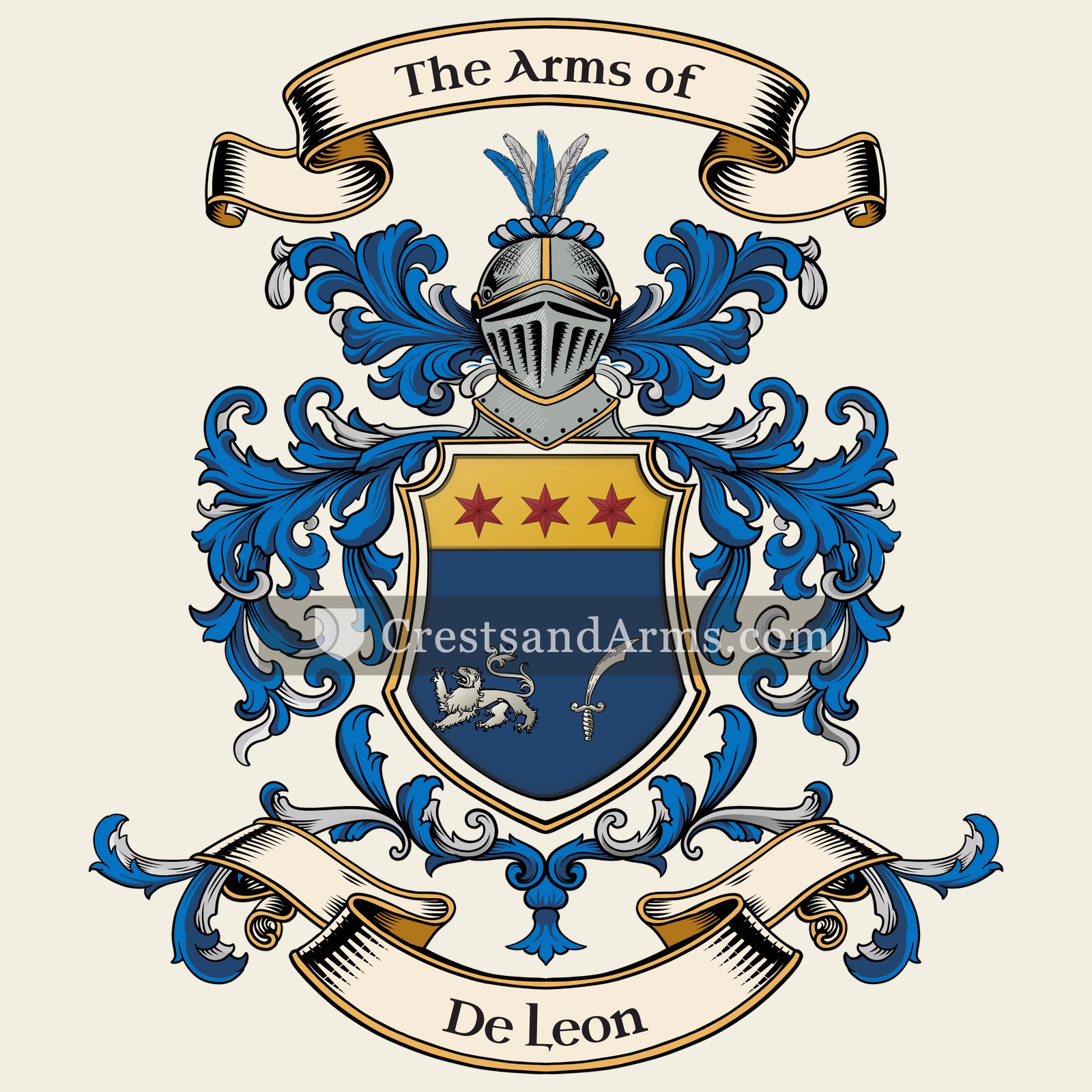
Symbols on this shield
chiefAuthority, wisdom and dominion
lionCourage, strength and royalty
swordJustice, and military honour
starThe celestial goddess, and nobility
Colours
Blue (Azure)Means: Loyalty and truth
Gold (Or)Means: Generosity
Silver (Argent)Means: Peace and sincerity
Red (Gules)Means: Military strength
Historical info
Source
J. B. Rietstap, Armorial Général, Gouda: G. B. van Goor Zonen, 1884–87
Blazon (the actual original written record)
“D'azur au lion d'arg., percé d'une épée d'arg., garnie d'or, tenue par un bras, arm. d'arg., iss. du canton sen. de la p.; au chef d'or, ch. de trois étoiles de gu.”
FranceStrasbourg, c. 1809
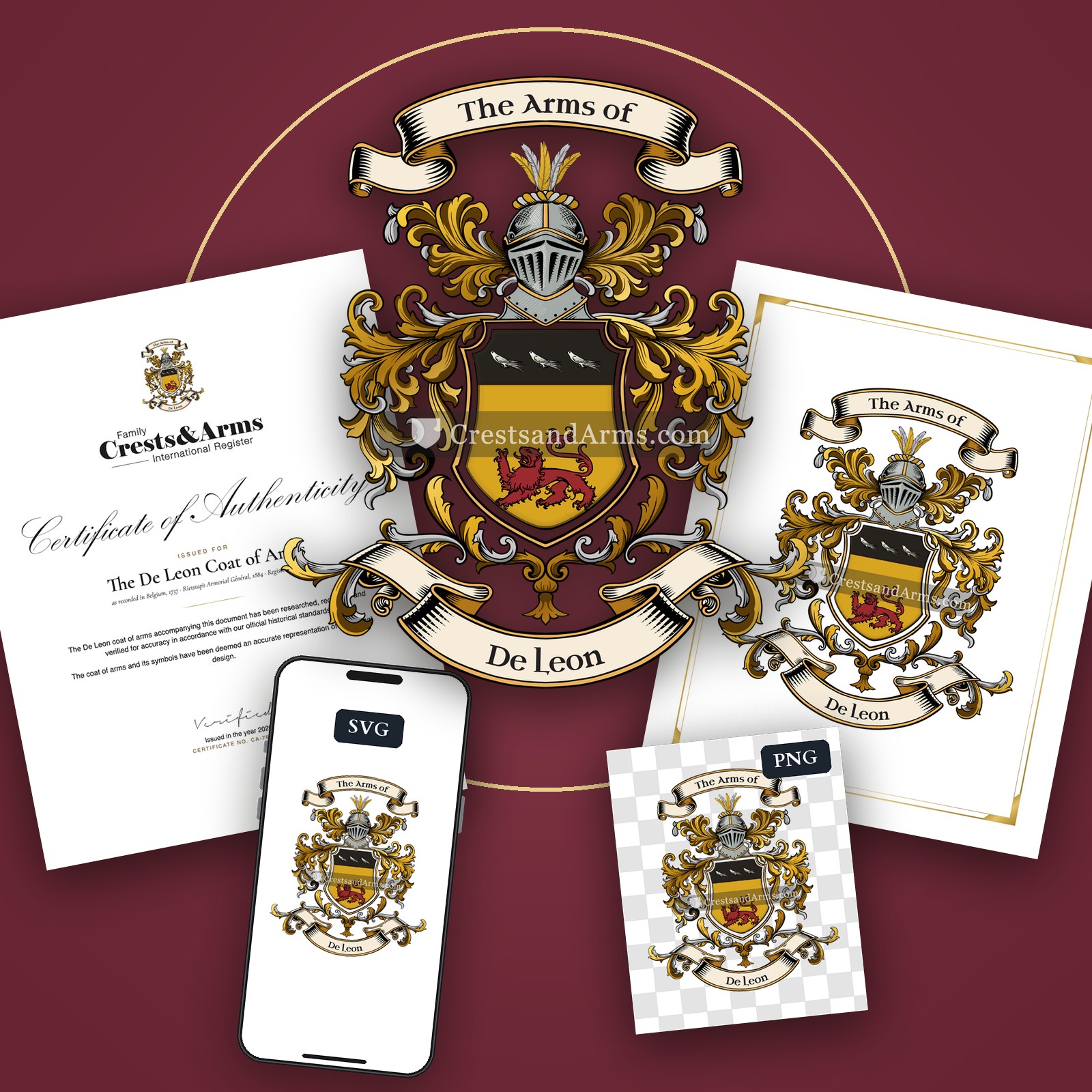
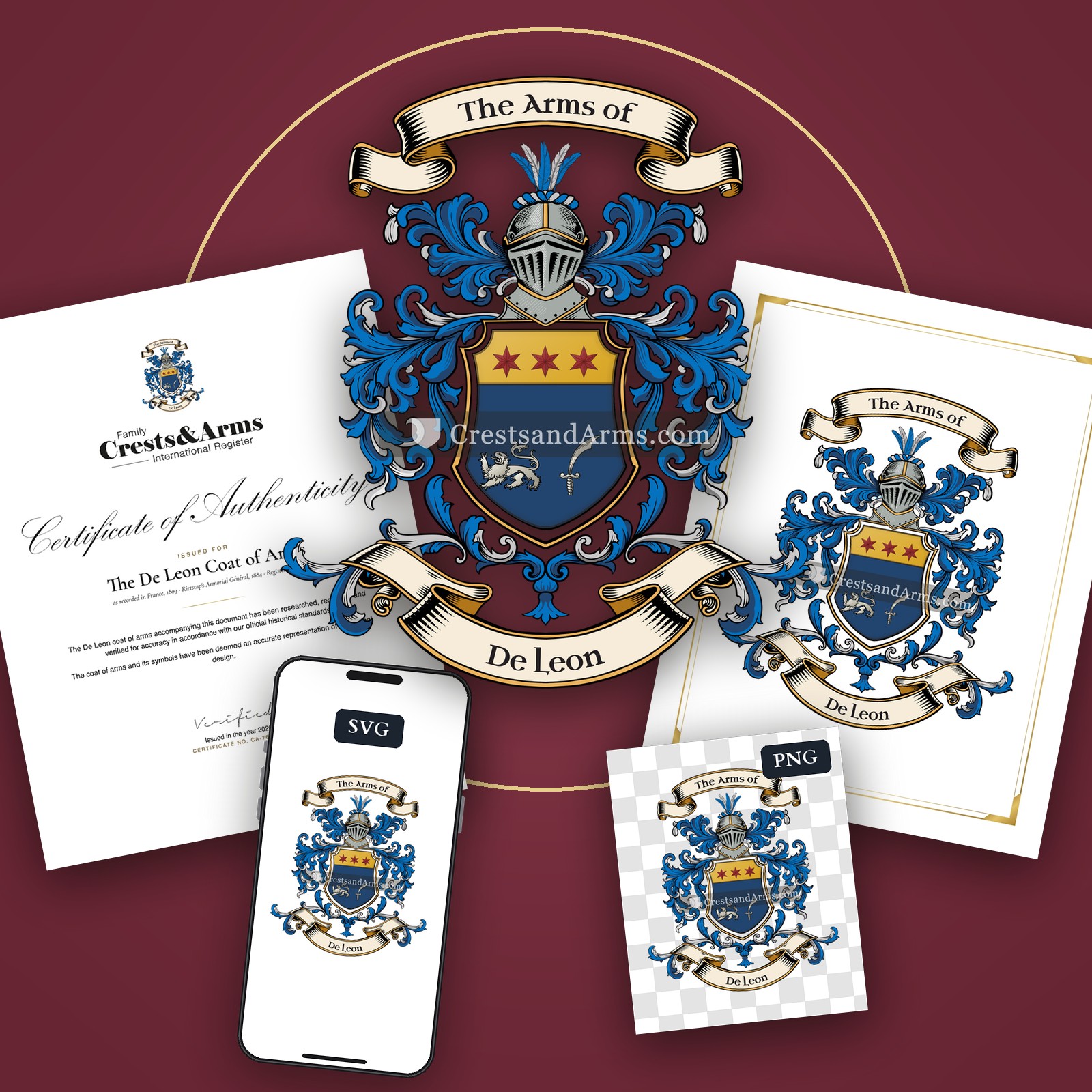
Digital archive packCoat of arms PNG, gold border print PDF, vector SVG and the certificate of authenticity. Sent to your email in minutes.
Map of France showing where the De Leon arms are recorded
The De Leon arms were recorded in Strasbourg, c. 1809.
This is where the arms were entered in the register. Families often moved to other parts of the country, so the same name can turn up in more than one region.
The body that granted and recorded arms in France in this period.
Napoleon
Sovereign of the period
Napoleon
1804–1814
Reigning in Belgium when the De Leon arms are first recorded.
How Arms Worked in France
In France, a coat of arms was a mark of honor that passed down through the male line to all legitimate descendants. Families often used the same shield without changes to show their shared heritage. If a branch wanted to stand out, they could add a small mark to their shield to show their specific place in the family tree.
Granting authority
The Juge d'armes de France acted as the official authority that regulated and verified coats of arms across the country.
How they got arms
Families typically inherited their arms from ancestors, though they could also receive them through royal grants or by proving their noble status.
Where arms were recorded
Coats of arms were officially recorded in the Armorial Général de France, which began its main collection in the year 1696.
The family's standing
Recorded among the armigerous families of France.
Origin & History of the De Leon Family in France
The history of the De Leon family in France is deeply tied to the shifting borders and legal reforms of the early nineteenth century. By 1809, members of the family were documented as residents of Strasbourg, a city that served as a vital cultural bridge between French and Germanic traditions. During this era, the Napoleonic administration mandated that all citizens adopt fixed surnames to improve tax collection and military conscription. Many families with roots in the Alsace region chose or solidified names that reflected their geographic origins or ancestral connections to the broader European continent. The presence of the De Leon name in Strasbourg suggests that the family was part of a mobile population navigating the complex social changes of the First French Empire. As the region transitioned through different political regimes, the family integrated into the local urban economy, contributing to the professional and commercial life of the city during a time of significant administrative modernization.
De Leon Meaning & Related Branches
Root word
Leo
Latin term for a lion, representing strength and courage.
This name
De LeonDerived from the Spanish prepositional phrase meaning of the lion, often denoting a person of noble or fierce character.
also spelled
Delione
Delionn
de Leeon
Documented Sources
J. B. Rietstap, Armorial Général, Gouda: G. B. van Goor Zonen, 1884–87
Archives: State Archives in Belgium (Algemeen Rijksarchief), Parish Registers of the Duchy of Brabant (Parochieregisters van het Hertogdom Brabant)
Books: De Ridder, P., Geschiedenis van de Brabantse steden in de achttiende eeuw, 1985
Books: Wouters, L., Migratie en sociale mobiliteit in de Zuidelijke Nederlanden, 1992
Digital archive packCoat of arms PNG, gold border print PDF, vector SVG and the certificate of authenticity. Sent to your email in minutes.


 chiefAuthority, wisdom and dominion
 lionCourage, strength and royalty
 martletA younger son, who must win his own land
 chiefAuthority, wisdom and dominion
 lionCourage, strength and royalty
 martletA younger son, who must win his own land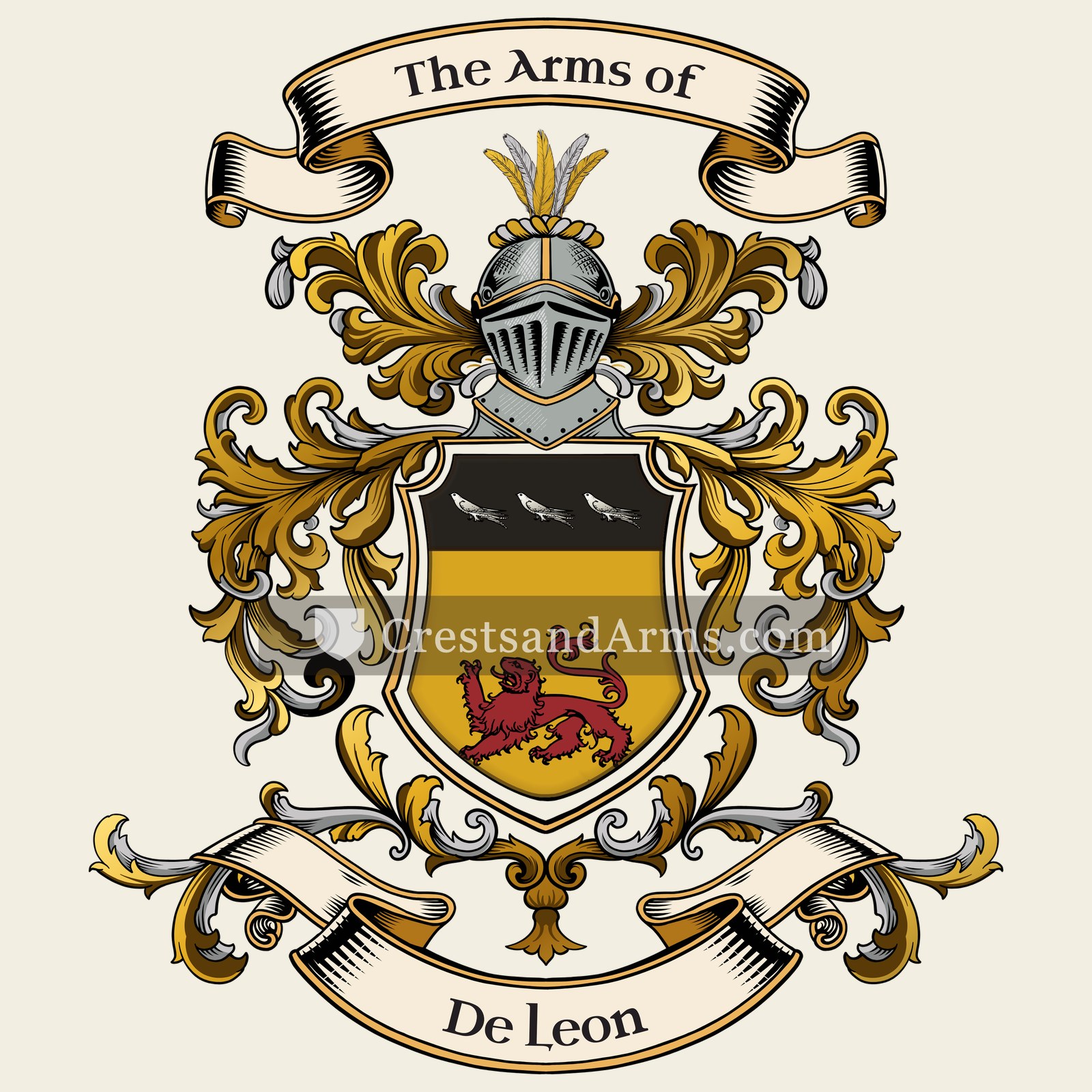


 swordJustice, and military honour
 starThe celestial goddess, and nobility